


You’ll want zinc, copper, carbon, stainless steel, and graphite for homemade batteries because they give usable voltage, good conductivity, and safer handling while keeping costs low. Match zinc or stainless as the anode with copper or carbon cathodes, use a mild salt or acidic aqueous electrolyte that won’t swell separators, and add PVC or polyolefin sleeves for protection and venting. Pick porous, chemically stable separators and gentle electrolytes to avoid corrosion, and keep reading to learn practical assembly tips.
| PVC Cable Sleeve for 18650 Batteries (120mm) |

| Durable Insulation | Material: PVC | Intended Use / Application: Battery wrapping / electrical insulation and protection | Portability / Size Descriptor: 2 m length, 120 mm diameter (sleeve) | VIEW LATEST PRICE | Read Our Analysis |
| Homemade Fruit Battery Experiment Kit with Mini Lamps |
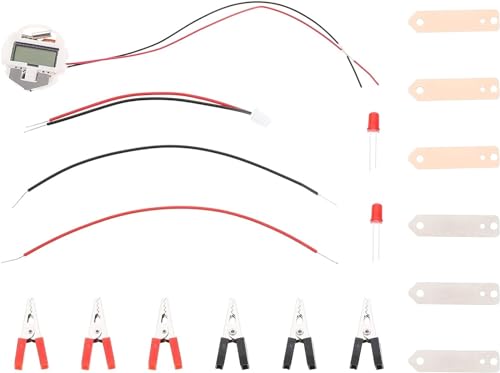
| Educational Starter | Material: Metal (clips/connectors) | Intended Use / Application: Fruit/potato battery experiments (education) | Portability / Size Descriptor: Compact kit ≈ 14 x 6 x 2 cm | VIEW LATEST PRICE | Read Our Analysis |
| 3-Pack 9V Battery T-Type Buckle Connectors |

| Reliable Connector | Material: Hard plastic shell + metal contacts | Intended Use / Application: Replacement 9V battery connector for electronics/projects | Portability / Size Descriptor: Small clip ≈ 7 x 3.5 x 0.2 in | VIEW LATEST PRICE | Read Our Analysis |
| 21700 Battery Sleeves – PVC Shrink Wrap Tubes (20pcs 77x34mm) |

| Bulk Protective Set | Material: Polyolefin (PVC-like heat-shrink) | Intended Use / Application: Battery/capacitor insulation and protection (21700 cells) | Portability / Size Descriptor: Small tubes, 77 x 34 mm (20-pack) | VIEW LATEST PRICE | Read Our Analysis |
| Egg Shell Opener & Egg Separator Kitchen Gadget (Orange) |

| Handy Kitchen Tool | Material: Stainless steel | Intended Use / Application: Egg cracking/separating tool (kitchen) — useful for precise egg handling in DIY battery electrolyte preparation (kitchen-sourced experiments) | Portability / Size Descriptor: Compact handheld, 35 g | VIEW LATEST PRICE | Read Our Analysis |
More Details on Our Top Picks
PVC Cable Sleeve for 18650 Batteries (120mm)
Should you wrap 18650 cells at home, you’ll want a sleeve that keeps them safe and neat, and this 2 meter PVC cable sleeve with a 120 mm diameter fits that need well. You’ll like the PVC material because it’s sturdy, wear resistant, and designed for shrink applications. You’ll wrap it around cells or wiring, then apply heat until it hugs the battery. You’ll notice low shrinkage and low water absorption, so the fit stays stable. You’ll trust its high resistivity for insulation and use it for repairs, junctions, cable management, and neat wire-end finishing.
- Material:PVC
- Intended Use / Application:Battery wrapping / electrical insulation and protection
- Portability / Size Descriptor:2 m length, 120 mm diameter (sleeve)
- Reusability / Multiple Uses:Reusable for multiple wraps/repairs until worn
- Safety / Protection Function:Electrical insulation and mechanical/wear protection
- Heat / Activation Requirement:Requires heat source to shrink to fit
- Additional Feature:Long 2 m length
- Additional Feature:120 mm diameter
- Additional Feature:Wear-resistant construction
Homemade Fruit Battery Experiment Kit with Mini Lamps
Provided you’re teaching a classroom, running a homeschool unit, or helping a kid with a science fair project, the Homemade Fruit Battery Experiment Kit with mini lamps is an ideal hands-on choice because it’s built for simple, safe demonstrations that produce visible results. You’ll get two kits with metal connectors, two single-ended alligator clip wires, three double U-type connectors, and colorful mini lamps. You can show how fruit or potatoes act as electrolytes while metal creates a circuit. Kids will test combinations, measure brightness, and reason like scientists. You’ll guide teamwork, enhance problem solving, and make learning feel playful.
- Material:Metal (clips/connectors)
- Intended Use / Application:Fruit/potato battery experiments (education)
- Portability / Size Descriptor:Compact kit ≈ 14 x 6 x 2 cm
- Reusability / Multiple Uses:Reusable for repeated classroom experiments
- Safety / Protection Function:Safe hands-on learning kit for students (low-voltage)
- Heat / Activation Requirement:No heat required (direct electrical connections)
- Additional Feature:Includes colorful mini lamps
- Additional Feature:Alligator clip wires included
- Additional Feature:Classroom/science-fair ready
3-Pack 9V Battery T-Type Buckle Connectors
In case you need a simple, reliable way to hook a 9V battery to a homemade pack, this 3-pack of T-type buckle connectors is a great fit for hobbyists, students, and makers who want durability without fuss. You’ll like the hard plastic shell that resists breaking, and the metal contacts that solder cleanly to wires. Use them to replace old clips on LED strips, Arduino builds, or school experiments. They’re sized for 9V only, so check your battery initially. They’re quality-checked in the USA, come with support, and feel reassuringly solid in your hand.
- Material:Hard plastic shell + metal contacts
- Intended Use / Application:Replacement 9V battery connector for electronics/projects
- Portability / Size Descriptor:Small clip ≈ 7 x 3.5 x 0.2 in
- Reusability / Multiple Uses:Reusable replacement connector for many battery swaps
- Safety / Protection Function:Provides safe, secure 9V connection (insulated shell)
- Heat / Activation Requirement:No heat required (mechanical/solder connections)
- Additional Feature:Hard plastic shell
- Additional Feature:Easy-to-solder cable tail
- Additional Feature:USA quality-checked packaging
21700 Battery Sleeves – PVC Shrink Wrap Tubes (20pcs 77x34mm)
In case you build or repair homemade batteries and want a clean, safe finish, these 21700 PVC shrink wrap tubes are a smart choice for you. You get 20 polyolefin sleeves sized 77 through 34 mm that fit most 21700 cells. They shrink at about 80°C with a shrink rate near 48% and a thin final wall of 0.08 to 0.09 mm. You’ll increase insulation up to a 300 V rating while cutting dust and moisture risks. Use heat to form a snug coat that improves appearance and safety. Should you need help, email customer support.
- Material:Polyolefin (PVC-like heat-shrink)
- Intended Use / Application:Battery/capacitor insulation and protection (21700 cells)
- Portability / Size Descriptor:Small tubes, 77 x 34 mm (20-pack)
- Reusability / Multiple Uses:Multiple sleeves per pack (20) for repeated use
- Safety / Protection Function:Insulation, moisture and dust protection for cells/components
- Heat / Activation Requirement:Requires heat (~80°C) to shrink
- Additional Feature:Pack of 20 pieces
- Additional Feature:Rated 300 V
- Additional Feature:Shrink at 80°C
Egg Shell Opener & Egg Separator Kitchen Gadget (Orange)
In case you love cooking and want a small tool that makes egg prep faster and tidier, this stainless steel egg shell opener and separator is a smart pick for home cooks who value precision and ease. You’ll crack eggs cleanly with a consistent ring that keeps shell fragments away. It also separates yolks from whites without piercing, so you handle eggs gently for baking and breakfast. The ergonomic non slip grip fits different egg sizes and feels comfortable in your hand. It’s lightweight, 35 g, food safe, easy to rinse and dishwasher safe, and small enough to take on trips.
- Material:Stainless steel
- Intended Use / Application:Egg cracking/separating tool (kitchen) — useful for precise egg handling in DIY battery electrolyte preparation (kitchen-sourced experiments)
- Portability / Size Descriptor:Compact handheld, 35 g
- Reusability / Multiple Uses:Reusable kitchen gadget, dishwasher safe
- Safety / Protection Function:Food-safe stainless steel; reduces shell fragments for clean handling
- Heat / Activation Requirement:No heat required (manual mechanical use)
- Additional Feature:Stainless steel construction
- Additional Feature:Dishwasher safe
- Additional Feature:Non-slip ergonomic grip
Factors to Consider When Choosing Materials For Homemade Battery
When you pick materials for a homemade battery, you’ll want to start with electrode choices that match the voltage and durability you need. Next consider about how the electrolyte and separator work together to pass ions but stop shorting, and factor in mechanical protection to keep parts from rubbing or breaking. Also make safety and venting a priority so you can avoid pressure build up and handle spills calmly in case something goes wrong.
Electrode Material Choice
Pick electrode metals that give you the biggest jump in voltage and the fewest surprises during use. You want metals with large differences in reduction potential so your cell actually powers things. For example, zinc and copper pair well because their potentials differ enough to make useful voltage. Also pick metals that conduct electricity well so wires and current flow stay strong; copper, silver, and zinc fit here. Consider corrosion and passivation too, since oxides can stop your cell fast. Balance reactivity and lifetime because very reactive metals give power but drain or pose risks, while milder metals last longer. Finally, check that the metals won’t dissolve, swell, or react badly with your build. These choices keep your project safe and steady.
Electrolyte Compatibility
You chose your electrodes carefully, so now let’s look at how the electrolyte will work with them and the rest of your build. You want an electrolyte that won’t eat your electrodes or separators. Check chemical stability initially, since cellulose swells in strong acids while many polymers stand up to alkali. Match pH and reactivity to avoid rapid corrosion or passivation, because zinc and lithium behave very differently. Also weigh ionic conductivity and viscosity, aiming for higher conductivity and lower viscosity to help ion flow. Consider safety and volatility too, since aqueous solutions are nonflammable but limit voltage, while organic solvents raise voltage at a fire risk. Finally, pick an electrolyte with suitable temperature and thermal stability for the conditions you expect.
Separator Durability
Balancing strength and chemistry matters a lot for a separator, so consider of it as the thin but mighty barrier that keeps your battery safe and working. You want a film that resists punctures and stretches, with tensile strength above 10 MPa to stop dendrites and avoid shorts. At the same time you need chemical stability in your chosen electrolyte, with swelling and mass change under 1% so ion pathways stay open. Porosity and pore size, around 0.01 to 1 micrometer, control ion flow and safety, so aim for uniform pores. Also check thermal behavior: low heat shrinkage under 5% and a melting point well above your cell temperature. Finally, make certain electrical resistivity exceeds 10^12 ohm·cm while keeping ion transport efficient.
Mechanical Protection Needs
Whenever you handle a homemade battery, consider the outer layer as its initial line of defense, and choose materials that stand up to real-world wear and tear. You want abrasion resistant, high tensile strength sleeves like certain PVC or polyolefin options so vibration and handling do not fray or split the casing. Pick protection that resists puncture and deformation so drops and impacts do not crush cells. Use heat shrink tubing with tight shrink tolerance and proper wall thickness for a snug, uniform fit that avoids gaps or stress points. Also favor low water absorption and chemical resistance to keep moisture and leaks from corroding contacts. Finally, make sure connectors, solder joints, crimp terminals and seams give strain relief so flexing does not cause failure.
Safety And Venting
Because cells can heat up, leak, or produce gas, your initial priority is to pick materials and designs that keep people and property safe. Choose chemically resistant, non-reactive enclosures like certain PVC or polyolefin heat-shrink that tolerate acids, bases, or solvents. Next, make certain housings and seals handle pressure and heat by using parts with softening points above likely thermal excursions, for example VICAT above 100°C where relevant. Also use high-resistivity insulating materials around terminals and wiring to prevent shorts and surface tracking. Provide space for pressure relief with vent holes, rupture disks, or non-sealed caps, and avoid fully gas-tight containers for chemistries that off-gas. Finally, stay away from flammable plastics near cells and pick flame-retardant options to limit fire spread.
