


A dependable battery for backpacking matters most when your phone also serves as a map, camera, weather reference, and emergency communication tool. Remote trails and long travel days offer few opportunities to recharge, so a portable power bank needs useful capacity without becoming another bulky object in your pack. The right choice depends on device compatibility, cable clutter, charging speed, and how much space you can reasonably spare. These seven options cover ultralight trips, cold-weather gear, multi-device travel, and Apple-based setups.
Your Options, Compared

charmast 10000mAh Built-Cable Power Bank
charmast 20000mAh Built-Cable Power Bank

RONEGN 10000mAh Four-Cable Power Bank
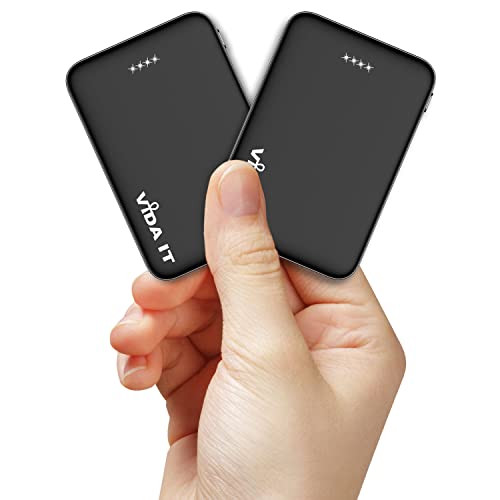
Vida IT 2-Pack 5000mAh USB Power Banks

Ekrist 10800mAh Magnetic Power Bank

JUOVI 45W 20000mAh Power Bank

charmast 5000mAh Mini USB-C Power Bank
A Closer Look At Each Pick
Built-in connections make this charmast model appealing on trips where a loose cable can be lost, crushed, or left behind. Its 10,000mAh capacity sits between emergency-only reserves and bulkier packs designed for repeated phone charging.
You can share capacity across several devices through the attached cables and additional USB connections, which suits a hiker carrying a phone and tablet. The foldable wall plug also reduces the need to reach for a separate adapter in a crowded hostel or campsite.
The Case For It
- Built-in cables remove several accessories from your pack.
- Multiple outputs support more than one device.
- The integrated plug handles recharging without a separate wall adapter.
- Capacity is practical for regular navigation and communication use.
Small Caveats
- Fixed cables cannot be replaced easily after damage.
- Several built-in connections may add bulk compared with a minimal power bank.
Key Facts
Made For
You benefit most on mixed-device trips where cable organization matters as much as usable capacity.
Another Choice May Suit
The charmast 5000mAh Mini USB-C Power Bank suits ultralight hikers who need a smaller phone-only reserve.
Higher capacity makes this the more substantial charmast option for multi-day travel. You gain more stored energy than the 10,000mAh model, making repeated phone and tablet charging more realistic across a route with limited outlets.
The folded wall plug, attached iPhone cable, and two-in-one USB-C and micro-USB cable reduce accessory clutter. For a hiker carrying several device types, that convenience may outweigh the extra pack space, although the design feels less natural for strict ultralight travel.
Useful Highlights
- 20,000mAh capacity supports more demanding itineraries.
- Built-in connectors cover several common charging standards.
- USB-A output broadens compatible-device support.
- Three devices can draw power at the same time.
Practical Considerations
- The larger battery takes more room than either 10,000mAh charmast option.
- Attached cables need careful packing to avoid connector strain.
- The dedicated USB-C input keeps the cable inventory organized but reduces universal input flexibility.
The Right Fit
You get the most benefit on longer trips carrying multiple rechargeable electronics.
Look Elsewhere When
The charmast 5000mAh Mini USB-C Power Bank better serves a single-device hiker protecting pack weight.
Four attached cables make the RONEGN model a practical choice when your group travels with different charging standards. The 10,000mAh rating provides a reasonable middle ground for navigation, reserve phone power, and occasional tablet use.
Its wider connector selection stands apart from the charmast 20000mAh model, which reaches higher capacity but carries fewer dedicated cable types. You may find RONEGN especially useful across a long trip involving borrowed gear or frequently changing devices.
Real Benefits
- iOS, USB-C, USB, and micro-USB cables remain attached.
- Three charging ports support several connection methods.
- The broad device coverage suits mixed electronics setups.
- Ten thousand milliamp hours balances capacity and pack volume.
Things To Watch
- Several fixed cables can tangle or catch during frequent packing.
- Modern travelers may carry fewer connector types than the cable selection suggests.
- The pack offers less reserve than the JUOVI 20000mAh option.
Who Will Love This
You benefit most when several people in your travel group use different charging connectors.
Where A Sibling Pick Shines
The charmast 20000mAh Built-Cable Power Bank serves longer routes where stored capacity matters more than four built-in cables.
Cold-weather hikers have more than a phone to recharge, which shifts attention toward heated garments. This Vida IT twin pack targets that specific problem with two compact 5,000mAh units and USB output for compatible accessories.
Keeping one bank in each pack offers practical redundancy, though it differs from conventional trail batteries that recharge your phone through several ports. For winter routes, that focused approach can make more sense than carrying one higher-capacity unit.
What Pays Off
- Two packs provide flexibility across separate bags.
- USB charging supports compatible heated clothing and phones.
- Compact units suit cold-weather emergency kits.
- Each 5,000mAh bank offers a secondary reserve.
A Few Limitations
- No built-in cable supports convenient cable-free charging.
- Capacity is modest for frequent full phone recharges.
- You must carry the appropriate cable for each device.
Quick Facts
Built With In Mind
You benefit most on cold hikes that include compatible heated garments or accessories.
Consider Something Else When
The JUOVI 45W 20000mAh Power Bank better serves electronics-heavy trips without heated clothing.
Magnetic alignment changes the routine for travelers carrying compatible iPhone and Apple Watch combinations. Rather than locating and holding a cable, you can position the charging surface directly against supported hardware.
The listed dimensions are 4.37 by 2.8 by 1.02 inches, with a weight of 239 grams. That footprint remains portable, though it may be larger than the charmast Mini USB-C Power Bank in your pocket.
The Practical Payoff
- Magnetic alignment simplifies supported wireless phone charging.
- The second charging side serves compatible Apple Watch models.
- A built-in cable provides another wired connection.
- Up to 25W output suits higher-powered phone charging.
Trade-Offs To Consider
- Magnetic charging depends on supported phone and watch models.
- Cases can interfere unless they support magnetic charging.
- Wireless charging generally produces more heat than a wired connection.
Feature Breakdown
Whose Shelf It Belongs On
You benefit most with a compatible iPhone and Apple Watch travel kit.
Skip It When
The RONEGN 10000mAh Four-Cable Power Bank suits travelers carrying varied connector types instead of Apple accessories.
Power Delivery, or PD, is a charging standard that lets compatible devices negotiate suitable power levels. JUOVI combines that capability with 45W output, 20,000mAh capacity, and four ports for trips where several devices need energy.
Unlike the cable-focused charmast 20000mAh model, you supply your own cables here. That trade-off improves flexibility for USB-C laptops, phones, tablets, and other compatible electronics, but it also returns cable management to you.
Everyday Advantages
- 45W output supports compatible high-power devices.
- 20,000mAh capacity covers longer travel periods.
- Two USB-A and two USB-C ports allow four-device charging.
- 30W charging offers a separate supported rate.
Points To Note
- No built-in cables means extra packing and potential cable loss.
- Full charging rates depend on device and cable compatibility.
- Its capacity and hardware produce a larger pack than compact models.
Technical Highlights
Who Should Grab It
You benefit most on electronics-heavy itineraries carrying several USB-C and USB-A devices.
A Better Fit Elsewhere
The charmast 20000mAh Built-Cable Power Bank better serves a hiker who prefers fewer accessories inside the pack.
A tiny reserve can be more useful than a large bank you decide not to carry. This charmast model measures 3.03 by 1.38 by 0.96 inches and weighs 0.2 pounds, making it a realistic pocket or daypack companion.
The attached USB-C connector removes the need for a phone cable during an emergency top-up. Its 5,000mAh capacity favors short hikes and moderate phone use, while travelers crossing several days away from outlets benefit more from 10,000mAh or 20,000mAh options.
Where It Delivers
- The built-in USB-C connector starts charging directly.
- Compact dimensions suit pockets and small pack compartments.
- Up to 20W output supports faster compatible phone charging.
- A low weight complements ultralight hiking setups.
Minor Gripes
- The attached connector only suits compatible USB-C devices.
- Small capacity offers limited repeated phone charging.
- You need an input cable to recharge the power bank.
Right Fit For
You benefit most on short day hikes where carrying a full-size bank would distract from weight savings.
Reach For A Different Pick When
The charmast 20000mAh Built-Cable Power Bank suits multi-day travel and heavier navigation demands.
Choosing a Battery That Matches Your Route
Capacity is only one part of the decision. Your route length, device mix, charging habits, and tolerance for pack weight determine which model makes more sense.
Match Capacity to Trip Length
A 5,000mAh bank works as a lightweight reserve for a day hike or an overnight trip. Multi-day routes often justify 10,000mAh or 20,000mAh, especially when your phone supports navigation and photography throughout the day. You’ll still need to account for cold weather, repeated screen use, and device age, which can reduce usable energy.
Confirm Connector Compatibility
USB-C is common on newer phones, tablets, and many small electronics, while older models may still use micro-USB or a proprietary connector. Built-in cables reduce accessory clutter, but fixed cables offer no replacement path once damaged. Carry your own cable when you switch between several device families or need laptop charging.
Balance Capacity Against Pack Weight
The smallest bank is rarely the most capable, and the largest can become uncomfortable on a long route. A 10,000mAh model often provides the middle ground you see in the charmast and RONEGN selections. For electronics-heavy travel, JUOVI’s larger capacity and four-port layout can justify its added volume.
Consider Charging Conditions
Cold environments can temporarily reduce battery performance across phones, cameras, and heated accessories. USB output at 5V and 2A on the Vida IT pack focuses on smaller compatible devices rather than high-power charging. Magnetic charging offers convenience for supported Apple equipment, while wired USB-C generally serves broader device compatibility.
Confirm Input and Output Separately
A USB-C port does not automatically guarantee the same charging speed in both directions. You need one compatible port for recharging the power bank and another output arrangement for your devices. Pay attention to each role because the charmast Mini model uses its attached USB-C connector as a direct phone output.
Practical Decisions Before You Pack
Mistakes Worth Dodging
Choosing by milliamp-hour alone can leave you with an unsuitable connector, excessive weight, or unnecessary ports. Check your actual devices and estimate how often you expect to recharge them. A compact bank that suits your route is more valuable than unused capacity taking up space.
What The Upgrade Payoff Buys
Higher-capacity models add energy and often faster output or more ports. That extra capability helps when you carry several electronics or spend long stretches without power. A smaller charger remains sensible for short trips and one USB-C phone.
Frequently Asked Questions
How much capacity is needed for backpacking?
A 5,000mAh bank suits short trips and light phone use, while 10,000mAh offers more flexibility. Choose 20,000mAh for longer routes or multiple devices.
Is a larger power bank better for hiking?
A larger battery provides more charging capacity but adds weight and pack volume. The best fit depends on route length, device requirements, and your ability to recharge the bank.
Can you charge multiple devices from one power bank?
You can charge several devices with a model that has multiple outputs and enough shared capacity. Charging speeds may fall as more devices connect, and every device needs a compatible cable or supported magnetic arrangement.
Are built-in cables suitable for backpacking?
Built-in cables reduce clutter and prevent a loose charging cord from being misplaced. Fixed cables are less replaceable after damage, so you should still inspect the connections before extended travel.
Should you carry cables with a portable charger?
You need a cable compatible with the power bank’s input for recharging it. Separate output cables are useful for devices without matching built-in connectors or for multi-device trips.
Wrap Up
The right battery for backpacking matches your route rather than simply offering the largest capacity. Choose the charmast Mini model for compact day-hike support, a 10,000mAh bank for balanced travel, or JUOVI for heavier electronics demands. RONEGN suits varied connectors, Vida IT targets cold-weather accessories, and Ekrist streamlines compatible Apple gear. Confirm your devices, connections, and route before packing.
