


Server power protection ranges from compact UPS units for a single workstation to room-scale battery systems capable of supporting 120/240V equipment. Your server’s power draw, runtime needs, and available space determine whether a small UPS or a larger hybrid system makes more sense.
A home lab, office, or media closet also changes the decision. Traditional UPS models protect computers and network gear, while high-capacity systems can support broader household loads and solar charging.
A Side-By-Side Look

WattCycle 48V 12kW Hybrid Inverter

Wattcycle 48V 100Ah LiFePO4

WattCycle 12kW 200A Bypass System

WattCycle Triple 48V 100Ah Rack System

WattCycle 48V 12kW Split-Phase Inverter
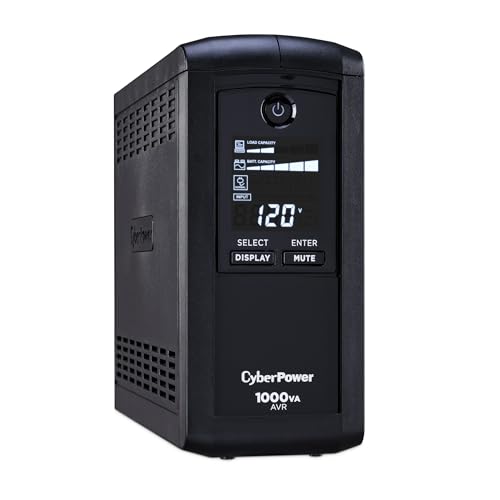
CyberPower CP1000AVRLCD LCD UPS

APC BR1500MS2 Pure Sine Wave UPS
The Picks, Examined More Closely
A small UPS handles one server, but this 12kW model addresses a different problem: keeping network equipment, workstations, and selected household circuits operating through extended outages. Its hybrid configuration combines battery support with solar charging, making it more substantial than a conventional desktop UPS.
Split-phase output separates 120V and 240V loads, which matters for homes with equipment beyond standard electronics. The scale may feel excessive for a single rack, but for a home lab or small workplace it offers room to grow.
Everyday Perks
- 12kW rated output supports several demanding devices at once.
- Dual single-phase and split-phase modes support varied household wiring.
- Solar charging can reduce dependence on grid power in suitable installations.
- Round-the-clock support adds practical help during setup or troubleshooting.
Things To Consider
- Battery capacity is not included, so runtime depends on the storage system you pair with it.
- Installation involves high-power equipment and should be handled by a qualified technician.
Quick Facts
Right Fit
You benefit most from this model when your server shares space with home-office equipment or essential 240V appliances.
A Better Fit Elsewhere
The CyberPower CP1000AVRLCD is simpler and more appropriate for a standalone server or compact network cabinet.
Unlike the WattCycle 48V 12kW Hybrid Inverter, this model stores energy rather than converting it directly into supported household output. That makes it a storage component for an existing compatible energy system, not a plug-and-play server UPS.
Its wall-mountable, 15.67-by-7.87-by-24.61-inch profile suits apartments and utility rooms where floor space is tight. The Bluetooth connection may also simplify battery monitoring, depending on the paired system and app.
Where It Excels
- 5.12kWh capacity offers more storage than a conventional desktop UPS.
- Vertical wall mounting keeps the battery out of walkways and work surfaces.
- 48V and 100Ah ratings suit larger three-phase-style home energy platforms.
- Bluetooth monitoring helps you check battery status from a compatible mobile setup.
Worth Noting
- You still need a compatible inverter, charge controller, and wiring to deliver usable power.
- Wall mounting requires sound fixing and clearances for service access and ventilation.
Feature Snapshot
Made For
This battery suits you when you operate a compatible home energy system in an apartment or space-conscious utility room.
Consider Something Else When
The APC BR1500MS2 fits a server room better because it connects directly to supported equipment without a separate battery system.
Integration is the main attraction in this package: three 48V 100Ah rack batteries accompany a 12kW hybrid inverter and 200A bypass. That arrangement reduces the number of separate components you need to plan for a home-scale system.
Compared with the single WattCycle 48V 100Ah LiFePO4, storage rises to 15.36kWh and the inverter adds surge capacity for demanding appliances. The trade-off is rack-space planning, since three batteries occupy considerably more room than one wall-mounted unit.
What Pays Off
- The included batteries provide 15.36kWh of combined storage.
- The 200A bypass accommodates larger loads without a second inverter.
- An 18,000VA surge rating supports appliances with high startup demand.
- Split-phase output serves both 120V and 240V equipment.
Potential Drawbacks
- Three rack batteries require a dedicated equipment area and careful cable routing.
- Very high-power installations need professional electrical design and setup.
Core Details
Who It Suits Best
You gain the most from this package when maintaining a home office and essential appliances during frequent, extended outages.
Where A Sibling Pick Shines
The WattCycle 48V 100Ah LiFePO4 is easier to place in an apartment where three full-size rack batteries would crowd the room.
This system targets properties with substantial solar generation rather than a single server cabinet. Its three 48V 100Ah batteries and 12kW split-phase inverter create a 15.36kWh storage platform for daily energy management and extended backup.
Compared with the WattCycle 12kW 200A Bypass System, solar capability takes center stage: dual maximum power point tracking, or MPPT, manages separate photovoltaic inputs, while charging current reaches 250A. That makes the system compelling for an owner designing around a large array.
The Case For It
- Dual MPPT inputs help manage multiple solar arrays efficiently.
- Up to 24kW of photovoltaic input supports larger renewable systems.
- The 250A charging rating suits high-output solar collection.
- Three matching batteries simplify expansion around a rack-style layout.
Small Caveats
- Solar output varies with sunlight, array orientation, and local conditions.
- The rack batteries and inverter require ventilation, secure placement, and compatible wiring.
- You may need site planning before the system suits your existing service.
Built With In Mind
This system serves you best when solar generation and long-duration storage matter as much as powering a home server.
Another Choice May Suit
The CyberPower CP1000AVRLCD is a more practical fit for one server and a few network devices in a small office.
Where the WattCycle 12kW 200A Bypass System includes storage, this model gives you the power-conversion side of a larger installation. It combines a 12kW hybrid solar inverter with a 200A bypass and 120/240V split-phase output.
A home with air conditioning, a well pump, or other high-demand appliances is the likely setting. For a server-only installation, that capacity is considerable, but the same headroom can protect a broader collection of critical equipment.
A Few Highlights
- Continuous 12,000W output supports multiple heavy loads.
- The 200A bypass simplifies transitions for supported high-current circuits.
- 18,000VA surge capacity helps during appliance startup.
- Solar charging makes it useful as part of a renewable-powered system.
Practical Considerations
- Batteries are not included, so storage cost and runtime remain separate decisions.
- Split-phase systems need careful circuit selection and professional installation.
Whose Shelf It Belongs On
This inverter fits you when your server sits within a larger home power system that also includes demanding appliances.
Reach For A Different Pick When
The APC BR1500MS2 offers a simpler path for sensitive computer equipment without household-scale wiring.
A server room does not always call for a room-sized power system. The CyberPower CP1000AVRLCD uses line-interactive UPS design, meaning it regulates small voltage swings through automatic voltage regulation before relying on its battery.
Its LCD gives you visible status information, while surge protection covers connected computer and network equipment. The simulated sine wave output is the key limitation, so sensitive or high-end components deserve closer scrutiny before connection.
Real-World Strengths
- Automatic voltage regulation handles minor fluctuations without immediate battery use.
- The LCD provides clear operating information at a glance.
- Surge protection adds a useful second line of defense for network equipment.
- Its compact form fits beneath or beside a desk more easily than a home energy system.
Trade Offs To Consider
- Simulated sine wave output may not suit every sensitive power supply.
- Battery runtime depends on the server’s load, so a high-consumption system may drain it quickly.
Technical Notes
Best Suited To
You benefit most from this unit with a standard desktop server, router, and networking equipment in a home office.
Look Elsewhere When
The APC BR1500MS2 is the better match for equipment that needs pure sine wave output.
The APC BR1500MS2 sits closer to the CyberPower CP1000AVRLCD in purpose, but pure sine wave output sets it apart. That waveform closely matches utility power, making it a more natural fit for sensitive servers, workstations, routers, and home electronics.
Its 1500VA rating and 900W maximum output provide more headroom than a small desktop UPS. You still need to match the connected load carefully, especially with power-hungry servers and multiple storage devices.
Real Benefits
- Pure sine wave output suits sensitive computer and network equipment.
- The 900W rating supports a meaningful server and peripheral load.
- Battery backup and surge protection cover two common power problems.
- Its desktop-friendly design keeps installation straightforward.
Where It May Fall Short
- It covers only part of a room during a sustained outage, not an entire home.
- Runtime varies directly with equipment load, so high-power servers shorten available time.
Technical Highlights
Who Will Love This
This model suits you when clean output and straightforward desktop protection matter more than whole-room runtime.
Skip It When
The WattCycle 48V 12kW Hybrid Inverter makes more sense for a larger home installation with high-power loads.
Matching Backup Power to Your Equipment
Calculate Runtime
Runtime depends on the total wattage of your server, router, storage, and networking equipment. Add their combined draw, then compare it with the UPS’s supported load and the battery capacity available for use. A compact UPS fits a single rack, while a 5.12kWh or larger storage system suits extended outage coverage.
Check Output Compatibility
Simulated and pure sine wave output are not interchangeable. A pure sine wave UPS is the safer fit for sensitive equipment, while a simulated waveform may work with many standard computers. Split-phase systems also require the correct voltage and wiring for your property.
Plan for Installation
Desktop UPS units usually connect near the equipment they protect. Larger systems need a suitable equipment room, ventilation, appropriate cables, and professional electrical work. Confirm the layout before choosing rack batteries, particularly in apartments or shared utility spaces.
Match Protection to the Load
A home server and network switch need much less power than air conditioning, pumps, or workshop equipment. Undersized capacity can cause early shutdowns, while excessive capacity adds cost and unused complexity. Choose the smallest system that comfortably covers your critical loads and realistic runtime.
Practical Choices for Different Power Needs
Common Shopping Slip Ups
A large capacity figure does not automatically mean your equipment will run for long. Check the UPS output rating, available battery energy, and connection requirements before buying. For a desktop setup, a standard UPS is usually easier to install than a home energy system.
What Separates Premium From Basic
Pure sine wave output, voltage regulation, and longer runtime distinguish many premium desktop models from basic units. Higher-capacity systems add larger battery banks, solar charging, split-phase output, and bypass hardware. Those additions suit bigger loads, but they also require more space and planning.
Frequently Asked Questions
Can a UPS protect a home server?
A properly sized UPS can protect a server, router, and connected storage from outages and voltage spikes. Runtime varies with equipment load and battery capacity.
How long should server backup power last?
A few minutes may cover a controlled shutdown, while hours of runtime suit remote work or essential network access. Calculate the combined equipment draw to estimate your needs.
Is pure sine wave output necessary?
It is worth considering for sensitive or high-performance electronics. Simulated sine wave output remains suitable for many standard office computers and networking devices.
Can one UPS support a whole home?
A desktop UPS protects selected equipment, not an entire home. Home-scale systems require a compatible inverter, substantial battery storage, appropriate electrical service, and careful installation.
Final Thoughts
For one server and a few network devices, the APC BR1500MS2 and CyberPower CP1000AVRLCD offer the most direct path. Larger WattCycle systems make sense when your server sits inside a broader home energy plan, with storage, solar charging, or 120/240V loads as the main priorities. Match the system to the equipment you actually need to keep online, then plan the electrical layout carefully.
