


A home power outage exposes the difference between a phone charger and a capable backup. Battery capacity, continuous output, recharge options, and safe installation determine how many essential devices remain operational. This guide covers seven portable systems for homes, apartments, RVs, and everyday emergency kits, ranging from a lightweight 288Wh model to higher-capacity units that can support refrigerators and other demanding appliances.
A Fast Comparison Of The Options

EF ECOFLOW Delta 3 1024Wh 1800W
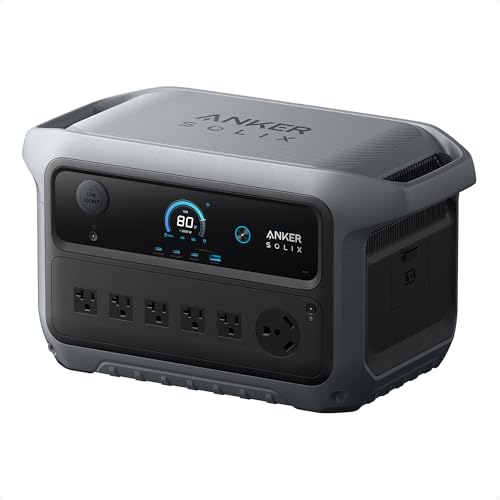
Anker SOLIX C2000 Gen 2 2,048Wh 2,400W

BLUETTI Elite 100 V2 1024Wh 1800W

BLUETTI Elite 200 V2 2,073.6Wh Solar Kit

Jackery Explorer 1000 v2 1070Wh 1500W

BLUETTI AC180 1152Wh 1800W

BLUETTI Elite 30 V2 288Wh Solar Kit
Taking A Closer Look At The Options
The Delta 3 balances 1,024Wh of usable capacity with 1,800W of continuous AC output, giving a home backup enough reach for routers, lights, televisions, and several smaller appliances. Its faster charging makes it more practical for daily readiness than a unit that stays on a shelf for weeks.
During a short neighborhood outage, you can recharge from a wall outlet or solar input and restore essential loads without waiting through an extended setup. Compared with the larger Anker SOLIX C2000 Gen 2, it takes less space, although the tradeoff is less capacity for prolonged refrigeration use.
Everyday Advantages
- The 1,024Wh battery offers practical reserve capacity for communications, lighting, and entertainment.
- An 80% charge can be reached in about 30 minutes, helping during short advance warnings.
- Solar input of up to 500W supports useful top-ups during daylight outages.
- Expansion batteries can raise capacity to 5kWh for households expecting longer interruptions.
Practical Considerations
- A refrigerator can consume most of the base capacity overnight, so expansion may be necessary.
- Keep ventilation openings clear and charge the unit periodically during extended storage.
Key Specs
Made For
This model suits apartment residents and homeowners who need a compact, frequently recharged system for essential electronics.
A Better Fit Elsewhere
The BLUETTI Elite 200 V2 offers more built-in capacity for households expecting to operate refrigerators and other larger loads.
More capacity and higher output make the C2000 Gen 2 a serious option for households that need more than communications equipment. Its 2,048Wh battery can carry a dual-door refrigerator for up to 32 hours under the stated conditions, while 2,400W of rated AC output handles demanding appliances.
That makes it closer to a partial home system than a conventional travel pack. Depending on appliance startup demands, you may still experience shorter runtime, but expansion to 4kWh gives you a practical path to longer support.
Where It Helps
- The 2,048Wh base capacity meaningfully reduces the need for continuous solar charging.
- Low 9W standby consumption helps preserve energy during extended interruptions.
- AC and solar charging can refill the battery in about 58 minutes.
- Four kilowatts of peak output gives compatible resistive loads extra startup room.
Trade Offs
- Its greater size and weight make it less convenient for casual camping than the Elite 30 V2.
- Recharge timing depends on input conditions, so the full-charge figure may not match every setup.
- Keep ports dry and the unit away from direct heat during storage.
Feature Snapshot
Who It Suits Best
Families with refrigerators, medical-adjacent electronics, or several essential household circuits benefit most from its larger reserve.
Consider Something Else When
The Jackery Explorer 1000 v2 serves travelers who value a 23.8-pound design over maximum home capacity.
Eleven ports give the Elite 100 V2 unusual flexibility for a 1,024Wh unit. That matters during an outage because your loads rarely consist of one refrigerator and nothing else; phones, lights, routers, medical equipment, and small appliances can compete for capacity.
The 1,800W rating sits alongside the EcoFlow Delta 3, but the broader port selection gives you more ways to organize the load. For weekends away or a family emergency kit, that flexibility can matter more than maximum expansion.
Well-Handled Touches
- Eleven outputs reduce the need to shuffle adapters during a multi-device outage.
- The 1,800W AC rating supports many common household essentials.
- Up to 1,000W solar input shortens the wait for meaningful daylight replenishment.
- A 70-minute AC charging target supports regular top-ups between uses.
Smaller Limitations
- Its base capacity still falls short of the Anker model for overnight refrigerator support.
- Running every port simultaneously can deplete the battery faster than casual use suggests.
- Outdoor storage deserves a dry location and periodic recharge checks.
Built With In Mind
You benefit most from this model during outages involving many low- to medium-power devices across a home, campsite, or RV.
Another Choice May Suit
The EcoFlow Delta 3 is the better fit for households planning to add substantial expansion batteries.
The Elite 200 V2 package combines 2,073.6Wh of storage with two 200W solar panels, removing the need to source charging equipment separately. Its 2,600W continuous output is aimed at refrigerators, coffee makers, hair dryers, and other household loads that exceed basic charging needs.
With both panels receiving suitable sunlight, a full recharge takes about 5.5 hours. Actual results can vary with panel placement and weather, yet the included kit remains a cleaner starting point than a bare power station for a prepared home.
What Works In Its Favor
- Two 200W panels provide a practical solar foundation for long-term home readiness.
- The 2,600W output handles high-demand household appliances beyond phone and laptop charging.
- Up to nine devices can operate at once, which suits a home with varied critical loads.
- Power lifting briefly assists compatible resistive appliances that exceed normal running output.
Where It May Fall Short
- The full kit occupies more setup space than a power station and one small panel.
- Solar charging stops or slows when cloud cover limits panel output.
- Position panels carefully and wipe dirt from their surfaces during long-term installations.
At A Glance
Made For
Homeowners with suitable solar space benefit most from the complete charging and storage package.
Where Another Pick Shines
The Anker SOLIX C2000 Gen 2 offers greater rated output and expansion capacity for indoor-heavy use.
At 23.8 pounds, the Explorer 1000 v2 is easier to move between a home garage, RV, and vehicle than the 2kWh systems in this roundup. Its 1,070Wh LiFePO4 battery, which uses lithium iron phosphate chemistry, provides a practical blend of capacity, output, and portability.
The 1,500W continuous rating can operate refrigerators, electric pots, and compatible air conditioners, while 3,000W peak output helps with startup surges. For a single household or weekend trip, the honest read is that mobility is its clearest advantage.
The Helpful Details
- The foldable handle and 23.8-pound weight support easier transport than larger home stations.
- A 100W USB-C output can charge compatible laptops directly.
- One-hour fast charging makes pre-outage preparation less disruptive.
- The 3,000W surge allowance gives compatible appliances room to start.
Details To Watch
- The 1,500W output trails the EcoFlow, BLUETTI Elite 100 V2, and Anker models.
- No solar panel is included, so off-grid recharging requires separate equipment.
- Store the unit with adequate charge and avoid damp storage areas.
The Right Fit
You gain the most from this model as a portable RV, camping, and vehicle emergency supply rather than a whole-home installation.
Reach For A Different Pick When
The BLUETTI AC180 better suits an RV dweller who wants eight outlets and app-based load control.
The AC180 centers on rapid readiness, reaching a full charge in about an hour through its 1,440W AC input. That makes it attractive for households that need a reliable top-up after each normal use rather than a unit reserved for years without inspection.
Eight outlets provide room for a mixed load, and the app can activate a 2,700W lifting mode for compatible resistive appliances. Compared with the Jackery Explorer 1000 v2, it trades portability for faster replenishment, more outlets, and greater load flexibility.
Everyday Wins
- The one-hour AC recharge supports frequent readiness checks before severe weather.
- Eight outlets simplify operation in a busy kitchen, office, or RV.
- The 1,152Wh LiFePO4 battery provides useful runtime without moving into 2kWh dimensions.
- Up to 500W solar input supports replenishment away from wall power.
- App-assisted power lifting gives supported heating loads additional startup headroom.
Possible Compromises
- Power lifting does not raise continuous output and should be used only with compatible loads.
- The solar panel is separate, increasing the parts and setup required for off-grid charging.
- Its larger footprint makes it less convenient to carry than the Jackery model.
Core Details
Who Will Love This
Busy households and RV occupants benefit from rapid charging, numerous outlets, and app-based load management.
Swap It Out When
The Elite 30 V2 is the better option for a small apartment where storage space outweighs runtime.
The Elite 30 V2 prioritizes portability over backup duration. At 9.4 pounds and 288Wh, it fits more easily into an apartment cabinet, travel bag, or vehicle emergency kit, while the included 60W panel provides a basic path to solar recharging.
You can expect useful support for phones, lights, small electronics, and limited medical-device demands rather than full-size appliances. Depending on the outage, a second unit or larger backup may be needed for continuous refrigerator operation.
The Practical Payoff
- The 9.4-pound weight makes the unit practical to carry between locations.
- A 60W solar panel is included for convenient daylight replenishment.
- Eight charging methods support flexible use across home, vehicle, and outdoor setups.
- The compact body suits apartments, dorm rooms, and travel vehicles with limited storage.
Points To Note
- The 288Wh battery is too limited for sustained operation of large household appliances.
- The panel takes about 5.5 hours to charge the unit under suitable conditions.
- Plan runtime around the smallest essential loads to preserve power for critical devices.
Who Should Grab It
You benefit most from this compact station as an apartment emergency kit or traveling supplement to other power.
Not Your Match When
The EcoFlow Delta 3 suits you better when refrigerator or multi-device runtime is the main concern.
Matching Backup Capacity To Your Outage Plan
Energy Requirements Drive Runtime
Wh, short for watt-hours, measures stored energy, while watts describe instantaneous output. A refrigerator needs enough energy for overnight operation, while a router may consume far less. Build your list from actual device labels and usage patterns rather than selecting capacity by appearance alone.
Startup Power Matters
Some appliances draw a brief surge when their compressor or heating element activates. Continuous power-lifting modes, also called lifting modes, can assist certain resistive loads, but they do not increase sustained output. Confirm wattage, startup behavior, and supported device types before relying on that feature.
Recharging Shapes Real Use
Wall charging restores capacity fastest, while solar depends on panel size and sunlight. A complete solar kit makes installation clearer, while a bare station offers more setup flexibility. Periodically recharge stored units and keep ventilation paths clear during operation.
Pick For The Load You Need
Small apartments and travel kits favor the Elite 30 V2, while frequent home use favors systems above 2kWh. The Delta 3 and Elite 100 V2 occupy the middle with different expansion and port priorities. Always organize required and optional loads, then check total draw before an outage.
Avoiding Portable Power Planning Errors
Wrong Turns To Avoid
Do not judge runtime from output alone, because a powerful unit may still have limited stored energy. Solar charging also takes longer than wall charging under many conditions. Test only devices within the unit’s output rating and keep emergency plans grounded in realistic load levels.
What Separates Premium From Basic
Higher tiers typically add capacity, stronger output, faster charging, more ports, and app controls. Those improvements help households running refrigerators or several devices, while a compact kit can serve phones and lights at much lower size. Extra capability matters only when your planned loads need it.
Frequently Asked Questions
How Much Power Does A Home Backup Need?
A backup only needs enough capacity and output for your essential loads. Calculate their combined draw, startup requirements, and expected outage duration before choosing a unit.
Can Portable Power Stations Run A Refrigerator?
Several models can run a refrigerator, but runtime depends on capacity, compressor behavior, temperature, and cycle frequency. Confirm both continuous output and starting demand.
Is Solar Recharging Practical During Outages?
Solar works well for gradual daytime replenishment with suitable panel placement. Wall charging restores capacity faster, so having both approaches offers more flexibility.
How Often Should A Backup Stay Charged?
Check it regularly and recharge it after substantial use. Periodic maintenance helps you identify charging or battery-condition issues before an emergency.
Do Expansion Batteries Increase Runtime?
Compatible expansion batteries add usable energy without replacing the base unit. The added weight, storage requirements, and charging time should factor into your decision.
Final Verdict
Your best fit depends on the loads you plan to operate and the space you can devote to the system. Compact units suit essential electronics, while 1kWh systems cover a broader household mix and 2kWh models add stronger refrigerator support. Choose the smallest system that credibly covers your outage plan, then keep it charged and ready.
