


A power outage can stop filtration, heating, lighting, or aeration at the worst possible time. Battery backup options range from compact DC units for low-voltage equipment to solar air pumps designed specifically for ponds and aquariums. Your tank size, equipment voltage, connector type, and required run time determine which system makes sense. The seven options below cover several practical setups, from a home aquarium with a small pump to an outdoor water feature that needs cordless operation. Pay close attention to power compatibility, though, because an ordinary UPS cannot safely power every aquarium device.
Your Options, Compared

Eujgoov Mini UPS 12000mAh 18W

ALFOINE 37Wh 5000mAh Mini UPS POE 24V

NFESOLAR 3W Solar Pond Aerator 2200mAh
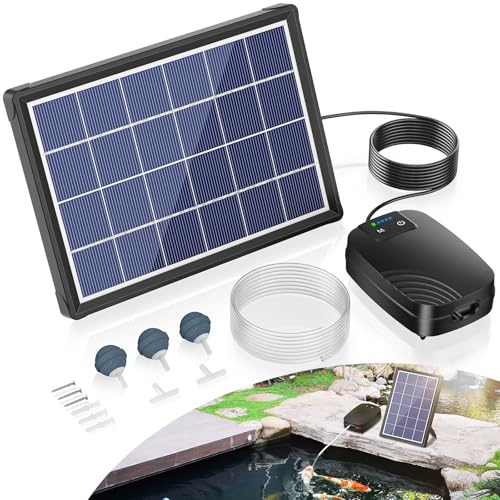
NFESOLAR 4W Solar Pond Aerator 2200mAh

CyberPower CP1500PFCRM2U Sinewave UPS

NFESOLAR 8W Solar Pond Aerator 4400mAh

Eujgoov Mini UPS 5400mAh 12V 2A
The Details Behind The Selections
A 12,000mAh battery gives this compact unit more capacity than the other Eujgoov model in the list, while its stated 18W output targets equipment that draws modest power. That profile can suit a small aquarium controller or compatible low-voltage pump, but connector and voltage matching remain essential.
The ABS enclosure measures roughly 6.2 by 5.1 by 1.3 inches, so it can sit beside a cabinet rather than dominate it. Three cables, a supply cord, and a converter head form the stated package, making the initial setup straightforward for someone maintaining a compact system.
The Helpful Details
- The 12,000mAh internal battery offers substantial reserve for compatible 12V equipment.
- An 18W ceiling makes load calculation easier before connection.
- The slim ABS body fits neatly beside network or aquarium controls.
- Three included cables support common low-voltage arrangements.
Things To Consider
- The stated seven-hour figure depends on the connected load, so it won’t apply equally to every pump.
- Aquarium equipment that draws water or sits near moisture needs careful placement and suitable connection.
Key Attributes
Built With In Mind
This model fits compact aquarium setups using compatible 12V devices with a combined draw below 18W.
A Better Fit Elsewhere
The Eujgoov Mini UPS 5400mAh 12V 2A offers a clearly defined output for smaller, simpler systems.
Where the Eujgoov units emphasize 12V capacity, the ALFOINE model broadens the conversation to router, modem, camera, and security-system support. DC input and listed 24V or 48V PoE output give it a useful role beside smart aquarium controllers, though PoE voltage selection must match the connected equipment.
Its internal 5,000mAh lithium-ion battery is rated at 37Wh. For a home setup, the practical benefit is keeping network-linked tank controls operating during an outage, not supplying power to a large filtration system.
Points In Its Favor
- Supports several low-voltage device categories around a connected aquarium.
- The 37Wh battery provides a clearer energy estimate than amp-hour capacity alone.
- Listed protection features cover common electrical fluctuations and charging conditions.
- Its compact DC-to-DC format avoids a bulky household UPS.
Worth Noting
- PoE output is useful only when its voltage and connector arrangement suit your equipment.
- Owners should secure the unit away from splash-prone areas and inspect cable connections periodically.
- Run time falls as connected equipment draws more power.
Feature Facts
Made For
This model suits aquarium owners whose filtration or lighting controls depend on compatible 24V or 48V devices.
Consider Something Else When
The NFESOLAR 4W Solar Pond Aerator 2200mAh serves aquariums needing direct air pumping rather than controller backup.
Moving from electrical UPS units to water equipment changes the decision entirely. This solar aerator uses a 3W panel and a built-in 2,200mAh battery, making it suitable for small ponds, aquariums, and hydroponic setups where a nearby outlet is inconvenient.
Three operating modes let you adjust the air pattern, while quiet operation suits a bedroom tank or peaceful patio water feature. Compared with the 4W model, this version makes more sense for compact water volumes and lighter circulation needs.
Real-World Strengths
- Solar charging removes the need to run a cable to a nearby outlet.
- The battery carries daytime energy into nighttime operation.
- Three modes offer control over bubbling and circulation patterns.
- Portable placement works for small indoor tanks or compact outdoor ponds.
Minor Gripes
- Cloudy periods and heavy shade reduce charging, so panel placement matters.
- The small air output may not suit a large, heavily stocked pond.
- Routine cleaning of the air stone and pump intake is necessary to prevent reduced flow.
Who It Suits Best
This aerator fits compact aquarium owners seeking solar circulation with simple mode-based control.
Look Elsewhere When
The NFESOLAR 8W Solar Pond Aerator 4400mAh offers more capacity for larger water features.
The 4W version steps up solar output from the preceding NFESOLAR model without changing its 2,200mAh battery class. That balance makes it a sensible middle ground for small ponds and fish tanks needing slightly more daytime energy than the 3W unit provides.
You still get three modes and battery-backed nighttime operation, so an outdoor setup can continue circulating without a mains cable. The trade-off is unchanged battery storage, meaning extended cloudy weather still places more reliance on available sunlight.
What Earns Its Place
- The higher 4W solar input improves energy collection over the 3W version.
- A quiet pump suits ponds near living spaces.
- Three modes let you tune bubbling for different tank sizes.
- Portable solar power avoids outlet placement around garden ponds.
Trade Offs
- Its storage capacity remains below the 4,400mAh NFESOLAR model.
- Deep shade reduces charging, making this less predictable in heavily covered locations.
- Regular cleaning helps maintain airflow through submerged components.
Quick Facts
Right Fit For
This model suits owners of small outdoor ponds or aquariums with moderate sunlight exposure.
Where A Sibling Pick Shines
The NFESOLAR 3W Solar Pond Aerator 2200mAh is easier to consider for a very small indoor tank.
Rack-style backup power takes a different approach from mini DC units. The CP1500PFCRM2U provides sinewave output, meaning AC power follows a waveform closer to utility power, which can suit sensitive electronics with active power factor correction.
Automatic Voltage Regulation corrects minor input fluctuations without immediately transferring to battery. Its support for networking, security, and audiovisual equipment makes it relevant around a central aquarium control system, provided every load is designed for the supported input and output arrangement.
A Strong Showing
- Sinewave output suits active power factor correction equipment.
- Voltage regulation helps reduce battery use during minor fluctuations.
- Rackmount construction fits equipment cabinets and control areas.
- Filtering supports a stable supply for sensitive electronics.
Practical Considerations
- This unit is not a direct substitute for a DC aquarium backup.
- Rack installation and ventilation require more planning than a compact mini UPS.
- Connected loads must fall within its electrical limits.
Technical Reference
Built For
This model fits aquarium installations with a rack cabinet of compatible, power-sensitive electronics.
Another Choice May Suit
The ALFOINE 37Wh 5000mAh Mini UPS POE 24V fits compact DC-controlled systems better.
This is the most substantial solar option in the group, combining an 8W panel with a 4,400mAh battery. Compared with both 2,200mAh NFESOLAR aerators, it offers stronger daytime collection and twice the stated storage capacity, a useful step for larger ponds or extended cloudy periods.
Three modes preserve the same simple adjustment found on the smaller models, and portable placement keeps cords away from outdoor water. It remains a small-water feature rather than a full filtration system, so circulation needs should stay proportionate.
Positive Takeaways
- Double the battery capacity supports more stored solar energy.
- The 8W panel replenishes power more strongly than lower-wattage models.
- Three modes accommodate different circulation needs.
- Quiet operation suits residential ponds near occupied rooms.
A Few Limitations
- Long-term cloudy conditions still reduce available stored power.
- Solar placement requires several hours of unobstructed light for reliable charging.
- Cleaning submerged pump parts remains part of routine ownership.
Who Will Love This
Homeowners with a modest outdoor pond or larger aquarium gain the most from the added solar capacity.
Reach For A Different Pick When
The NFESOLAR 4W Solar Pond Aerator 2200mAh is a lighter setup for a small water garden.
The second Eujgoov unit offers a clearly defined alternative to the 18W model: 12V output at up to 2A through a 5.5 x 2.1mm DC connection. That makes connector checking straightforward for compatible routers, cameras, and other low-voltage devices placed around an aquarium.
Its flame-retardant PC housing houses a rechargeable 5,400mAh lithium battery. Compared with the larger Eujgoov, it carries less energy and appears suited to a simpler control setup rather than higher-draw equipment.
Useful Highlights
- The stated 12V, 2A output gives you a concrete load ceiling.
- A built-in battery keeps the installation compact.
- The DC connector suits many standard low-voltage devices.
- The US plug simplifies household recharging arrangements.
Things To Weigh Up
- A different barrel size can prevent the connection from fitting.
- Owners should check device startup demand as well as normal operating draw.
- Place the dry power unit away from splashes and humid aquarium surfaces.
Feature Facts
Best Suited To
This model serves aquarium owners with one or more compatible 12V devices drawing no more than 2A.
Swap It Out When
The Eujgoov Mini UPS 12000mAh 18W is the better fit for a higher-capacity compatible system.
Matching Backup Power to Your Tank
Start with the equipment, not the battery. Write down each device’s input voltage, current draw, connector size, and startup requirement. A backup only works when its output matches those details, while multiple connected loads can exceed its rated capacity.
For a solar aerator, tank volume and sunlight matter more. Larger outdoor ponds generally benefit from the NFESOLAR 8W Solar Pond Aerator 4400mAh, while compact tanks may need less. Indoor systems receiving direct light also need enough daytime charging, and cloudy conditions should be treated as a practical limitation.
DC Units Versus AC Systems
A DC mini UPS sits neatly beside low-voltage aquarium controllers, cameras, and routers. An AC rackmount unit serves a different category of equipment and requires compatible outlets, ventilation, and rack space. Don’t bridge that gap simply by matching connector shapes.
Battery Capacity Alone Isn’t Enough
Capacity tells you stored energy, but output power determines what can run at one time. Two pumps sharing a circuit may overwhelm a unit that handles either pump separately. Check startup behavior, which can exceed the normal running draw of a pump or other motor-driven device.
Solar Placement and Maintenance
Place solar panels where they receive strong, unobstructed light. Shading from trees, walls, and aquarium canopies can reduce charging even when the panel looks well positioned. Clean the air stone and intake as part of routine maintenance so buildup doesn’t restrict airflow.
Practical Choices for Reliable Water Care
Common Shopping Slip Ups
The most consequential error is matching only the connector size. Voltage, current, and power requirements still need to align, and moisture calls for careful placement of every electrical component. Avoid assuming a backup can run every device connected to a tank.
What The Higher Tier Buys
Larger solar models generally add panel output, battery storage, or both. That extra capacity helps with larger water volumes or extended periods with limited sunlight, but it adds little value to a small aquarium already receiving regular direct sun.
Frequently Asked Questions
Can a UPS power a fish tank filter?
Only with matching voltage and sufficient output power. High-draw circulation equipment may require a dedicated system rather than a compact mini UPS.
Are solar pond aerators suitable for indoor tanks?
Yes, when the panel receives sufficient light. An aquarium placed away from a window may need supplemental charging or continuous panel placement near the tank.
How long does a mini UPS run?
Run time depends on battery capacity and connected power draw. A higher-draw pump shortens the available runtime, so calculate the load before choosing a unit.
Can one backup support several aquarium devices?
Potentially, provided their combined power remains within the output limit and the connection method matches. Account for startup surges from pumps and other motor-driven equipment.
Do solar aerators need an outlet?
No external outlet is required for normal solar operation. They still need adequate sunlight for charging, and shaded locations can reduce performance substantially.
Final Verdict
Choose the backup that matches your actual equipment rather than relying on battery capacity alone. Solar aerators suit tanks needing direct air circulation, while DC and AC UPS units protect compatible controllers and low-voltage systems. Confirm voltage, connector size, power draw, and placement before installation.
