


An outage in an apartment rarely starts with dramatic warning signs. The lights simply stop, your router goes quiet, and phones become valuable for checking the time, so a battery backup needs to match your routine rather than your wish list. Portable solar stations suit renters who need power at several outlets or outdoors, while lithium UPS units provide a cleaner fit for computers and home-office equipment. Consider runtime, output, recharge options, and the amount of space you can realistically reserve before choosing.
The Shortlist At A Glance

ZeroKor 300W Solar Generator with 60W Foldable Panel for RV Camping
ZeroKor 120W Solar Power Station with 30W Panel and Car Charging

Jackery Explorer 1000 v2 Power Station, 1070Wh, 1500W, LiFePO4

EF ECOFLOW Delta 3 Solar Generator with 220W Bifacial Panel

GOLDENMATE 1500VA/1000W Lithium UPS, White

GOLDENMATE 1000VA/800W Lithium UPS, White

ZeroKor 300W Solar Generator with 60W Panel and USB-C for RV Backup
A Deeper Look At The Lineup
For a studio or small apartment, this bundle puts a 280Wh battery, 300W inverter, and foldable 60W panel into one reasonably focused package. Pure sine-wave AC output makes it more practical for sensitive electronics than a basic emergency inverter, although capacity remains the deciding factor.
You can keep a router, phone, tablet, and other small devices running while camping or traveling. Compared with the Jackery Explorer 1000 v2, it takes less storage space but supports much less equipment, so your real-world fit depends on whether convenience or capacity matters more.
The Good Stuff
- Two pure sine-wave AC outlets support ordinary household adapters without the noise associated with modified sine-wave output.
- The included 60W folding panel reduces the need to purchase a separate charger for apartment or campsite use.
- USB, USB-C, and DC connections cover phones, tablets, laptops, and lower-voltage electronics.
- A reading light and SOS flashlight add practical value during a nighttime outage.
Small Caveats
- The 300W ceiling makes larger kitchen appliances a poor match despite the battery’s portable format.
- Plan periodic charging during long storage, preferably at 60% to 80%, to help preserve usable capacity.
Core Details
Made For
This model suits apartment residents who want portable power for a router, mobile devices, and modest electronics during short outages.
A Better Fit Elsewhere
Choose the EF ECOFLOW Delta 3 with 220W Bifacial Panel instead when your apartment needs higher output and faster replenishment.
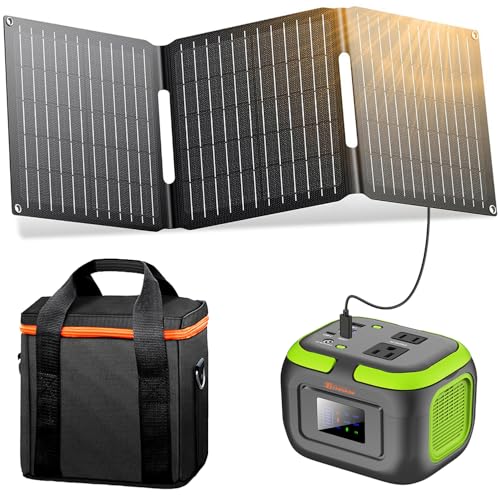
Space matters in many apartments, and the 120W rating keeps this ZeroKor focused on portable electronics rather than household equipment. The included 30W folding panel, carrying bag, and three charging paths make it particularly convenient for a commute, weekend cabin, or emergency kit.
Its two AC outlets should be treated as available capacity, not 240W of independent power. The shared limit means you may find yourself choosing between a laptop and several smaller devices, although USB-C charging adds welcome flexibility.
Positive Points
- Wall, solar, and car charging make it adaptable to home, road, and campsite routines.
- A USB-C port supports compatible phones, tablets, and other modern devices without an additional adapter.
- The carrying bag simplifies storage compared with a larger power station.
- Three flashlight modes help illuminate a dark room or campsite.
Trade Offs
- Its 120W combined ceiling offers little margin for devices with high startup or sustained demand.
- The 30W panel replenishes energy slowly, so top-ups during cloudy stretches may be limited.
- The DC socket uses a specific 2.1mm barrel connector, which may require the correct cable.
Quick Facts
Who It Suits Best
It fits apartment residents who mainly need phone, tablet, laptop, and light-device support with minimal storage.
Consider Something Else When
The ZeroKor 300W Solar Generator with 60W Foldable Panel for RV Camping is the stronger choice for higher-powered small appliances.
Apartment outages become more manageable when you can run several devices rather than switch between them. The Explorer 1000 v2 combines 1,070Wh of storage with 1,500W continuous output and a 3,000W surge peak, giving it more headroom for refrigerators, kettles, and computer equipment.
At 23.8 pounds, it is portable enough for an apartment closet or vehicle, but the optional solar panel means the initial bundle may be less self-contained than either ZeroKor package. The one-hour charging claim also makes it attractive between outages, provided your wall connection supports that input.
The Practical Payoff
- Higher continuous and surge output handles a broader mix of home-office and kitchen equipment.
- LiFePO4 chemistry suits frequent charging cycles compared with conventional lead-acid designs.
- 100W USB-C output can charge compatible laptops directly through one port.
- The foldable handle and 23.8-pound weight support movement between rooms or vehicles.
- A solar generator for an apartment can be assembled around this unit without the included panel adding initial bulk.
Points To Keep In Mind
- It occupies more storage space and weighs substantially more than the 120W ZeroKor station.
- Runtime varies with each appliance, so the 1,070Wh capacity does not promise equal runtimes across different loads.
Right Fit For
This station suits households wanting portable outage power for a computer setup plus selected kitchen appliances.
Reach For A Different Pick When
A GOLDENMATE 1500VA/1000W Lithium UPS, White is more appropriate for a stationary computer setup where outlet protection matters most.
The Delta 3 answers a different question from the smaller ZeroKor bundles: how quickly can an apartment battery become useful again? Its 1,024Wh capacity and 1,800W output bridge the gap between the Jackery Explorer 1000 v2 and larger systems, while the included bifacial panel captures light from two sides.
Up to 1,500W of AC charging input supports a stated 56-minute full charge, and one included 220W panel takes about 5.8 hours. That makes this a more active power system, but the bundled equipment also demands a permanent storage place and regular maintenance.
What It Does Well
- High wall-input power shortens the recovery period after normal use.
- The included bifacial panel offers more charging flexibility than a single-sided 60W panel.
- Expansion capacity can grow to 5kWh for households expecting a sustained increase in demand.
- 1,800W output comfortably covers a router, computer, lighting, and selected appliances in sequence.
Practical Considerations
- The larger system and folding panel need more storage than a compact 120W station.
- Solar charging remains much slower than maximum AC charging, especially during limited daylight.
Technical Highlights
Built With In Mind
It targets apartment residents who expect frequent device use and want faster recovery from wall or solar charging.
Another Choice May Suit
The Jackery Explorer 1000 v2 offers a similar portable concept with lower continuous output and a more compact selection of listed features.
A UPS, or uninterruptible power supply, transitions connected equipment to battery power after an outlet interruption. That makes the GOLDENMATE 1500VA/1000W Lithium UPS a natural fit beside a home-office desk, where preserving a computer setup matters more than powering an entire apartment.
Compared with the 800W model in this lineup, the 1,000W rating gives desktop computers, monitors, networking equipment, and peripherals more aggregate headroom. In a compact apartment, that added capacity can be more useful than portability, provided the unit remains near the equipment it protects.
Standout Benefits
- A 1,000W maximum accommodates a broader desktop setup than the 800W alternative.
- LiFePO4 chemistry supports long service life and more than 3,000 charge cycles.
- Surge protection adds a second line of defense for sensitive electronics.
- White housing blends more naturally into a home office than a visually industrial power station.
Details To Watch
- VA measures apparent power, while watts reflect real output, so your device total must stay within the 1,000W limit.
- Keep ventilation space around the unit and retain access to its controls and outlets.
- It is intended for installed electronics rather than portable solar charging.
Feature Snapshot
Whose Shelf It Belongs On
This model fits remote workers and gamers with several connected devices sharing one home-office circuit.
Where A Sibling Pick Shines
The GOLDENMATE 1000VA/800W Lithium UPS, White is the simpler option for a smaller desk and a tighter load budget.
For a compact study area, the 800W ceiling can be more realistic than chasing capacity you rarely use. This GOLDENMATE model covers a primary computer, monitor, router, and modest peripherals while preserving essential operation during a short power interruption.
The stationary UPS format contrasts sharply with the Jackery Explorer 1000 v2: you trade wheels, folding handles, and solar flexibility for a cleaner setup beside a desk. It also makes sense for residents whose outage priorities are work and connectivity rather than cooking.
Features That Help
- The 800W limit is approachable for a computer, monitor, router, and selected accessories.
- More than 5,000 stated charge cycles suit regular use and repeated battery cycling.
- LiFePO4 chemistry avoids the lead-acid composition associated with heavier traditional UPS batteries.
Some Limits To Know
- A gaming desktop, large monitor, printer, and charging devices could exceed the combined 800W rating.
- Do not interpret 1000VA as 1,000W of usable real-world power.
- Position the unit near the wall outlet and connected equipment for a tidy installation.
- Battery backup is not designed to replace an apartment’s full electrical service.
The Right Fit
It suits students and remote workers running a modest computer setup from a small apartment or home office.
Look Elsewhere When
The GOLDENMATE 1500VA/1000W Lithium UPS, White serves people with a broader desktop load and greater wattage needs.
This ZeroKor package lands between the smaller 120W model and the higher-output Jackery and EcoFlow options. A 300W ceiling, folding 60W solar panel, carrying bag, and broad port selection make it a balanced setup for apartments that also serve as bases for weekend travel.
You can recharge through an AC outlet, 12V vehicle socket, or compatible 13V to 23V solar input. The panel uses monocrystalline cells rated at 20.5% conversion efficiency, although real charging time still depends heavily on sunlight, panel angle, and the station’s remaining charge.
Practical Advantages
- Two 110V pure sine-wave outlets support compatible household and office equipment.
- Wall, vehicle, and solar inputs provide more replenishment routes than most compact alternatives.
- USB-C, USB-A, and DC connections support a varied mix of personal electronics.
- The MPPT, or maximum power point tracker, helps manage compatible solar-panel input.
- A reading mode and SOS mode add utility during travel or nighttime outages.
Potential Compromises
- It is less powerful than the Jackery and EcoFlow stations, with a tighter appliance ceiling.
- The 60W panel provides gradual top-ups rather than rapid solar recovery.
- The battery management system helps guard against electrical faults, but periodic charging remains important.
Quick Technical Notes
Built For
This bundle suits apartment residents who need moderate portable power for travel, camping, and everyday electronics.
Swap It Out When
Move to the Jackery Explorer 1000 v2 when your load list includes larger kitchen appliances or sustained high output.
What Matters Before You Reserve Backup Power
Start with your outage load list. A router, laptop, monitor, and lights require far less capacity than a refrigerator, electric kettle, or washing machine. Write down each device’s wattage, then add a margin for startup surges and future electronics. Continuous output matters more than a large headline number when several appliances may run together.
UPS Or Portable Power Station?
A UPS is designed around installed electronics and automatic battery transfer. The GOLDENMATE models suit a desk, monitor, and network connection, while portable stations offer AC outlets, flexible placement, and some level of solar recharging. Your location and mobility determine which architecture fits your apartment.
Capacity Is Not Output
Wh, or watt-hours, measures stored energy, while watts measure instantaneous output. You may have a large battery that still cannot start a demanding appliance, or a modest battery capable of running several low-draw devices for hours. Check both values and avoid calculating runtime from wattage alone.
Recharging And Storage
Solar panels are useful supplements, not instant replacements for wall charging. Fold and store panels dry, keep ventilation open around portable stations, and periodically recharge stationary lithium batteries according to their guidance. Leave enough room to access outlets, switches, and ventilation openings.
Practical Mistakes To Avoid
Where Shoppers Go Wrong
Choosing by capacity while ignoring output can leave you with a station that cannot run your chosen appliance. Avoid using generic “generator” capacity as a promise of whole-apartment support, and do not ignore surge requirements. Confirm connector types, supported charging voltages, and the space needed for panel storage.
What Separates Larger Models
Higher-output stations add faster wall charging, more usable AC capacity, stronger port selection, and faster solar input. Those traits help households managing several devices or larger appliances, but smaller apartments gain more from a unit they can charge regularly and store without crowding the living space.
Frequently Asked Questions
Do battery backups run an entire apartment?
Not usually. They support selected equipment based on battery capacity, output limits, and device demand. A UPS protects computers, while a portable station can power smaller appliances and electronics.
Which type is quietest during use?
A stationary UPS often makes less noise because it does not need a gasoline engine. Portable stations can also operate silently, although internal cooling fans may become audible under heavier loads.
Can solar replace wall charging?
Solar can maintain or replenish a portable station, but a small panel charges much more slowly. Wall charging remains the practical method for preparing before a short daytime outage.
How much runtime does a laptop need?
Runtime depends on the battery’s watt-hour capacity, laptop consumption, and power losses. A higher-capacity station generally provides more operating time, while the UPS models are more appropriate for keeping equipment powered through brief interruptions.
Should a UPS stay switched on?
Continuous operation supports automatic outage protection and regular battery conditioning. Follow the setup guidance, retain ventilation, and keep the unit near the wall outlet and protected equipment.
Final Verdict
Your best fit depends on the equipment you actually use. Compact ZeroKor stations serve travel and electronics, the Jackery and EcoFlow systems cover broader loads, and the GOLDENMATE UPS models concentrate on computers and home offices. Match the load first, then choose the smallest system that gives you comfortable headroom.
