


A battery backup gives computers, network gear, and entertainment equipment time to shut down cleanly during outages or voltage fluctuations. The right capacity depends on your connected devices, desired runtime, outlet count, and whether sensitive electronics need pure sine wave output. This lineup covers compact home-office setups, high-end electronics, replacement needs, and larger systems requiring more headroom.
The Lineup, Simplified

APC UPS 850VA/450W Battery Backup & Surge Protector

APC RBC35 Replacement Battery for BE350G, BE350C
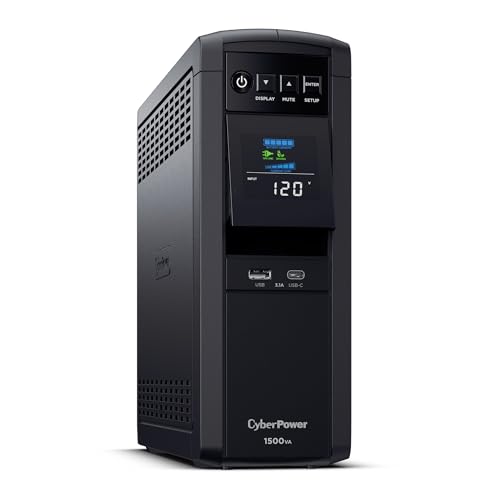
CyberPower CP1500PFCLCD PFC Sinewave UPS

APC Back-UPS Pro BR1000G 1000VA Tower

GOLDENMATE 1000VA/800W Lithium UPS, Gray

GOLDENMATE 1500VA/1000W Lithium UPS, White

GOLDENMATE 1000VA/800W Lithium UPS, White
Why These Options Stand Out
A home office rarely contains one device at a time. A router, monitor, laptop charger, and external storage can share the APC BE850G2 without demanding its entire 450W rating.
For a desk near a frequently interrupted power line, the five battery-supported outlets are more useful than a higher VA number alone. Compared with the larger APC BR1000G, this model favors a smaller footprint and lighter load profile.
Real Benefits
- Seven outlets reduce the need for an oversized power strip.
- 450W handles a desktop, router, NAS, and monitor when high-draw accessories stay off.
- Surge coverage complements the battery function during normal line fluctuations.
- The compact format suits a crowded desk or network cabinet.
Things To Consider
- Runtime falls sharply when a power-hungry desktop drives the unit toward capacity.
- Owners should keep vents clear and use a grounded outlet.
Quick Facts
Made For
This model suits home offices combining a router or NAS with a modest computer setup.
Another Choice May Suit
The APC Back-UPS Pro BR1000G offers more capacity for power-hungry desktops and multiple external drives.
The APC RBC35 is a replacement cartridge, not another complete UPS. It restores backup capability for the specifically listed BE350G and BE350C models, making it a practical ownership purchase rather than an upgrade.
A dated battery can shorten runtime even while the surrounding unit appears normal. Confirming the printed model label before ordering prevents the most common installation problem, while periodic runtime checks help reveal a cartridge that needs attention.
Real-World Strengths
- Model-specific compatibility supports a more predictable installation.
- Using the intended cartridge helps preserve expected UPS operation.
- Replacing the battery extends the useful life of an existing APC system.
Points To Keep In Mind
- This cartridge does not fit the other APC models in the lineup.
- UPS owners commonly find periodic self-tests and runtime checks useful after replacement.
- Proper disposal matters because batteries require separate handling.
Right Fit For
This cartridge is suited to owners of a BE350G or BE350C who need its existing battery replaced.
Reach For A Different Pick When
The GOLDENMATE 1000VA/800W Lithium UPS is the better choice for a new installation rather than a battery-only repair.
Pure sine wave output closely resembles utility power, making the CP1500PFCLCD a sensible fit for sensitive or power-sensitive systems. Its color LCD turns operating information into a glanceable panel rather than a collection of blinking indicators.
The PFC label matters for compatible active power-factor-correction equipment, including many modern desktop systems. Compared with APC’s more conventional approach here, CyberPower prioritizes clean output and detailed status visibility.
The Value In It
- Pure sine wave output supports compatible sensitive electronics.
- The LCD helps check load, battery state, and operating conditions.
- 1500VA capacity offers comfortable headroom for a workstation and network equipment.
- The mini-tower format remains practical beneath or beside a desk.
Trade Offs
- The feature set may be unnecessary for a basic router and monitor setup.
- Clearance around the tower and its cooling vents improves everyday reliability.
Feature Snapshot
Built With In Mind
This CyberPower model suits workstation owners using compatible active PFC equipment that benefits from clean output.
Look Elsewhere When
The APC UPS 850VA/450W model is simpler and more compact for a light network-focused load.
The BR1000G balances eight outlets, moderate battery capacity, and automatic voltage regulation for a conventional office. Automatic voltage regulation, or AVR, corrects elevated or reduced input voltage without switching to battery power, conserving the reserve during common line conditions.
That makes it useful with a router, desktop, and external hard drives in a home office. The APC BE850G2 is easier for lighter loads, while this tower offers more capacity for equipment that draws variable power.
What Works In Its Favor
- 600W output accommodates a broader desktop load than the APC BE850G2.
- Eight outlets support computers, drives, routers, and related accessories.
- AVR helps preserve battery runtime during minor voltage changes.
- Four battery-backed outlets protect essential network equipment.
Minor Gripes
- The tower takes more room than most compact desktop models.
- Connected equipment still needs to remain below the 600W limit.
Key Specs
Who It Suits Best
This tower fits home offices running a desktop, network equipment, and several storage devices.
A Better Fit Elsewhere
The GOLDENMATE 1500VA/1000W Lithium UPS offers greater output for a substantially heavier setup.
Lithium battery chemistry makes this GOLDENMATE a natural fit for owners who want longer service intervals between battery replacements. Eight backed outlets also remove much of the outlet rationing associated with smaller office units.
The built-in battery management system monitors charging and operating conditions, while PP45 terminals add connection options. For a busy home office, you’ll still need to account for cooling-fan sound and keep the vents open.
What Makes Sense
- Lithium chemistry supports long replacement intervals.
- Eight battery-backed outlets suit several low- and moderate-power devices.
- The 800W rating gives compact systems more headroom than the APC BE850G2.
- A battery management system supports controlled charging.
Practical Considerations
- Eight backed outlets can encourage a heavier load than you initially expect.
- The cooling system needs unobstructed space for practical maintenance.
Essential Details
The Right Fit
This unit suits mixed home offices that value lithium chemistry and plentiful outlets.
Where A Sibling Pick Shines
The white GOLDENMATE 1000VA/800W model offers the same nominal capacity in a different finish.
The 1500VA/1000W rating gives this GOLDENMATE room for a more demanding workstation or several networked devices. Compared with the gray 1000VA model, the higher ceiling may support longer runtime when the load remains reasonable.
Lithium iron phosphate, commonly shortened to LiFePO4, distinguishes this line from conventional lead-acid systems. That chemistry carries a strong longevity case, but the white housing may not suit a dark utility room or rack with a white equipment theme.
Useful Touches
- 1000W output supports a wider mix of desktop equipment.
- 1500VA capacity can provide useful reserve for multiple devices.
- LiFePO4 chemistry supports a long service life.
- The stated cycle life exceeds 3,000 cycles.
Worth Noting
- A higher capacity does not guarantee long runtime for power-hungry equipment.
- Heavy loads increase heat, so unobstructed cooling remains important.
Who Will Love This
This model suits owners of larger desktops, multiple peripherals, and extensive network equipment.
Skip It When
The APC UPS 850VA/450W is more restrained when your connected equipment stays light.
The white GOLDENMATE fits visually into a bright office, apartment, or media cabinet where a black tower would stand out. Its 1000VA/800W capacity also provides a practical middle ground for computers, displays, routers, and entertainment equipment.
Source information highlights more than 5,000 charge cycles and over 10 years of stated battery life. Actual service depends on temperature, discharge depth, and maintenance, so periodic checks still matter even with lithium chemistry.
What It Does Well
- The white finish suits bright rooms and coordinated shelving.
- 800W handles more than a basic network-only load.
- LiFePO4 chemistry resists frequent cycling compared with lead-acid designs.
- The stated battery life suits long-term ownership planning.
Details To Watch
- Battery longevity varies with operating temperature and usage.
- Capacity alone does not reveal how long a particular load will run.
- Owners should keep cooling paths clear in enclosed cabinets.
- The exact output and connection details should be checked against your equipment.
Made For
This model suits apartment residents wanting moderate backup capacity and a lighter-colored enclosure.
Consider Something Else When
The CyberPower CP1500PFCLCD is the stronger fit for compatible equipment that needs pure sine wave output.
What Matters Before You Choose
Capacity starts with your connected load
Add the power requirements of your computer, monitor, router, storage, and entertainment equipment, then leave reasonable headroom. VA measures apparent power while watts measure the real load, so neither figure should be examined in isolation.
Output type affects equipment compatibility
Sine wave output resembles normal utility power and is useful for sensitive systems. Modified sine wave output costs less but may cause problems with some motors, clocks, or active PFC electronics.
Outlets and installation shape daily use
Count the plugs you need before choosing the enclosure. Battery-backed outlets are more useful than surge-only outlets, while cable management and vertical space matter in a crowded cabinet.
Runtime is different from capacity
A larger UPS can support more equipment, yet runtime depends on load and battery condition. Schedule occasional checks by disconnecting nonessential devices and confirming the connected system shuts down as expected.
Common Errors To Avoid
Mistakes Worth Dodging
Sizing from outlet count alone can lead to an overloaded UPS. Add up your connected equipment’s power draw and verify compatibility with active PFC equipment before installation.
When Paying More Pays Off
Higher-tier units can offer more capacity, cleaner output, lithium chemistry, and clearer controls. Those additions matter most for sensitive electronics, heavier workstations, or owners planning to keep the system for many years.
Frequently Asked Questions
How long should a UPS battery last?
Runtime depends on capacity, equipment load, battery age, and operating conditions. A lightly loaded system generally runs longer than one drawing close to the UPS rating.
Is 1000VA enough for a computer?
A 1000VA unit can support many computers and peripherals within its watt limit. Gaming systems, large monitors, and power-hungry drives require closer capacity planning.
What does pure sine wave output provide?
Pure sine wave output closely resembles normal utility power. It can suit sensitive or active PFC equipment that may not operate as smoothly with modified sine wave output.
Can you replace a UPS battery yourself?
Many units use user-replaceable cartridges, but you should confirm the model and follow its safety instructions. Units requiring internal service benefit from qualified assistance.
Should networking equipment stay connected during outages?
A UPS can preserve a router or network switch long enough for a controlled shutdown or temporary connection. Its useful runtime depends on the chosen capacity and the number of connected devices.
Final Verdict
Choose based on load, runtime, and power compatibility rather than VA alone. Compact APC models suit lighter offices, CyberPower targets sensitive equipment, and the GOLDENMATE options add lithium-focused capacity for more demanding setups. Confirm the model, measure your load, and allow time for regular runtime checks.
