


Outages expose the difference between a few emergency lights and a backup system that can keep essentials running. The right capacity, output, and transfer behavior depend on whether you need to protect a home office, refrigerator, medical equipment, or an entire household. These options span portable power stations, installed battery systems, a dual-fuel generator, and a compact UPS for sensitive electronics.



The Shortlist At A Glance
Anker SOLIX C1000 Gen 2 1,024Wh Power Station

Anker SOLIX C1000 Gen 2 with PS400 Panel
ECO-WORTHY Liber 10KP 10KW Home Backup System

Westinghouse iGen5000DF Dual Fuel Generator
CyberPower CP1500PFCLCD PFC Sinewave UPS
ECO-WORTHY Cubix100 V3 Home Backup System
ECO-WORTHY 5,120Wh Home Backup Power System
The Details Behind The Selections
The Anker SOLIX C1000 Gen 2 balances portability with enough output for essential household equipment. Its 1,024Wh lithium iron phosphate battery, 2,000W continuous output, and 3,000W peak rating suit weekend camping, remote work, or limited outage coverage without requiring a permanently installed system.
Ten output ports add useful flexibility, while 1,600W input charging enables a stated 49-minute recharge. Compared with the larger ECO-WORTHY systems later in the list, it trades whole-home capacity for a much easier storage and deployment story.
Bright Spots
- The 2,000W output can cover several essential loads during a moderate outage.
- Lithium iron phosphate chemistry suits frequent cycling and long-term household use.
- Ten ports reduce the need to cycle adapters or disconnect devices.
- Fast charging helps restore readiness between uses.
Practical Considerations
- 1,024Wh capacity falls well short of running a full household indefinitely.
- Owners still need a dry storage location and a clear plan for keeping the battery charged.
- UPS function depends on transfer time and equipment compatibility, so essential-computer pairing deserves careful setup.
Feature Snapshot
Who It Suits Best
Renters, campers, and homeowners seeking portable outage coverage without a complex installation benefit most.
Another Choice May Suit
The ECO-WORTHY Liber 10KP offers much greater capacity for households that need sustained power for essential appliances.
Pairing the SOLIX C1000 Gen 2 with a 400W panel makes this bundle more self-sufficient away from wall outlets. The same 1,024Wh capacity and 2,000W output support phones, lights, laptops, and selected small appliances, while the panel offers a renewable path to replenishing the battery.
The panel and station arrive separately, which means packaging clearance and tracking deserve attention. For campers or homeowners preparing for outages, that separation is minor; for someone expecting an immediate all-in-one setup, it adds a step.
Noteworthy Benefits
- Including a panel reduces the need for separate renewable-charging equipment.
- The same ten-port station handles several devices across work and leisure use.
- Fast wall charging remains available through the stated 1,600W input.
- Solar input makes the station practical for campsites and remote workspaces.
Things To Weigh
- A 400W panel replenishes energy more slowly than direct wall charging, with output varying with sunlight and positioning.
- The separate shipment may create an awkward gap between delivery dates.
- Panel placement requires access to unobstructed sunlight and suitable cable routing.
Made For
Campers, van travelers, and off-grid hobbyists who want one portable power system with solar charging included.
A Better Fit Elsewhere
The standard Anker SOLIX C1000 Gen 2 is more convenient for households already equipped with suitable charging panels.
The ECO-WORTHY Liber 10KP moves beyond portable weekend power into installed household backup. Its 10,240Wh battery capacity and 10,000W inverter output provide meaningful headroom for refrigerators, networking equipment, lighting circuits, and other essentials during an outage.
Two 51.2V 100Ah lithium iron phosphate batteries form the battery side of the kit, with an MPPT inverter included. Compared with the Westinghouse iGen5000DF, this system eliminates fuel storage but adds installation, wiring, and battery-maintenance responsibilities.
What Stands Out
- 10kW output offers substantial room for household circuits and surge loads.
- The 10.24kWh battery bank offers twice the energy of the 5,120Wh ECO-WORTHY configuration.
- Lithium iron phosphate batteries suit frequent cycling and stationary reserve use.
- MPPT inverter support accommodates renewable charging strategies.
Installation Matters
- Installed systems require competent electrical configuration and appropriate circuit planning.
- The larger battery bank needs secure placement, ventilation, and accessible wiring.
- Battery capacity still depends on realistic load levels and available recharging.
Key Product Details
The Right Fit
Homeowners with installation support and several essential circuits benefit most from its high output.
Look Elsewhere When
The CyberPower CP1500PFCLCD is easier for protecting computers alone without creating a whole-home electrical project.
The Westinghouse iGen5000DF is built for outages long enough to exhaust a typical portable battery. Dual-fuel operation lets you use gasoline or propane, while remote electric starting removes the need to return to the unit in bad weather or darkness.
A TT-30R outlet, two 20A household outlets, and built-in USB connections cover RV, camping, and emergency needs. It offers nearly continuous fuel replenishment, yet operating noise, exhaust, storage, and fuel rotation become ongoing ownership concerns.
Positive Takeaways
- Gasoline or propane offers flexibility based on available fuel.
- Remote start improves control during nighttime outages.
- The RV-ready 30A connection simplifies travel-oriented power planning.
- Variable engine speed can reduce fuel use during lighter loads.
Ongoing Ownership
- Fuel requires safe storage, rotation, and ventilation during operation.
- Outdoor placement is necessary because of exhaust and carbon monoxide risk.
- Maintenance intervals and spark-plug, oil, air-filter, and fuel-system care require attention.
Technical Sheet
Built With In Mind
RV owners, campers, and households expecting multiday outages benefit from refillable fuel flexibility.
Reach For A Different Pick
The ECO-WORTHY Liber 10KP suits households seeking silent battery operation without fuel storage.
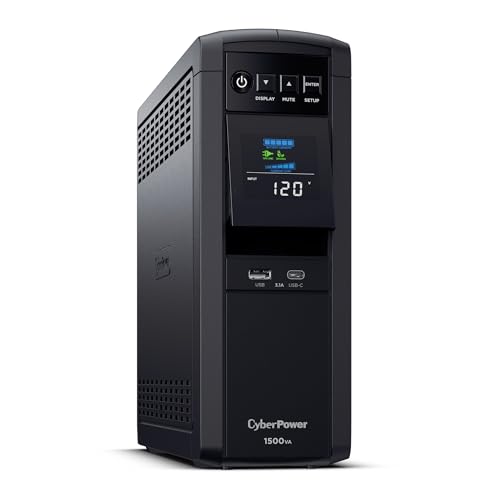
The CyberPower CP1500PFCLCD targets a narrower need: keeping computers and network equipment running during short outages. A line-interactive uninterruptible power supply, or UPS, transfers stored battery power when normal utility input fails, while surge protection handles voltage spikes.
Sine-wave output suits active power factor correction, a feature used by many modern desktop systems. Compared with the portable Anker station, it offers more focused office protection and an LCD status panel but lacks the capacity for household appliances.
Where It Excels
- Sine-wave output supports compatible computers and active PFC equipment.
- Line-interactive design fits areas with brief voltage interruptions.
- The color LCD makes operating status easier to check.
- Desktop and network-device use keeps the form factor practical.
Worth Bearing In Mind
- It cannot supply refrigerator-sized or household power loads.
- Runtime depends on the connected equipment and remaining battery charge.
- Owners commonly need to test the battery system periodically and keep ventilation clear around the mini-tower enclosure.
Quick Facts
Who Will Love This
Desktop users, workstations, and home-network operators needing compact outage protection benefit most.
Skip It When
The Westinghouse iGen5000DF better serves households needing several appliances or RV connections during an outage.
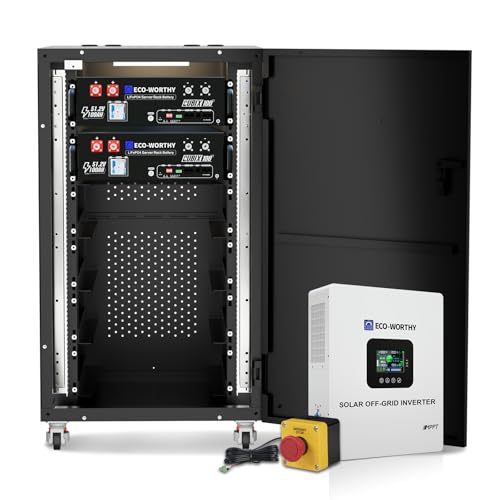
The ECO-WORTHY Cubix100 V3 combines two 51.2V 100Ah lithium iron phosphate batteries, a 5,000W MPPT inverter, and a rack-style cabinet. That bundled enclosure appeals to homeowners who want a more organized installation than loose batteries and separate equipment.
Its 10,240Wh capacity matches the larger Liber 10KP battery total, but inverter output is lower at 5,000W. That makes it a practical middle ground for essential circuits, assuming the cabinet location, ventilation, and electrical connections suit your home.
What Helps Most
- The V3 cabinet keeps the battery bank and inverter in a consolidated installation.
- 10,240Wh capacity supports essential loads for longer periods than compact stations.
- The 5,000W inverter balances residential output with a manageable system scale.
- MPPT charging supports compatible solar replenishment.
Room For Improvement
- Cabinet dimensions and placement should be checked against the intended utility or storage area.
- Electrical installation still requires careful circuit protection and cable sizing.
- The 5,000W inverter has less headroom than the 10,000W Liber model.
Built With In Mind
Homeowners wanting a contained battery setup and 10.24kWh of reserve capacity benefit most.
Swap It Out For
The ECO-WORTHY 5,120Wh system is easier to scale down when space and electrical load are more limited.
The ECO-WORTHY 5,120Wh system sits between a compact portable station and a full battery bank. A single 51.2V 100Ah lithium iron phosphate battery feeds a 5,000W MPPT inverter, creating a practical platform for refrigerators, routers, lighting, and carefully selected household circuits.
Compared with the Cubix100 V3, it halves the battery energy while keeping the same inverter output. That can simplify expansion and fit households wanting useful power without committing to a larger footprint.
The Value In It
- 5,000W output covers a useful range of essential appliances and electronics.
- The 5.12kWh battery provides more installed capacity than typical compact UPS units.
- Lithium iron phosphate chemistry supports repeated discharge cycles.
- MPPT inverter support fits solar-oriented ownership plans.
Practical Considerations
- Installation requires appropriate electrical design and protected battery placement.
- Longer runtime depends on reducing nonessential loads and maintaining a recharge path.
- Owners of stationary battery systems commonly schedule periodic checks of connections, ventilation, and charge status.
Essential Details
Whose Shelf It Belongs On
Homeowners needing a moderate installed system for several essential loads benefit most.
Consider Something Else
The Anker SOLIX C1000 Gen 2 is easier to move and store for renters or temporary outage coverage.
Matching Backup Power To Your Home
Establish The Load First
Start by listing the equipment you need during an outage. A desktop setup has different requirements from a refrigerator, internet equipment, lighting, and well pump, so nameplate wattage matters. Add starting surges and decide how long each load must remain online before comparing systems.
Battery Capacity Is Only Half The Equation
Capacity is stored energy measured in watt-hours, while inverter output determines how much power can run at one time. A large battery paired with an undersized inverter may still struggle during startup, and high output cannot extend runtime by itself. For portable systems, size also affects carrying weight and storage location.
Choose Quiet Or Refillable Power
Lithium systems operate quietly and need little attention between recharges, making them suitable for homes and indoor-adjacent equipment. A dual-fuel generator offers potentially longer runtime through refueling but requires safe outdoor placement, fuel storage, ventilation, and routine engine maintenance.
Plan The Installation
Portable stations belong where you can access them safely, while high-voltage battery banks require suitable floor space, secure mounting, ventilation, and correctly sized wiring. UPS units serve smaller electronics and need regular battery checks. Confirm connection types, transfer behavior, permitted placement, and local electrical requirements before purchasing.
Avoiding Common Power Planning Errors
Wrong Turns To Avoid
A common mistake is comparing advertised output without checking each appliance’s startup demand. Another is buying based on total household consumption instead of the smaller set of circuits you can realistically support. Households also overlook runtime, recharge time, fuel logistics, or the room required for permanent equipment.
What The Higher Tier Buys
Higher-output systems provide more room for demanding appliances and larger battery banks extend runtime. Added inverter capacity can also reduce overload compromises during equipment startup. Those gains matter most for homes with multiple essential circuits; a small electronics-only load usually needs less capacity than a refrigerator, router, and lighting combined.
Frequently Asked Questions
How Large A Battery Backup Power Do I Need?
Calculate the combined wattage of essential devices, then add room for startup surges. Battery capacity also determines runtime, so longer outages require substantially more stored energy.
Can A Portable Power Station Run A Refrigerator?
A suitably rated model can run many refrigerators, although compressor startup may temporarily exceed the unit’s continuous output. Check the refrigerator’s running and starting requirements, then leave capacity for other essentials.
Is A UPS Better Than A Generator?
A UPS is quieter and suited to computers, networking equipment, and short interruptions. A generator supports heavier loads and longer outages through refueling, but it requires outdoor operation and ongoing maintenance.
Do Installed Battery Systems Need Professional Installation?
Yes, high-voltage batteries, inverters, transfer equipment, and household wiring involve electrical hazards and code considerations. Use a qualified professional to determine suitability and complete the installation.
How Often Should Backup Batteries Be Maintained?
Follow the manufacturer’s schedule for connection checks, charge maintenance, ventilation inspection, and battery testing. Periodic checks help reveal loose connections, reduced capacity, or charging problems before an outage.
Final Verdict
Your best match depends less on the largest specification than on the loads you genuinely need to operate. Compact stations suit offices and temporary coverage, installed batteries support essential home circuits, a UPS protects sensitive electronics, and a generator handles extended outages with refueling. Match the load list, location, and maintenance commitment before choosing.
