


A power spike can interrupt sensitive electronics or stop essential equipment during an outage. These portable power stations give you rechargeable capacity, AC outlets, and surge handling for homes, RVs, campsites, and roadside emergencies, but the right size depends heavily on which appliances you plan to run and for how long. Match the battery capacity and output to your actual load list rather than choosing by wattage alone.
The Shortlist At A Glance

Jackery Explorer 2000 v2 Portable Power Station, 2042Wh, 2200W

Jackery HomePower 3600 Plus, 3584Wh, 3600W

Jackery Explorer 1000 v2, 1070Wh, 1500W
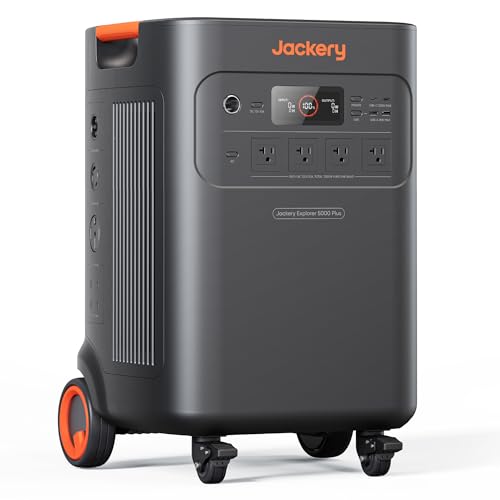
Jackery Solar Generator 5000 Plus, 5040Wh, 7200W

Jackery HomePower 3600 Plus with 2x 200W Solar Panels

Jackery Explorer 2000 v2 and 2x 200W Solar Panels

Jackery Solar Generator 1000 v2 and 200W Solar Panel
The Details Behind The Selections
The Explorer 2000 v2 sits between the lighter Explorer 1000 v2 and the higher-output HomePower 3600 Plus. Its 2,042Wh capacity gives you more usable energy than a small camping station without pushing you into large-appliance territory.
For a home office, refrigerator, or weekend cabin, that balance feels sensible. The 100W USB-C port also handles many phones, tablets, and laptops directly, although you should check device requirements before relying on it.
Everyday Wins
- Three AC outlets provide flexibility for several smaller devices.
- 2,220W rated output covers many household essentials.
- LiFePO4 chemistry suits repeated charging cycles better than typical lead-acid designs.
- The 100W USB-C port reduces adapter clutter during an outage.
Points To Note
- It is not a substitute for a transfer switch or whole-home wiring.
- Storage requires dry conditions and regular charge maintenance during extended downtime.
Who It Suits Best
You benefit most from this model as a balanced backup for a home office, essential appliances, and moderate camping loads.
A Better Fit Elsewhere
The Jackery Solar Generator 5000 Plus suits households planning to run substantially larger loads.
Where the Explorer 2000 v2 emphasizes portability, the HomePower 3600 Plus is built around higher household demand. Its 3,600W output has more room for pumps, heaters, dryers, and other loads that would strain the smaller station.
That scale matters for RV owners and households expecting outages beyond a single evening. The tradeoff is greater size and weight, which may make this a less natural fit for a small apartment or occasional camping trip.
Good Reasons To Consider
- Higher output supports demanding appliances.
- 3,584Wh capacity gives you more runtime for essential equipment.
- 120V and 240V support in parallel configurations increases flexibility.
- Expansion capacity reaches 21kWh per unit for larger backup plans.
Trade-Offs
- The higher capacity unit takes more storage space than an Explorer model.
- Appliance startup demands can exceed rated output, so check surge requirements.
Made For
Homeowners and RV users needing more than a compact emergency station benefit from this model.
Look Elsewhere When
The Jackery Explorer 1000 v2 is easier to manage for camping and lighter travel loads.
Moving down from the Explorer 2000 v2 trades capacity for portability. At 23.8 pounds, the Explorer 1000 v2 is easier to carry between a vehicle, campsite, and emergency kit, yet it still provides 1,500W AC output and a 3,000W surge peak.
For a weekend trip or a short household outage, that combination may be enough for a refrigerator, small air-conditioning unit, or electric pot. Continuous runtime will be limited once several devices run together.
Where It Helps
- Low weight suits road trips and camping.
- 1,070Wh capacity handles essential devices without a large cart.
- 100W USB-C output supports compatible laptops and phones.
- One-hour charging is useful when recovery time is short.
Small Caveats
- Multiple high-draw appliances can consume the battery quickly.
- The foldable handle is convenient, but the unit still needs careful lifting.
The Right Fit
Campers, road travelers, and apartment residents need a manageable station for essential electronics and small appliances.
Another Choice May Suit
The Jackery Explorer 2000 v2 provides a better fit when you need longer runtime and more simultaneous outlets.
The 5000 Plus is the largest dedicated home-backup option in this group, with 7,200W of rated AC output and support for 120V and 240V equipment. That makes it relevant for water heaters, large air conditioners, dryers, and other loads that exceed the HomePower 3600 Plus.
Its 5,040Wh base capacity can expand to 60kWh, which changes the planning horizon for extended outages. You still need to confirm circuit requirements, appliance startup loads, and local electrical rules before installation.
What Pays Off
- 7,200W output supports high-demand home equipment.
- 120V and 240V capability broadens appliance compatibility.
- 5,040Wh starting capacity suits multi-day planning.
- Expansion to 60kWh adds long-term flexibility.
Practical Considerations
- Its size makes it less practical for ordinary camping.
- Large loads can drain stored energy faster than smaller electronics.
Whose Shelf It Belongs On
Homeowners preparing for substantial appliance loads benefit from this model when backup space is available.
A Better Fit Elsewhere
The Jackery HomePower 3600 Plus is a more manageable option for RV use and moderate household loads.
This bundle pairs the HomePower 3600 Plus with two 200W solar panels, giving you a more complete charging setup than the standalone version. The panels can replenish the battery outdoors, although sunlight, panel placement, and weather determine real-world charging speed.
Compared with the Explorer 1000 v2 bundle, you gain much higher output and storage for RVs, cabins, or home essentials. The added equipment also takes more room to transport and set up.
Strengths Worth Knowing
- Two 200W panels reduce dependence on wall charging.
- 3,600W output handles heavier RV and household loads.
- 3,584Wh capacity supports essential equipment beyond a short stop.
- Expansion options allow a larger storage plan later.
Worth Noting
- Two panels require open space and careful placement.
- Solar charging depends on available sunlight and compatible conditions.
Who Should Grab It
You benefit from this bundle when you want higher-output backup and solar recharging in one package.
Where A Sibling Pick Shines
The Jackery Solar Generator 5000 Plus suits households needing more output and expansion capacity.
The Explorer 2000 v2 bundle keeps the standalone model’s 2,042Wh capacity and 2,220W output while adding two 200W panels. It sits between the compact Explorer 1000 v2 and the higher-output HomePower models, making it a practical middle ground for many homes.
Solar charging is useful at a campsite or remote cabin, though you should treat it as a supplement rather than an overnight guarantee. Wall charging remains useful when you return to a powered location.
What Stands Out
- Two-kWh capacity gives useful runtime for mixed essential loads.
- Three AC outlets support multiple small appliances.
- 100W USB-C charging helps with compatible electronics.
- The solar bundle reduces the need to carry separate charging components.
Honest Caveats
- The included panels do not eliminate dependence on suitable sunlight.
- Some appliances need more startup power than the unit provides.
Best Suited To
Homeowners, campers, and small-business users need a flexible middle-capacity system with solar support.
Reach For A Different Pick When
The Jackery HomePower 3600 Plus is the better match for high-output household equipment.
The Solar Generator 1000 v2 package offers the smallest battery and solar pairing here, with 1,070Wh of capacity and a 200W panel. It fits weekend trips, a vehicle emergency kit, or a cabin where you need modest solar replenishment.
Its 1,500W AC output is useful for small electronics and selected appliances, but it is not a sensible match for heaters, dryers, or large air conditioners. You may find yourself choosing between devices rather than running them together.
Useful Highlights
- Lightweight design supports mobile ownership.
- 1,070Wh capacity covers smaller emergency loads.
- 1,500W output handles many common household devices.
- The included 200W panel supports outdoor recharging.
Less Ideal Details
- Runtime drops quickly with several larger appliances.
- Panel charging varies with sun exposure and positioning.
Built With In Mind
You benefit from this package as a portable solar starter for small loads and short trips.
Consider Something Else When
The Jackery Explorer 2000 v2 and 2x 200W Solar Panels provide a better fit for longer off-grid use.
Choosing The Right Capacity And Output
Start with a load list. Write down each appliance, its running wattage, and its startup demand, then separate essential devices from discretionary loads. This simple step prevents a common mistake: choosing a high surge figure while overlooking the battery capacity needed to keep everything running afterward.
Capacity is measured in watt-hours, which combine power and time. A 1,070Wh station stores less energy than a 5,040Wh model, so it suits shorter outages and lighter equipment. Output tells you which devices the station can run, while surge capacity covers the brief startup spike many motors demand.
Voltage matters too. A 120V-only appliance cannot run directly from a 240V connection without compatible equipment, and a 120V outlet does not provide 240V power. Check the exact output requirements of every device before expansion units, parallel operation, or home integration enter your plan.
For solar setups, panel wattage indicates rated solar input, not guaranteed charging speed. Dust, shade, temperature, panel angle, and the station’s charging limits all affect the result. Keep wall charging available for dependable recovery, and store the battery in a dry, temperature-appropriate place between uses.
Power Planning Details That Matter
Common Shopping Slip Ups
The most common error is focusing on surge wattage alone. A station may start a refrigerator but lack enough stored energy for several hours of operation. Check both running requirements and capacity, and avoid trying to run every appliance at once.
What The Higher Tier Buys
Larger models spend more on battery capacity, higher output, voltage flexibility, and expansion options. Those additions help households running high-demand equipment or preparing for multi-day outages, while smaller models remain easier to carry and recharge.
Frequently Asked Questions
How much battery capacity do you need for a power outage?
You need enough capacity for your essential appliances and the number of hours you expect them to run. A small emergency kit may suit phones and lighting, while household backup requires far more energy.
Can a portable power station run a refrigerator?
Many portable stations can run a refrigerator, but you should compare its running and startup requirements with the station’s output and capacity. The unit also needs enough stored energy for continued cooling.
Are solar panels useful during outages?
Solar panels can add charging during daylight, but output depends on sunlight, panel placement, weather, and compatible charging limits. Keep another charging method available for dependable backup.
What does LiFePO4 mean for portable power?
LiFePO4 refers to lithium iron phosphate battery chemistry. It is commonly chosen for repeated charge cycles, although capacity, temperature, and maintenance still affect long-term ownership.
Which portable station handles a power spike?
You need to check surge capacity, rated output, and appliance startup demand together. A higher surge rating may help with motors, but only sufficient battery capacity will sustain operation afterward.
Final Thoughts
The Jackery Explorer 1000 v2 is the most manageable starting point, while the Explorer 2000 v2 offers a stronger balance for mixed household use. Larger homes and RV users should examine the HomePower 3600 Plus or Solar Generator 5000 Plus, with solar bundles helping remote charging setups. Choose from your actual outage plan, not just the largest specification sheet.
