


A dependable battery backup gives laptops and phones breathing room during a dead outlet, delayed flight, or full day away from home. You need enough capacity for your devices, but raw wattage only tells part of the story. The right balance also depends on portability, port selection, built-in cables, and the kind of interruption you plan to handle.
The Picks In Brief
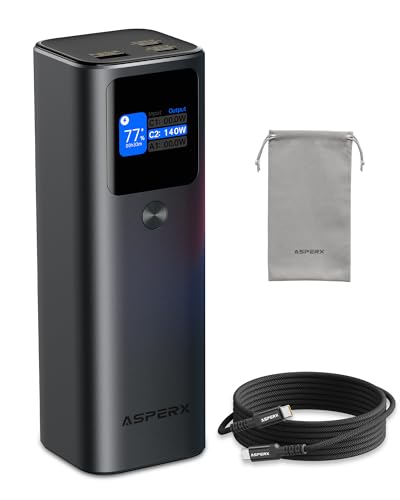
AsperX 27,600mAh 162.5W Laptop Power Bank

Hermitshell EVA Case for Anker PowerCore+ 26800

AsperX 165W 20,000mAh TFT Power Bank

AsperX 27,600mAh 140W Built-In Cable Power Bank
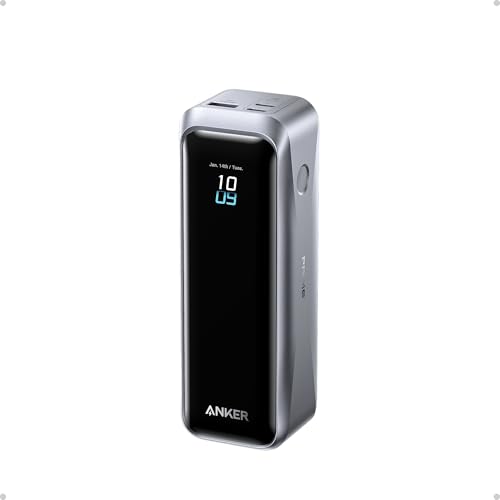
Anker Prime 20,100mAh 3-Port Power Bank

AsperX 165W 20,000mAh Retractable Cable Power Bank

RORRY CharmGo 10,000mAh 30W Power Bank
The Strengths Of Each Pick
High-wattage laptop charging puts this AsperX model in a different class from the compact phone bank later in the list. Its 27,600mAh capacity and 162.5W peak output suit a mobile workstation that must run through a long train ride or several hours without an outlet.
The aluminum unibody body looks more substantial than a plastic travel pack, although its extra bulk may matter in a slim laptop sleeve. You benefit most from a demanding commute or a work trip where laptop and phone charging compete for the same reserve.
Practical Pluses
- The 162.5W peak output targets power-hungry USB-C laptops rather than only topping up phones.
- Capacity of 27,600mAh gives you a larger reserve for multi-device travel days.
- Power Delivery 3.1 supports modern high-power charging negotiations when connected to compatible equipment.
Practical Considerations
- The high-capacity battery adds weight, so expect a larger pouch than the RORRY CharmGo supplies.
- Owners of multi-port setups should check device compatibility because shared power depends on the active port combination.
Key Specs
Who It Suits Best
You’ll get the most use from this model during laptop-heavy business travel or full-day outages that involve several connected devices.
A Better Fit Elsewhere
For a phone-first kit that must stay light, the RORRY CharmGo 10,000mAh 30W Power Bank offers a more manageable capacity.
This entry serves a narrower role: it protects a compatible Anker PowerCore+ 26800 rather than supplying power itself. The rigid EVA material, meaning a closed-cell foam-style material, gives a bulky high-capacity battery a structured home during flights, road trips, and daily commuting.
You’ll find it most useful after buying a large power bank that rattles loosely inside a soft sleeve. The trade-off is model specificity, so verify the dimensions and connector layout before packing your charger.
Where It Excels
- The hard shell helps shield the power bank from bumps, dents, and scratches during transit.
- A dedicated case keeps the charger upright and separate from loose cables.
- Its fitted design suits travelers who prefer organized packing over a soft drawstring pouch.
Small Caveats
- It only serves as protection unless you also own the specifically fitted Anker battery.
- The EVA exterior can collect grime, so occasional wiping is sensible after outdoor travel.
Feature Snapshot
Made For
You’ll appreciate this case most as a fitted home for a large Anker PowerCore+ 26800 that regularly travels in luggage.
Another Choice May Suit
The Anker Prime 20,100mAh 3-Port Power Bank is a better fit for you when you need an actual three-port charger rather than a case.
Compared with the larger AsperX 27,600mAh model, this version trades some reserve for a useful TFT screen. That thin active display gives you a more informative view of operating status and power readings, which is convenient when you’re managing several devices rather than simply checking a row of LEDs.
Its 165W total output targets demanding USB-C equipment, and the gray aluminum body suits a desk or laptop bag that favors restrained styling. In practice, the 20,000mAh capacity may feel moderate for an extended laptop outage, depending on your screen brightness and workload.
Where It Delivers
- The TFT display makes charging information easier to check at a glance.
- Dual USB-C output supports modern laptop and tablet charging.
- The aluminum enclosure adds rigidity while preserving a professional appearance.
Worth Noting
- Capacity sits below the 27,600mAh AsperX choices, so repeated laptop charging is less extensive.
- Owners commonly report carrying extra cables because the built-in display does not supply one.
Quick Facts
Right Fit For
You’ll appreciate the display most while charging a laptop, tablet, and phone across a long travel day.
Where A Sibling Pick Shines
The AsperX 27,600mAh 140W Built-In Cable Power Bank better serves you when carrying one cable matters more than display detail.
The built-in cable changes how this AsperX fits into a daily carry. You can connect a compatible USB-C phone without hunting through a pocket for a short cord, while the 27,600mAh battery still offers more reserve than most compact models.
Two USB-C ports and one USB-A port cover modern laptops alongside older accessories. The 140W ceiling is lower than the 162.5W AsperX Laptop Power Bank, but for many productivity laptops that difference will matter less than the convenience of a permanently attached cable.
Everyday Perks
- The integrated cable reduces packing clutter and cable loss.
- Large capacity supports several phone, tablet, and laptop charging sessions.
- A TFT display keeps power information visible during travel.
- USB-A expands compatibility with older phones, accessories, and low-power devices.
Possible Compromises
- The attached cable suits USB-C devices and cannot replace every connector you might need.
- Its high capacity makes it heavier than the RORRY CharmGo for phone-only days.
- Retract or route the built-in cable carefully to reduce stress at its connection point.
Best Suited To
You’ll get the most value from this model during multi-device travel with a USB-C laptop and phones.
Look Elsewhere When
Choose the RORRY CharmGo instead when your daily backup is limited to one small phone.
Three ports make the Anker Prime easier to justify for a mixed-device bag than a phone-specific bank. Two USB-C connections handle modern laptops, phones, and tablets, while USB-A preserves a practical option for older accessories.
The 20,100mAh capacity amounts to 72.36Wh, and maximum laptop output reaches 140W with a compatible 5A cable. You’ll find that mix effective in offices, airports, and conferences, though shared-output limits still depend on the chosen port combination.
Useful Touches
- Three ports reduce the need to swap cables throughout the day.
- Up to 140W provides meaningful laptop charging rather than phone-only output.
- The 72.36Wh battery offers a practical balance for travel and extended workdays.
Points To Keep In Mind
- Maximum charging speed requires compatible devices, cables, and suitable port allocation.
- Multiple high-output devices can reduce the power available to each one.
- Keep ports uncovered and dry during storage to discourage dust and moisture buildup.
Technical Highlights
Who Will Love This
You’ll appreciate this Anker model most when one portable charger must serve both USB-C laptops and USB-A accessories.
Reach For A Different Pick When
The RORRY CharmGo is more suitable for you when a smaller phone-only reserve fits your routine better.
The retractable cable gives this model a different kind of portability from the fixed cable on the AsperX 27,600mAh 140W Built-In Cable Power Bank. You pull out a short connector, attach your phone, and return it to the housing before putting the bank away.
That system reduces loose-cord clutter during commutes and hotel packing. Rated peak output of 165W still targets laptops, although the 20,000mAh reserve is closer to the AsperX TFT model and may require careful budgeting during an all-day outage.
Positive Points
- The retractable lead is ready for compatible USB-C phones without a separate cable.
- A 165W ceiling supports power-hungry laptops.
- The aluminum body gives the bank a rigid, professional feel.
Trade Offs
- The retractable lead is less useful for devices requiring another connector type.
- Avoid pulling the cable by its tip; guiding it back into the housing helps limit wear at the joint.
Built With In Mind
You’ll find the built-in lead especially useful in small work bags where loose cables become tangled.
Swap It Out When
The Anker Prime 20,100mAh 3-Port Power Bank better serves you when you need three simultaneous connections.
After five laptop-capable options, the RORRY CharmGo makes its case through restraint. Its 10,000mAh capacity and 30W Power Delivery output focus on keeping a phone ready rather than powering a notebook for hours.
That makes it suited to a pocket, small handbag, or an evening event where a compact daily reserve matters more than maximum output. The trade-off is obvious: larger AsperX and Anker models serve laptops and tablets far more effectively.
Positive Takeaways
- The 10,000mAh battery keeps carry weight manageable.
- Up to 30W output targets modern phone fast charging.
- Its small reserve works well for overnight travel and daily top-ups.
Details To Watch
- It lacks the reserve and wattage needed for regular laptop backup.
- Use a compatible USB-C cable and confirm device support before travel.
- Owners commonly report accumulating lint on pocketable ports, so occasional cleaning is worthwhile.
Core Details
The Right Fit
You’ll find this model most useful for phone-only top-ups during short trips, events, or workdays.
Consider Something Else When
The Anker Prime 20,100mAh 3-Port Power Bank is a better fit for you when a laptop joins the backup kit.
Match Power And Portability Before You Pack
Start With The Device That Matters Most
A phone backup can live with modest output and compact capacity. A laptop needs enough wattage to sustain demanding work, and you should check whether your computer charges through USB-C Power Delivery at the level you expect. Matching the bank to the most demanding device prevents you from carrying extra capacity you may rarely use.
Read Shared Output Carefully
Multi-port ratings describe the maximum under a particular setup, not necessarily the output available to every connected device. The total combined output can change as another port draws power, so read the supported port combinations for the AsperX and Anker models before relying on simultaneous charging.
Capacity Changes The Carry Experience
Capacity is measured in milliampere-hours, abbreviated mAh. A larger cell can support more complete charging cycles, but it also adds weight and may need separate air-travel storage or carry-on review. Smaller banks fit pockets more comfortably, yet their reserve runs out sooner during a laptop-heavy outage.
Built-In Leads Need Routine Care
A fixed or retractable cable reduces packing clutter, but cable strain deserves attention. Extend and retract it gently, avoid sharp bends, and keep the connector from remaining dusty inside a bag. Your own charging requirements determine whether that convenience outweighs carrying separate cables.
Practical Battery Backup Decisions
Mistakes Worth Dodging
Choosing by capacity alone can leave you with a bulky bank that cannot charge your laptop at the expected speed. Check device compatibility, cable requirements, and shared port output before purchasing. A phone-first user needs a different fit from someone powering several USB-C computers.
What Separates Premium From Basic
Higher-output models add power electronics, larger cells, displays, or integrated cables that basic phone banks leave out. Those additions suit full workdays, laptop travel, and mixed-device charging. For occasional phone top-ups, a smaller 10,000mAh model can provide the more practical carry experience.
Frequently Asked Questions
Can a battery backup power bank charge a laptop?
Yes, provided the laptop supports USB-C Power Delivery and the connected cable can carry the required current. A 20W phone bank is unlikely to meet a modern notebook’s needs, while 100W-plus models target higher-power charging.
How much capacity is enough for travel?
A 10,000mAh bank focuses on phone backups, while 20,000mAh or 27,600mAh models provide more room for tablets and laptops. Your screen use and workload determine how many complete charges you can expect.
Do built-in cables replace every charging cable?
No. Integrated leads primarily help with compatible USB-C devices. Different ports, device sizes, and legacy accessories may still require your own cables.
Why does multi-port charging speed change?
Power is shared among connected devices, and each port receives less output as demand rises. Check the supported port combinations to see which configuration supplies the wattage your laptop requires.
How should I store a battery backup?
Keep it partly charged in a dry, room-temperature location and avoid crushing it inside a crowded bag. Before storage, retract an integrated cable and keep ports clear of dust or moisture.
Final Verdict
Your best match depends on the device carrying the biggest consequence during an outage. Choose the RORRY CharmGo for phone-only top-ups, the Anker Prime for mixed devices, or an AsperX model for laptop-heavy travel and larger reserves. The Hermitshell case belongs only with the specifically fitted Anker PowerCore+ 26800, giving your power bank a protected place in the kit.
