


Battery backup choices range from compact desktop units to portable power stations that support camping gear, networking equipment, and household electronics during outages. Your workload and setup determine which type fits: a UPS protects computers with graceful shutdowns, while a portable station offers greater output for broader power needs. Replacement batteries also extend the life of an existing APC Back-UPS system.
The Main Contenders

Jackery Explorer 2000 v2 Portable Power Station, 2042Wh, 2200W AC Output

CyberPower CP1500PFCLCD PFC Sinewave UPS
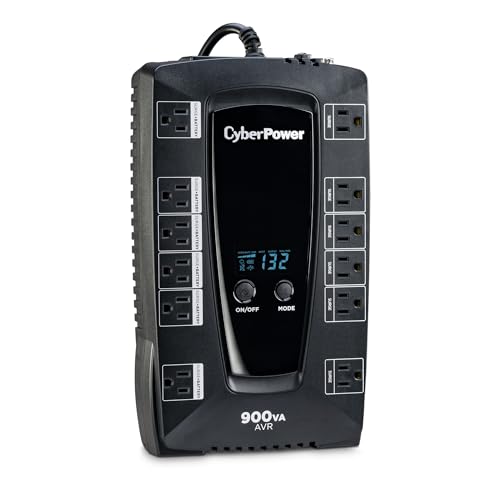
CyberPower AVRG900LCD Intelligent LCD UPS
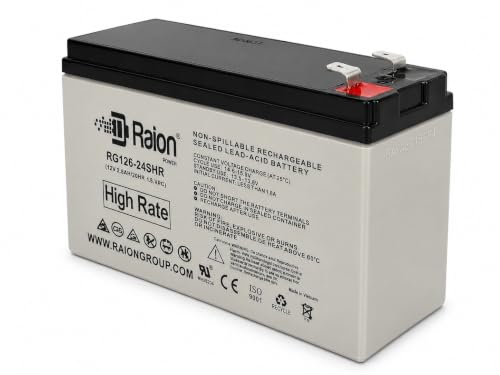
Raion Power APCRBC154 Compatible 12V 6Ah UPS Battery

APC APCRBC154 UPS Replacement Battery

GOLDENMATE 1500VA/1000W Lithium UPS, White

GOLDENMATE 1000VA/800W Lithium UPS, White
The Strengths Of Each Pick
The Jackery Explorer 2000 v2 sits apart from the desktop UPS units in this roundup because it combines a 2,042Wh battery with 2,200W of AC output. That scale suits household essentials, camping equipment, or a small-business setup where a computer-only unit would be too limited.
Its three AC outlets and 100W USB-C PD charging give you more ways to manage devices during a power cut. Compared with CyberPower CP1500PFCLCD, the trade-off is portability rather than desktop-focused power conditioning.
What Pays Off
- The 2,042Wh capacity provides substantial reserve power for multiple devices.
- Three AC outputs support a broader mix of household equipment.
- The 100W USB-C PD port simplifies high-power device charging.
- LiFePO4 chemistry suits frequent cycling and extended ownership.
- Portable construction transitions from outage response to camping use.
Practical Considerations
- Its size and weight make it less convenient beside a workstation.
- Solar charging requires a separately compatible panel.
- Runtime varies with each device’s power draw and operating mode.
Feature Snapshot
Built With In Mind
You benefit most from this model during outages, camping trips, or mobile work where AC-powered equipment matters more than a slim desk footprint.
Another Choice May Suit
Choose CyberPower CP1500PFCLCD instead for a stationary computer setup that prioritizes sinewave support and controlled shutdowns.
The CyberPower CP1500PFCLCD targets computers and other equipment that benefit from active power factor correction, a feature commonly abbreviated as PFC. Its sinewave output also makes it more deliberate than a basic UPS designed mainly for simple electronics.
A color LCD provides visible operating information, which helps during troubleshooting or after a sudden outage. For daily desk use, this fixed-purpose design can feel more practical than carrying a larger portable power station.
Features That Help
- Sinewave output suits compatible PFC-based computer equipment.
- The color LCD makes operating conditions easier to inspect.
- Line-interactive topology supports a conventional office footprint.
- Surge protection adds a second layer beyond battery reserve.
Worth Noting
- It focuses on computers and networking equipment rather than household-wide power.
- Runtime depends on connected loads and the state of its internal battery.
Quick Facts
Right Fit For
You gain the most from this unit with a desktop computer, workstation, router, or similar equipment that benefits from a clean sinewave supply.
Look Elsewhere When
Jackery Explorer 2000 v2 suits you better when you need to run several AC-powered devices beyond a computer desk.
The CyberPower AVRG900LCD makes sense for a compact home office where outlet space is limited. Automatic voltage regulation, or AVR, corrects small input fluctuations without relying on battery power for every minor variation.
That behavior can preserve battery reserves during ordinary voltage changes, while the LCD keeps operating information visible. Compared with the CP1500PFCLCD, this model offers a smaller format but uses simulated sinewave output rather than pure sinewave power.
The Value In It
- AVR handles minor voltage fluctuations without unnecessary battery use.
- The LCD gives you quick access to operating information.
- Its compact format suits desks and home offices with limited room.
- Surge protection supports a broader electronics setup.
Small Caveats
- Simulated sinewave output is less aligned with sensitive PFC equipment than the CP1500PFCLCD.
- Capacity is intended for connected electronics, not high household loads.
- Older sealed lead-acid batteries require periodic condition checks.
Made For
This model works well for compact networks, desktop computers, and home entertainment equipment in a space-conscious office.
A Better Fit Elsewhere
CyberPower CP1500PFCLCD is the stronger fit for a workstation whose connected equipment requires sinewave output.
Renewing aging backup runtime often starts with replacing the internal battery rather than the entire UPS. The Raion Power APCRBC154 offers a 12V 6Ah AGM replacement cartridge for several APC Back-UPS models that use the RBC154 format.
AGM means the electrolyte is held in an absorbent glass mat, which supports a sealed, low-maintenance installation. You still need to match the exact cartridge and model, particularly because similarly sized UPS batteries may have different terminals or dimensions.
The Good Stuff
- The 24W high-rate design targets discharge-heavy UPS applications.
- AGM construction reduces routine electrolyte servicing.
- Compatibility spans several named APC Back-UPS models.
- Replacing the cartridge can renew an otherwise functional setup.
Practical Considerations
- Compatibility depends on the RBC154 cartridge format and your exact model.
- Internal UPS batteries can weaken gradually, so reduced runtime may appear before failure.
- You should follow the UPS manufacturer’s handling and replacement guidance.
- Model-specific appearance may differ from a factory cartridge.
Core Details
Who Should Grab It
You benefit from this cartridge when your compatible APC Back-UPS has declining runtime and its battery compartment accepts an APCRBC154 or RBC154 battery.
Consider Something Else When
Choose APC APCRBC154 instead when exact brand-model matching matters more to you than a compatible third-party replacement.
The APC APCRBC154 stays narrowly focused on one role: renewing the battery in a compatible Back-UPS BE600M1. That specificity reduces the model-matching work compared with a broad replacement listing, though it also makes this cartridge useless for unrelated UPS systems.
For an owner with the matching unit, the appeal is straightforward brand and model alignment. Compared with Raion Power APCRBC154, you gain tighter product identity but lose the wider list of compatible APC models.
The Helpful Details
- The cartridge is identified for the APC Back-UPS BE600M1.
- Exact model focus simplifies replacement selection.
- APC branding provides a clear ownership choice for matching systems.
Details To Watch
- It is not a broad replacement for other battery sizes or UPS brands.
- Confirm the model label and battery cartridge number before ordering.
- You may still need to reinitialize or recharge the UPS after installation.
Who Will Love This
This cartridge suits you precisely when you own an APC Back-UPS BE600M1 and want a replacement tied to that exact model.
Swap It Out When
Raion Power APCRBC154 Compatible 12V 6Ah UPS Battery makes more sense for a compatible system outside the BE600M1 model range.
The GOLDENMATE 1500VA/1000W targets mixed office loads with greater headroom than the 1000VA/800W model. Its LiFePO4 battery, short for lithium iron phosphate, is designed for a long service life and more than 3,000 charge cycles.
That chemistry makes frequent cycling less central to replacement planning than sealed lead-acid chemistry. You still need to respect actual device requirements, since UPS capacity describes supported load rather than an unlimited household power supply.
Strengths Worth Knowing
- The 1,000W output supports a broader office load than the smaller sibling.
- LiFePO4 chemistry favors longevity and frequent charge cycles.
- The stated 3,000-plus cycles support long-term ownership planning.
- Surge protection supports connected computers and network equipment.
- The white housing fits a light-colored office setup.
Possible Compromises
- It remains a desktop UPS rather than a portable power station.
- VA ratings can overstate usable wattage for power-factor-sensitive equipment.
- Lithium systems may cost more upfront than lead-acid replacements.
Important Details
The Right Fit
You benefit most from this model with a home office containing a primary computer, network equipment, and several smaller connected devices.
Where A Sibling Pick Shines
GOLDENMATE 1000VA/800W Lithium UPS, White suits you better in a tighter workspace with a more modest load.
The GOLDENMATE 1000VA/800W Lithium UPS brings LiFePO4 chemistry to a smaller office load. Its more than 5,000 stated charge cycles exceed the figure associated with the larger 1500VA sibling, making cycle endurance a central ownership consideration.
For apartments, studies, and small offices, the tradeoff is capacity rather than chemistry. Assuming your connected equipment remains within the supported load, the lower rating should fit basic computing and networking needs more neatly.
Reasons It Performs
- LiFePO4 chemistry supports long service life.
- The stated 5,000-plus cycles suit frequent backup use.
- The 800W output covers a focused small-office load.
- Surge protection adds protection for connected electronics.
Where It May Fall Short
- The 800W rating has less headroom than the 1500VA/1000W version.
- Connected devices with high startup demands can reduce available runtime.
- You must still check device requirements and outlet placement.
Product Snapshot
Whose Shelf It Belongs On
This UPS belongs in an apartment, study, or compact office where computers and network devices need outage coverage without extra load capacity.
Reach For A Different Pick When
GOLDENMATE 1500VA/1000W Lithium UPS, White is the better fit for a heavier office load that needs more wattage headroom.
Match Runtime to Your Workload
Runtime begins with the devices you plan to connect. A desktop computer, router, and monitor need far less support than a portable power station carrying camping equipment or several household electronics. List your essential loads and estimate their combined draw before choosing a capacity.
UPS and battery chemistry deserve separate attention. A UPS, or uninterruptible power supply, conditions incoming power and supplies its battery during short outages. LiFePO4 systems favor longevity and frequent cycling, while AGM lead-acid replacement batteries can renew compatible equipment at lower upfront cost.
Output quality matters for sensitive electronics. Pure sinewave output is generally easier for PFC-based equipment to accept, while simulated sinewave output may suit simpler computers and network hardware. Verify the connected equipment rather than relying on the battery capacity alone.
Physical fit should guide the final choice. A compact desktop UPS fits beneath a desk, an APC replacement cartridge keeps an existing setup intact, and the Jackery portable station demands more floor or storage space. You also need room for ventilation and unobstructed outlets.
Avoiding Common Capacity Traps
Mistakes Worth Dodging
Confusing battery capacity with output power can lead to an oversized unit that still cannot run your equipment. Check both energy, measured in watt-hours, and output, measured in watts. Also verify connector, voltage, and cartridge compatibility before ordering a replacement battery.
What Separates Premium From Basic
Additional capacity, lithium chemistry, pure sinewave support, or more ports justify a higher spending level for matching needs. A premium feature offers little value when your actual load remains modest. Compare the specification with your outage plan instead of buying on feature count alone.
Frequently Asked Questions
Can a UPS replace a portable power station?
A UPS protects connected electronics and supports shutdowns, while a portable power station can supply broader AC loads. Choose based on equipment size and required runtime.
How long should a UPS battery last?
Runtime depends on battery condition, load, and usage patterns. Signs such as sudden shutdowns or sharply reduced duration suggest the battery or unit may need attention.
Is pure sinewave output important?
It matters most for PFC-sensitive or other demanding equipment. Simulated sinewave output may work with simpler electronics after compatibility checks.
Can any replacement battery fit an APC Back-UPS?
No. Match the model, voltage, dimensions, terminals, and specified battery cartridge before replacement.
Which pick handles the most equipment?
The Jackery Explorer 2000 v2 offers the highest stated AC output here. Actual suitability still depends on device draw, startup demands, and runtime.
Wrap Up
The most useful backup system matches your equipment rather than simply offering the largest number. Choose pure sinewave support for demanding electronics, lithium chemistry for frequent use, and a portable station for broader AC power needs. Replacement cartridges are practical only after exact model verification.
