


A brief power interruption can take down a router, extend an internet outage, and leave essential devices offline until service returns. The right battery backup solution depends on the equipment you need online, from a single Wi-Fi router to a home office, security system, or essential high-draw appliances.
The Lineup, Simplified

ECO-WORTHY Powermega 48V 314Ah System with Liber 10KP

ECO-WORTHY Powermega 48V 314Ah 16.1kWh Battery
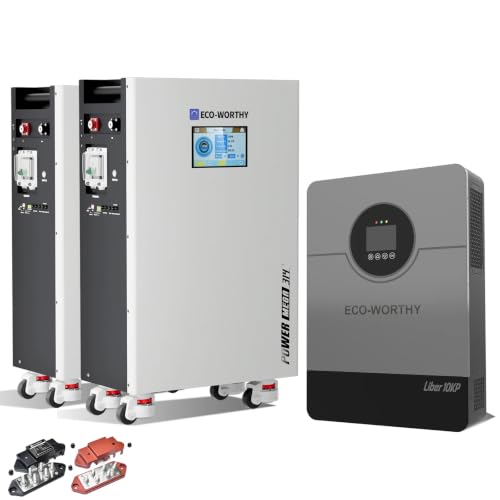
ECO-WORTHY Powermega Dual 314Ah System with Liber 10KP

EverAmp 1500VA 1000W LiFePO4 UPS

CyberPower CPS1500AVR Intelligent LCD UPS

NOBIS 45W 20000mAh Fast-Charging Power Bank

Yuuki Power 20800mAh 62Wh DC UPS
Taking A Closer Look At The Options
A short outage that interrupts a router can also silence a home office and connected security equipment. This system combines a 48V 314Ah lithium iron phosphate battery with a 10kW hybrid inverter, giving you a larger backup platform than a compact desktop UPS.
For a home equipped with essential loads, that scale can be useful. Installation and equipment matching require more planning than a plug-in network backup, although the built-in connectivity gives you more control over a permanent setup.
Points In Its Favor
- The 16.1kWh battery capacity can support selected household loads for longer than a compact UPS.
- A 10kW hybrid inverter can manage compatible AC, solar, or off-grid power paths.
- Bluetooth and Wi-Fi connectivity support remote battery monitoring.
- Active cell balancing helps maintain consistency across the battery’s internal cells.
Things To Consider
- This is a fixed power-system component, so professional electrical planning is likely appropriate for many homes.
- Its capacity and weight make it more involved to install and relocate than a router-sized DC UPS.
Key Specs
Built With In Mind
This system suits households with essential loads that need backup beyond networking equipment and a professionally considered installation.
Another Choice May Suit
The Yuuki Power 20800mAh 62Wh DC UPS is easier to place near a router and serves a much smaller equipment load.
Where the first ECO-WORTHY package includes its inverter, this option focuses on stored power alone. That makes it more relevant to an existing renewable-energy or off-grid system that already has compatible power-control equipment.
The large 16.1kWh capacity is meaningful for homes trying to carry essential loads through longer interruptions. You still need matching voltage, communication protocols, and a suitable charge system, so this is not a simple router accessory.
Real-World Strengths
- Large stored-energy capacity supports households that need more runtime than a small UPS provides.
- Active cell balancing helps the battery maintain more consistent cell performance.
- Compatibility with earlier V1 units allows expansion into a parallel battery arrangement.
- The integrated aerosol fire protection adds a layer to the battery’s safety design.
Worth Noting
- You supply the compatible inverter, solar controller, and other system components separately.
- Hazardous-material shipping rules can affect replacement logistics, and the listing identifies the battery as non-returnable.
Feature Snapshot
Made For
Experienced off-grid households and solar users need large storage without a bundled inverter.
Where A Sibling Pick Shines
ECO-WORTHY Powermega 48V 314Ah System with Liber 10KP is the more direct choice for a new integrated installation.
The dual-battery configuration expands on the single-battery ECO-WORTHY system, pairing two 48V 314Ah packs with a 10kW hybrid inverter. Its greater stored energy targets homes that need routers, communications equipment, lighting, refrigeration, or other essential loads during longer outages.
That capacity does not guarantee every household runs normally through a lengthy interruption. You still need to match the system to expected loads, arrange suitable electrical connections, and reserve a secure, accessible installation area.
Good Reasons To Consider
- More than 30kWh of stated usable capacity offers greater outage coverage than the one-battery system.
- The 10kW inverter accommodates higher household loads than a desktop network UPS.
- Built-in Bluetooth and Wi-Fi support remote system monitoring.
- Two coordinated batteries can reduce frequent cycling stress compared with relying on one pack alone, subject to proper configuration.
Practical Considerations
- Installation demands more space, handling, and electrical planning than a compact UPS.
- A listed cable-management offer is tied to a future date, so it should not shape your present setup decision.
The Right Fit
This package best serves households preparing for extended outages and willing to plan a professionally designed power system.
Reach For A Different Pick
EverAmp 1500VA 1000W LiFePO4 UPS is more practical for a network rack, office desk, and a limited set of electronics.
Network routers are only part of a productive home office, and the EverAmp covers a broader set of electronics without requiring a fixed battery-room setup. Its pure sine wave output closely follows utility-shaped AC power, a useful distinction for sensitive computers and audiovisual equipment.
Eight protected outlets make it more accommodating than a single-purpose router battery. You’ll still need to manage the 1,000W ceiling carefully, especially during startup or while a desktop and monitor operate together.
Features That Help
- Pure sine wave output suits sensitive network, office, and entertainment equipment.
- Eight backed-up outlets reduce the need for extension cords and power-strip limitations.
- The 1,000W capacity handles a meaningful load while remaining far smaller than a home energy system.
- A dual-metal enclosure gives the unit a more substantial construction than a lightweight plastic power box.
Small Caveats
- Runtime varies with the connected load, so office equipment may reduce backup duration quickly.
- Ventilation space matters because the case is designed to dissipate heat from several sides.
Quick Facts
Who Will Love This
Home offices and network-conscious households need several compatible devices protected from outages and voltage spikes.
A Better Fit Elsewhere
The NOBIS 45W 20000mAh Fast-Charging Power Bank is better suited to travel days than continuously powered home equipment.
Unlike the EverAmp’s pure sine output, the CyberPower uses simulated sine wave power, a design suited to many conventional computers and network devices. Automatic Voltage Regulation, which gently corrects minor input fluctuations, helps stabilize a desk-based setup.
The LCD provides useful operating information in a format suited to offices, server rooms, and network cabinets. You’ll want to check your connected devices for power-supply compatibility, especially sensitive or specialized audio equipment.
Where It Excels
- Line-interactive architecture provides a practical balance of protection and compactness.
- The LCD keeps load, battery, and operating status visible without guesswork.
- Automatic Voltage Regulation helps reduce minor voltage swings before an outage develops.
Points To Note
- Simulated sine wave output may not suit every sensitive or specialized device.
- Battery runtime varies with workstation size and the number of network devices connected.
- Periodic battery checks help you notice reduced capacity before an extended interruption.
At A Glance
Whose Shelf It Belongs On
This UPS fits workstations, network devices, and telecom equipment in offices without highly specialized power requirements.
Skip It When
The EverAmp 1500VA 1000W LiFePO4 UPS offers a better fit for sensitive equipment that needs pure sine wave output.
The NOBIS is a different kind of outage tool, supporting portable devices rather than a stationary router or desktop. On a long flight, delayed train, or full day away from an outlet, its 20,000mAh capacity can keep a phone or other compatible USB-C device working.
PD 3.0 and QC 4.0 protocols provide the negotiation needed for faster charging with supported devices. It does not keep Wi-Fi online by itself, so treat it as mobile power rather than network backup hardware.
Benefits That Matter
- Up to 45W output can charge compatible USB-C laptops and phones more quickly than basic low-wattage packs.
- The 20,000mAh capacity offers several phone charges depending on battery size and usage.
- Airline approval makes it more practical for flights, subject to your carrier’s current carry-on rules.
Things That May Matter
- It cannot power a router directly because it lacks the required DC output and automatic transfer switching.
- Charging speed depends on your device, cable, and protocol support.
- Keep the power bank partially charged during long storage and avoid letting it sit in hot vehicles.
Made For
Frequent travelers and people away from reliable outlets need portable charging for personal devices.
Consider Something Else
The Yuuki Power 20800mAh 62Wh DC UPS directly maintains compatible routers, modems, and cameras during outages.
For a home that only needs its router, modem, and a few small network devices to remain powered, a DC UPS offers a more focused solution than an AC system. The 62Wh battery provides stored energy specifically for lower-voltage networking equipment.
Its selection of DC outputs makes it more versatile than a single-port router battery, and automatic shutdown helps protect the unit from overload. You’ll still need to confirm your router’s voltage, current, connector type, and backup expectations before purchase.
Practical Advantages
- 12V, 9V, and 5V DC outputs support several router, modem, and camera arrangements.
- PoE ports add compatibility for networking equipment that uses power over Ethernet.
- The LED display provides a clear view of the remaining battery level.
- At 1.3 pounds, the unit is easier to position near network equipment than larger UPS systems.
Where It May Fall Short
- The 18W total output ceiling excludes computers, televisions, and most household appliances.
- USB-A and USB-C charging outputs add flexibility, but the unit still focuses on low-voltage equipment.
- Runtime depends on connected-device draw, and prolonged low-battery use requires regular charging.
Core Details
Right For
Apartment residents and remote workers need a dedicated, compact backup for compatible routers, modems, and cameras.
Look Elsewhere When
The CyberPower CPS1500AVR Intelligent LCD UPS better serves a home office that also needs AC power protection.
Matching Backup Power to the Load
Start with a simple distinction: a DC backup supports low-voltage network equipment, while an AC uninterruptible power supply supports standard wall-powered electronics. Your equipment inventory should determine the format before capacity enters the discussion.
Start With the Essential Load
List the devices that must remain online during an interruption. A router and modem may need only a small DC UPS, whereas a home office can require a larger AC model with enough outlets and output capacity.
Check Power Compatibility
Voltage and connector type are just as important as stored energy. A backup with 12V output still needs a close match to your router’s required current and plug, while AC equipment may need pure sine wave output for sensitive operation.
Estimate Runtime From Draw
Runtime depends on how much power your connected devices consume and how long they remain active. A light network load can run longer, while monitors, computers, kitchen equipment, and other high-draw devices will reduce available runtime.
Decide Between Portable and Stationary
A power bank supports personal devices while you travel, but it does not maintain network equipment automatically. Fixed DC and AC backup systems are better choices for a router, office, or essential home circuit.
Avoiding Common Backup Mistakes
Mistakes Worth Dodging
Choosing by battery capacity alone overlooks voltage, connector type, and output limits. Check each device’s power requirements first, and avoid attempting to power unsupported appliances through a network-focused UPS.
What The Higher Tier Buys
Larger systems add inverter capacity, storage, multiple outlets, and cleaner AC output. Those upgrades matter for extended household coverage, while a compact DC UPS is more sensible when only a router and modem need support.
Frequently Asked Questions
How Long Can a Battery Keep Wi-Fi Online?
Runtime depends on the backup type, battery capacity, and connected-device draw. A lightweight network UPS can last much longer than a system carrying computers or household appliances.
Will Any UPS Work With a Router?
No. You need matching voltage, current, and connector details, with a suitable connector or appropriate adapter and automatic transfer behavior for seamless outage support.
Is a Power Bank Useful During an Outage?
A power bank helps only devices you connect to it manually, such as a phone or laptop. A dedicated DC UPS can automatically continue supplying a compatible router and modem.
Should I Choose Pure or Simulated Sine Wave?
Pure sine wave output offers closer utility-shaped power and broader equipment compatibility. Simulated sine wave output can work with many standard office devices, but specialized electronics may require the former.
Do I Need an Electrician for These Systems?
Compact network UPS units are generally placed like ordinary powered equipment, while high-capacity battery and inverter packages need careful electrical planning. Follow local electrical requirements and have qualified professionals handle hardwired work.
Final Verdict
The Yuuki Power 20800mAh 62Wh DC UPS is the most direct fit for keeping a compatible router and modem online, while the EverAmp handles a broader home-office load. For extended household coverage, the ECO-WORTHY systems provide much more storage but require substantially more planning. Match the equipment first, capacity second, and installation demands last.
