


Rechargeable power can keep wireless microphones ready for rehearsals, meetings, karaoke nights, and live performances without frequent disposable-battery changes. The seven options below include 9V battery packs, AAA rechargeables for compatible cordless phones, and complete microphone systems for people who need more than spare cells. Your equipment’s connector type, battery chemistry, runtime demands, and charging setup determine which option makes the most sense.
A Side-By-Side Look
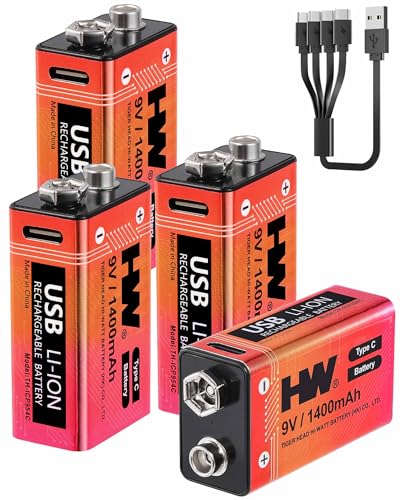
HW 9V Rechargeable Batteries 1400mAh USB-C 4 Pack

Tribit Dual Handheld Cordless Microphone System

OSIM BK-40AAABU 4-Pack AAA Ni-MH Rechargeable Batteries

Bietrun UHF Wireless Microphone 1/4-Inch Receiver

HW 9V Rechargeable Batteries 1400mAh USB-C 8 Pack

HW 9V Rechargeable Batteries 1400mAh USB-C 12 Pack

ZERFUN G8 4-Channel Wireless Microphone System
Inside Each Recommended Option
A rechargeable 9V pack fits a broader role than the category name suggests. Smoke detectors and compatible wireless microphones can use the same cylindrical format, so the four cells also work as a rotating household reserve, subject to each device’s charging requirements.
The 1400mAh rating supports longer use than ordinary disposable cells, while the USB-C ports simplify top-ups. For people managing several compatible devices, four units are easier to rotate than a single battery, though the charging cable and indicator light deserve a place in your routine.
The Helpful Details
- USB-C charging reduces the need for a separate nine-volt charger.
- The four-pack format supports device rotation.
- A 1400mAh rating suits higher-drain household electronics.
- An LED provides a visible charging-status cue.
Things To Consider
- Compatibility depends on the 9V connector and charging requirements.
- Store spare cells away from heat and moisture.
Key Specs
Made For
You benefit most with several compatible 9V devices and limited appetite for disposable batteries.
Another Choice May Suit
The HW 9V Rechargeable Batteries 1400mAh USB-C 12 Pack suits larger multi-device rotations.
Two handheld transmitters make this a practical starting point for duet recordings, karaoke, presentations, and compact performances. A dynamic capsule favors strong, direct vocal pickup, which can help you cut through guitars or backing tracks without adding a separate microphone to the setup.
Unlike the HW packs, this is a complete microphone system rather than spare power. DSP processing, meaning digital signal processing that shapes the audio, and an integrated pop filter help control plosive bursts in ordinary rehearsal rooms, although exact output still depends on the receiver connection and your speaking or singing distance.
Where It Helps
- Two handheld units support shared vocal roles.
- The dynamic capsule suits direct voice pickup.
- DSP processing reduces unwanted vocal noise.
- The pop filter helps soften breathy consonants.
Worth Noting
- Confirm receiver compatibility with your speaker or audio interface.
- Keep transmitters and receivers together during charging and storage.
Feature Snapshot
Who It Suits Best
You’ll benefit most as a singer-songwriter, host, or casual performer needing two cordless handheld microphones.
A Better Fit Elsewhere
The ZERFUN G8 4-Channel Wireless Microphone System suits groups needing four separate handheld channels.
AAA Ni-MH cells serve many battery-powered household devices, but model matching matters more here than with standard AAAs. The BK-40AAABU designation, 1.2-volt rating, and stated Panasonic cordless-phone compatibility make this pack more useful as a dedicated handset replacement than a broad electronics battery.
Ni-MH chemistry means rechargeable nickel-metal hydride, designed to be reused rather than discarded after use. A four-cell set keeps replacements available around a busy kitchen, yet you should verify your handset model and charging requirements because voltage and contact design vary across phone systems.
What It Does Well
- Model-specific fit supports compatible Panasonic handsets.
- Four precharged cells simplify replacement.
- Ni-MH chemistry supports repeated charging.
- The 400mAh rating suits lower-drain phone use.
Practical Considerations
- Contact and voltage mismatches can prevent proper use.
- AAA charging equipment must support 1.2-volt Ni-MH cells.
- Remote-control compatibility may vary by manufacturer.
The Right Fit
You’ll benefit most as a Panasonic cordless-phone household seeking a reusable, model-specific AAA set.
Where A Sibling Pick Shines
The HW 9V Rechargeable Batteries 1400mAh USB-C 12 Pack suits wireless microphones that specifically accept rechargeable 9V cells.
Moving from spare cells to a complete system changes the ownership question from charging batteries to configuring a signal path. The Bietrun receiver connects through a quarter-inch microphone input, a familiar arrangement on many powered speakers and compatible audio equipment.
UHF means ultra-high frequency, the radio range used here to carry the microphone signal. Its stated 98-foot open-area reach gives singers and presenters room to move, though walls, people, and other wireless equipment can reduce practical separation, so line-of-sight placement is worth testing in your room.
What Pays Off
- Automatic connection reduces initial setup.
- The quarter-inch plug suits many speaker inputs.
- Open-area range supports movement away from equipment.
- UHF operation helps separate the wireless signal.
Small Caveats
- Walls can shorten the stated open-area distance.
- Confirm that your speaker accepts microphone-level input.
- Charging the receiver before a rehearsal prevents avoidable downtime.
Quick Facts
Built With In Mind
You’ll benefit most as a mobile singer or presenter using compatible quarter-inch audio equipment.
Reach For A Different Pick When
The Tribit Dual Handheld Cordless Microphone System suits two-person performances needing two handheld units.
An eight-cell rotation fits a pedal board more comfortably than carrying spare disposables between rehearsals. Guitar pedals can draw power steadily, so keeping several rechargeable cells available helps you exchange one without interrupting a session or leaving a power-dependent effect disconnected.
The same 1400mAh and USB-C foundation appears in the four-pack, but this larger set offers more scheduling flexibility. For a musician running late into the evening, you can recharge several cells together, yet each pedal’s voltage tolerance and charging design still deserve confirmation before a live set.
What Stands Out
- Eight cells support a substantial pedal-board rotation.
- USB-C ports simplify batch charging.
- The 1400mAh capacity suits sustained electronics use.
- LED charging indicators support a quick visual check.
- The included multi-connector cable reduces charger clutter.
Details To Watch
- Some effects may require disposable 9V batteries.
- Charge the rotation before rehearsals rather than between them.
Whose Shelf It Belongs On
You’ll benefit most as a guitarist or home-studio musician running several compatible pedal devices.
Swap It Out When
The HW 9V Rechargeable Batteries 1400mAh USB-C 4 Pack suits smaller household rotations.
Twelve cells solve a rotation problem rather than a single-device problem. You can dedicate several batteries to microphones, distribute the remainder across compatible 9V electronics, and keep a spare group available for rehearsal, travel, or long sessions.
That scale makes this pack more relevant to wireless microphone users than the four-pack, particularly in a home studio or mobile setup with several compatible transmitters. The USB-C ports and LED indicators remain useful, though storing twelve batteries safely requires a labeled case or divided compartment.
Real Benefits
- Twelve cells support several devices at once.
- A large reserve reduces last-minute battery changes.
- USB-C charging connects to a modern power setup.
- LED indicators clarify charging status.
- The 1400mAh rating favors sustained use.
Where It May Fall Short
- The larger set takes more storage and charging time.
- Compatibility remains tied to 9V format and device requirements.
Essential Details
Made For
You’ll benefit most with multiple compatible 9V microphones and other high-drain electronics.
Consider Something Else When
The Bietrun UHF Wireless Microphone 1/4-Inch Receiver suits people seeking a complete microphone system.
Four channels turn the G8 into a group-performance system rather than a single-vocal solution. Karaoke nights, family events, and small ensembles benefit from separate handheld microphones, and individual volume controls let you balance participants before connecting the receiver box.
Automatic frequency scanning and transmitter setup reduce the manual pairing involved with multi-microphone coordination. The catch is equipment fit: confirm that the receiver works with your amplifier or sound system, and charge every handheld before a busy event because one depleted transmitter can interrupt the whole channel plan.
The Practical Payoff
- Four channels support simultaneous handheld voices.
- Individual controls simplify channel balancing.
- Automatic scanning reduces frequency-selection work.
- Automatic transmitter setup streamlines preparation.
Practical Considerations
- Confirm receiver compatibility with your sound system.
- Four transmitters require more charging and storage.
Feature Facts
Who Will Love This
You’ll benefit most as a host, karaoke group, or small ensemble needing four handheld channels.
Not Your Match When
The HW 9V Rechargeable Batteries 1400mAh USB-C 4 Pack suits people needing only replacement power.
Match Power To Your Microphone Setup
Start with the equipment rather than the battery format. A microphone designed around proprietary lithium cells may not accept 9V or AAA replacements, while equipment marketed for 9V power may still specify disposable chemistry. The manufacturer’s battery-compartment markings and manual provide the most reliable guide.
Voltage matters because microphones, pedals, phones, and other electronics draw power within a permitted range. A cell with the right physical shape can still cause problems when its voltage, rechargeability, polarity, or contacts differ. Model numbers such as BK-40AAABU are especially important for cordless phones.
UHF describes the radio band used by complete wireless microphone systems, not a battery specification. Open-area range also differs from real rooms: walls, ceiling fixtures, bodies, and other radio equipment can affect reception. Quarter-inch plugs provide convenient speaker connections, although input level and compatibility still require checking.
Charging logistics deserve equal attention. USB-C cells can share a cable and power supply, while complete microphone systems usually need their included charging path. Labeling a rotation helps performers avoid inserting an uncharged cell under time pressure.
Small Mistakes That Disrupt Performances
Common Shopping Slip Ups
Shape alone rarely establishes compatibility, so avoid assuming every rechargeable 9V or AAA cell fits. Check chemistry, voltage, model number, and charging requirements. Skipping this step can leave you with a full battery that your microphone cannot safely use.
What The Higher Tier Buys
A larger battery set mainly provides scheduling value: more cells, fewer exchanges, and a stronger reserve for demanding sessions. A complete wireless system adds another layer of utility through multiple channels, automatic setup, and volume control, making that cost easier to justify for groups rather than single-microphone use.
Frequently Asked Questions
Can wireless microphones use rechargeable 9V batteries?
Only models designed for rechargeable 9V power will work safely. Check the battery compartment and manufacturer instructions because some microphones require disposable or proprietary cells.
Are AAA Ni-MH batteries suitable for wireless microphones?
Most wireless microphones do not use AAA cells. These batteries fit compatible AAA-powered devices, including the listed Panasonic cordless phones.
How many spare batteries should rehearsals need?
A four-cell rotation supports several devices, while eight or twelve cells suit larger setups. Recharge them between rehearsals and label each cell by device or channel.
Does UHF mean the microphone has a 9V battery?
No. UHF identifies the radio band used to transmit audio in a complete wireless microphone system. Battery requirements come from each handheld transmitter.
Should rechargeable batteries be stored fully charged?
You should follow the battery manufacturer’s storage guidance. Keep cells away from heat, moisture, and metal objects that could complete a circuit.
Bottom Line
The right power solution depends on the equipment you already own. Rechargeable 9V packs favor larger rotations, the OSIM set targets compatible Panasonic handsets, and complete wireless systems serve singers, presenters, and groups who need multiple channels. Match every format and chemistry to the device before building your setup.
