


Finding the right 9V battery depends on the device, the equipment, and your preference between rechargeable and disposable cells. Smoke alarms, wireless microphones, guitar pedals, and household electronics place different demands on voltage stability, capacity, charging convenience, and replacement frequency, even though they share the same connector format. A rechargeable battery can simplify repeat use in equipment that accepts it, while disposable alkaline or lithium cells may suit occasional-use devices more neatly.
Your Options, Compared
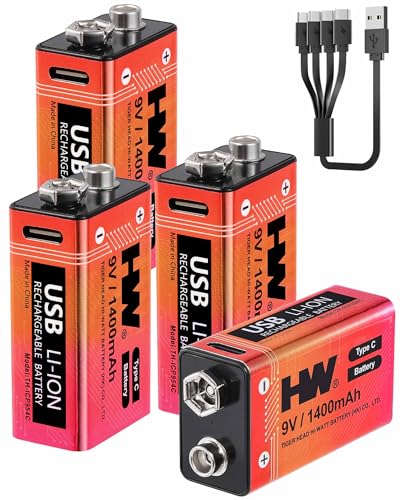
HW 1400mAh USB-C Rechargeable 9V Batteries 4 Pack

My Battery Supplier Rechargeable NiMH 9V 175mAh 3 Pack

Batteriol 1200mAh Lithium 9V Batteries 4 Pack

EBL Alkaline 9V Batteries 4 Pack

HW 1400mAh USB-C Rechargeable 9V Batteries 8 Pack

HW 1400mAh USB-C Rechargeable 9V Batteries 12 Pack

PKCELL Ultra Alkaline 9V Batteries 12 Pack
A Closer Look At Each Pick
Rechargeable power makes sense for compatible equipment that you use regularly, and this four-pack removes much of the charging-table clutter. Each cell has a built-in USB-C port, so the supplied four-in-one cable can handle several batteries without a separate charging dock. An LED indicator supplies a simple visual check during charging.
For household devices that expressly support rechargeable 9V cells, that convenience is meaningful. Compared with disposable options such as EBL Alkaline 9V Batteries 4 Pack, you gain reusable power but accept the need to recharge cells between cycles. Compatibility deserves careful attention before purchase.
Notable Upsides
- The 1400mAh rating supports repeat use in compatible equipment.
- Built-in USB-C ports simplify charging and reduce cable requirements.
- Four cells provide a practical rotation for home or hobby use.
- The LED indicator makes charging status easier to monitor.
Practical Considerations
- Confirm that every intended device accepts rechargeable 9V batteries.
- Routine charging and storage add steps that disposable cells avoid.
Key Product Details
Built With In Mind
You benefit most from these cells in compatible household equipment used often enough that regular recharging feels routine.
A Better Fit Elsewhere
My Battery Supplier Rechargeable NiMH 9V 175mAh 3 Pack may suit lower-drain compatible devices where a smaller three-cell set is more practical.
A three-cell package gives this option a lighter footprint than most sets here. NiMH, or nickel-metal hydride, is a rechargeable battery chemistry commonly chosen for repeat cycling in compatible electronics. The listed 175mAh capacity sits below the higher-capacity HW sets, making this one more relevant to lighter-duty use.
You may find the set useful for compatible radios, small electronics, or hobby devices that cycle intermittently rather than demanding long sessions. It offers less capacity than HW 1400mAh USB-C Rechargeable 9V Batteries 4 Pack, but fewer cells can make charging and storage less demanding.
Benefits That Matter
- Rechargeable NiMH chemistry supports repeat use.
- The compact three-pack fits limited storage spaces.
Worth Noting
- The 175mAh rating provides less capacity than the HW rechargeable options.
- A compatible 9V charger is not identified in the supplied information.
- Long storage periods call for periodic charge maintenance common to rechargeable cells.
- Device compatibility must be checked before use.
Technical Sheet
The Right Fit
This set suits you when you need a few rechargeable NiMH cells for compatible, low-drain electronics.
Reach For A Different Pick
HW 1400mAh USB-C Rechargeable 9V Batteries 4 Pack offers higher stated capacity for compatible equipment with heavier usage.
Disposable power remains the straightforward answer for devices used only occasionally. This Batteriol set pairs a 1200mAh capacity with a stated 10-year shelf life, which makes it a logical stock-up choice for compatible alarms, microphones, and walkie-talkies kept between uses. The batteries arrive ready for use without a charging routine.
That storage-oriented profile distinguishes it from the HW rechargeable sets, particularly for equipment that rarely reaches the outlet. Your trade-off is simple: you gain shelf-ready backups but discard cells after depletion rather than recharging them.
The Value In It
- The stated 10-year shelf life supports long-term backup storage.
- A 1200mAh rating provides useful capacity for compatible electronics.
- Disposable cells require no dedicated charging equipment.
- The four-pack works across several compatible household and audio devices.
Small Caveats
- These cells are non-rechargeable, so regular cycling isn’t possible.
- Keep unused cells in their original packaging and a cool, dry location.
Who Will Love This
You benefit most from these disposable lithium cells when you need stored backups for compatible equipment used only now and then.
Consider Something Else When
HW 1400mAh USB-C Rechargeable 9V Batteries 4 Pack may suit you better for compatible high-frequency use where recharging is convenient.
Disposable alkaline cells remove nearly every layer of ownership complexity. You install one, test the device, and replace it at the interval your equipment calls for. This EBL four-pack is positioned for compatible smoke detectors, carbon monoxide alarms, toys, audio equipment, wireless microphones, and other common household electronics.
Compared with Batteriol 1200mAh Lithium 9V Batteries 4 Pack, the chemistry is more familiar and the package is smaller, while the lithium set emphasizes greater stated capacity and shelf life. Nothing flashy makes this the simpler option, which is exactly the point.
The Upside
- Disposable alkaline cells need no charger or recharge schedule.
- The stated shelf life supports storage as household backups.
- Four cells cover several compatible devices around the home.
- Installation remains familiar for standard 9V equipment.
Trade Offs
- Disposable chemistry cannot be reused after discharge.
- The four-cell count is smaller than the PKCELL 12-Pack.
- Storage still matters because aging can reduce stored shelf capacity.
Feature Snapshot
Made For
This set suits households wanting simple disposable power for several compatible alarms, toys, and audio devices.
Where Another Pick Shines
PKCELL Ultra Alkaline 9V Batteries 12 Pack gives you a larger disposable rotation for homes with several alarm replacements.
An eight-cell rotation makes more sense for a pedalboard packed with multiple 9V-powered effects than a four-pack does. Each HW battery carries a 1400mAh rating and a built-in USB-C port, so you can recharge several cells through the included multi-connector cable. The set supports a repeat-charge approach for compatible equipment.
During rehearsals or a weekend session, that avoids reaching for disposable cells between performances. The trade-off is added charging work, and every pedal must accept a rechargeable 9V cell before you rely on this approach.
Reasons It Performs
- Eight cells suit pedalboards containing several 9V-powered effects.
- The 1400mAh rating supports longer compatible use cycles.
- Built-in USB-C connections simplify multi-battery charging.
- The included cable reduces the need for separate adapters.
- LED indicators provide visible charging-state information.
Areas To Watch
- Charge cells before traveling to prevent an interrupted session.
- Compatibility varies across pedal models, so check each device.
Core Details
Who Should Grab It
You benefit most from this set when your guitar pedalboard uses several compatible rechargeable 9V batteries.
Look Elsewhere When
My Battery Supplier Rechargeable NiMH 9V 175mAh 3 Pack may suit lower-drain electronics with a simpler three-cell rotation.
Twelve rechargeable cells turn the HW line into a practical inventory for wireless microphones, stage accessories, or a mixed collection of compatible equipment. The 1400mAh capacity offers more stated energy than the 175mAh NiMH set, while built-in USB-C ports let you replenish cells through the supplied multi-connector cable.
For someone operating multiple microphones, the large count can reduce interruptions during a busy week. You trade disposable simplicity for centralized charging and must keep every device’s battery requirements in view.
Where It Excels
- The 12-cell count covers several compatible audio devices.
- A 1400mAh rating supports extended operating cycles.
- USB-C charging reduces the need for dedicated sockets.
- LED indicators make individual charging states visible.
Possible Compromises
- Twelve cells require more charging and storage space than smaller packs.
- Long periods without use may call for periodic charging maintenance.
- Not every wireless microphone necessarily supports rechargeable 9V cells.
- A labeled rotation helps you avoid mixing depleted cells with ready ones.
Quick Facts
Best Suited To
This large set suits performers, creators, and studios running several compatible wireless microphones.
Swap It Out When
HW 1400mAh USB-C Rechargeable 9V Batteries 4 Pack may suit you better when four cells are enough for the equipment involved.
A large disposable inventory makes sense for apartments, family homes, or workshop storage where several compatible alarms and electronics need dependable backups. PKCELL supplies 12 ultra-alkaline 9V cells, so you can rotate devices or maintain spare stock without charging anything. The stated service life is 1.8 to 2 times that of an ordinary alkaline 9V cell.
That longevity claim makes the pack appealing for replacement planning, though actual device life depends on the equipment and operating conditions. Compared with HW’s rechargeable sets, this option is less convenient for frequent cycling but much simpler to store and deploy.
What Works In Its Favor
- Twalk cells support a broad household replacement inventory.
- The stated service life exceeds that of ordinary alkaline cells.
- Disposable cells need no charger or recharge schedule.
- The pack works well for compatible smoke alarms and other household devices.
- Spare cells can be divided among several locations.
Points To Note
- Twalk cells may be excessive for a single low-drain device.
- Stored batteries benefit from cool, dry conditions.
- The cells cannot be recharged after use.
Essential Details
Made For
This pack suits you when multiple compatible alarms or household devices call for a large disposable-cell rotation.
Another Choice May Suit
EBL Alkaline 9V Batteries 4 Pack may align better with a smaller home rotation and simpler storage footprint.
What Matters Before You Choose Your 9V Battery
Match The Chemistry To The Device
Start with the equipment manufacturer’s battery instructions, especially for alarms and professional audio gear. Rechargeable NiMH or lithium-ion cells require compatible equipment and charging arrangements, while disposable alkaline and lithium cells remove that restriction but create ongoing replacement needs. Connector shape alone doesn’t guarantee electrical compatibility.
Capacity Reflects Different Ownership Priorities
Capacity, measured in milliampere-hours or mAh, indicates stored electrical capacity rather than guaranteed runtime. Higher-rated cells may suit equipment with repeated, extended use, while smaller cells can be adequate for lower-drain devices. Device design, battery age, temperature, and operating load all influence real-world runtime.
Count The Devices You Actually Need
Four cells suit a modest rotation, while eight or 12 become more useful across pedalboards, wireless microphones, or several household alarms. You also need a charging and storage plan for rechargeables, plus a dry location away from temperature extremes for disposable cells. Match the pack size to your device count rather than buying extra inventory by reflex.
Rechargeable Convenience Has A Cost
USB-C ports can make a rechargeable set easier to replenish, especially during regular rehearsals or production work. The trade-off is that you must keep cells charged, rotate used batteries, and confirm device acceptance before installation. Disposable chemistry remains more suitable for occasional use and stored emergency replacements.
Avoidable Errors In 9V Battery Choices
Wrong Turns To Avoid
A common mistake is focusing on physical fit while ignoring chemistry. Rechargeable cells can have different voltage behavior from disposable cells, so equipment approval matters. Also consider charging access, device count, and storage conditions before choosing a large pack.
What The Higher Tier Buys
Higher-rated rechargeable sets generally add capacity, quantity, USB-C convenience, and charging indicators. Those attributes matter for frequent use, but a disposable lithium or alkaline set may be more economical for intermittent equipment. Match the upgrade to your operating rhythm rather than the largest specification.
Frequently Asked Questions for Batteries For Use 9 Volt
Can Rechargeable 9V Batteries Be Used In Smoke Detectors?
Only use rechargeable 9V batteries in a smoke detector whose manufacturer permits them. Some alarm models specify disposable cells, so check the labeling or installation instructions before replacing the battery.
Are Lithium 9V Batteries Rechargeable?
The Batteriol 1200mAh Lithium 9V Batteries 4 Pack is non-rechargeable. It is designed for immediate use and storage, not repeated charging cycles.
Which 9V Battery Pack Is Best For Wireless Microphones?
The HW 1400mAh USB-C Rechargeable 9V Batteries 12 Pack offers a large rotation for compatible wireless microphones. Its higher stated capacity and built-in USB-C connections suit frequent use, subject to device compatibility.
How Should Unused 9V Batteries Be Stored?
Keep unused cells in their original packaging in a cool, dry location away from direct heat and moisture. Rechargeable cells benefit from periodic charge maintenance during long storage periods.
Is A Larger Battery Pack More Convenient?
A larger pack reduces replacement frequency and provides more spare cells, but it also takes up more storage space. Choose the quantity that matches your device count and charging routine.
Final Verdict
The right 9V battery comes down to device approval, chemistry, capacity, and how often you use the equipment. HW’s rechargeable sets serve compatible pedalboards and wireless audio setups, while EBL and PKCELL keep disposable ownership simple. Batteriol’s lithium cells suit long-term storage, and the smaller My Battery Supplier set covers lighter rechargeable use.
