


Solar energy storage choices range from compact AA rechargeable cells for garden lights to high-capacity LiFePO4 batteries for marine equipment and off-grid systems. The right fit depends on storage capacity, physical space, charging method, and the device you need to power. For boaters, RV users, homeowners, and anyone managing outdoor electrical equipment, matching the battery to the actual load matters more than simply choosing a large capacity number. The options below cover different storage needs, from small solar lights to substantial trolling motor and portable-power applications.
The Leading Options At A Glance
Redodo 24V 100Ah Mini LiFePO4 Marine Battery

LiTime 24V 100Ah Bluetooth LiFePO4 Battery

LiTime 24V 100Ah Victron Communication Battery
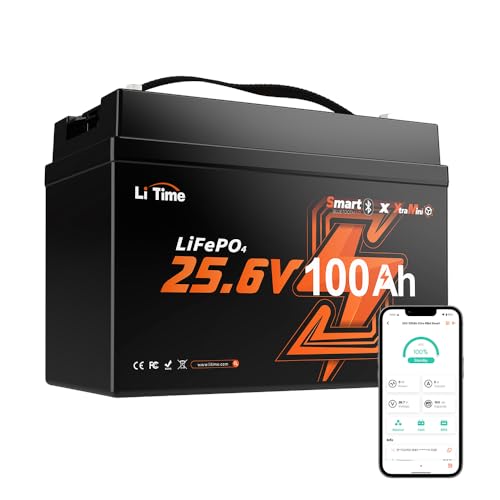
LiTime 24V 100Ah Mini Marine Trolling Battery

ABOK Ark2000 1536Wh 2000W Power Station Kit

WENJOOP 16-Pack AA Solar Light Batteries

EBL 12-Pack AA Solar Light Batteries
The Picks, Examined More Closely
Redodo targets boats with a 24V 100Ah LiFePO4 battery that combines substantial storage with a smaller Group 31 footprint. LiFePO4 chemistry is designed for repeated charging and discharging, which suits anglers running a trolling motor through a long day on the water. The measured enclosure is 13.11 by 6.93 by 9.45 inches, so the battery can reclaim useful deck space compared with a full-size case.
Compared with the larger LiTime options later in this roundup, Redodo prioritizes a compact marine layout rather than app-based monitoring. It appears suited to anglers who need a high-capacity 24V bank and have measured the tray carefully. The honest catch is enclosure compatibility: Group 31 trays are supported, while standard Group 31 battery boxes are not.
What Helps Most
- The 24V 100Ah rating provides a high-capacity starting point for demanding trolling motor use.
- LiFePO4 chemistry suits repeated charge cycles better than a basic lead-acid replacement.
- The compact dimensions can preserve tackle-storage space on a crowded deck.
- Group 31 tray support gives installers a defined mounting target.
Things To Consider
- Its height exceeds the capacity of standard Group 31 battery boxes, so measure the compartment before ordering.
- Owners should confirm charging equipment is compatible with a 24V LiFePO4 system.
Key Specs
Made For
This battery fits anglers with a 24V trolling motor who have a Group 31 tray and need a compact high-capacity bank.
Where Another Pick Suits Better
LiTime 24V 100Ah Bluetooth LiFePO4 Battery suits boaters who prioritize wireless status monitoring over the smallest enclosure.
LiTime’s 24V 100Ah model adds Bluetooth visibility to a battery that can serve marine, RV, and off-grid applications. Bluetooth monitoring means you can check status and manage discharge from a compatible phone, which is useful when the battery sits in a compartment or trailer that is not easy to reach. That convenience is more valuable in a stationary RV or cabin installation than during a moving boat.
The 8.2 by 21 by 8.5-inch size is substantially larger than the mini Redodo and LiTime marine batteries, so this is a better match for installations with generous clearance. Its listed 45.85-pound weight also matters during installation. The tradeoff is straightforward: Bluetooth adds control, but it does not shrink the battery.
The Case For It
- Bluetooth 5.0 provides battery status and discharge controls from a compatible device.
- The 24V 100Ah rating supports marine, RV, and off-grid loads.
- LiFePO4 chemistry is appropriate for repeated solar charging and regular use.
- The listed weight is manageable for a high-capacity installation compared with a much heavier lead-acid bank.
Worth Noting
- Its long, tall enclosure may crowd smaller battery compartments.
- Bluetooth monitoring depends on a compatible phone and app connection.
Key Product Details
Right Fit For
It suits RV, cabin, and boat owners who want remote battery visibility and have room for a full-size 24V unit.
Where Another Pick Suits Better
Redodo 24V 100Ah Mini LiFePO4 Marine Battery is a stronger choice for limited Group 31 tray space.
This LiTime battery is built around communication with a Victron Cerbo GX, making it more specialized than the general-purpose marine and RV model. CAN communication lets the battery participate in a connected power system, while DVCC support coordinates charging across the system. For an off-grid cabin, this can turn several separately managed boxes into a more coherent installation.
Remote monitoring through VRM is another reason to consider it, especially for installations where equipment sits away from the living area. The listed open-protocol approach may also help with integrations involving Xantrex, AIMS, or Go Power. You still need to verify equipment compatibility yourself, because communication support is only useful when every component speaks the required protocol.
Advantages To Know
- CAN communication is designed for Victron Cerbo GX integration.
- DVCC support helps coordinate charging across connected batteries.
- VRM enables remote monitoring for systems managed off-site.
- The open protocol offers a path toward broader system integration.
Practical Considerations
- This is a system-specific choice, so a simple standalone battery may be easier to deploy.
- Confirm firmware, wiring, and charger compatibility before installation.
Feature Snapshot
Who It Suits Best
It fits owners of Victron-based off-grid systems who need coordinated charging and remote battery visibility.
Consider Something Else When
LiTime 24V 100Ah Bluetooth LiFePO4 Battery is a more flexible choice for standalone marine, RV, or off-grid use without Victron communication.
LiTime’s mini marine battery follows the same compact direction as the Redodo, measuring 13.11 by 6.93 by 9.45 inches and fitting BCI Group 31 trays. Its stated application is 70- to 100-pound trolling motors, so it is aimed at a defined boat setup rather than a universal off-grid installation. Stable voltage and controlled thrust are the practical benefits that matter while moving across a lake or river.
Compared with the LiTime Bluetooth model, this enclosure is easier to place in a constrained boat layout, but you give up the listed wireless monitoring feature. Standard Group 31 battery boxes may also create a clearance problem because the height exceeds their stated capacity. Measure the full compartment, including cable routing, before committing.
Good Reasons To Consider
- The compact 24V format fits a Group 31 tray layout.
- LiFePO4 chemistry supports repeated charging for routine trolling use.
- Stable voltage can support smoother motor operation during extended outings.
Small Caveats
- Standard Group 31 battery boxes may not provide enough height.
- No Bluetooth monitoring is listed for this model, so status checks require a different method.
Quick Facts
Built With In Mind
It fits anglers with 70- to 100-pound trolling motors and a Group 31 tray who value a smaller battery case.
Swap It Out When
Choose LiTime 24V 100Ah Bluetooth LiFePO4 Battery instead when remote status monitoring matters more than enclosure width.
ABOK takes a different approach with a portable power station instead of a fixed 24V battery. The Ark2000 combines 1,536Wh of stored energy, 2,000W of output, and a 200W solar panel in one kit. That format works for camping, RV travel, and off-grid use where you want a ready-made power package rather than wiring a permanent bank into a boat or cabin.
The included panel makes the system easier to start with, although panel output still depends on sunlight, placement, and weather. Unlike the marine batteries, this unit is intended for portable equipment and campsite loads. Check the output requirements of your devices before relying on it for high-draw appliances, and plan for regular panel positioning.
Where It Excels
- 1,536Wh provides a useful portable energy reserve for camping and travel.
- 2,000W output suits many common portable loads.
- The 200W panel adds a practical solar-charging component to the package.
- All-in-one packaging reduces the need to assemble a separate battery and panel.
Practical Considerations
- It is a portable power station, not a drop-in trolling motor battery.
- Solar charging speed varies with sunlight and panel placement.
Technical Highlights
Made For
It suits campers, RV travelers, and off-grid users who want a portable station with a panel included.
A Better Fit Elsewhere
Redodo 24V 100Ah Mini LiFePO4 Marine Battery is the better choice for a permanently installed trolling motor setup.
WENJOOP’s 16-pack targets the small-scale end of solar storage: rechargeable AA cells for pathway, patio, deck, fence, and string lights. Each cell is rated at 1.2V and 1600mAh, a specification appropriate for compatible solar fixtures that use rechargeable AA batteries. The large count is practical for a household managing many lights across several outdoor areas.
These batteries are not substitutes for the larger LiFePO4 systems in this roundup. They store only enough energy for compact fixtures, and compatibility matters because devices designed for 1.2V NiMH cells may not work with every rechargeable AA product. Allow the cells to charge in the fixture or with a suitable NiMH charger before expecting consistent outdoor operation.
Standout Benefits
- The 16-pack covers multiple fixtures without requiring individual replacements.
- Each AA cell provides 1.2V and 1600mAh for compatible solar lights.
- The format suits pathway, patio, deck, fence, and string lighting.
Where It May Fall Short
- It will not power trolling motors, RV systems, or larger household equipment.
- Some solar fixtures require specific rechargeable cell types, so compatibility should be checked first.
Details At A Glance
Whose Shelf It Belongs On
It fits homeowners replacing many small solar lights spread across gardens, paths, patios, and decks.
Another Choice May Suit
EBL 12-Pack AA Solar Light Batteries is a better fit for households needing fewer replacement cells or a smaller pack.
EBL’s 12-pack is a straightforward replacement option for solar fixtures that accept 1.2V rechargeable NiMH AA cells. The pack is smaller than WENJOOP’s 16-cell set, which can be convenient for a single patio, a few pathway lights, or a staged replacement. It also has broader listed uses than outdoor lighting, including compatible household devices.
The key requirement is matching the device. EBL specifies 1.2V NiMH operation and recommends its own AA NiMH charger, so do not assume a standard alkaline charger is suitable. The cells arrive without a full charge, meaning you should charge them before first use. For compact fixtures, that preparation is simple; for a larger energy system, choose a dedicated storage battery instead.
Practical Advantages
- Rechargeable NiMH AA format supports compatible solar lights and household devices.
- The 12-pack covers a focused replacement need without carrying a larger set.
- Standard AA dimensions make familiar solar fixtures easier to service.
Potential Drawbacks
- It is limited to devices designed for 1.2V NiMH cells.
- Using the wrong charger can lead to unsuitable charging behavior, so follow the stated charger guidance.
Core Details
Who Will Love This
It fits households maintaining several small 1.2V solar-light fixtures without needing a larger outdoor battery bank.
Look Elsewhere When
WENJOOP 16-Pack AA Solar Light Batteries suits you better when you need replacements for a larger number of compatible fixtures.
What Matters Most Before You Choose Solar Energy Storage
Start with the load
A solar light and a trolling motor belong in different storage categories. Small AA cells handle low-draw fixtures, while marine batteries and portable stations are designed for larger loads. Calculate the equipment’s voltage and expected draw before choosing a battery.
Check the physical installation
Marine trays, RV compartments, and portable equipment have different clearance limits. Measure length, width, height, cable access, and ventilation before ordering. A compact Group 31 tray layout may not work with a standard battery box.
Match charging and monitoring
LiFePO4 systems need compatible charging equipment, and connected systems may require compatible communication protocols. Bluetooth monitoring is useful for a reachable phone, while Victron integration suits a connected energy platform. AA solar-light batteries need a compatible NiMH charging arrangement.
Common Shopping Slip Ups
The most common mistake is treating all solar batteries as interchangeable. A rechargeable AA cell, a 24V marine battery, and a portable power station serve completely different loads. Another mistake is skipping compatibility checks, especially for battery voltage, charger type, device protocol, and enclosure height.
What The Higher Tier Buys
Higher-capacity units generally add stored energy, larger enclosures, heavier construction, or more advanced monitoring and integration. Those features matter for a trolling motor, RV system, or remote off-grid installation. For a few garden lights, the added capacity and complexity are unnecessary.
Frequently Asked Questions
Can AA rechargeable batteries power a trolling motor?
No. AA NiMH cells are designed for small compatible devices and solar lights, not the high current and storage capacity required by a trolling motor.
Which battery fits a Group 31 tray?
The Redodo and LiTime mini marine batteries are specified for Group 31 tray layouts, but their height may exceed a standard Group 31 battery box. Measure the compartment first.
Does Bluetooth help with solar energy storage?
Yes. Bluetooth can show battery status and provide discharge controls for compatible systems. It is most useful in installations where you can regularly access the app.
Are LiFePO4 batteries suitable for repeated charging?
LiFePO4 chemistry is designed for repeated charge and discharge cycles. You still need a charger matched to the battery’s voltage and chemistry.
Can I use solar-light batteries in other devices?
Only when the device accepts 1.2V rechargeable NiMH AA cells. Check the device requirements before replacing alkaline cells or using batteries in toys, remotes, keyboards, or other equipment.
Final Thoughts
Choose a large LiFePO4 battery for marine, RV, or connected off-grid power, and choose a portable station for camping energy that needs to travel with you. For solar lights, match the rechargeable AA cell type and pack size to the fixtures you maintain. Measuring the compartment and confirming charger compatibility prevents the most costly mismatch.
