


Solar power at home depends on storage as much as panel production. You need enough usable energy for evening essentials, reliable charging control, and a battery that suits your inverter, installation space, and expected runtime. The options below range from complete portable power stations to fixed 12V LiFePO₄ batteries, plus a travel bag for organizing a smaller setup.
A Closer Look At The Lineup

Jackery Explorer 2000 v2 2042Wh Power Station

Anker SOLIX C1000 Gen 2 with 400W Panel

ECO-WORTHY 12V 314Ah LiFePO₄ Solar Battery

ECO-WORTHY EnergyRock 12V 280Ah 2-Pack Batteries

Trunab Travel Bag for Jackery Explorer 160/240/300

ECO-WORTHY 12V 280Ah Metal Case Battery
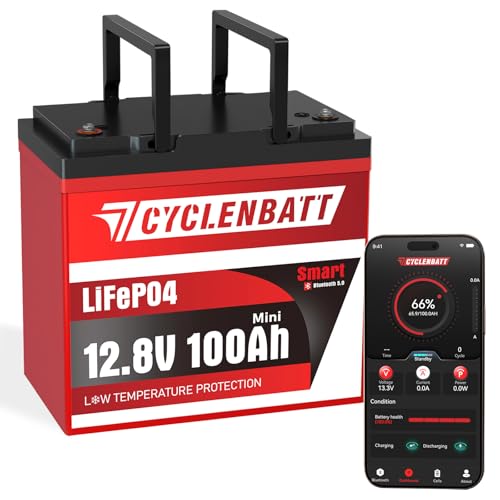
CYCLENBATT 12V 100Ah Mini Bluetooth Battery
The Strengths Of Each Pick
The Jackery Explorer 2000 v2 brings home-scale storage into a portable format, with 2,042Wh of energy and 2,200W of AC output. That combination suits a backup circuit, weekend cabin, or outdoor setup running several devices, although sustained household loads still require careful load management.
The included four 100W folding panels add useful charging flexibility for a property without a fixed rooftop array. Compared with the smaller Anker SOLIX C1000 Gen 2, this package offers substantially more stored energy and a stronger starting point for extended outages.
Useful Touches
- Three AC outputs provide 2,200W of combined power for common household appliances.
- The 2,042Wh capacity gives you more overnight room than the Anker C1000 Gen 2.
- A 100W USB-C PD port charges compatible electronics without a separate wall adapter.
- Four folding solar panels make recharging more practical across campsites or backup locations.
Things To Consider
- The larger capacity and panel bundle create a bulkier storage arrangement than a compact portable station.
- Keep ventilation clear and follow the charging guidance during long, high-output sessions.
Key Specs
Made For
You benefit most with a backup circuit, weekend cabin, or portable setup that needs more capacity than a small camping station.
A Better Fit Elsewhere
The Anker SOLIX C1000 Gen 2 suits you better when portability and a simpler solar bundle matter more than extended runtime.
The Anker SOLIX C1000 Gen 2 balances portability with enough power for a compact backup or off-grid recreation setup. Its 1,024Wh battery and 2,000W continuous output can serve multiple devices without approaching the physical scale of the Jackery Explorer 2000 v2.
The included 400W panel makes the bundle useful beyond emergency power, although the station and panel arrive separately. For daily mobile use, you may find ten ports and 1,600W recharging more useful than the Jackery package’s extra storage.
Where It Helps
- Ten output ports reduce the need for multiple charging blocks.
- 2,000W continuous output and 3,000W peak suit common portable appliances.
- 1,600W input charging shortens replenishment during periods of strong sun.
- The 400W solar panel supports off-grid topping up without a permanent rooftop system.
Practical Considerations
- The separate shipments require you to confirm that both components arrive before setup.
- At 1,024Wh, it holds roughly half the energy of the Jackery Explorer 2000 v2, limiting overnight runtime.
- App-based controls mean you gain useful visibility, but your phone becomes part of the setup experience.
At A Glance
Right Fit For
You benefit most as a camper, van traveler, or homeowner needing compact outage coverage for electronics and small appliances.
Where A Sibling Pick Shines
The Jackery Explorer 2000 v2 fits you better when a full night of moderate household power takes priority over portability.
The ECO-WORTHY 314Ah model favors fixed solar storage over appliance-ready outputs. Its 4,019Wh nominal capacity gives a large off-grid or RV installation more headroom, while Bluetooth monitoring lets you check charge status and operating information from a compatible phone.
Unlike the portable Jackery and Anker stations, this battery needs compatible wiring, charge control, and an appropriately sized inverter. The trade-off is integration work in exchange for a high-capacity bank that can scale as your energy use grows.
Features That Help
- The 314Ah capacity provides 4,019Wh of nominal stored energy.
- A 200A BMS, or battery management system, coordinates charging and discharge protection.
- SOC LEDs show remaining charge and operating status without requiring a separate meter.
- Bluetooth monitoring makes battery checks more accessible during routine maintenance.
Trade-Offs
- You must match the battery to a 12V charge controller and inverter with suitable current ratings.
- Low-temperature protection changes charging behavior in cold conditions, so seasonal placement matters.
- The April 2026 capacity revision makes listing labels especially important when comparing older inventory.
Feature Snapshot
Who It Suits Best
You benefit most with an off-grid home, larger RV installation, or experienced solar hobbyist comfortable configuring the electrical system.
Consider Something Else When
The CYCLENBATT 12V 100Ah Mini suits you better in a compact installation where weight and space constrain expansion.
The EnergyRock two-pack gives you 3,584Wh of combined nominal capacity in a matched configuration. That makes it attractive for an RV, camper, or residence seeking more storage than one compact battery can provide without assembling an unmatched collection.
The 2026 metal-case revision improves structural and thermal resistance compared with the earlier plastic enclosure. You still need compatible parallel-interconnection equipment, balanced cable sizing, and a charge controller, so the pack does not eliminate system-design work.
Points In Its Favor
- Two 280Ah batteries simplify expansion compared with mixing separate capacities.
- The pair provides 3,584Wh of combined nominal energy.
- Metal enclosures add durability for installation areas subject to bumps and temperature variation.
- Bluetooth and low-temperature protection support remote monitoring and seasonal operation.
Points To Keep In Mind
- The two units double the installation weight, so floor loading and mounting positions deserve attention.
- Each battery needs secure terminals, ventilation, and code-compliant wiring.
- The pair may exceed the space available in a small travel trailer or compact utility cabinet.
Built With In Mind
You benefit most with a larger RV, travel trailer, or fixed solar system that can accommodate two matched batteries and proper cable routing.
Another Choice May Suit
The single ECO-WORTHY 12V 314Ah battery fits you better when installation weight and one-unit serviceability matter more than matched redundancy.
The Trunab Travel Bag is an accessory rather than a battery, so its place here depends on your portable setup. You may find it useful for organizing cables and protecting a smaller Jackery Explorer unit during camping trips, RV departures, or temporary household backup.
Its 9.5 × 5.5 × 8-inch nylon construction is shaped for Explorer 160, 240, and 300 models, with padding and a water-resistant exterior. That compatibility is narrower than the larger models featured elsewhere in this roundup, including the Jackery Explorer 2000 v2.
Useful Strengths
- Tear-resistant nylon protects the station from scuffs during transport.
- Padded lining reduces bumps and contact with surrounding gear.
- The compact dimensions simplify storage in a vehicle, closet, or equipment locker.
Minor Gripes
- The bag does not fit the larger Jackery Explorer 2000 v2.
- Water resistance is helpful during light exposure but does not make the bag submersible.
- You must confirm your power station’s dimensions before ordering.
Quick Facts
The Right Fit
You benefit most as a camper who carries one of the specified compact Jackery models and wants a protected home for storage and cables.
Look Elsewhere When
The Jackery Explorer 2000 v2 fits you better when you need actual home-scale battery capacity rather than a transport accessory.
The single 280Ah metal-case battery sits between compact storage and a large two-unit system. At 3,584Wh, it gives RV owners, boaters, and solar hobbyists a substantial 12V bank without doubling your footprint immediately.
The low-current power switch provides a convenient way to isolate low-draw circuits, while Bluetooth puts operating information on your phone. Compared with the 314Ah ECO-WORTHY option, the capacity is slightly lower, but the shared 200A BMS and metal enclosure make it a strong alternative.
A Few Strong Suits
- The 280Ah rating supplies 3,584Wh of nominal energy.
- The metal case offers improved heat resistance and structural durability.
- Bluetooth monitoring helps you check status during routine system checks.
- A low-current switch supports controlled shutdown of attached accessories.
Practical Considerations
- Mount the unit securely and maintain clear space around the enclosure.
- Low-temperature protection affects charging behavior, so keep the battery within the specified operating conditions.
- Two label styles may arrive randomly, though the internal capacity and structure remain consistent.
Who Will Love This
You benefit most with a trolling-motor boat, camper, or off-grid project needing a durable single 12V battery.
Reach For A Different Pick When
The ECO-WORTHY EnergyRock 2-Pack fits you better when you prefer matched batteries and planned storage expansion.
The CYCLENBATT Mini targets installations where 100Ah, or 1,280Wh, is enough capacity and compact dimensions carry extra weight. It fits a small boat, weekend trailer, or single-room solar project where the 280Ah and 314Ah batteries would consume too much space.
Bluetooth monitoring, low-temperature protection, and a stated 5,000-cycle rating make it easier to manage as a long-term component. The stated 330A instantaneous discharge capability also suits load surges, but your wiring and controller must support the battery’s available current.
Strong Points
- The 100Ah capacity provides 1,280Wh of nominal energy in a compact format.
- Bluetooth gives you remote visibility into battery status.
- A stated 5,000-cycle rating supports long-term planning.
- Up to 330A instantaneous discharge handles brief high-current demands.
Small Limitations
- It offers much less storage than the ECO-WORTHY 280Ah and 314Ah models.
- High-current performance depends on properly sized cables, fusing, and charge controls.
- Low-temperature protection makes seasonal charging behavior worth checking before installation.
Core Details
Whose Shelf It Belongs On
You benefit most with a compact boat, trailer, or solar project where weight and enclosure space limit larger batteries.
Swap It Out When
The ECO-WORTHY 12V 314Ah battery fits you better when overnight energy demand outweighs compact dimensions.
Match Capacity To Your Solar System
Capacity comes first because a battery’s amp-hour rating times its nominal voltage determines stored energy. A 12V 100Ah battery provides 1,280Wh nominally, while the 280Ah and 314Ah options provide 3,584Wh and 4,019Wh. Compare those figures with your evening loads and expected sun exposure rather than inverter output alone.
Check Electrical Compatibility
You need an inverter designed for 12V battery banks, a charge controller matched to panel and battery voltage, correctly sized cables, and suitable fusing. Confirm terminal layout, communication requirements, and the manufacturer’s installation limits before purchasing; a large battery cannot compensate for undersized wiring.
Consider Temperature And Monitoring
Cold climates make low-temperature protection an important feature because charging behavior changes under those conditions. Bluetooth or SOC indicators simplify routine checks, but monitoring works best with a clearly planned maintenance routine and secure mounting.
Decide Portable Or Fixed
Portable power stations such as the Jackery Explorer 2000 v2 and Anker C1000 Gen 2 provide built-in outlets and greater mobility. Fixed LiFePO₄ batteries offer larger storage options for solar homes, RVs, and boats, but they demand more careful electrical design and installation.
Avoid Common Storage Mistakes
Common Shopping Slip Ups
A common mistake is comparing amp-hour numbers across different voltages without converting them to watt-hours. Another is assuming a large battery can safely connect to any inverter or charge controller. Check connector type, wiring diameter, fusing, enclosure dimensions, and temperature limits before ordering.
Where The Extra Money Goes
Higher-capacity models add stored energy, larger enclosures, stronger battery-management systems, or monitoring features. Those upgrades help when you need longer runtime or higher loads, while a smaller battery may be enough for a compact cabin, boat, or emergency electronics circuit.
