


Choosing solar-panel storage means balancing usable capacity, system voltage, physical space, and connection compatibility. The ECO-WORTHY options suit installations needing substantial home-storage capacity, while the cable and adapter picks support smaller solar charging projects, maintenance connections, and custom wiring layouts. Your equipment voltage, charge controller, and available space ultimately determine which option fits.
A Quick View Of The Lineup

ECO-Worthy Cubix100 48V 600Ah LiFePO4 Solar Battery Kit
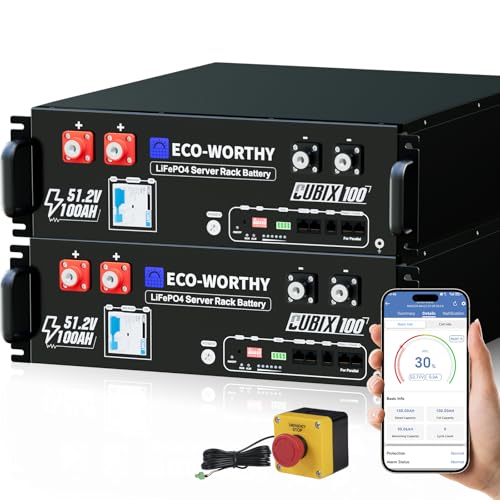
ECO-WORTHY Cubix100 48V 200Ah LiFePO4 Battery, Two-Pack with Bluetooth
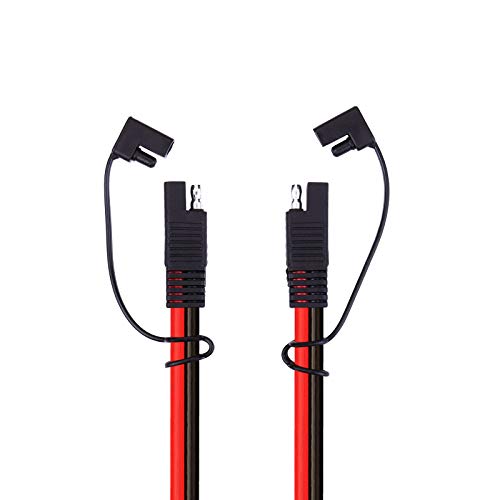
iGreely 10 AWG SAE Extension Cable

RIOCAN 10AWG 1FT PV Extension Cable

Renogy 20FT 12AWG Solar Extension Cable Pair and 10A PWM Controller
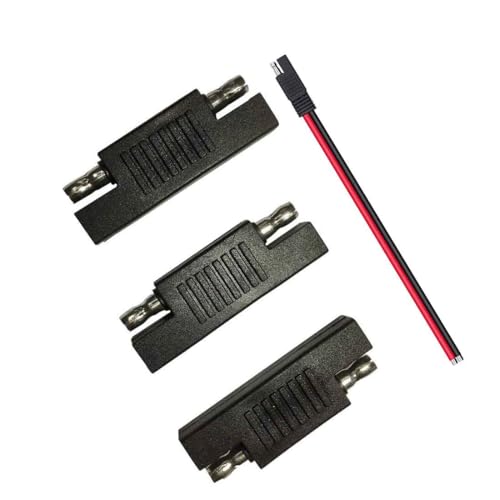
Sunway Solar SAE Polarity Reverse Adapters, 3-Pack
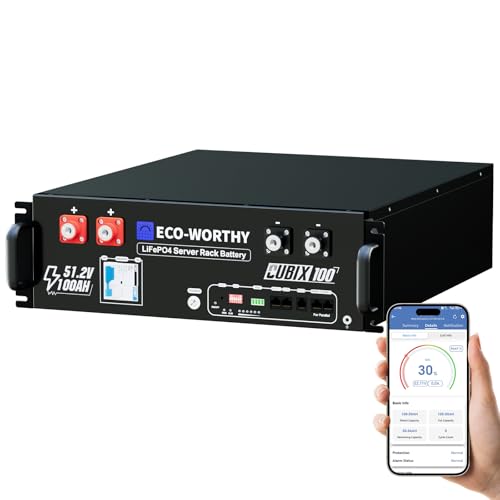
ECO-WORTHY Cubix100 48V 100Ah LiFePO4 Server Rack Battery
A Closer Look At Each Pick
The six-pack configuration turns this into a substantial 48V storage system rather than a portable solar accessory. LiFePO4 chemistry uses lithium iron phosphate, a battery chemistry valued for thermal stability in stationary storage. For a home with substantial backup expectations, its stated 30.72kWh capacity offers considerably more room than the smaller Cubix100 alternatives later in this list.
The server-rack format favors organized equipment rooms, dedicated installation planning, and a system designed to remain stationary. Depending on your property, six units may require more floor space and careful cable routing than a single-module setup. Even so, the scale makes sense for households planning extensive energy storage rather than occasional battery maintenance.
Well-Handled Touches
- Six 600Ah modules support high-capacity home backup planning.
- LiFePO4 chemistry suits stationary storage applications.
- The rack format helps organize a multi-battery installation.
- Documented safety testing provides useful installation context.
Trade Offs
- The physical footprint is substantial for garages and utility rooms.
- Battery shipping is subject to hazardous-material transportation rules.
- Installation demands compatible 48V equipment and careful ventilation planning.
Key Specs
Built With In Mind
This kit suits experienced homeowners planning a dedicated, high-capacity 48V storage installation with adequate equipment-room space.
Consider Something Else When
ECO-WORTHY Cubix100 48V 100Ah LiFePO4 Server Rack Battery offers a more manageable starting point for modular home energy projects.
Two 100Ah modules make this a more moderate step up from the single Cubix100 unit, while the Bluetooth feature adds a useful monitoring layer. That matters in a busy utility room because closed-loop communication can help compatible systems track battery conditions without relying entirely on a separate display. Compared with Item 1, it serves a smaller installation without abandoning a 48V architecture.
For daily backup planning, its stated 10.24kWh capacity gives you a middle ground between a single module and a six-battery bank. The trade-off is that battery chemistry alone does not determine usable runtime; inverter sizing, solar production, temperature, and household loads shape the result. You’ll still need matching power-conversion equipment and appropriately configured cables.
Everyday Advantages
- Two 100Ah units provide a balanced expansion point.
- Bluetooth supports connected battery monitoring in compatible setups.
- The rack format keeps stationary modules organized.
- Support access adds practical assistance for setup questions.
Practical Considerations
- Bluetooth monitoring depends on compatibility with your other equipment.
- Two modules still need an appropriate ventilation plan and secure rack space.
- Coverage terms can vary, so examine the plan details before purchase.
Core Details
Made For
This two-pack fits homeowners who want connected 48V storage with more capacity than a single module but less equipment than Item 1.
Another Choice May Suit
ECO-Worthy Cubix100 48V 600Ah LiFePO4 Solar Battery Kit suits installations needing substantially greater stored energy and rack capacity.
The iGreely cable supports the wiring side of a solar project rather than storing energy itself. SAE connectors are standardized quick-disconnect plugs used across portable charging, maintenance, and automotive applications, so their main benefit is easier separation and reconnection. The 3.3-foot length also makes routing around a battery maintainer or compact panel setup less awkward.
For a boat, motorcycle, ATV, or small maintenance system, that plug-and-play convenience can outweigh the bulkiness of permanent storage wiring. Unlike Item 4’s PV lead, this cable expects SAE connections at both ends, so confirm your equipment uses that interface. The honest read is that it works best as a targeted extension, not as a universal solar cable.
Strong Points
- SAE quick disconnects simplify routine reconnection.
- The 3.3-foot run fits many compact battery-maintainer layouts.
- 10 AWG wire provides a heavier connection profile for portable charging projects.
Small Caveats
- Your solar charger and battery must use compatible SAE connections.
- The cable adds resistance over long runs, making it better suited to short extensions.
- Polarity still needs verification before connecting equipment.
Who Will Love This
This extension suits owners of SAE-equipped battery maintainers, portable chargers, boats, motorcycles, or ATVs who need a short flexible link.
Where Another Pick Suits Better
RIOCAN 10AWG 1FT PV Extension Cable suits panel installations that use dedicated PV connectors and custom terminal connections.
This one-foot lead is built around photovoltaic wiring rather than SAE quick disconnects. PV connectors are the weather-resistant plugs commonly found on solar panels, while the bare-wire end allows you to create a connection that fits your charge controller or battery input. That makes the cable practical for panel builders comfortable with basic wire termination.
Compared with Item 3, the RIOCAN lead uses 10 AWG, equivalent to 6 square millimeters, and includes a red-and-black pair. Its tinned copper conductors resist oxidation, a useful detail for long-term exposed wiring. The one-foot length is intentionally short, so it works best as a custom transition near the panel or controller.
What Earns Its Place
- Matched male and female PV connectors simplify panel-side connection.
- Bare-wire ends allow custom battery or controller terminations.
- Tinned copper construction supports corrosion resistance.
Details To Watch
- Bare conductors require correct stripping, crimping, and insulation.
- The short length suits equipment positioned close together.
- Connector gender and conductor polarity must match your panel.
Quick Facts
Right Fit For
This lead suits DIY solar wiring projects that need a short PV-to-bare-wire transition and use proper crimping tools.
Look Elsewhere When
iGreely 10 AWG SAE Extension Cable provides a better fit for maintainers and portable charging systems that use SAE plugs.
The Renogy package goes beyond a cable by pairing 20-foot extension leads with a 10-amp PWM charge controller. Pulse-width modulation, or PWM, controls charging by switching the controller’s output rather than continuously reducing voltage. For a small panel charging a 12V or 24V battery bank, that makes this a more complete starting point than Item 3 or Item 4.
The 20-foot distance gives you more freedom to place a panel in direct light while the controller remains near the battery, which is useful in sheds, boats, and remote installations. The trade-off is that the included 10-amp controller sets a firm limit on charging current. A larger panel may collect more sunlight than this controller can process, so your system sizing needs to follow the weakest component.
Practical Advantages
- The cable pair simplifies panel-to-controller routing.
- Twenty-foot leads accommodate more distant panel placement.
- The 10-amp controller provides a compact charging component.
- UV-resistant, waterproof cabling suits exposed outdoor routes.
Possible Compromises
- The 10-amp limit constrains very large panel arrays.
- 12 AWG is thinner than the 10 AWG leads in Items 3 and 4.
- Controller placement still requires protection from moisture and heat.
Feature Snapshot
Who Should Grab It
This package suits beginners assembling a compact 12V or 24V solar charging system with a panel, battery bank, and modest current demand.
A Better Fit Elsewhere
ECO-WORTHY Cubix100 48V 200Ah LiFePO4 Battery, Two-Pack with Bluetooth suits stationary home storage rather than portable low-voltage charging.
Different SAE-connected products can use opposite conductor arrangements, making polarity mismatches more than a theoretical concern. These adapters reverse the SAE connection so a panel charger can work with a battery maintainer, regulator, or extension cable using the opposite arrangement. That makes the 3-pack useful for anyone maintaining more than one small solar charging setup.
Unlike Item 3, which adds reach between matching connectors, this item solves a compatibility problem at the plug. The honest read is that it should simplify a known wiring mismatch, not become a substitute for checking specifications. Polarity errors can damage connected equipment, so confirm the charger and battery connections before energizing the circuit.
Key Advantages
- Corrects reversed SAE conductor arrangements.
- Three adapters cover several chargers or stored spare connections.
- Works alongside SAE extension cables, regulators, and maintainers.
Where It May Fall Short
- The adapters provide no cable length between components.
- Only SAE-equipped systems benefit from this solution.
- Connector compatibility and polarity need verification before use.
The Right Fit
This set suits owners of several SAE solar devices whose charger and battery accessories use differing polarity arrangements.
Reach For A Different Pick When
iGreely 10 AWG SAE Extension Cable is the better option for adding physical distance between already compatible SAE connections.
A single 100Ah module gives you a cleaner starting point than the two-pack in Item 2 or the six-pack in Item 1. Its 48V LiFePO4 platform is aimed at stationary solar storage, where a compact rack-mounted battery can be expanded around compatible equipment. That makes it appealing for a utility room where space matters but future capacity may grow.
One battery does not provide the storage volume of a larger bank, and a complete home system still needs an inverter, charge equipment, ventilation, and correctly sized wiring. Support and service-plan information can be valuable during setup, although plan terms and eligibility deserve careful review. For modular planning, the single-unit format offers a more manageable starting point than committing to six modules immediately.
The Upside
- The single-module format simplifies initial storage planning.
- LiFePO4 chemistry fits stationary solar applications.
- Server-rack construction supports organized equipment rooms.
- Closed-loop communication adds monitoring potential in compatible systems.
Honest Caveats
- A single 100Ah module stores less energy than the larger multi-pack options.
- Compatibility with your inverter and control equipment must be confirmed.
- Rack placement, secure mounting, and ventilation remain essential ownership tasks.
Essential Details
Built With In Mind
This single module suits experienced homeowners building a modular 48V storage system in a dedicated equipment space.
Where A Sibling Pick Shines
ECO-WORTHY Cubix100 48V 600Ah LiFePO4 Solar Battery Kit suits households that need substantially more storage from the outset.
What Matters Before Building Solar Storage
Match the nominal voltage first
A solar battery’s nominal voltage must align with your inverter, charge controller, and wiring architecture. The 48V Cubix100 units belong in a 48V system, while the Renogy controller package supports 12V or 24V charging. Treat nominal voltage as the first compatibility filter, not the final installation decision.
Compare capacity against realistic loads
Capacity describes stored energy, but usable runtime also depends on inverter efficiency, conversion losses, temperature, and household demand. A larger bank gives you more flexibility during cloudy periods or an outage. For daily commute electronics, a small charger and battery maintainer may be enough.
Check connectors before buying cable
SAE plugs, PV connectors, and bare-wire leads serve different roles. SAE quick disconnects favor portable maintenance connections, while PV leads support permanent panel wiring. Count both ends, measure the route, and confirm conductor size before purchasing a short extension.
Plan for service access and environment
Stationary batteries need secure mounting, ventilation, cable strain relief, and room for maintenance. Portable systems still need moisture protection and reliable connections. Owners commonly report setup friction from rushed cable routing, so plan the physical installation before unpacking the largest components.
Practical Checks Before You Connect
Mistakes Worth Dodging
Don’t judge a battery by capacity alone; voltage, connector type, and charge-control requirements determine compatibility. Measure the actual cable route and verify polarity before cutting or connecting wire. Confusing nominal panel output with battery charging current can also lead to undersized equipment.
What Separates Premium From Basic
Higher-capacity systems add usable storage, monitoring, and larger installation components rather than simply heavier batteries. The added value matters for frequent outages or larger household loads. A compact setup remains more practical for low-demand maintenance charging, so scale the upgrade to the load instead of size alone.
Frequently Asked Questions
What voltage battery works with solar panels?
Your battery voltage must match the charge controller, inverter, and wiring design. Common portable systems use 12V or 24V, while larger home-storage systems commonly operate around 48V.
Can one solar panel charge a battery?
Panel size, sunlight exposure, battery capacity, and charge losses determine the result. A small panel can maintain a battery, but meaningful charging usually requires more panel output and suitable charge control.
Are SAE and PV connectors interchangeable?
No. SAE quick disconnects and PV connectors have different designs and intended applications. You need matching connectors or a purpose-built, electrically verified adapter.
How much battery capacity is needed for backup power?
Calculate the wattage of essential loads and the hours you expect them to operate. Add expected conversion losses, then choose a battery bank that meets both the energy target and your system’s voltage requirements.
Do LiFePO4 batteries need special installation?
They still require compatible controls, secure mounting, correct wiring, and suitable ventilation. Follow the equipment documentation and local electrical requirements for your installation.
The Takeaway
Choose the ECO-WORTHY capacity that matches your planned 48V system, not simply the largest available bank. For compact solar charging or maintainers, focus on connector type, cable length, and charge-control limits. Thoughtful sizing and careful polarity checks make the practical difference.
