


Building a solar or wind system means matching storage and connection parts to the equipment already in your setup. A 12V battery bank needs enough usable capacity for cloudy spells, overnight loads, and battery-management requirements, while damaged control cables or undersized extensions can interrupt an otherwise sound installation.
This lineup covers actual LiFePO4 storage, portable power, and the cables that connect panels, controllers, chargers, and battery systems. You’ll find the right fit whether you’re expanding an off-grid home, maintaining an RV circuit, or keeping essentials charged during camping trips far from a wall outlet.
A Quick View Of The Lineup

POANES 3.3FT VE.Direct Cable for Victron Devices
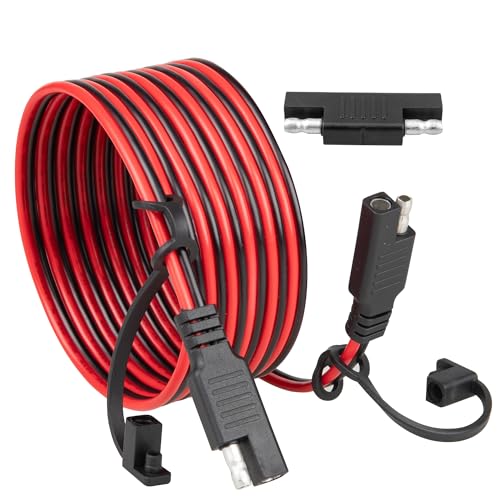
Oyviny 6FT 16AWG SAE Extension Cable

ELFCULB 20FT 12AWG XT60 Extension Cable

ECO-WORTHY 12V 314Ah LiFePO4 Battery 4019Wh

ECO-WORTHY EnergyRock 12V 280Ah Battery 2-Pack

ECO-WORTHY 12V 280Ah Metal Case Battery

YELOMIN 38800mAh Solar Charger Power Bank
Why These Options Stand Out
A damaged communication lead can stop a Victron installation from becoming a neatly integrated system. This 3.3-foot POANES cable targets VE.Direct connections involving GX devices, SmartSolar controllers, smart chargers, and compatible DC/DC battery chargers.
That makes it a focused repair or routing option rather than a general solar lead. In a compact RV installation, you may find the short run easier to manage than a longer coil, but the equipment compatibility must line up before purchase.
Reasons It Performs
- Supports communication between several compatible Victron Energy device types.
- The 3.3-foot length suits short controller-to-device runs without excess cable.
- A replacement cable can restore a connection without dismantling the surrounding wiring.
- Black construction gives it a neutral appearance inside an enclosure or control panel.
Practical Considerations
- VE.Direct compatibility is specific, so it won’t serve as a universal solar connection.
- Owners should keep the cable clear of standing water, sharp edges, and moving components.
Quick Facts
Built With In Mind
This cable best serves Victron owners replacing a short communication lead in a compact solar, RV, or off-grid control setup.
Where Another Pick Suits Better
Solar installations using SAE connections have more suitable routing flexibility with the Oyviny 6FT 16AWG SAE Extension Cable.
Moving a solar panel around an RV or connecting a charger across a battery compartment often comes down to connector choice and cable routing. The Oyviny lead uses two-pin SAE connectors, red and black conductors, and a polarity-reversing adapter to make those connections more adaptable.
Its 16AWG copper construction and PVC jacket suit mobile and stationary 12V applications, provided the cable handles the current expected by your equipment. Compared with the specialized POANES VE.Direct lead, it fits a broader collection of SAE-equipped devices.
Noteworthy Benefits
- Six feet of reach reduces the need for awkward panel positioning.
- SAE quick connectors simplify repeated setup and disconnection.
- The polarity adapter helps resolve differing connector arrangements.
- Red and black conductors make conductor identification more straightforward.
Worth Noting
- Connector compatibility and current limits need to be checked before energizing the circuit.
- Polarity can be missed during hurried mobile connections, so inspect red-to-positive and black-to-negative alignment.
- Replace the cable when its insulation or connector shows cracking rather than routing it through pinch points.
Feature Snapshot
Right Fit For
RV owners, mobile solar users, and workshop-based hobbyists benefit from this lead when their equipment uses two-pin SAE connections.
A Better Fit Elsewhere
Compact setups based entirely around XT60 equipment have a more direct connection path with the ELFCULB 20FT 12AWG XT60 Extension Cable.
Twenty feet of cable gives a portable power station or RC battery setup room that shorter leads may not. The ELFCULB cable pairs that reach with 12AWG tinned copper conductors and female-to-male XT60 ends, targeting compatible solar panels and battery packs.
The length works well for reaching from a panel to a pack across a workbench or within a larger equipment layout. For a compact installation, you may end up with more cable than necessary, so plan the route before ordering and secure any excess safely.
Practical Pluses
- Twenty feet offers useful reach for portable stations and separated panels.
- XT60 ends suit compatible RC batteries, solar panels, and power systems.
- Twelve-gauge conductors provide a practical balance of reach and bulk.
Points To Keep In Mind
- XT60 compatibility is narrower than the more common SAE connection format.
- Long cable runs add resistance, so distance should be included in electrical design decisions.
- Protect connectors from moisture, abrasion, and pinching during storage.
Made For
Portable power users, RC hobbyists, and small solar developers benefit most from the reach of the XT60 connection.
Consider Something Else When
Panels with two-pin SAE leads fit the connector format and adjustment needs of the Oyviny 6FT 16AWG SAE Extension Cable more directly.
Storage sizing determines how long an off-grid system can carry its loads between sunny periods. This single 12V LiFePO4 battery supplies 314Ah, equivalent to a stated 4019Wh, while a 200A battery-management system, or BMS, coordinates charging and discharge.
Bluetooth monitoring, SOC LEDs, and low-temperature protection make it more informative than an unmarked basic bank. Compared with the 280Ah options later in the lineup, its greater rated capacity favors larger daily loads, though the exact system design still governs usable runtime.
Everyday Perks
- The 4019Wh rating provides substantial storage for off-grid, RV, and solar backup loads.
- Bluetooth status data helps you check battery information without relying only on a basic charge estimate.
- SOC LEDs provide a quick visual indication of charge state.
- Low-temperature protection adds a useful control for cold-weather battery environments.
- The 200A BMS suits high-current applications within its specified limits.
Trade Offs To Consider
- A large battery adds weight, so lifting and mounting deserve planning.
- Capacity alone does not determine runtime; inverter efficiency, temperature, cable losses, and load size all matter.
Key Product Details
Who It Suits Best
Off-grid homeowners and RV users with substantial 12V loads benefit from the high capacity and accessible charge monitoring.
Another Choice May Suit
A paired installation gains parallel storage capacity from the ECO-WORTHY EnergyRock 12V 280Ah Battery 2-Pack.
A pair of 280Ah batteries gives an off-grid system more flexibility than a single unit, particularly where loads span evenings and cloudy weather. The EnergyRock pack supplies a stated maximum of 3584Wh, Bluetooth monitoring, low-temperature protection, and a 200A BMS in each 12V metal-case battery.
That storage profile fits RVs, campers, travel trailers, and home solar projects, but parallel operation requires compatible equipment and careful sizing. Unlike the 314Ah single battery, this option shifts emphasis toward a matched two-unit bank rather than maximum capacity in one enclosure.
What Makes Sense
- Two 280Ah units expand total storage to a stated 7168Wh across the pack.
- Metal cases suit stationary installations where structural durability and heat resistance matter.
- Bluetooth adds remote status visibility for battery management.
- Each battery includes a 200A BMS and low-temperature protection.
Small Caveats
- Two batteries create a heavier installation with more connection points to inspect.
- Parallel cables, ventilation, mounting, and electrical compatibility require careful planning.
Technical Highlights
Whose Shelf It Belongs On
Home solar planners and RV owners needing a matched high-capacity bank benefit from the two-battery format.
Where A Sibling Pick Shines
A single-unit installation has a simpler physical arrangement with the ECO-WORTHY 12V 314Ah LiFePO4 Battery 4019Wh.
The single 280Ah metal-case battery fills the middle ground between compact storage and a full two-battery bank. Its stated 3584Wh capacity, Bluetooth monitoring, low-temperature protection, and 200A BMS suit off-grid homes, RVs, campers, and trolling motor applications with 12V power demands.
You gain a substantial storage block without managing two parallel batteries from the outset. The trade-off is less expansion flexibility, and the listing includes randomly assigned exterior label styles, though the stated internal structure and capacity remain the same.
Useful Touches
- The metal enclosure adds structural substance and thermal resistance.
- Bluetooth monitoring makes recurring status checks more convenient.
- A 3584Wh rating provides useful capacity for sizable 12V equipment.
- Low-temperature protection supports cold-weather system planning.
Honest Caveats
- Shipping may produce either supported exterior label style.
- The battery is heavy, so safe handling and sturdy mounting are essential.
- Charging equipment and loads must remain within compatible electrical limits.
Who Will Love This
RV owners, camper users, and solar hobbyists wanting one high-capacity battery benefit from this single-unit layout.
Swap It Out When
Projects already designed around a matched parallel bank align more closely with the ECO-WORTHY EnergyRock 12V 280Ah Battery 2-Pack.
A phone power bank handles a different role from the large LiFePO4 banks in this lineup: keeping small devices alive during a hike, campsite, or travel delay. The YELOMIN model combines 38,800mAh of nominal capacity with 22.5W USB-C charging, four built-in cables, and dual LED emergency lights.
That cable bundle is useful when packing space is tight, while USB-C supports compatible phones and compact electronics. Its solar designation shouldn’t be treated as a substitute for a panel, so campsite planning should allow for supplemental charging and preserve the internal cell’s capacity.
Strengths Worth Knowing
- Four integrated cables reduce the need to pack several separate leads.
- The 22.5W USB-C output suits compatible everyday devices.
- Dual LED flashlights add practical visibility during outdoor travel.
- The high nominal capacity is useful for repeated phone charging over a trip.
Factors To Consider
- This portable pack is not a substitute for a 12V house or RV battery.
- Recharge it before travel and keep it away from moisture or extreme heat.
Feature Card
The Right Fit
Hikers, campers, and frequent travelers benefit from portable phone power and integrated cables away from wall outlets.
Look Elsewhere When
Off-grid households needing sustained household loads need a larger bank such as the ECO-WORTHY 12V 314Ah LiFePO4 Battery 4019Wh.
Matching Storage, Charging, And Connector Needs
Start with the system voltage
Solar and wind installations commonly organize around 12V, 24V, or 48V systems, though individual components can sit at different stages of the power path. Match battery voltage to the charge controller, inverter, and converter requirements rather than treating amp-hour capacity as a universal measure.
A 12V battery can operate within some higher-voltage systems through a suitable converter, yet that adds another compatibility decision. Confirm connector types, charge profiles, and manufacturer specifications before combining components from different systems.
Calculate usable storage
Battery capacity begins with amp-hours, which combine voltage and current capacity. A 12V 280Ah battery provides 3,360Wh on a simple label calculation, while the listed 3,584Wh maximum reflects the product’s stated specification rather than guaranteed available runtime.
Your usable amount is usually lower because of conversion losses, temperature, battery age, and the depth to which the system operates. For daily energy use, list the wattage and hours for each load, then design around expected solar or wind gaps rather than nominal capacity alone.
Check the current path
Cable gauge determines how much current a conductor can carry while limiting resistive heating and voltage loss. Longer runs demand careful attention to both wire size and total circuit length, especially for inverters, motors, and high-output chargers.
Connector names also matter. VE.Direct supports compatible Victron communication devices, SAE offers a two-pin connection format, and XT60 provides a different quick-connection arrangement, so an attractive cable can still be useless without the correct ends.
Consider monitoring and protection
Bluetooth status information helps you understand battery condition and charge level without relying entirely on a controller display. SOC LEDs offer quicker visual checks, while a BMS manages charging and discharge within specified limits.
Low-temperature protection matters for RV, camper, and off-grid storage exposed to cold conditions. A metal case can improve structural and thermal characteristics, but secure mounting, ventilation, and terminal care remain necessary regardless of enclosure material.
Practical Decisions Before Power Flows
Mistakes Worth Dodging
Sizing by amp-hours alone can leave a system short on energy or oversized for its inverter. Connector mismatch, poor ventilation, undersized cables, and overlooked temperature limits create separate problems that capacity calculations won’t solve.
What Separates Premium From Basic
Premium storage tends to add Bluetooth monitoring, low-temperature controls, higher-current BMS hardware, and stronger enclosures. Those additions matter most for off-grid systems, mobile installations, and users who need clearer battery information, while compact phone power offers a different form of convenience.
Frequently Asked Questions
Are LiFePO4 batteries suitable for off-grid solar?
LiFePO4 batteries can suit off-grid solar storage because the chemistry supports repeated cycling and common 12V configurations. Charging equipment, temperature controls, and system sizing must match the battery specifications.
Can one battery replace a two-battery bank?
A single higher-capacity battery may cover a similar energy target, but charging, inverter, and cable requirements still matter. Two matched batteries can simplify expansion or replacement planning for some systems.
Which cable connector should you use?
Choose the connector supported by both ends of your equipment. VE.Direct, SAE, and XT60 serve different device types, so a physical fit also needs to be paired with correct voltage, current, and polarity requirements.
Does a solar power bank replace a solar battery?
A portable power bank primarily charges phones and small electronic devices. Off-grid homes, RVs, and sustained appliances require a properly sized rechargeable battery system and compatible power-conversion equipment.
How much battery capacity do you need?
Add the wattage and operating time for each load, account for conversion losses, and compare usable storage with the expected gap between energy production and demand. A larger system may be appropriate for long cloudy periods or essential nighttime loads.
Final Verdict
The ECO-WORTHY batteries cover the main storage needs here, with the 314Ah model favoring a single high-capacity unit and the EnergyRock two-pack supporting larger banks. The POANES, Oyviny, and ELFCULB cables solve specific connection needs, while the YELOMIN power bank remains a portable travel accessory rather than off-grid storage. Match voltage, connector format, current demand, and installation space before you connect anything.
