


RV solar setups need dependable storage for long weekends, remote workdays, and extended periods without shore power. A suitable battery must match your inverter, charge controller, and expected daily load, while also fitting the physical space under a bench or inside a compartment. The options below cover large off-grid systems, standard Group 24 and Group 31 layouts, 48V installations, and smaller portable applications.
A Closer Look At The Lineup

ECO-WORTHY 12V 314Ah LiFePO4 Battery Bluetooth

ECO-WORTHY EnergyRock 12V 280Ah 2 Pack Battery
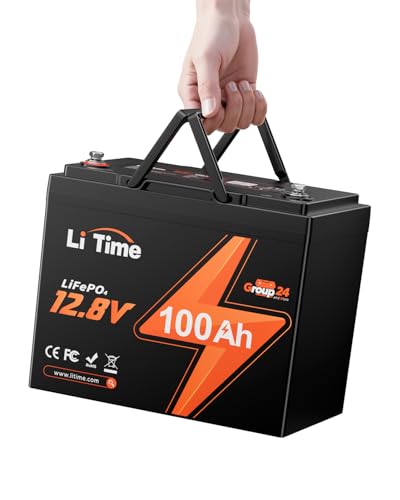
LiTime 12V 100Ah Group 24 RV Battery

VATRER POWER 48V 100Ah LiFePO4 Battery

Redodo 12V 100Ah Group 31 LiFePO4 Battery

ECO-WORTHY 12V 280Ah Metal Case LiFePO4 Battery

HeyFuture 12V 20Ah Power Wheels Battery Kit
A Closer Look At Each Pick
The 314Ah capacity gives large RV solar installations a substantial reserve for refrigerators, lighting, water pumps, and electronics. That makes this a sensible starting point for a bus conversion or a full-time off-grid build where stopping power use is not realistic. The Bluetooth status display adds visibility without requiring you to open the battery compartment, although actual runtime still depends on your inverter efficiency and daily consumption.
Compared with the smaller 100Ah options later in the lineup, this model offers much more storage in a single 12V unit. Its 200A BMS supports higher-current equipment, while low-temperature protection matters during cold mornings at campgrounds or during shoulder-season travel.
Standout Benefits
- 314Ah provides 4019Wh of nominal storage for extended off-grid use.
- Bluetooth monitoring helps you check charge status and operating information from nearby.
- 200A BMS is suited to demanding loads and larger inverter configurations.
- Low-temperature protection is useful in seasonal climates.
- One large battery can simplify cable planning compared with several parallel units.
Things To Consider
- The size and weight require a secure, ventilated installation area with adequate structural support.
- Bluetooth monitoring adds another device and app to your maintenance routine.
- Its high capacity may be unnecessary for a weekend camper with modest loads.
Who It Suits Best
This battery fits full-time RVs and serious off-grid conversions that need a large 12V reserve for daily household loads.
Where Another Pick Suits Better
LiTime 12V 100Ah Group 24 RV Battery is easier to accommodate in a compact compartment and fits standard Group 24 layouts.
Two 280Ah batteries create 7168Wh of combined nominal capacity, making this pair useful for an RV that already has room for a sizable battery bank. You gain flexibility for high-demand appliances and longer stretches away from hookups, but the installation is heavier and requires careful cable sizing. The metal case adds structural confidence compared with lighter plastic housings, particularly in an active travel environment.
This configuration makes more sense for an installer planning an expandable system than for someone replacing a single Group 24 battery. Bluetooth monitoring and low-temperature protection remain useful additions, though the pack’s size should drive the layout before you purchase it.
Reasons It Performs
- The two-battery format provides 7168Wh of nominal energy.
- Metal enclosures improve physical durability and heat resistance.
- Bluetooth lets you monitor battery status without direct access to terminals.
- A 200A BMS supports demanding inverter and household loads.
- Parallel capacity gives you room to expand an off-grid system.
Practical Considerations
- Weight and dimensions may exceed the space beneath a typical dinette or rear bench.
- You need balanced wiring and compatible fusing when joining large-capacity batteries.
- Label styles may vary while internal specifications remain the same.
Made For
This pair is built for RV solar owners with a dedicated battery compartment and substantial household energy demand.
Consider Something Else When
ECO-WORTHY 12V 314Ah LiFePO4 Battery Bluetooth offers greater single-battery capacity with a simpler parallel layout for some installations.
Group 24 compatibility makes this battery less disruptive to an existing RV layout. It provides 1.28kWh of energy, which is meaningful for a compact rig running LEDs, a refrigerator, phone charging, and small pumps without requiring the footprint of a dedicated high-capacity bank. The source lists it for trolling motors, boats, marine use, and solar applications, giving it more flexibility than a vehicle-only battery.
Compared with the 314Ah ECO-WORTHY, the LiTime approach is less about maximum storage and more about straightforward replacement of a common battery format. The listed 15,000-cycle figure describes an expected cycle rating, not guaranteed service life in every installation.
Features That Help
- Group 24 form factor simplifies common RV battery replacements.
- 1.28kWh of storage supports a moderate household load.
- Lighter construction can reduce the burden on battery trays and compartments.
- The stated cycle rating suits long-term renewable-energy planning.
- Marine and trolling-motor compatibility broadens its practical uses.
Small Caveats
- It is not intended for engine starting, golf-cart use, or jacks.
- A single 100Ah unit may be modest for large inverters or continuous high draw.
- You still need a charge controller matched to the solar array.
Best Suited To
This battery fits campers and boats that use a Group 24 compartment and need a balanced upgrade from lead-acid storage.
Reach For A Different Pick When
Redodo 12V 100Ah Group 31 LiFePO4 Battery is a better match when Group 31 dimensions suit your compartment more closely.
The 48V design places this battery in a different category from the 12V options throughout the rest of the roundup. A 48V system can carry substantial power with lower current for a given wattage, which helps reduce heavy-current cable demands in larger installations. That architecture suits an RV conversion with a 48V inverter, although it is not a drop-in replacement for a standard 12V battery bank.
Its built-in 100A BMS provides centralized protection and monitoring for a system designed around that voltage. You’ll need compatible 48V equipment throughout, so this is a more deliberate choice than simply swapping a 12V battery under a bench.
The Good Stuff
- 48V architecture reduces current requirements for high-power RV systems.
- 100Ah at 48V corresponds to 5.12kWh of stored energy.
- Built-in BMS supports centralized battery protection.
- Prismatic-cell construction suits stationary renewable-energy storage.
- One 48V unit can simplify the architecture of a compatible inverter system.
Trade Offs
- It cannot be mixed casually with 12V batteries without correct voltage conversion and wiring.
- Non-returnable shipping rules add friction to planning.
- The full system must be designed around 48V power electronics.
Right Fit For
This battery fits installers building a dedicated 48V RV solar system rather than replacing a conventional 12V house bank.
Swap It Out When
LiTime 12V 100Ah Group 24 RV Battery is the more practical option for a standard 12V RV electrical system.
Group 31 dimensions give you another familiar battery format, this time aimed particularly at RV and marine installations. The 100Ah rating provides a useful balance between storage and physical size for boaters, campervans, and smaller solar setups. Compared with LiTime’s Group 24 model, the choice comes down to the physical tray and cable layout in your vehicle, not simply the nominal capacity.
Bluetooth and heating variants appear in the product family, so matching the exact version to your wiring is important. The listed low self-discharge is helpful for occasional use, while deep cycling supports renewable-energy applications that place repeated demands on the battery.
A Few Strong Suits
- Group 31 format fits many marine and RV battery compartments.
- 100Ah capacity is practical for moderate daily loads.
- Low self-discharge helps preserve charge during storage periods.
- Bluetooth monitoring is available in the broader product family.
- Deep-cycle capability suits solar charging and trolling applications.
Points To Note
- Group 31 and Group 24 cases are not interchangeable without checking tray clearance.
- Multiple Bluetooth, heating, and dual-purpose versions create selection complexity.
- A single 100Ah battery may not support a large inverter alone.
Built With In Mind
This battery suits RV and marine owners who need a compact 12V unit with renewable-energy capability and Group 31 clearance.
Another Choice May Suit
LiTime 12V 100Ah Group 24 RV Battery is easier for systems already designed around Group 24 dimensions.
This single 280Ah battery offers a middle path between the 100Ah Group-format units and the larger 314Ah ECO-WORTHY model. Its metal case is designed to withstand demanding RV and solar environments while adding thermal resistance. That makes it attractive for rigs where one high-capacity unit is easier to secure than several smaller batteries, provided the compartment can handle the weight.
Bluetooth status information, low-temperature protection, and a 200A BMS cover the core monitoring and cold-weather concerns. You’ll still need to match its voltage, charge current, and physical clearance to the rest of the installation.
Useful Touches
- 280Ah capacity provides 3584Wh of nominal energy in one unit.
- Metal enclosure adds durability for vibration-prone travel.
- 200A BMS supports substantial inverter and household loads.
- Bluetooth monitoring helps track charge status remotely.
- Low-temperature protection supports seasonal camping.
Details To Watch
- The metal case adds weight compared with a typical 100Ah Group battery.
- You need a secure tray and adequate clearance around the enclosure.
- A large inverter may require careful charge-controller sizing.
Who Will Love This
This battery suits owners who want high 12V capacity in a single enclosure for RV, camper, or trolling-motor use.
Look Elsewhere When
Redodo 12V 100Ah Group 31 LiFePO4 Battery is the easier choice for a smaller compartment with a standard Group 31 tray.
The 20Ah format belongs in a different category from the RV solar batteries above. It is intended as a power upgrade for Power Wheels ride-on toys, where lower weight and a compact lithium package can matter more than bank-sized energy storage. The built-in BMS monitors charging, over-discharge, and short-circuit conditions, which is useful for a small project exposed to bumps and changing loads.
Its listed cycle rating is suited to regular toy-vehicle use, but it does not substitute for an RV house bank or a solar-charging battery. Verify connector compatibility, charger output, and the toy’s voltage requirements before installation.
The Case For It
- 20Ah capacity is sized for a small ride-on toy application.
- LiFePO4 chemistry avoids routine watering and maintenance.
- Built-in BMS manages charging and common electrical faults.
- Compact packaging helps preserve space inside a modified toy.
- The 12V format aligns with many ride-on toy electrical systems.
Possible Compromises
- It is not designed for motorcycle starters.
- Capacity is insufficient for an RV solar installation.
- Connector and charger mismatches can prevent a clean installation.
Whose Shelf It Belongs On
This battery fits hobbyists modifying a compatible 12V ride-on toy and prioritizing lighter maintenance.
A Better Fit Elsewhere
ECO-WORTHY 12V 314Ah LiFePO4 Battery Bluetooth is the more relevant choice for an RV solar power bank.
Choosing Storage That Fits Your RV Power Plan
Start with the battery’s nominal voltage and energy capacity. A 12V 100Ah battery stores approximately 1.28kWh, while 48V systems use a different equipment architecture and should be designed from the inverter outward. Next, measure the compartment and confirm the battery’s terminals, cable clearance, and weight tolerance before placing an order.
A larger battery is not automatically more useful. Daily load, solar-panel output, inverter size, and your tolerance for charging time all shape the result. Group 24 and Group 31 formats can simplify replacements, while a dedicated high-capacity installation may offer more flexibility for full-time living.
Match The Battery Case
Standard case formats reduce installation friction in many RVs and boats. Group 24 and Group 31 batteries are easier to compare with existing trays, while metal-case high-capacity units require more deliberate structural planning.
Check The BMS
The battery management system, or BMS, regulates charging and discharge limits. A higher-current BMS can support larger inverter loads, but the charge controller and inverter must also be compatible with that current and voltage.
Size For Daily Demand
Estimate the watt-hours your refrigerator, lighting, water pump, electronics, and climate equipment use during a typical off-grid day. Choose enough storage for that load plus a reasonable reserve, then verify that your solar array can refill it under the expected travel conditions.
Plan For Cold And Monitoring
Low-temperature protection matters in winter climates. Bluetooth monitoring also helps you identify declining state of charge and battery status without removing a compartment cover, although you should keep the app and connection arrangement arranged for your travel setup.
Common Mistakes In RV Solar Battery Selection
Many mistakes begin with matching capacity before measuring the compartment or inverter requirements. A high-capacity battery cannot solve undersized wiring, an unsuitable charge controller, or a system that draws more power than the solar array can replace. Confirm the full electrical architecture first.
Common Shopping Slip Ups
Do not assume all 12V batteries are interchangeable, because Group 24, Group 31, and proprietary cases fit different trays. Also check connector type, terminal orientation, and low-temperature behavior before ordering.
What The Higher Tier Buys
Higher-cost options commonly add Bluetooth monitoring, stronger enclosures, larger BMS ratings, or greater usable capacity. Those features can be worthwhile for frequent travelers and full-time RVs, but a smaller system may need none of them. The honest read is that electrical compatibility matters more than a long feature list.
What Separates Premium From Basic
A metal case and higher-current BMS make sense for demanding loads or rough travel conditions. A smaller battery with the correct dimensions and adequate protection may serve a modest camper just as neatly.
Frequently Asked Questions
Can I use a 12V battery with a 48V inverter?
No. The battery bank, charge controller, inverter, and wiring must use a compatible voltage architecture.
Is LiFePO4 suitable for RV solar storage?
Yes. It suits renewable-energy storage, with capacity, temperature, and charge-current matching still required.
What does Group 24 mean?
Group 24 describes a physical battery case format. It helps with replacement fit, but it does not guarantee identical electrical performance.
Can I connect several lithium batteries together?
Only with compatible voltage, proper fusing, balanced cables, and a configuration supported by the manufacturer and system design.
Do these batteries work for engines?
No. The LiTime and HeyFuture options are not intended for engine starting.
Final Verdict
Choose the battery that matches your RV’s voltage, inverter, solar controller, and available space. Large 12V systems suit demanding off-grid living, Group 24 and Group 31 formats simplify common replacements, and 48V designs require a purpose-built installation. The HeyFuture unit belongs in a ride-on toy project, not a house bank. Match the system first, then refine capacity and monitoring.
