


A Roomba battery rarely fails at a convenient moment. One unfinished cleaning cycle can leave a busy kitchen or carpeted living room half-swept, making the robot’s model, battery format, and charging system the details that matter before replacement. This guide covers dock-based chargers and replacement batteries across older 500-series robots plus current i, j, and e-series models, helping you match the part before installation.
The Main Contenders
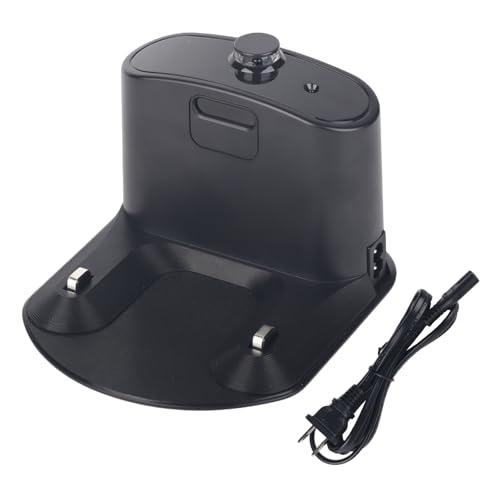
Jvtlirdfu Roomba Charger Dock with US Power Cord

Mighty Max 14.4V NiCD Battery for Roomba APS Robots

Jvtlirdfu 14.4V 3200mAh ABL-D1 Battery

Jvtlirdfu ABL-F 75Wh 5200mAh Battery

VANPIR 5200mAh Battery for Roomba 500-900 Series

JGTM 5.2Ah Battery for Roomba 600-900 Series

Lcenerga 5600mAh ABL-F Battery for Modern Roomba Models
What Each Pick Brings To The Table
A charging base and an internal battery solve different problems. This dock addresses a robot that no longer recognizes its charging station, sits crookedly, or has a damaged cord, rather than a battery that drains quickly. The included US power cable is useful in homes where the original cable has been lost.
The broad model references make this a practical replacement candidate, though the exact base and connector should be checked against your robot. Unlike the battery choices later in this roundup, it restores the charging endpoint. You benefit most when the battery still holds a charge but the robot cannot find or use the dock.
Where It Helps
- Includes a replacement power cable for a complete charging setup.
- Targets charging-base replacements across numerous Roomba generations.
- US-style power wiring suits compatible North American installations.
- Can restore dock contact and charging without replacing the internal battery.
Practical Considerations
- Model-family references do not confirm compatibility with every Roomba, so check the base shape and connector.
- It will not restore runtime when the robot’s internal battery has lost capacity.
Feature Snapshot
Who It Suits Best
You suit this dock best when your robot’s battery remains sound but its charging base or cable is visibly damaged.
Look Elsewhere When
Owners dealing with shortened runtime should examine Mighty Max 14.4V NiCD Battery for Roomba APS Robots instead.
Older Roomba robots used several battery technologies, so an APS replacement cannot be chosen by voltage alone. This 14.4V nickel-cadmium battery is intended for the APS connection used across R3, 500, 600, 700, and 800-series models. NiCD is an older rechargeable chemistry that remains appropriate only when the robot was designed around it.
That legacy focus gives it a clearer role than the lithium-ion options here. A 2.0Ah pack may not deliver the runtime associated with newer 5,200mAh or 5,600mAh batteries, but matching the original format can be more useful than adding incompatible capacity. The honest read is simple: this choice depends on a classic APS-style robot, not a current ABL-F design.
What Makes Sense
- 14.4V output matches the charging requirements described for supported APS robots.
- The direct battery format simplifies replacement in older floor-vacuum models.
- Coverage spans several common generations of 500- through 800-series hardware.
- It offers a practical option for maintaining a robot that is otherwise mechanically sound.
Worth Noting
- Its 2.0Ah NiCD capacity is modest beside the lithium-ion packs in this list.
- Nickel-cadmium chemistry should never be forced into a lithium-ion battery bay.
- Older robots can have aging docks or charging contacts that also affect performance.
The Right Fit
This battery fits you best when you maintain a classic Roomba using the APS connection and value dependable compatibility over larger capacity.
Reach For A Different Pick
Households with a Roomba 500-900 lithium-compatible model will find more capacity from VANPIR 5200mAh Battery for Roomba 500-900 Series.
The ABL-D1 format serves a different middle ground from the older APS pack and the higher-capacity ABL-F batteries. This replacement specifies 14.4V lithium-ion operation and 3,200mAh capacity, making the energy rating easier to compare than vague claims about extended runtime. In apartments and moderately sized homes, the extra capacity may reduce dependence on a spare battery.
Compatibility still needs care. Although the product targets e, i, and j-series robots, the ABL-D1 designation is more important than the broad family names. That distinction sets it apart from Jvtlirdfu ABL-F 75Wh 5200mAh Battery, which serves a different battery format and offers substantially more nominal capacity.
Features That Help
- 14.4V output aligns with the charging system used by compatible robots.
- 3,200mAh capacity sits above the Mighty Max option’s 2.0Ah NiCD rating.
- Lithium-ion chemistry is better suited to modern charging expectations than an older NiCD substitute.
- The defined ABL-D1 format helps narrow the fit before installation.
Small Caveats
- Do not select this pack for a robot designed around the ABL-F connector.
- Its 3,200mAh rating remains below the 5,200mAh and 5,600mAh options.
- Connector condition and dock alignment can still limit charging after installation.
Best Suited To
You suit this battery best when your robot uses the ABL-D1 pack and you want more capacity than the legacy APS replacement.
Consider Something Else
For an ABL-F-equipped robot with substantial floor space, Lcenerga 5600mAh ABL-F Battery for Modern Roomba Models offers a larger rated capacity.
Modern Roomba replacements often divide into ABL-D1 and ABL-F families, making the latter’s broad model coverage especially relevant. This pack supplies 14.4V, 75Wh, and 5,200mAh, a capacity that should appeal to homes with several rooms or mixed flooring. Higher watt-hours translate into more stored energy than the 3,200mAh ABL-D1 pick, though charging time may also increase.
Compatibility spans specified i, j, and e-series models, including several i3, i4, i7, j7, e5, and e6 variants. The list is long enough to be useful, but your robot’s exact model number remains essential. Fits should be confirmed before opening the robot because connector layouts can look similar at a glance.
A Strong Showing
- 75Wh provides substantial energy for longer cleaning intervals.
- The 5,200mAh rating exceeds the ABL-D1 choice in nominal capacity.
- Broad compatibility covers numerous current and recent Roomba models.
- The ABL-F label gives you a more precise starting point than a family name alone.
Points To Note
- Capacity does not override the need to verify the exact model number.
- A larger lithium-ion pack can take longer to recharge than a smaller replacement.
- Older contacts beneath the robot may need cleaning before a new battery seats properly.
Made For
This battery is made for you when an ABL-F robot needs restored capacity for regular cleaning across a medium or large home.
A Better Fit Elsewhere
Owners of a 5,200mAh-compatible Roomba 500-900 robot can find similarly rated power in VANPIR 5200mAh Battery for Roomba 500-900 Series.
Compatibility breadth is this battery’s defining attribute. It targets Roomba 500, 600, 700, 800, and 900-series machines, including a long collection of named models and the 1800LI format. That makes it a practical candidate for households with several older robots, provided each one uses the expected 14.4V lithium-ion connection.
The 5,200mAh, 74.88Wh rating gives it the same broad energy class as Jvtlirdfu ABL-F 75Wh 5200mAh Battery, but for a different model population. You should not treat “500 through 900” as automatic confirmation, since battery connections vary even within a series. The 1800LI designation and your printed model number offer the more reliable decision points.
What Earns Its Place
- Covers five major Roomba series instead of one modern connector family.
- 5,200mAh capacity can support longer sessions than lower-capacity legacy packs.
- Many specific 600-, 700-, 800-, and 900-series models are listed.
- Supports multi-robot homes where several machines share similar battery formats.
Details To Watch
- Series numbers alone are insufficient because connector formats can differ.
- A large replacement battery may require more charging time than the original pack.
- Swapping chemistry demands attention to the robot’s specified battery type.
Who Will Love This
You will appreciate this battery most when maintaining a compatible 1800LI or another listed model from the 500-900 generations.
Another Choice May Suit
Your exact ABL-D1 model calls for Jvtlirdfu 14.4V 3200mAh ABL-D1 Battery rather than this broader legacy-series option.
The JGTM pack focuses on lithium-ion-equipped Roomba robots rather than every similarly numbered model. Its 14.4V, 5.2Ah, 74.88Wh specification represents 5,200mAh of rated capacity, placing it beside the VANPIR option and the Jvtlirdfu ABL-F pack. That larger energy reserve can matter in a home where the dock sits between distant rooms.
Compatibility remains the decisive line. The source specifically excludes 500-, 600-, 700-, and 800-series Ni-MH configurations, despite those family numbers appearing in the broad title. You should verify that your robot uses the 1800LI-style lithium-ion system before ordering. That restraint prevents a technically capable battery from becoming an expensive mismatch.
Standout Benefits
- 5.2Ah capacity gives a larger stated runtime reserve than older battery packs.
- 74.88Wh provides a useful energy figure for comparison across replacements.
- The 14.4V lithium-ion format suits listed 1800LI-era robots.
- Named model references make preliminary compatibility checks more manageable.
Practical Considerations
- It does not suit robots using the excluded Ni-MH battery format.
- Confirm 1800LI compatibility rather than relying only on the series number.
- Allow more dock time than you would expect from a smaller battery.
Key Product Details
Built With In Mind
This replacement fits you best when your Roomba uses the named 1800LI lithium-ion format and benefits from more stored energy.
Swap It Out When
Owners of an ABL-F robot should choose Jvtlirdfu ABL-F 75Wh 5200mAh Battery to match the newer connector family.
This ABL-F pack reaches the highest stated capacity in the group, pairing 5,600mAh with 14.4V to produce 80.64Wh. For a robot covering several floors or carrying pet hair through a busy home, that reserve may reduce how often you need to pause for a recharge. The trade-off is a pack that may require longer dock time than the 5,200mAh alternatives.
Its model coverage centers on i, j, and e-series Roomba robots, including named i3, i4, i7, i8, j7, e5, and e6 variants. Because ABL-F connectors recur across modern models, this is more useful than the D1 choice for many current robots, but your exact number still decides the outcome. The connector must also seat cleanly beneath the battery door.
Well-Handled Touches
- 5,600mAh is the largest nominal capacity listed among these picks.
- 80.64Wh provides more stored energy than either 5,200mAh option.
- Broad i-, j-, and e-series coverage serves many modern robot families.
- Lithium-ion operation fits robots designed around the ABL-F format.
Less-Strong Areas
- It will not suit an APS, ABL-D1, or other incompatible battery connection.
- Greater capacity can mean a longer recharge between cleaning sessions.
- Terminal corrosion or debris can affect charging even with a new pack.
The Right Fit
This battery fits you best when a compatible ABL-F robot needs more capacity for extended, multi-room cleaning.
Where A Sibling Pick Shines
Your ABL-D1 robot is a stronger match for Jvtlirdfu 14.4V 3200mAh ABL-D1 Battery because its connector format differs.
Start With The Connector, Not Capacity
Start by identifying the robot’s exact model number from the underside, base, or original documentation. Family names can conceal differences between NiCD, Ni-MH, lithium-ion, APS, ABL-D1, and ABL-F connections, so a model series alone is rarely enough.
Capacity And Runtime
Once compatibility is settled, compare voltage, amp-hour capacity, and watt-hours. The AMP-hour unit measures charge capacity, while watt-hours combine voltage and capacity into stored energy. Higher figures can extend available runtime, although charging time and the robot’s power management still shape the result.
Chemistry And Charging Behavior
Li-ion is generally lighter and stores more energy by weight than NiCD or Ni-MH, but those older chemistries remain valid for robots built around them. Never substitute chemistry based on physical dimensions alone. A battery can look similar while using a different connector, charge protocol, or thermal arrangement.
Common Fit Problems To Avoid
Mistakes Worth Dodging
Avoid ordering from a series number or an image alone, because visually similar robots can use different batteries. Check the printed model number, battery label, and connector before purchase. Also consider the dock, since a worn charging contact can resemble a weak internal battery.
Where The Extra Capacity Helps
Higher-capacity packs are most useful for large homes, multiple rooms, carpeted surfaces, and frequent cleaning schedules. A smaller compatible battery can make more sense for a compact apartment or a robot that finishes its usual route with reserve remaining. Capacity helps, but only after the connector and chemistry match exactly.
Frequently Asked Questions
How Do I Know Which Roomba Battery I Need?
Read the exact model number from the robot and compare it with the replacement’s supported list. Then verify the battery format, such as APS, ABL-D1, or ABL-F.
Can I Use a Lithium-Ion Battery in an Older Roomba?
Only when the robot’s charging system and connector support lithium-ion operation. A physically similar NiCD or Ni-MH battery should not be replaced with a different chemistry without model-specific confirmation.
Is a Higher-Capacity Battery Always Better?
Higher capacity may provide longer intervals between charges, but it cannot compensate for an incompatible connector. The correct battery format matters first, followed by charging time and intended cleaning area.
Do I Need to Replace the Charger with the Battery?
Usually, a healthy dock charges a compatible replacement battery normally. Replace the dock only when its connector, cord, power supply, or charging contact is damaged or fails to recognize a known-good battery.
Should I Clean the Battery Contacts?
A dry wipe can remove visible dust from accessible contacts before installation. Power must be removed first, and the battery, dock, and connector should not be cleaned with moisture.
Closing Verdict
The right replacement starts with your robot’s exact model, connector, voltage, and battery chemistry, not the largest capacity number. Mighty Max serves older APS robots, Jvtlirdfu covers ABL-D1 and ABL-F systems, VANPIR and JGTM target broad lithium-ion model ranges, and Lcenerga provides the highest stated capacity among the ABL-F choices. Match the specification carefully, clean the contacts, and accept that the best replacement is the one your charging system was designed to recognize.
