


Solar systems live or die by their storage, especially during long stretches of cloud cover or nighttime demand. The right battery must match your voltage, inverter, available space, and expected discharge rate, whether you power a cabin, RV, boat, or backup panel. These options span compact sealed lead-acid batteries, high-capacity 12V lithium systems, and communication-ready 24V packs.
Lithium iron phosphate, commonly called LiFePO4, uses a stable chemistry suited to repeated cycling, while a battery management system, or BMS, regulates charging, discharge, and operating conditions. Compare those fundamentals alongside physical dimensions, communications, and temperature protection.
A Fast Comparison Of The Options

ECO-WORTHY 12V 314Ah Bluetooth LiFePO4 Battery

ECO-WORTHY EnergyRock 12V 280Ah Two-Pack Battery

Yuasa NP7-12FR 12V 7Ah SLA Battery

LiTime 24V 100Ah Bluetooth LiFePO4 Battery
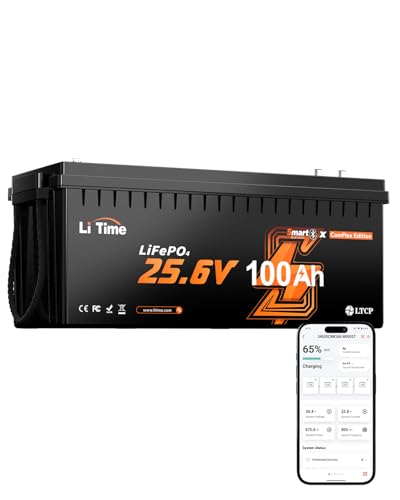
LiTime 24V 100Ah Victron Communication Battery

ECO-WORTHY 12V 280Ah Bluetooth LiFePO4 Battery

Renogy 12V 100Ah Bluetooth Marine Battery
Meet The Standout Selections
Large solar arrays need storage that can absorb substantial energy without leaving you dependent on generator power after sunset. The 314Ah capacity provides 4,019Wh at 12V, making this ECO-WORTHY model relevant to cabins, equipment rooms, and larger RV electrical systems. Depending on your inverter and charge controller, it may suit installations where the Yuasa NP7-12FR would be far too small.
Bluetooth monitoring and status LEDs reduce the need to access a dark enclosure merely to check charge level. The built-in 200A BMS is especially important in a high-output bank because it manages current within the battery’s design envelope. For most fixed installations, that combination feels more purposeful than simply adding another small battery.
Positive Points
- The 4,019Wh capacity supports extended evening and nighttime runtime.
- Bluetooth lets you check battery information without running a local display cable.
- Status LEDs provide a quick physical indication of operating state.
- Low-temperature protection is valuable for unheated cabins and cold-weather travel.
- The 200A BMS suits demanding inverter and charging configurations.
Things To Consider
- Its weight and size demand a sturdy battery stand with ample ventilation clearance.
- Low-temperature protection manages charging conditions but does not make cold-weather use care-free.
- Confirm cable thickness, terminal orientation, and inverter voltage before installation.
Key Specs
Built With In Mind
You benefit most from this model when powering a substantial 12V load after dark or building a high-capacity stationary bank.
A Better Fit Elsewhere
ECO-WORTHY EnergyRock 12V 280Ah Two-Pack Battery suits RV setups that favor a matched pair and expandable parallel storage.
A matched two-pack removes much of the guesswork from building a balanced 12V bank. Each EnergyRock unit supplies 280Ah, so parallel configuration suits RV solar, camper systems, or a home installation that may expand later. Compared with the single 314Ah model, this package offers more redundancy, though the larger footprint makes space planning essential.
Metal housings add structural rigidity and handle vibration better than lightweight plastic boxes, a useful distinction on a travel trailer or camper. Bluetooth monitoring and low-temperature charging protection support remote operation, while each pack includes a 200A BMS. In our view, the pair is most convincing where balanced expansion matters more than minimizing battery count.
What Works In Its Favor
- Two matched 280Ah batteries simplify capacity planning for a parallel bank.
- Metal cases provide a sturdier shell for vibration-prone RV installations.
- Bluetooth status access helps identify charge condition without opening the enclosure.
- Low-temperature protection supports more disciplined charging in cold conditions.
- Built-in 200A management hardware suits demanding discharge equipment.
Trade Offs
- Two batteries require more floor area, cable routing, and ventilation clearance.
- Parallel cables should be kept equal in length and gauge to reduce uneven current flow.
- Exterior label designs may vary while the internal batteries remain equivalent.
Made For
This pair fits RV owners and mobile solar users who have room for a matched, expandable 12V battery bank.
Where A Sibling Pick Shines
ECO-WORTHY 12V 314Ah Bluetooth LiFePO4 Battery is the cleaner choice when floor space is limited and a single high-capacity unit is enough.
Not every solar circuit needs a lithium bank large enough to run a household overnight. The Yuasa NP7-12FR targets smaller emergency lighting, control boards, gate systems, and equipment that require dependable 12V standby power. Its sealed lead-acid construction also provides a familiar alternative for technicians maintaining cabinets with limited space.
SLA means sealed lead-acid, a maintenance-free design that doesn’t require routine water checks. The small 5.94-by-2.55-by-3.83-inch enclosure and flexible mounting orientation make placement easier, although the 5.84-pound weight remains substantial for its capacity. For larger household storage, the LiTime and ECO-WORTHY lithium options offer much more usable capacity.
Everyday Wins
- The compact case fits control cabinets and small equipment compartments.
- Sealed construction eliminates routine electrolyte checks.
- Shock and vibration resistance suits mobile equipment installations.
- Spill-proof construction simplifies placement around sensitive electronics.
Minor Gripes
- Seven amp-hours provides limited runtime for substantial household loads.
- Lead-acid batteries are bulkier than lithium alternatives of equal capacity.
- Owners should follow the solar controller’s absorption and float settings to preserve usable life.
At A Glance
The Right Fit
You gain the most from this battery for a small standby circuit, alarm panel, or compact solar controller rather than whole-home use.
Another Choice May Suit
LiTime 24V 100Ah Bluetooth LiFePO4 Battery suits larger marine or off-grid installations that require substantially more stored energy.
Boats and RVs often benefit from a nominal 24V system because it lowers current for a given power level. This 100Ah LiTime battery supplies 2.4kWh, giving you a meaningful overnight reserve for navigation equipment, lighting, refrigeration, or cabin loads. That scale separates it from compact standby units such as the Yuasa NP7-12FR.
Bluetooth 5.0 supports status monitoring and discharge control, which is useful on installations where the battery sits below deck or inside a locked compartment. The stated 4P2S arrangement supports configurations reaching 10.24kWh, although your charge controller, inverter, and interconnect design must be suitable for that arrangement. At 45.85 pounds, handling requires planning, and small boat compartments may reject the 8.2-by-21-by-8.5-inch case.
Notable Gains
- The 100Ah 24V rating provides a substantial energy reserve in one enclosure.
- Bluetooth monitoring reduces the need for physical access on a boat or RV.
- Flexible 4P2S support creates a path toward larger storage systems.
- The listed weight remains manageable compared with many lead-acid banks.
Practical Considerations
- The dimensions may exceed the available space on smaller boats.
- A 45.85-pound battery needs a secure base and safe lifting route.
- Parallel and series wiring must follow compatible voltage, BMS, and charge-controller limits.
Quick Facts
Who Will Love This
Marine and RV users with a measured 24V compartment gain the most from the capacity and remote monitoring.
Reach For A Different Pick When
LiTime 24V 100Ah Victron Communication Battery better fits systems whose primary need is direct Cerbo GX data integration.
A large battery is only as useful as the system managing it, especially in a remote cabin or mobile installation. This LiTime model narrows the communication gap through CAN connectivity with the Victron Cerbo GX, allowing battery data to join a centralized control setup. Compared with the standard LiTime 24V 100Ah Bluetooth LiFePO4 Battery, communication protocol support is the defining advantage.
CAN is a vehicle-style network standard used here for structured data exchange between compatible equipment. Support for DVCC, Victron’s distributed voltage and current control, can coordinate battery behavior across a multi-device system, while VRM provides remote monitoring. Those features suit installers who value system visibility more than a simple standalone power block.
What Makes Sense
- Direct Cerbo GX integration reduces the need for separate battery-monitoring hardware.
- DVCC support helps coordinate charging across compatible system components.
- Remote VRM monitoring is valuable at cabins, boats, and other distant sites.
- An open protocol provides a path toward integrations beyond the primary setup.
Points To Keep In Mind
- The full communication value depends on compatible Cerbo GX hardware, firmware, and configuration.
- Remote data access still requires reliable cellular coverage or another network connection.
- This communication emphasis makes the model less relevant to a basic sealed lead-acid control circuit.
Built For
You benefit most from this model as a Victron Cerbo GX owner who wants battery data, charging coordination, and remote visibility in one setup.
Consider Something Else When
Renogy 12V 100Ah Bluetooth Marine Battery better serves a smaller 12V trolling motor setup that doesn’t need Victron communication protocols.
The middle ground between a compact marine battery and a massive home bank is often the most versatile. This 280Ah ECO-WORTHY model supplies 3,584Wh at 12V, covering meaningful loads in an RV, camper, solar room, or backup system. It also targets trolling motor use, but its 200A BMS deserves comparison with your motor controller before installation.
The metal enclosure distinguishes it from lighter plastic cases and offers better resistance to heat and physical damage. A low-current power switch provides a local cutoff, useful during maintenance or extended storage, while Bluetooth reporting gives you remote charge visibility. The same core design makes this a flexible single-battery alternative to the EnergyRock two-pack, without requiring the same total capacity.
What Stands Out
- The 3,584Wh rating provides useful runtime without a multi-battery enclosure.
- Metal construction improves structural and thermal resistance.
- Bluetooth monitoring simplifies status checks in concealed installations.
- The local low-current switch helps isolate the battery during maintenance.
- The 200A BMS serves both solar and high-current accessory scenarios.
Areas To Watch
- Confirm physical clearance, ventilation, and terminal access before ordering.
- Two external label styles may arrive, while internal specifications remain the same.
- Weight can challenge a small RV compartment, so measure the supported load and floor area.
Technical Highlights
Best Suited To
This model suits RV, camper, and home solar users who want substantial 12V storage plus remote monitoring in a single unit.
Swap It Out When
ECO-WORTHY 12V 314Ah Bluetooth LiFePO4 Battery offers more nominal capacity for installers with room for a heavier single unit.
A trolling motor creates a different demand pattern from household backup, with sustained current and repeated throttle changes. The Renogy 12V 100Ah battery supports 150A continuous discharge and 300A surge output for 30 seconds, making its 100A BMS setting an important installation detail. Group 24 dimensions give it a familiar marine footprint while freeing space compared with some larger Group 31 layouts.
IP67 denotes resistance to dust ingress and temporary immersion under defined conditions, a useful attribute in a wet boat compartment. At 21.8 pounds, it remains lighter than many lead-acid batteries, though secure restraint is still essential. Bluetooth status monitoring adds visibility, but your trolling motor’s actual draw and your solar charger must remain within the battery’s operating design.
Strong Points
- The 150A continuous rating supports power-hungry trolling motor operation.
- IP67 protection suits exposed marine environments and splashing.
- Bluetooth monitoring helps track state of charge from the helm or cabin.
- The Group 24 format simplifies comparison with common marine battery spaces.
- The 21.8-pound weight eases handling during installation and battery changes.
Small Caveats
- The 100A BMS requires a system design that remains within its current limits.
- Marine boxes need vibration-resistant mounting and protected cable connections.
- Owners should keep terminals clean and periodically inspect the cable connections.
Feature Snapshot
Who Should Grab It
Boat owners and anglers gain the most from this battery when their trolling motor and charging system operate within the stated current limits.
Look Elsewhere When
LiTime 24V 100Ah Bluetooth LiFePO4 Battery fits a larger 24V installation where cabin loads outweigh trolling motor priorities.
What Matters Before Choosing Solar Storage
Capacity and usable energy
Nominal amp-hours tell you stored charge, but usable capacity depends on inverter limits, depth of discharge, temperature, and cable losses. Compare daily consumption against realistic solar production rather than focusing only on the largest number. The Yuasa NP7-12FR suits small standby loads, while the 24V lithium options serve much larger circuits.
Voltage and controller compatibility
A battery pack must operate at the voltage expected by your charge controller and inverter. Parallel batteries stay at the same voltage; series wiring raises it. Never connect packs solely by matching amp-hour labels, and confirm whether your equipment supports lithium chemistry and the battery’s BMS configuration.
Space, weight, and mounting
Large capacity brings real handling demands. Measure the compartment, ventilation gaps, terminal clearance, and load-bearing surface before ordering. Secure batteries against movement, use appropriately sized cables, and preserve access for inspection.
Monitoring and communications
Bluetooth makes routine status checks easier, while CAN-based communication offers deeper integration with compatible energy-management equipment. The LiTime Victron model fits the second category, but that feature adds little value when your controller cannot communicate with it. Choose the interface your equipment will actually use.
Lessons That Prevent Storage Headaches
Mistakes Worth Dodging
Sorting solely by capacity can leave you with incompatible voltage, excessive weight, or inadequate discharge capability. Measure first, then match wiring and charge controls. Owners commonly overlook terminal clearance and ventilation spacing, so plan the complete installation rather than just the battery position.
What Separates Premium From Basic
Higher-end packs commonly add Bluetooth reporting, low-temperature charging controls, metal housings, or system-level communication. Those features help in remote cabins, boats, and larger electrical systems, though a small standby circuit may not need them. The practical upgrade is the feature your equipment can actually use.
Frequently Asked Questions
How many batteries do you need for off-grid solar?
Your energy needs, solar production, inverter limits, and usable storage determine the count. Calculate overnight consumption and add realistic system margins before selecting capacity.
Can you connect different lithium batteries together?
Only use compatible batteries with matching nominal voltage, chemistry, BMS limits, and appropriately balanced wiring. Following one manufacturer’s guidance is safer than mixing unrelated models.
Is LiFePO4 better than lead-acid for solar?
LiFePO4 typically offers stronger cycle life, lower weight, and more usable capacity in a compact package. Lead-acid can still suit small standby circuits where space and initial cost dominate.
Does Bluetooth work without internet service?
Bluetooth usually connects locally between the battery and a nearby phone or controller. Internet access becomes relevant only when you view that data through a remote monitoring service.
Wrap Up
Your strongest choice depends on the system rather than capacity alone: the Yuasa serves small standby loads, ECO-WORTHY favors substantial 12V storage, LiTime supports 24V and Victron integration, and Renogy targets marine use. Match voltage, current, space, and communications before selecting the battery. The right installation plan will serve you better than an oversized but mismatched pack.
