


Why Batteries For Off Grid Matter
Batteries For Off Grid power everything from cabin lights and refrigeration to marine electronics and backup systems during outages. Your setup may run constantly, charge from solar, or deliver short bursts of substantial power, so battery chemistry, usable capacity, temperature controls, communications, and physical dimensions matter. The right choice depends less on headline capacity than on the loads you actually need to support. The ECO-WORTHY Powermega brings together a 48V 314Ah lithium iron phosphate battery and a Liber 10KP 10kW hybrid inverter in one coordinated package. That matters because the battery and inverter must communicate properly, and handling both as a matched system reduces some of the configuration work associated with separate components. The package provides 16.1kWh of usable energy, which suits full-time off-grid cabins, larger homes, and installations that need meaningful overnight reserve capacity. You still need to confirm electrical service, solar controls, generator connections, and local installation requirements before purchase.
The Main Contenders

ECO-WORTHY Powermega 48V 314Ah LiFePO4 Energy Storage System

LiTime 12V 100Ah Trolling Motor LiFePO4 Marine Battery

ECO-WORTHY Powermega 48V 314Ah Battery

LiTime 24V 100Ah Bluetooth LiFePO4 Marine Battery

LiTime 24V 100Ah Cerbo GX Communication Battery
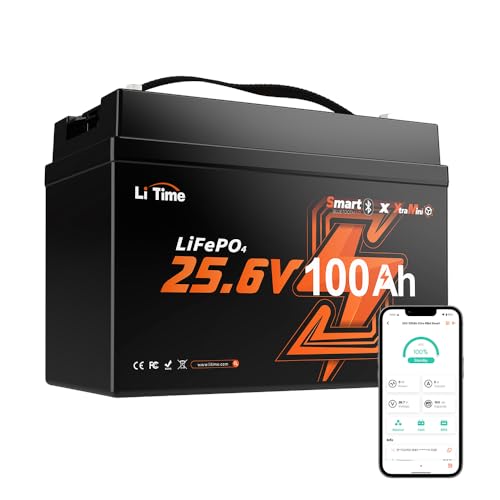
LiTime 24V 100Ah Mini LiFePO4 Marine Battery

ECOFLOW DELTA 3 Max 2048Wh 2400W Power Station
More On The Choices That Made The List
The Powermega 48V 314Ah LiFePO4 Energy Storage System is built for installations where a battery-only solution would leave a major equipment gap. Pairing the storage unit with a 10kW hybrid inverter gives you a more cohesive starting point for an off-grid cabin or home backup system, although installation requirements still vary by site.
Its 16.1kWh usable-energy figure provides a substantial foundation for evening loads, refrigeration, communications equipment, and essential circuits. Compared with LiTime’s 12V and 24V marine units, this system operates on a different scale and is better suited to whole-property power than a trolling motor or compact cabin.
Strong Points
- The integrated 10kW hybrid inverter simplifies the core system layout.
- Active cell balancing helps keep the battery cells more evenly conditioned.
- Bluetooth and Wi-Fi monitoring give you remote visibility into operating status.
- RS485, CAN, and RS232 communication support broader inverter compatibility.
Things To Consider
- You still need to confirm conductor sizing, disconnects, grounding, and local electrical requirements.
- The package is large and unsuitable for a small boat compartment.
Feature Snapshot
Made For
You benefit most with a cabin, rural home, or backup installation that needs substantial stored energy and integrated power conversion.
A Better Fit Elsewhere
The LiTime 12V 100Ah Trolling Motor LiFePO4 Marine Battery is a better fit for smaller boats that need power for a trolling motor rather than whole-home loads.
This 12V marine battery fits a more focused need than the ECO-WORTHY system: keeping a trolling motor, electronics, and cabin lights running through a day on the water. Its Group 31 format and 100Ah rating make the electrical scale familiar to many boat owners, while Bluetooth monitoring helps you check status without reaching into a crowded compartment.
The listed 1,280Wh capacity represents a practical middle ground between a compact starter battery and a large house bank. In practice, it suits anglers who spend long hours moving quietly, though a small compartment can still become the limiting factor.
A Few Strong Suits
- Bluetooth monitoring puts charge information and discharge controls on your phone.
- Low-temperature protection pauses charging below 32°F and discharging below -4°F.
- The 100Ah Group 31 format fits many common trolling-motor layouts.
- LiFePO4 chemistry suits repeatable charge and discharge cycles.
Small Caveats
- You need to confirm the battery’s physical dimensions against your boat’s tray and cable clearance.
- Cold-weather protection means charging may pause during winter conditions rather than operate continuously.
Quick Facts
Right Fit For
This battery fits anglers and boaters who need dependable 12V power for trolling motors, fish-finding equipment, and cabin accessories.
Another Choice May Suit
LiTime 24V 100Ah Bluetooth LiFePO4 Marine Battery makes more sense for larger 24V marine or RV systems where space allows.
The standalone ECO-WORTHY Powermega 48V 314Ah Battery gives you more freedom to design the rest of an off-grid system around your chosen inverter and solar components. That separation can suit installers who already have equipment preferences or need to expand capacity gradually, but it also places more responsibility on you for compatibility.
The 16.1kWh storage scale is meaningfully larger than the LiTime batteries in this list. It makes sense for a home, workshop, or cabin where load management matters more than a compact footprint.
Real Benefits
- The 48V architecture supports larger stationary storage than 12V or 24V batteries.
- Active cell balancing supports more consistent cell behavior across the pack.
- Compatibility with earlier V1 units creates a path toward parallel expansion.
- The lithium iron phosphate format favors repeatable daily cycling.
Worth Noting
- You need an inverter and balance-of-system components that suit a 48V installation.
- The battery is non-returnable and its transportation is subject to hazardous-material rules, so confirm your installation plan before ordering.
Built With In Mind
You get the most from this battery in a fixed solar or backup installation with room for a large battery enclosure and appropriate electrical equipment.
Look Elsewhere When
The LiTime 12V 100Ah Trolling Motor LiFePO4 Marine Battery is the more practical choice for a boat that needs compact propulsion power.
This LiTime 24V 100Ah unit sits between portable marine power and fixed off-grid storage. Its dimensions are listed at 8.2 x 21 x 8.5 inches, so the height and length deserve careful comparison with your compartment before you order. A battery that works electrically can still be awkward to install or service.
Bluetooth 5.0 monitoring and 4P2S support make it appealing for larger systems, including RV use and expanded battery banks. The listed weight is 45.85 pounds, which is manageable for many installations but still requires two-handed handling and secure mounting.
What Makes Sense
- 24V operation reduces current demands in larger DC systems.
- Bluetooth gives you remote status checks and discharge controls.
- 4P2S configuration supports expansion to 10.24kWh.
- The form suits larger boats and RV electrical compartments where space permits.
Practical Considerations
- Measure the compartment carefully; the battery may be too tall for smaller boxes.
- Expansion changes cable length, protection, and charge-controller requirements, so plan the full architecture before adding units.
Technical Highlights
Who Should Grab It
This battery suits RV owners, larger boats, and small off-grid systems that need 24V capacity and phone-based monitoring.
Consider Something Else When
The ECO-WORTHY Powermega 48V 314Ah LiFePO4 Energy Storage System offers much more capacity for whole-home backup applications.
This LiTime battery is defined by its communications role as much as its capacity. Built for Victron Cerbo GX systems, it uses CAN communication, DVCC distributed voltage and current control, and VRM remote monitoring. Those features matter in a managed system because the battery, inverter, charger, and monitoring hardware can work from shared operating information.
Compared with the standard LiTime 24V 100Ah Bluetooth LiFePO4 Marine Battery, this model is the stronger match for an existing Victron ecosystem. For a simpler boat or RV installation without Cerbo GX hardware, that extra integration may not be necessary.
Real-World Strengths
- CAN communication suits Victron Cerbo GX control environments.
- DVCC helps coordinate charging and system voltage across connected equipment.
- Remote monitoring gives you a clearer view of operating conditions away from the battery.
- Open protocol support may help connect future equipment choices.
Trade Offs To Consider
- You need compatible Victron hardware and a correctly configured communication network.
- The advanced electronics do not remove the need for secure mounting, ventilation, and correct wiring.
Important Details
Made For
You benefit most with a Victron-based off-grid system where coordinated battery communication and remote monitoring are central to operation.
Another Choice May Suit
The LiTime 24V 100Ah Bluetooth LiFePO4 Marine Battery is the simpler alternative for marine users who mainly want phone-based battery visibility.
The LiTime 24V 100Ah Mini LiFePO4 Marine Battery focuses on reducing the footprint of a 24V marine power package. It is aimed at anglers using trolling motors in the 70- to 100-pound range, where stable voltage and manageable dimensions can influence how practical a battery setup feels on the water.
Its dimensions are listed at 13.11 x 6.93 x 9.45 inches, and it fits BCI Group 31 trays. The height exceeds standard Group 31 battery-box capacity, so “mini” does not mean it drops into every enclosure. Measure first, especially in a tightly packed boat.
Where It Helps
- The Group 31 tray format supports recognizable marine-battery organization.
- 24V operation can suit higher-power trolling motor setups better than a 12V arrangement.
- The lithium iron phosphate format supports repeatable charging and discharging.
- The compact layout helps preserve usable space around the battery.
Minor Gripes
- The listed height may prevent use in a standard Group 31 battery box.
- You should confirm trolling-motor connector compatibility and cable bend radius before installation.
Who Will Love This
This battery fits anglers with a 24V trolling-motor setup who value a Group 31-style footprint and can accommodate the listed height.
Not Your Match When
LiTime 12V 100Ah Trolling Motor LiFePO4 Marine Battery is the better choice for a smaller boat designed around a 12V trolling system.
The EcoFlow Delta 3 Max is the portable option in this group, combining a 2,048Wh lithium iron phosphate battery with a 2,400W power output. That arrangement suits campers, tailgaters, remote work setups, and temporary household circuits where carrying a fixed battery bank would be impractical.
Its listed charging capability reaches 80% in about 1.13 hours, which makes it useful before a trip or after returning to camp. X-Boost mode can raise continuous output to 3,400W, although you should check device requirements and thermal conditions before relying on that mode.
A Strong Showing
- 2,048Wh provides more capacity than a typical small portable power station.
- The 2,400W rating supports common household tools and electronics.
- Fast charging reduces downtime during preparation and recharge periods.
- X-Boost mode adds flexibility for compatible high-draw equipment.
Where It May Fall Short
- It serves temporary and portable loads rather than a permanent whole-home installation.
- You need to account for the unit’s weight and the runtime effect of high-power devices.
At A Glance
Best Suited To
You get the most flexibility from this power station during camping, mobile work, tailgating, or short-term household backup.
A Better Fit Elsewhere
ECO-WORTHY Powermega 48V 314Ah LiFePO4 Energy Storage System is the stronger choice for a permanently installed off-grid property.
Match Battery Chemistry, Capacity, and Connections
Choosing an off-grid battery starts with the loads you expect to run. A trolling motor, cabin lights, refrigerator, power tools, and backup electronics have very different current demands. Calculate both continuous draw and surge requirements, then leave room for conversion losses and future loads.
Capacity matters too. Amp-hours describe stored charge at a given voltage, while watt-hours offer a more direct comparison across systems. A 24V 100Ah battery stores 2.4kWh, while a 48V 314Ah LiFePO4 battery provides a much larger reserve for whole-property use. You also need to distinguish usable energy from the battery’s nameplate capacity.
LiFePO4 batteries offer lithium-based chemistry with a strong reputation for repeatable cycling, but temperature and charging limits still apply. Bluetooth, Wi-Fi, CAN, RS485, and RS232 serve different purposes: phone monitoring, local access, or integration with an energy-management system. Check communication requirements before choosing a battery.
Finally, physical fit can determine whether an otherwise suitable option works. Measure the battery tray, cable clearance, ventilation path, and mounting strength. For a permanent installation, confirm inverter compatibility and have the electrical design reviewed by a qualified professional.
Common Shopping Slip Ups
The most frequent mistake is choosing capacity before checking the inverter voltage and charge controls. Another is treating a Bluetooth app as a substitute for correct wiring, fusing, or battery protection. Small boats also run into fit problems, especially when a Group 31 tray does not provide enough height.
What The Higher Tier Buys
Higher-end systems generally spend more on capacity, inverter integration, communication, and cell balancing. That investment can matter for a home backup system or a Victron-based installation, where coordinated monitoring and expansion are useful. A portable power station is the sensible direction for temporary use, where mobility matters more than permanent infrastructure.
Frequently Asked Questions
How much battery capacity is needed for off-grid living?
Capacity depends on daily energy use and the amount of reserve you want after sunset. Start with a load list, estimate hours of operation, and size the inverter to the largest load before selecting a battery.
Is 24V better than 12V for a boat?
A 24V system can reduce current for the same power level, which can suit larger trolling-motor or onboard systems. It also requires compatible inverters, chargers, wiring, and controls, so 12V remains simpler for smaller installations.
Can a portable power station run a refrigerator?
Yes, a unit such as the EcoFlow Delta 3 Max may power compatible refrigerators, especially during outages or camping. Runtime depends on refrigerator draw, battery capacity, temperature, and the age and condition of the appliance.
Do off-grid batteries need Bluetooth monitoring?
Bluetooth is useful for checking charge and operating status from a phone, but it does not replace electrical protection or system design. Communication features matter most when your inverter, charger, or controller supports them.
Are LiFePO4 batteries better than lead-acid batteries?
LiFePO4 batteries commonly offer higher usable cycle life and lighter weight than lead-acid alternatives. They still require correct charging, temperature considerations, ventilation planning, and compatible system components.
Final Thoughts
The right off-grid battery depends on where the power goes. Marine anglers get a more natural fit from the LiTime trolling-motor models, while larger homes and cabins may need the ECO-WORTHY 48V system. Portable setups favor the EcoFlow station because it combines storage and output in one movable format. Measure the space, match the voltage, and confirm communication requirements before making the final choice.
