


Living beyond the utility grid means matching stored energy to real demands, from weekend cabin lighting to an RV’s appliances or a home’s essential circuits. Battery chemistry, inverter compatibility, usable capacity, and installation demands matter more than headline capacity alone. The seven options below range from portable power stations to permanently installed 48V systems, giving you a clear path for mobile, recreational, or whole-property use.
The Choices Worth Comparing

Power Queen 12V 150Ah Bluetooth LiFePO4 Battery

ECO-WORTHY Powermega 48V 314Ah System with Liber 10KP

ECO-WORTHY Powermega 48V 314Ah Battery
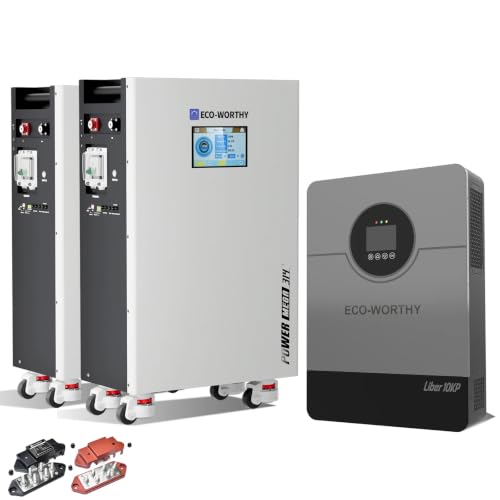
ECO-WORTHY Powermega 48V 314Ah 2-Pack with Liber 10KP

Redodo 12V 100Ah Group 24 Bluetooth Battery 3-Pack

OUPES Mega 1 Lite 1024Wh 2000W Power Station

Renogy 12V 100Ah Bluetooth Group 24 Battery
Taking A Closer Look At The Options
Large RV loads make the Power Queen 12V 150Ah Bluetooth LiFePO4 Battery a practical upgrade from a bank of smaller lead-acid units. Its Group 27 format helps preserve familiar cabinet space while providing 1.8kWh of nominal energy, enough for substantial overnight use when paired with an appropriate inverter and charger.
Bluetooth monitoring is useful for checking battery status without reaching into a confined compartment, although pairing depends on phone and app support. For cabins, boats, and heavily equipped RVs, the capacity-to-size balance looks sensible, though exact runtime still depends on inverter losses and your daily load.
Positive Points
- 150Ah capacity offers more stored energy than typical Group 24 alternatives.
- Group 27 dimensions ease comparison with common RV battery compartments.
- LiFePO4 chemistry reduces routine maintenance compared with flooded lead-acid batteries.
- Bluetooth gives RV occupants a convenient remote view of operating data.
- Up to 83% lower weight and 10-times faster charging are meaningful for mobile installations.
Things To Consider
- One battery remains a 12V unit, so several units or a larger inverter may still be necessary.
- Terminal clearance, ventilation, and charge-controller compatibility deserve checking before installation.
Key Specs
Made For
You benefit most from this battery in a large RV, work trailer, or compact off-grid installation where capacity and a familiar footprint both matter.
A Better Fit Elsewhere
ECO-WORTHY Powermega 48V 314Ah Battery fits larger renewable-energy projects that require a 48V architecture instead of mobile 12V power.
Home backup becomes more approachable when storage and inverter control arrive together. This system combines a 48V Powermega battery with a Liber 10KP hybrid inverter rated at 10kW, while its 16.1kWh usable capacity covers considerably more than a typical weekend emergency supply.
The built-in Bluetooth and Wi-Fi connections, LCD, and RS485, CAN, and RS232 communication options give system owners several ways to inspect and integrate the setup. That makes the package more practical for a cabin or primary residence, assuming your electrical design and installation plan can support the equipment.
The Good Stuff
- The 10kW hybrid inverter supports substantial household and renewable-energy loads.
- 16.1kWh of usable storage provides useful overnight backup capacity.
- Active balancing helps maintain consistency across battery cells.
- Multiple wired protocols and wireless connections broaden monitoring options.
Practical Considerations
- A fixed installation needs careful circuit planning, ventilation, and cable sizing.
- Compatibility should be confirmed with existing solar, generator, and transfer equipment before purchase.
- The larger package takes more floor space than a portable power station.
Feature Snapshot
Right Fit For
This package suits off-grid homeowners, cabin owners, and technically confident installers who need a coordinated inverter-and-battery system.
Consider Something Else When
OUPES Mega 1 Lite 1024Wh 2000W Power Station offers a lighter, plug-and-play approach for mobile use or shorter outages.
A storage-only battery gives experienced off-grid builders more freedom than the integrated ECO-WORTHY system. The 48V 314Ah Powermega provides roughly 16kWh of nominal capacity, creating a substantial base for solar storage, generator support, or a custom backup installation when paired with appropriate equipment.
Active cell balancing helps keep the internal cells operating more evenly, while integrated aerosol fire protection adds a defined layer of system protection. You still need a compatible inverter, solar charge controller, communications setup, and enclosure plan, so this is not a portable or single-box answer.
Features That Help
- The 16kWh-class capacity serves whole-site energy storage rather than lightweight electronics.
- Active cell balancing supports more consistent cell behavior within the pack.
- Aerosol fire protection adds a purpose-built layer to the installation.
- The 48V format reduces current demands compared with an equivalent low-voltage bank.
Factors To Consider
- Hazardous-material shipping rules may affect delivery arrangements.
- Non-returnable status makes compatibility verification essential.
- You must add the inverter, wiring, protection, and monitoring components separately.
Best Suited To
You gain the most from this battery as the foundation of a planned 48V solar or stationary backup system with professional electrical support.
Reach For A Different Pick When
Power Queen 12V 150Ah Bluetooth LiFePO4 Battery fits RV cabinets and mobile systems that need 12V power rather than a floor-mounted storage bank.
The two-battery configuration moves this ECO-WORTHY package beyond short emergency coverage. Two 48V 314Ah units provide more than 30kWh of usable storage, while the included Liber 10KP hybrid inverter supplies 10kW of conversion capacity for household circuits, solar charging, or off-grid living.
Compared with the single-battery system, the main gain is endurance rather than a different operating concept. That matters during extended utility outages, although the additional battery weight, floor space, and electrical work make this a more involved installation.
Why It Works Well
- More than 30kWh of usable energy supports sustained backup for essential household loads.
- The 10kW hybrid inverter handles high-demand appliances more readily than small portable units.
- Active balancing supports consistent operation across the larger battery bank.
- Built-in Bluetooth and Wi-Fi support system monitoring and remote awareness.
- The bundled batteries and inverter simplify component selection for new installations.
Where It May Fall Short
- Two large batteries increase installation weight and require a suitable equipment room.
- A conduit box inclusion applies from August 3, 2026, leaving earlier installations to source one separately.
- Existing panel and generator controls must be reviewed for safe integration.
Quick Facts
Built With In Mind
This system fits homeowners seeking multi-day resilience and renewable-energy flexibility without separately selecting a large battery bank and hybrid inverter.
Another Choice May Suit
ECO-WORTHY Powermega 48V 314Ah System with Liber 10KP offers the same basic architecture at roughly half the stated storage capacity.
Three Group 24 batteries give RV travelers a mobile bank that can be split among storage compartments or connected according to a planned 12V architecture. Each 100Ah unit supplies 1.28kWh of nominal energy, so the set provides 3.84kWh before inverter and wiring losses.
Built-in cold-weather controls make winter travel more predictable: charging pauses below 32°F, resumes above 41°F, and discharge stops at -4°F. You may receive the units separately because of size and shipping restrictions, so installation planning should account for staggered arrivals.
Advantages To Know
- The 3.84kWh combined nominal capacity supports substantial RV and cabin loads.
- Automatic temperature cutoffs reduce charging activity in hazardous cold conditions.
- Bluetooth monitoring helps you inspect battery status from a phone.
- LiFePO4 construction removes the watering and venting routine associated with flooded batteries.
Some Limits To Know
- Separate deliveries may complicate a tightly scheduled departure.
- Three units require secure mounting and room for cable bends and terminal access.
Technical Highlights
Who Should Grab It
You benefit most from this three-pack as a mobile energy bank for an RV, travel trailer, or removable cabin supply.
Swap It Out When
Renogy 12V 100Ah Bluetooth Group 24 Battery fits a single Group 24 installation where trolling-motor output and marine enclosure resistance matter more than bundled capacity.
Camping, tailgating, and short outages call for a self-contained power station rather than a permanently wired battery bank. The OUPES Mega 1 Lite combines 1,024Wh of stored energy with 2,000W of continuous AC output, enough for many portable electronics, tools, and moderate appliances.
Its 4,500W surge rating provides brief headroom for device startup, while 1,400W AC input recharges the unit in about 46 minutes under suitable conditions. You trade deep whole-home endurance for portability, so it works best as backup layered behind existing utility power.
The Practical Payoff
- 2,000W continuous output powers more equipment than a basic small power station.
- The 46-minute AC recharge schedule can restore capacity during a lunch stop.
- 4,500W surge capacity handles brief startup demands from compatible equipment.
- The integrated design avoids battery wiring and permanent inverter installation.
Small Caveats
- Runtimes fall quickly under high loads, especially with AC appliances.
- You must respect each device’s surge, power, and heat-management limits.
- Battery aging and frequent full discharges can shorten practical service life.
On The Road For
This unit suits campers, contractors, and households wanting portable AC output for outages without installing a fixed storage system.
Where Another Pick Shines
Redodo 12V 100Ah Group 24 Bluetooth Battery 3-Pack is a better fit for sustained RV use where long-term 12V storage outweighs carrying one consolidated unit.
Trolling motors place a different demand on a battery than a cabin lighting load: continuous output and surge capability take priority. This Renogy Group 24 unit supplies 150A continuously, reaches 300A of surge output for 30 seconds, and serves trolling motors operating across 12V to 36V systems.
Its IP67 enclosure resists dust and temporary water exposure, a useful feature around exposed marine hardware, while Bluetooth and the 100A battery management system provide monitoring and electrical control. At 21.8 pounds, it also reduces the carrying burden associated with many lead-acid batteries.
Positive Takeaways
- 150A continuous discharge supports power-hungry trolling motor configurations.
- 300A surge output covers short high-demand events without changing the 12V Group 24 format.
- IP67 water resistance suits the exposed environment around a boat.
- Bluetooth monitoring helps you track operating status from your phone.
- The 21.8-pound weight improves handling and frees storage space for other gear.
Worth Noting
- A single 100Ah unit may not match the aggregate storage of a multi-battery RV bank.
- IP67 protection does not make the battery suitable for submersion or routine washing.
- Marine installations still need secure mounting and correctly sized connections.
Core Details
The Right Fit
You benefit most from this battery on a fishing boat that needs high current, remote monitoring, and a compact Group 24 mounting format.
A Better Fit Elsewhere
Power Queen 12V 150Ah Bluetooth LiFePO4 Battery offers greater stored energy for RV use, while needing close attention to inverter and charger matching.
Matching Power to Your Off-Grid Load
Start With Usable Energy
Nameplate watt-hours describe stored energy, not how long equipment will run. Inverters, cables, temperature, battery age, and your actual load all reduce usable runtime, so map daily kilowatt-hour consumption before choosing capacity.
A 1,024Wh portable station suits electronics and moderate appliances for short periods. A 12V RV bank supports mobile living, while 16.1kWh and 30kWh-plus systems address cabins and homes needing extended backup.
Confirm the System Voltage
Your charging equipment, inverter, solar controller, and battery bank must operate at the same system voltage. Mixing 12V and 48V components without appropriate conversion can cause installation problems, so compatibility deserves priority over capacity.
A battery-only option gives you more control over component selection. An integrated inverter-and-battery package reduces that planning, though fixed wiring and site preparation remain necessary.
Separate Mobile Needs From Stationary Ones
Marine, RV, and camping power favors Group 24 or Group 27 formats, remote monitoring, and secure mounting. A permanent residence or cabin generally benefits from a larger storage bank, hybrid inverter, and a properly designed electrical enclosure.
Bluetooth is useful for checking state of charge, while cold-weather controls matter for winter travel or remote installations. Neither feature replaces sound ventilation, terminal care, or routine system checks.
Avoiding Common Battery Mistakes
Mistakes Worth Dodging
The most common error is buying on watt-hours alone. Ignore inverter compatibility, continuous output, temperature limits, and realistic daily loads, and an apparently large battery may still fail to power your equipment. Parallel batteries also need matched models, proper cabling, and a coherent charge plan.
What The Higher Tier Buys
Higher-capacity systems provide more stored energy, greater continuous output, advanced balancing, and wider monitoring options. Those additions help when you operate demanding appliances, extended outage support, or a multiday property, while a smaller portable or 12V system may serve lighter needs more efficiently.
Frequently Asked Questions
Is LiFePO4 better than lead-acid for off-grid use?
LiFePO4 generally offers better cycle life, lighter weight, and lower routine-maintenance demands. Lead-acid may cost less initially, so your budget, weight limits, and replacement cycle determine the practical choice.
Can a portable power station run a refrigerator?
A compatible portable station can run a refrigerator, especially during moderate outdoor temperatures and without opening the door constantly. You must check the refrigerator’s startup demand, the station’s continuous output, and the energy lost through conversion.
Do 12V batteries need to match?
You should use batteries with matching chemistry, capacity, age, and state of charge, and connect them according to the manufacturer’s instructions. Parallel wiring increases available current, while series wiring increases system voltage but demands careful matching and protection.
How much battery capacity does a cabin need?
A small cabin running lights, communications, refrigeration, and occasional tools may begin around a few kilowatt-hours of usable storage. Larger appliances, extended outages, and limited solar production raise that requirement substantially.
Is a 48V system better than 12V?
A 48V system is often more efficient for large fixed installations because lower current reduces conductor demands. A 12V system remains easier to deploy for RVs, boats, and small cabins, particularly with portable or readily available components.
Final Verdict
Your best fit depends on mobility and scale. Choose a 12V Group 24 or Group 27 battery for RV and marine use, the OUPES unit for portable short-term power, or a 48V ECO-WORTHY system for a cabin or home with substantial backup needs. Match capacity to real loads, confirm electrical compatibility, and leave room for safe installation.
