


A motorhome battery does more than start an engine. It carries refrigeration, lighting, water pumps, entertainment systems, and cabin electronics through dry campsites and long stretches away from shore power, so choosing for adequate capacity matters as much as getting the battery into the compartment. These deep-cycle lithium options suit RV solar systems, marine equipment, trolling motors, and off-grid living. Their Bluetooth monitoring, physical dimensions, continuous discharge ratings, and expected installation demands differ considerably.
LiFePO4 chemistry also deserves a closer look. It uses lithium iron phosphate cells and typically offers greater usable capacity, lighter weight, and deeper discharge than conventional lead-acid batteries, but charger compatibility and battery-box dimensions still need careful attention.
A Closer Look At The Lineup
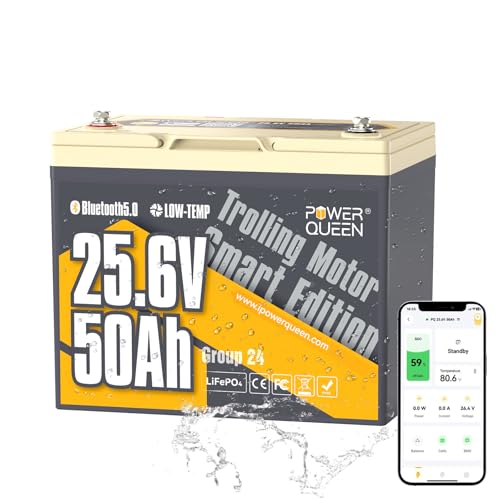
Power Queen 24V 50Ah Bluetooth Remote Battery
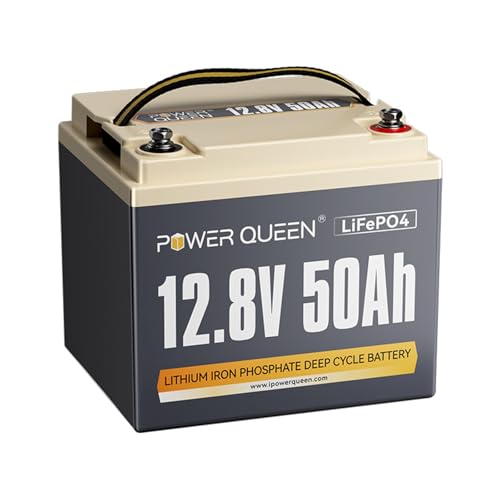
Power Queen 12V 50Ah Trolling Motor Battery

Redodo 12.8V 100Ah Group 24 4-Pack

Power Queen 12V 100Ah Group 31 RV Solar Battery

HumsiENK 12V 300Ah Bluetooth Battery

Power Queen 36V 50Ah Marine LiFePO4 Battery
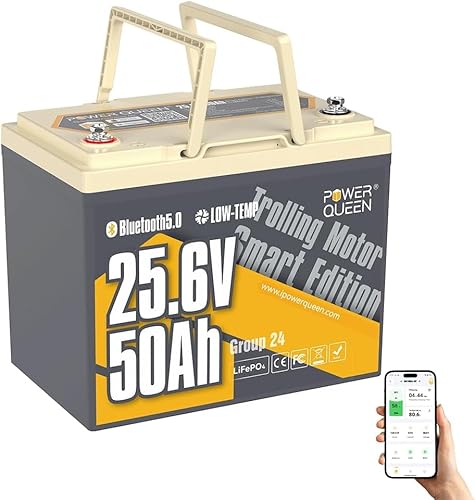
Power Queen 24V 50Ah Trolling Motor Battery
The Picks, Examined More Closely
Remote status checks make this 24V configuration attractive during long voyages, where climbing into a confined battery compartment is inconvenient. Bluetooth 5.0 puts operating information on your smartphone, while the stated low-temperature protection adds useful control in cold-water conditions.
Compared with the single 12V options later in the list, this model needs a compatible 24V equipment arrangement and has a higher nominal working voltage. It fits boaters and stationary installations that value monitoring more than a compact Group 24 footprint.
Practical Advantages
- Bluetooth status monitoring reduces physical battery checks during routine operation.
- The 24V platform can suit higher-voltage marine electronics without duplicating the battery string.
- Cold-weather protection suits storage and boating conditions where low temperatures matter.
- Remote access is particularly useful in a crowded engine or battery compartment.
Points To Keep In Mind
- Your charger, inverter, and equipment must accept the battery’s voltage and charging profile.
- Smartphone visibility depends on Bluetooth range, so app access may be limited inside some metal enclosures.
- A motorhome installation still needs secure mounting and properly rated cabling.
Made For
This battery best suits marine operators and off-grid users who need remote monitoring in a compatible 24V system.
A Better Fit Elsewhere
Power Queen 12V 100Ah Group 31 RV Solar Battery suits motorhomes whose charger and battery tray are designed around 12V power.
Handling matters in a motorhome battery tray, and this model weighs roughly 11 pounds while measuring 7.7 by 6.5 by 6.6 inches. Its 12.8V LiFePO4 format targets portable power, trolling motors, camping gear, and smaller cabin loads that benefit from low mass.
The stated Group 24, 27, and 31 compatibility makes installation planning more approachable, though you should still compare terminal position, cable clearance, and hold-down clearance. Against the 300Ah HumsiENK later in this list, it prioritizes portability over bulk energy storage.
Practical Pluses
- The low weight makes removal and repositioning easier in a crowded compartment.
- Its moderate 50Ah capacity suits portable electronics and less demanding trolling applications.
- Multiple Group-size fitments offer useful installation options, subject to terminal and tray checks.
Worth Noting
- One unit may run short for refrigeration and other sustained motorhome loads.
- Owners should confirm terminal orientation before ordering cables or planning the tray layout.
- Compatibility with lead-acid chargers is not automatic, so charger settings matter.
The Right Fit
Campers, anglers, and travelers who prioritize low weight will find this model practical for portable 12V needs.
Reach For A Different Pick When
Power Queen 12V 100Ah Group 31 RV Solar Battery offers more stored energy for full-time cabin use and extended dry camping.
Four 100Ah batteries create a substantial 12V bank for trolling motors, marine cabins, or a heavily equipped motorhome. Each Group 24 unit weighs 22.16 pounds, so the complete pack is substantial; the four-battery format suits installations with multiple secured positions and adequate cable infrastructure.
The stated energy density is 59.37Wh per pound, reflecting the lighter LiFePO4 approach compared with a 52-pound comparable lead-acid battery. You may receive the four units separately because of shipping volume, which can complicate planning a single installation day.
Strengths Worth Knowing
- Four 100Ah units provide ample aggregate storage for demanding trolling or RV circuits.
- The Group 24 format follows a familiar physical arrangement used by many marine installations.
- Lower weight than comparable lead-acid units reduces handling strain during installation and service.
- Deep-cycle LiFePO4 construction is better suited to repeated discharge than a starting-only battery.
Practical Considerations
- Four units require balanced wiring, ventilation, secure retention, and sufficient compartment support.
- Separate arrivals can delay a planned installation, even when the complete set has been ordered.
- Parallel battery systems require compatible charge settings and careful cable sizing.
Feature Snapshot
Built With In Mind
This four-pack fits owners with a substantial 12V installation and enough space for multiple Group 24 batteries.
Another Choice May Suit
HumsiENK 12V 300Ah Bluetooth Battery better serves setups wanting more capacity in a single enclosure.
The Group 31 format brings 1,280Wh of nominal energy into a battery layout familiar to many RV and marine trays. That makes this a logical central option for solar charging, inverter-fed electronics, and the sustained loads encountered during extended motorhome stays away from hookups.
Its 100A BMS, meaning the battery-management system that regulates charging, discharge, and cell balance, provides a useful electrical framework. Unlike the Bluetooth-equipped choices here, this model emphasizes straightforward high-capacity storage for installations already supported by remote monitoring.
What Stands Out
- The 100Ah capacity supports cabin appliances and solar storage more effectively than the 50Ah options.
- A standard Group 31 footprint simplifies comparison with existing RV battery trays.
- The stated 15,000-cycle rating points toward long-term deep-cycle suitability.
- Configurations of up to 4P4S offer flexibility for larger systems, within proper electrical design.
Trade Offs To Consider
- Group 31 dimensions may sit close to the edge of some compact motorhome compartments.
- Solar performance depends on panel output, charge-controller settings, and available sunlight.
- Terminal clearance and cable bend radius deserve attention during installation.
Who Will Love This
Full-time travelers and solar-equipped motorhomes benefit most from the combination of Group 31 fit and substantial stored energy.
Look Elsewhere When
Power Queen 12V 50Ah Trolling Motor Battery is a lighter option for portable loads that do not need 100Ah.
A 4.19kWh energy rating gives this battery unusual storage density for a single 12V unit. It suits an energy-intensive motorhome carrying refrigeration, inverters, pumps, and electronics, especially where combining several smaller Group-size batteries would consume too much compartment space.
Bluetooth monitoring and a stated 200A BMS suit owners who want remote information plus strong discharge capability. The tradeoff comes with a very large battery, so its weight, terminal placement, cooling, and enclosure should be evaluated before it goes into a confined tray.
What It Does Well
- The 4.19kWh capacity reduces the need for several separate 12V batteries.
- A 15,000-plus deep-cycle claim supports long-term planning for repeated discharge.
- Bluetooth monitoring helps track operating status without a direct compartment check.
- The 200A BMS is suited to systems with substantial inverter or accessory loads.
Possible Compromises
- The enclosure may exceed the space available in a small motorhome battery bay.
- High-current installations need properly sized busbars, cables, and fusing.
- Charging equipment must support the battery’s lithium charging profile.
Core Details
Whose Shelf It Belongs On
This battery suits owners with a large battery compartment and several high-draw RV systems running from one bank.
Swap It Out When
Power Queen 12V 100Ah Group 31 RV Solar Battery is easier to manage for owners with a standard tray and more moderate space.
A 36V system reduces current demands for a given power level, which can benefit larger boat electrical architectures. This battery provides 1,920Wh of nominal energy, a stated 50A continuous discharge rating, and a 60A peak allowance for 30 minutes.
Bluetooth 5.0 reporting exposes voltage, state of charge, and temperature through a smartphone, useful on longer voyages. Compared with the 24V marine options, it suits owners whose boat equipment and charging architecture are designed around a higher nominal voltage.
Positive Takeaways
- The 1,920Wh rating provides useful energy without moving to the 12V 300Ah format.
- Bluetooth access gives boaters visibility into three important operating measurements.
- A 50A continuous rating supports substantial marine equipment loads.
- The stated 4,000-plus cycle rating suits frequent deep-cycle use.
Where It May Fall Short
- Your inverter and charger must be rated for 36V nominal operation.
- The peak rating applies for a limited 30-minute window, not continuous output.
- Marine compartments still need secure mounting and cable protection from moisture and movement.
Technical Reference
Best Suited To
Boat owners with a 36V electrical system and a need for app-based battery monitoring will find the feature set relevant.
Where A Sibling Pick Shines
Power Queen 24V 50Ah Trolling Motor Battery serves conventional 24V trolling setups more directly.
Built around a 24V trolling motor arrangement, this model delivers 1,280Wh and supports a maximum continuous discharge current of 50A. Its stated fit for 70- to 100-pound motors makes it a focused option for anglers moving between inland waters, cold lakes, and larger fishing boats.
Bluetooth 5.0 adds live status information, while the battery-management system includes more than 20 stated protective functions. A low-temperature cutoff helps manage charging in cold conditions, though a complete 24V trolling setup may require two batteries in series and compatible motor wiring.
Useful Touches
- The 24V format supports higher-powered trolling motors than a typical 12V arrangement.
- A 50A continuous current rating aligns well with sustained motor demand.
- Remote monitoring helps anglers check battery status from the boat rather than the compartment.
- Cold-temperature cutoff control suits early-season fishing trips.
Smaller Caveats
- A single battery does not replace the full battery bank required by every 24V motor.
- Bluetooth range can shorten inside a metal boat hull.
- Series installation requires matched batteries, correct polarity, and sound cable connections.
Who Should Grab It
Anglers operating a compatible 24V trolling motor in cold or remote conditions will value the monitoring and cutoff features.
Consider Something Else When
Power Queen 12V 50Ah Trolling Motor Battery is more portable for smaller trolling motors and single-battery camping setups.
What Matters Before You Choose A Motorhome Battery
Start with your daily energy profile
List the appliances you actually use between charging sessions, not merely the appliances fitted inside the motorhome. Refrigeration, pumps, lighting, routers, and inverters can produce different average and peak loads, so one large capacity number cannot describe your entire requirement. A daily load calculation helps determine whether one 100Ah battery is sufficient or a larger bank is needed.
Match voltage to the rest of the system
A 12V, 24V, or 36V battery must work with the converter, inverter, solar controller, and motor. Do not assume a LiFePO4 battery can replace a lead-acid unit without checking the charger profile and charge settings. Series and parallel arrangements also change voltage, current, cable requirements, and balancing demands.
Measure the compartment before ordering
Group 24 and Group 31 describe battery dimensions, not guaranteed compatibility. Check the tray opening, terminal locations, cable clearance, ventilation, and hold-down system before purchasing. A compact motorhome may accommodate the nominal dimensions yet lack room for safe cable movement.
Think beyond stored energy
Bluetooth status data, a 100A or 200A battery-management system, and cold-temperature cutoff control can make long trips easier to manage. Still, these features do not reduce the need for proper fusing, secure mounting, ventilation, and routine charge-state checks. For heavy loads, continuous-current capability matters as much as amp-hour capacity.
Matching Capacity To The Travel Style
Hidden Buying Traps
A large amp-hour figure can conceal a weak fit for the electrical system. Confirm nominal voltage, terminal arrangement, physical clearance, and charger compatibility before ordering. Parallel banks also need balanced cables and correctly configured charging.
What Separates Premium From Basic
Premium options may add app monitoring, stronger discharge ratings, cold-weather controls, or much higher capacity in one enclosure. Those additions suit owners who need remote visibility or substantial stored energy, while simpler Group-size batteries can serve lighter mobile setups. Choose added capability only when your space and electrical architecture can use it.
Frequently Asked Questions
Can a 12V LiFePO4 battery replace a motorhome lead-acid battery?
Often, yes, as long as the charger, inverter, cables, and battery compartment suit LiFePO4 operation. You should also account for lithium’s higher charging voltage and the differences between rated and usable capacity.
How much battery capacity does a motorhome need?
Capacity depends on your daily appliance load, inverter output, solar contribution, and how often the battery is charged. Calculate the watt-hours used per day and compare that figure with usable storage rather than relying on one label.
Are Bluetooth batteries better for a motorhome?
Bluetooth is convenient for checking status without opening the battery compartment. It does not change charging requirements, and connection range may be limited inside a metal enclosure.
Can multiple 12V batteries be connected together?
Yes, parallel and series connections can increase capacity or voltage, but the configuration must match the equipment. Use compatible cables, correct fusing, balanced wiring, and manufacturer-compatible charging settings.
Is a higher amp-hour rating always better?
Not necessarily. More capacity adds weight, may require extra space, and does not help when a charger or inverter cannot support the intended load. Match capacity, voltage, current output, and compartment space to the system.
Closing Remarks
The right battery depends less on the largest number on the label than on your motorhome’s voltage, daily energy use, and available compartment. Power Queen 12V 100Ah Group 31 RV Solar Battery fits many RV solar layouts, while the larger HumsiENK model serves high-load installations with ample space. For marine use, match the nominal voltage to the boat and choose Bluetooth monitoring only where it adds practical visibility.
