


Choosing batteries for a home solar system is rarely as simple as matching a battery label to a panel wattage. Battery voltage, storage chemistry, inverter compatibility, temperature protection, and installation space all shape the result, especially during an outage or a cold-weather stay. This roundup covers LiFePO4 storage, portable power stations, and the connection hardware that links portable solar panels to compatible equipment.
A Side-By-Side Look
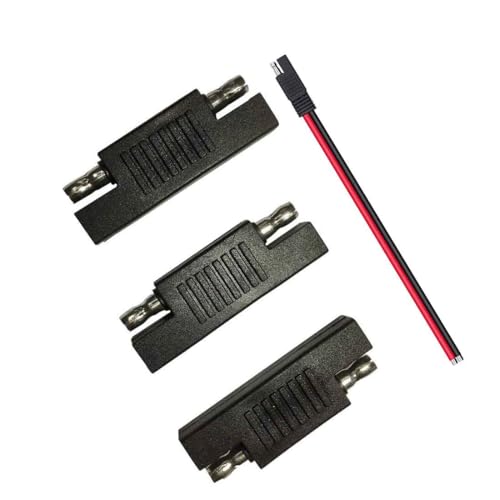
Sunway Solar SAE Polarity Reverse Adapters 3-Pack

ECO-WORTHY Powermega 48V 314Ah LiFePO4 Battery

ECO-WORTHY 12V 314Ah LiFePO4 Bluetooth Battery

ECO-WORTHY EnergyRock 12V 280Ah Battery 2-Pack

Sunway Solar 10AWG MC-4 to SAE Adapter Cable

ECO-WORTHY 12V 280Ah Metal Case LiFePO4 Battery

BLUETTI Elite 200 V2 Portable Power Station
The Picks, Examined More Closely
Polarity problems can stop a portable solar setup before stored energy ever reaches a battery. This Sunway Solar three-pack connects two SAE ends while reversing their orientation, making it useful when panel leads and charging equipment use opposing connector layouts.
For RV owners, portable-panel users, and technicians assembling compact solar kits, its value is straightforward: one small correction avoids replacing an otherwise usable cable. It doesn’t store energy, so ECO-WORTHY Powermega 48V 314Ah LiFePO4 Battery serves a completely separate role in a larger home system.
A Few Strong Suits
- The three-pack supports multiple cable corrections or provides a spare for a mobile setup.
- SAE-to-SAE construction joins compatible quick-disconnect leads without a permanent cable splice.
- Its compact form fits easily into a cable bag, camper compartment, or portable-panel storage case.
Practical Considerations
- Polarity must be confirmed before connection because using a reverse adapter in the wrong arrangement can damage attached equipment.
- This set only solves SAE polarity differences and does not adapt unrelated connector formats.
Quick Facts
Made For Mobile Solar
You benefit most with portable panels, SAE-equipped chargers, and a compact RV or maintenance kit.
A Better Fit Elsewhere
Choose the BLUETTI Elite 200 V2 Portable Power Station instead for usable battery storage and AC output rather than cable correction.
High-capacity storage changes the scale of a home solar project, and this 48V Powermega model sits at that end of the list. Its 314Ah rating produces a stated 16.1kWh of stored energy, enough capacity to support a properly sized inverter and several household loads in a larger installation.
LiFePO4 chemistry uses lithium iron phosphate rather than the cobalt-based chemistry found in some older battery designs. That distinction favors cycle life and thermal stability, but only exact inverter compatibility, wiring requirements, and local installation rules make a 48V system workable.
Everyday Wins
- The 16.1kWh capacity reduces dependence on daytime solar production once evening loads begin.
- A 48V architecture can suit larger residential inverter systems designed around high-voltage DC storage.
- Active cell balancing helps keep individual cells aligned during charging and parallel operation.
- Compatibility with earlier V1 units supports staged expansion for a growing installation.
Things To Weigh
- A battery of this capacity is substantial to transport, position, and install.
- Hazmat shipping rules can affect delivery arrangements outside standard parcel handling.
- Parallel expansion still requires matching equipment and correctly configured electrical connections.
Essential Details
Built With In Mind
Homeowners planning a larger fixed installation and working with a qualified solar installer gain the most from this capacity.
Consider Something Else
The ECO-WORTHY EnergyRock 12V 280Ah Battery 2-Pack offers a simpler starting point for RV and mobile systems operating at 12V.
Capacity monitoring makes a battery easier to live with during long off-grid stretches. This 12V 314Ah model provides 4,019Wh of nominal energy, while SOC LEDs and Bluetooth connectivity provide two ways to check operating status without returning to a physical terminal display.
The built-in 200A BMS manages battery-side protection and current limits, making it distinct from passive connector accessories such as the Sunway Solar SAE cable. For RV living, remote cabins, or backup circuits, the practical fit still depends on a compatible 12V charge controller, inverter, and appropriately rated wiring.
Real-World Strengths
- The 4,019Wh rating gives 12V installations more usable capacity than the 280Ah alternatives here.
- Bluetooth status access helps you check charge information without opening an electrical enclosure.
- SOC LEDs provide a quick local indication of remaining battery level.
- Low-temperature protection adds control logic relevant to cold-climate storage.
- The listed 15,000-cycle capability makes the model attractive for frequently cycled off-grid use.
Small Caveats
- The 314Ah rating still places a substantial weight on installation and handling.
- Bluetooth convenience depends on a compatible monitoring process and usable signal placement.
- Low-temperature protection manages operation but does not remove the need to follow charging-temperature guidance.
Who Will Love This
You get the most from this battery through a 12V off-grid system where remote status checks and deep cycle capacity matter.
Where Another Pick Shines
The ECO-WORTHY Powermega 48V 314Ah LiFePO4 Battery fits larger fixed installations that operate at a higher DC voltage.
A matched pair can simplify the logistics of building storage from multiple batteries. This EnergyRock set combines two 12V 280Ah LiFePO4 units, each rated at up to 3,584Wh, which gives mobile users a practical path to a larger 12V bank.
The 2026 metal enclosure replaces the earlier plastic shell, adding structural rigidity and better resistance to heat transfer in an enclosed battery compartment. Bluetooth and low-temperature controls support everyday monitoring, but the case still needs suitable ventilation, secure mounting, and protection from moisture.
Noteworthy Benefits
- Two matched batteries streamline capacity expansion without sourcing units separately.
- The metal enclosures are better suited to vibration-prone RV and trailer installations than lightweight plastic shells.
- Bluetooth monitoring helps you track status in a system that may be tucked into a storage bay.
Potential Drawbacks
- You must follow the intended series or parallel configuration; incorrect battery interconnection can create serious electrical problems.
- The pair is heavier and more space-consuming than a single 12V unit.
- Exterior label styles may vary, although the stated internal structure and capacity remain the same.
Right Fit For Mobile Living
RV owners, camper builders, and trailer users gain the most from a coordinated two-battery installation.
Another Choice May Suit
The ECO-WORTHY 12V 314Ah LiFePO4 Bluetooth Battery suits single-battery projects needing more capacity and local SOC LEDs.
Connector compatibility often determines whether a portable panel can feed a battery charger directly. This 10AWG Sunway Solar cable bridges MC-4 panel connectors and SAE charger connections, creating a practical link for RV, caravan, and compact solar installations.
The cable is 13.8 inches long, which keeps it manageable inside a wiring cabinet or between nearby components. Unlike the Sunway Solar SAE Polarity Reverse Adapters 3-Pack, this cable also handles connector translation, though it is not a universal bridge for every panel and battery combination.
Bright Spots
- MC-4-to-SAE conversion supports a common portable solar arrangement.
- 10AWG wire provides a useful conductor size for suitably sized low-voltage solar charging circuits.
- The included polarity adapters add flexibility for SAE connections that use opposing layouts.
Details To Watch
- Polarity requires confirmation before the final connection, especially around battery inputs and charge controllers.
- The 13.8-inch length may be short for panels mounted far from their charge controller.
- Connector compatibility does not establish electrical compatibility with every controller or battery.
Built With In Mind
You benefit most with portable panels, SAE battery maintainers, and RV wiring located within the cable’s short reach.
Look Elsewhere When
The ECO-WORTHY 12V 280Ah Metal Case LiFePO4 Battery is the relevant choice for stored energy rather than panel-to-charger wiring.
Mobile power systems demand a compact battery that can live in a secured compartment. This single 12V 280Ah model delivers up to 3,584Wh and targets off-grid homes, RVs, campers, travel trailers, and trolling motor applications where 12V is the prevailing system voltage.
Its heavy metal enclosure handles heat resistance better than a lightweight plastic shell, while a low-current power switch provides a straightforward local cutoff. Compared with the EnergyRock 2-Pack, you gain installation flexibility but lose the convenience of receiving two matched batteries together.
Positive Takeaways
- The 3,584Wh capacity supports substantial 12V loads without moving to a 48V architecture.
- Bluetooth monitoring helps manage a battery installed out of immediate view.
- The metal case adds rigidity for road vibration and mobile use.
- Low-temperature protection and a 200A BMS support controlled battery operation.
Factors To Consider
- Mounting, ventilation, and cable strain relief remain essential installation tasks.
- Trolling motor use requires careful sizing for motor startup current and expected runtime.
- Two separate label designs may appear randomly, with matching internal specifications.
Technical Snapshot
Whose Shelf It Belongs On
This model suits mobile-energy projects where a single high-capacity 12V battery and local cutoff are priorities.
Swap It Out When
The ECO-WORTHY EnergyRock 12V 280Ah Battery 2-Pack suits installations that need two matched units from the outset.
A portable power station combines a battery, inverter, outlets, and solar charging in one housing. The BLUETTI Elite 200 V2 provides 2,073.6Wh of storage and 2,600W of continuous AC output, making it more approachable during outages than a fixed 48V installation requiring system design and hardwiring.
You can run refrigerators, coffee makers, hair dryers, and other household loads within the unit’s electrical limits, with up to nine devices connected at once. Its lifting mode raises available output to 3,900W for compatible resistive loads, though you should still account for startup surges and device behavior.
The Upside
- The 2,073.6Wh battery provides useful outage runtime in a transportable format.
- 2,600W continuous output covers more household equipment than typical low-power emergency stations.
- Multi-device support reduces the need for several separate power products.
- Solar recharging makes it practical for road trips, cabins, and temporary home use.
Possible Compromises
- The unit is heavier and less integrated into a home than a permanently wired battery bank.
- High-draw appliances still require attention to continuous and lifting-mode limits.
- Capacity is modest beside the 16.1kWh ECO-WORTHY Powermega 48V 314Ah LiFePO4 Battery.
Feature Facts
Made For Flexible Backup
You benefit most during outages, road trips, or temporary setups where portability matters more than whole-home storage.
Reach For A Different Pick
The ECO-WORTHY Powermega 48V 314Ah LiFePO4 Battery fits fixed installations needing much greater storage capacity.
Matching Storage To Your Solar Architecture
Begin With System Voltage
Your charge controller, inverter, and battery must operate at compatible DC voltages. A 12V battery bank suits many RV and small off-grid arrangements, while a 48V architecture supports larger loads with lower current across the same power level.
Battery management systems, or BMSs, monitor and regulate cells inside a lithium battery. The stated 200A rating describes a maximum current class, not the continuous output you should expect from every connected appliance.
Compare Energy Against Inverter Output
Battery capacity and inverter output answer different questions. The ECO-WORTHY 12V 314Ah LiFePO4 Bluetooth Battery stores substantial energy, but its inverter must still handle the appliances connected to it.
The BLUETTI Elite 200 V2 takes a simpler route by combining storage and AC conversion. It offers an approachable option for outages, though its 2,073.6Wh capacity won’t sustain a full household indefinitely.
Account For Temperature And Placement
LiFePO4 chemistry performs well across many solar applications, yet temperature still affects charging. Low-temperature protection is useful in cold climates, while ventilation, secure mounting, moisture control, and cable strain relief matter in every enclosure.
Verify Every Connection
Polarity defines the direction of DC current, while connector format determines whether cables physically fit. SAE, MC-4, ring terminals, and Anderson-style connections are not interchangeable.
Confirm polarity with the manufacturer’s documentation before energizing a new circuit. The Sunway Solar adapters solve specific SAE orientation problems, not general electrical mismatches.
Practical Checks Before System Integration
Mistakes Worth Dodging
A common mistake is choosing capacity before checking the inverter’s input voltage and output requirements. Another is treating a connector adapter as proof of electrical compatibility. Confirm polarity, conductor size, charge current, and equipment limits before connecting solar panels to storage.
Where The Extra Money Goes
Higher-capacity models add usable energy, stronger enclosures, monitoring, or larger battery-management electronics. Those additions matter for frequent cycling, cold-climate charging, mobile installations, or larger household demand; simpler connector hardware serves a much narrower purpose.
Frequently Asked Questions
How Long Do Home Solar Batteries Last?
Runtime depends on battery capacity, inverter efficiency, cable losses, and the energy your appliances consume. Divide usable watt-hours by the approximate running wattage for a practical estimate, then account for conversion losses.
Can 12V and 48V Batteries Be Connected?
No. A 12V battery bank and a 48V battery bank use different voltage ranges and require compatible control equipment. Mixing them without the correct DC-DC conversion equipment can damage components.
Do Solar Batteries Work During Outages?
A properly configured system can supply power during an outage, including from batteries charged by solar panels. Automatic transfer behavior also depends on the inverter and whether essential loads are wired into a separate backed-up circuit.
Are SAE and MC-4 the Same Connector?
No. SAE connectors commonly appear on portable charging equipment, while MC-4 connectors frequently connect solar panels. An appropriate adapter can bridge those formats only after polarity and electrical ratings are confirmed.
Should a Battery Stay Connected to Solar?
Solar charging can normally remain connected through a compatible charge controller, which regulates battery charging. Cold-temperature charging rules and the battery manufacturer’s operating guidance still take precedence.
Final Verdict
Start with the architecture you already have or can realistically install. Choose the Sunway options for specific SAE or MC-4 connection problems, the 12V ECO-WORTHY batteries for mobile and compact off-grid systems, the 48V Powermega for larger fixed storage, or the BLUETTI station for portable AC backup. The right choice is the one that matches your voltage, loads, environment, and installation plan.
