


Storage batteries range from compact camping units to fixed systems sized for essential circuits and whole-home resilience. The right choice depends on usable capacity, continuous output, recharge options, inverter compatibility, and how much installation work you can realistically manage.
For daily commuters and occasional campers, a portable power station offers the easiest path. Homeowners managing longer outages need to think in terms of usable kilowatt-hours, surge capacity, thermal management, and a properly sized inverter instead of choosing on battery capacity alone. The seven options below cover compact travel, expandable mobile power, and permanently installed energy storage.
Your Options, Compared

ECO-WORTHY Powermega 48V 314Ah LiFePO4 Home Backup System

ECO-WORTHY Powermega 48V 314Ah LiFePO4 Battery
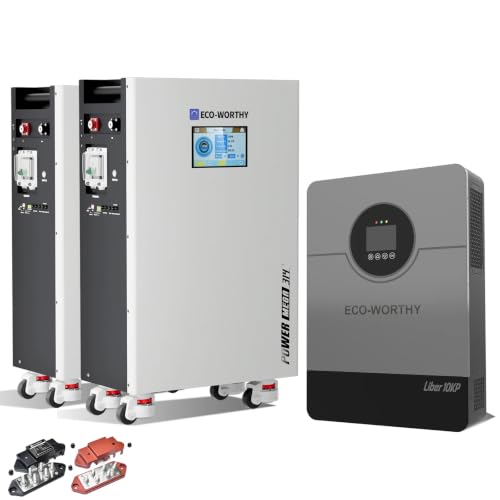
ECO-WORTHY Powermega Dual-Battery 10kW Home Energy System

PECRON E3600LFP Portable Power Station with Trolley

Simple Houseware 10-Tier Hanging Shoe Organizer

AFERIY 1024Wh Expandable Portable Power Station

Jackery Explorer 290 Portable Power Station Renewed
The Details Behind The Selections
A fixed system makes more sense than a suitcase-sized station for homeowners addressing recurring outages, an off-grid cabin, or a solar installation that needs substantial storage. Pairing a 48V 314Ah lithium iron phosphate battery with a 10kW hybrid inverter reduces the number of separate components you must coordinate.
The listed 16.1kWh usable capacity gives essential loads room to operate for an extended period, although actual runtime depends on appliance demand and conversion losses. Compared with the PECRON E3600LFP later in this roundup, this setup trades portability for a permanent connection and potentially greater whole-home headroom.
Standout Benefits
- The 10kW hybrid inverter supports demanding household loads rather than serving only small electronics.
- LiFePO4 chemistry is well suited to repeated charge and discharge cycles in daily energy storage service.
- Active cell balancing helps maintain more even cell performance across a large battery bank.
- Bluetooth and Wi-Fi connectivity simplify remote battery monitoring after installation.
Installation Details Matter
- A permanently installed system requires careful electrical design, ventilation planning, and correct inverter integration.
- The large battery is unsuitable for transport-based camping or mobile use.
- Protection plan terms vary, so coverage details deserve close review before purchase.
Key Technical Notes
Built For Fixed Installations
Experienced homeowners, off-grid property owners, and installers handling essential high-draw loads benefit most from this integrated configuration.
Another Choice May Suit
The PECRON E3600LFP Portable Power Station with Trolley serves people who need substantial portable power without a fixed installation.
This standalone battery gives you freedom to select an inverter that matches your solar array, generator, and load requirements. That flexibility makes it attractive for a carefully planned installation, though the absence of an included inverter shifts more responsibility to the installer.
Its 16.07kWh nominal capacity provides a substantial foundation for home backup or off-grid use. Active cell balancing improves charge distribution, while compatibility with earlier V1 units supports staged expansion for households planning more storage later.
Where It Delivers
- The 314Ah capacity creates a high-energy starting point for essential circuits and solar storage.
- Active balancing helps cells share charge more evenly during long operating cycles.
- Parallel compatibility with earlier V1 batteries allows capacity to grow in planned stages.
- LiFePO4 chemistry fits applications requiring frequent cycling rather than occasional standby use.
Owning The Bare Battery
- You must source and correctly configure the inverter, wiring, and balance-of-system components.
- Hazardous-material shipping rules can complicate some delivery arrangements, and the item is non-returnable.
- Its weight makes this a stationary choice rather than a recreational power station.
Core Details
Made For System Builders
Technically confident homeowners and professional installers benefit most from the flexible, inverter-independent design.
A Better Fit Elsewhere
The ECO-WORTHY Powermega 48V 314Ah LiFePO4 Home Backup System suits people who prefer an integrated battery and inverter package.
Two 48V 314Ah batteries lift this system well beyond the single-battery ECO-WORTHY configuration. The listed usable capacity exceeds 30kWh, making it more relevant to households that need refrigerators, lighting, communications equipment, and other essential loads to continue through a prolonged outage.
A 10kW hybrid inverter handles the power-conversion role while the battery bank supplies stored energy. The package suits experienced installers more than casual users because two high-capacity batteries still require proper placement, wiring, ventilation, and operating settings.
Strong Points
- More than 30kWh of stated usable energy offers room for several essential appliances.
- The dual-battery design reduces runtime anxiety during multi-day disruptions.
- A 10kW inverter provides meaningful headroom for household loads.
- Active balancing supports consistent operation across the expanded battery bank.
Practical Constraints
- Two batteries require adequate floor space and a planned installation area.
- The larger capacity does not make high-draw appliances practical without checking load limits.
- Ongoing monitoring and maintenance require familiarity with large battery systems.
- A cable-management conduit is associated with a future promotion, so its availability should not drive the purchase decision.
Whose Home It Serves
Homeowners preparing for extended grid interruptions or substantial off-grid consumption gain the most from the dual-battery configuration.
Look Elsewhere Lightly
The Jackery Explorer 290 Portable Power Station Renewed is a far simpler option for occasional camping and travel.
The E3600LFP sits between a camping battery and a permanently installed home system. Its 3,072Wh capacity and 3,600W rated output can support substantial portable loads, while the trolley eases movement around garages, workshops, and outdoor work areas.
Expansion changes the equation. Up to four EP3800-48V batteries raise the listed maximum capacity to 18.43kWh, giving RV owners and households room to grow without replacing the base unit. That flexibility comes with added weight and a more complex charging plan.
Practical Pluses
- The 3,600W rated output supports power tools and household equipment beyond basic charging needs.
- Sixteen output connections reduce the need for a crowded adapter assortment.
- A pure sine-wave AC waveform suits sensitive electronics.
- Four compatible expansion batteries create a practical path to 18.43kWh.
- The trolley makes a station of this class less awkward to reposition.
Handling The Full Package
- Maximum expansion adds considerable weight and may limit where the completed system can be placed.
- Runtime depends heavily on appliance draw and battery additions.
- Portable placement still requires safe ventilation during charging and use.
Technical Highlights
Ready For Mobile Power
RV travelers, homeowners, and tradespeople who move between outlets benefit most from its capacity and wheeled format.
Consider Something Else
The AFERIY 1024Wh Expandable Portable Power Station offers a lighter starting point for lighter mobile loads.
The Simple Houseware organizer is not a battery and has no role in generating or storing electrical energy. Its place in this list is limited to another kind of storage problem: reclaiming vertical closet space that would otherwise hold only a few pairs of footwear.
Ten tiers suit apartments, dorm rooms, and narrow closets where floor area is scarce. You can group shoes by type or household member, though longer boots and bulky footwear may not fit the individual cubbies cleanly.
Points In Its Favor
- Ten tiers make efficient use of otherwise empty vertical closet space.
- The hanging format leaves the floor beneath the organizer available for larger items.
- The gray finish fits easily into a range of closet and entryway styles.
Wardrobe Limitations
- It provides no electrical capacity or outage support.
- Closet depth and ceiling clearance need checking before installation.
- Owners commonly limit each tier to compatible footwear to prevent overcrowding.
Whose Shelf It Belongs On
Small-apartment residents and anyone managing footwear in a narrow closet benefit from the vertical layout.
A Better Fit Elsewhere
The Jackery Explorer 290 Portable Power Station Renewed addresses portable electricity rather than wardrobe organization.
Starting at 1,024Wh, the AFERIY targets people who want more than a small charging bank but do not need to carry several kilowatt-hours from the outset. Expansion to 5,120Wh makes it practical for RV travel, extended outages, and off-grid stays that begin with modest daily consumption.
The listed under-10ms transfer speed targets brief grid interruptions, making it relevant to computers, network equipment, and other devices that dislike sudden input loss. In practice, the supported load mix and required outlet configuration still determine how useful that fast transfer will be.
A Few Strong Suits
- The 1,024Wh starting point balances portability with more useful runtime than a typical small power bank.
- Expansion to 5,120Wh creates room for larger appliances as needs change.
- The quoted sub-10ms switchover supports sensitive electronics during brief outages.
- A portable format fits RV storage, outdoor work areas, and temporary home use.
Expansion Trade-Offs
- Full expansion increases both carrying effort and charging time.
- Fast switchover does not guarantee that every appliance can operate during an extended outage.
- Reasonable load planning remains necessary to preserve usable capacity.
Feature Snapshot
Who Will Love This
RV travelers and homeowners seeking a staged portable system benefit from its low starting capacity and expansion path.
Reach For A Different Pick
The PECRON E3600LFP Portable Power Station with Trolley serves people needing substantially more starting output and capacity.
The Explorer 290 fits weekend campers and travelers who need less capacity than the AFERIY provides. Its 290Wh battery and 200W continuous output are suited to phones, cameras, lights, small appliances, and modest electronics rather than household circuits.
A pure sine-wave 110V AC outlet offers a cleaner waveform for sensitive devices, while two USB ports and a 12V car connection cover common charging needs. The renewed designation warrants a close look at condition, included accessories, and seller details before checkout.
The Case For It
- Compact dimensions and a built-in handle simplify transport.
- The pure sine-wave AC output suits compatible sensitive electronics.
- USB, 110V AC, and 12V connections cover several everyday charging methods.
- The LCD display shows operating information and remaining battery level.
- Wall, vehicle, and solar charging options provide useful flexibility.
Renewed Item Considerations
- The 290Wh capacity limits runtime for high-draw equipment.
- A solar panel is not included, and stated solar charging takes about five hours.
- Inspect the listing closely because renewed units can differ in cosmetic condition.
Quick Technical Notes
Made For Weekend Trips
Occasional campers, travelers, and households seeking a small emergency reserve benefit most from its manageable capacity.
Swap It Out For
The AFERIY 1024Wh Expandable Portable Power Station suits longer outages and RV users who need more stored energy.
Matching Storage Capacity to Your Power Demands
Capacity and output answer different questions. Capacity determines how much energy is stored, while output determines how much power can flow at one time. A large battery still needs a sufficiently capable inverter to run demanding appliances.
Establish Your Load Profile
List the appliances you expect to operate during an outage and separate essential circuits from discretionary loads. Add their running and starting demands, then compare the total with the inverter’s continuous and surge ratings.
Match Chemistry To Your Routine
LiFePO4 storage is designed around frequent cycling and is common in home energy systems. Smaller portable units can also use lithium-ion chemistry, so compare weight, cycle characteristics, and manufacturer guidance rather than assuming one chemistry fits every use.
Decide Between Portable and Fixed Storage
A portable station offers mobility and a simpler setup, yet household backup depends on keeping it charged. Fixed systems provide larger capacity and stronger inverter integration, although professional electrical design is more realistic for new installations.
Review Expansion Before Buying
Expansion can spare you from replacing the entire unit later. Verify compatible battery models, connector requirements, ventilation, maximum parallel capacity, and the space needed for the completed configuration.
Two Decisions That Shape Your Purchase
Mistakes Worth Dodging
A common mistake is focusing on total watt-hours while overlooking inverter output and surge limits. Another is assuming every listed capacity remains fully available for household use. Check output, compatible accessories, charging requirements, and installation clearances before deciding.
What The Higher Tier Buys
Higher-capacity systems add stored energy, heavier construction, stronger inverter hardware, or more connection options. Those additions suit frequent outages, RV travel, or essential home loads, while occasional campers can often achieve their goals with a smaller portable unit.
Frequently Asked Questions
How much battery capacity is needed for backup power?
Required capacity depends on the appliances, their power draw, and the outage duration. Add expected energy use, then leave room for conversion losses and capacity that may remain reserved for system control.
Can portable power stations run a refrigerator?
A suitably sized unit can run many refrigerators, but compressor startup demand matters as much as the running wattage. Check surge capacity and battery expansion options before relying on it during outages.
Is LiFePO4 preferable for home storage?
LiFePO4 is commonly used in frequently cycled storage because of its chemistry and cycle characteristics. The complete system, thermal environment, battery management, and inverter compatibility still govern performance.
Do solar generators include panels?
Many portable solar generators are sold as units only, so check the listed contents carefully. The Jackery Explorer 290 requires a separate compatible solar panel, while other systems may include different accessories.
Can these batteries be expanded later?
Some systems support additional battery units, but only with manufacturer-approved models and correct settings. Expansion can increase weight, charging time, and installation requirements, so compatibility should be confirmed before purchase.
Final Thoughts
Choose portable storage for mobility and simpler ownership, or a fixed system for larger capacity and home-integrated power. Match the battery to your actual loads, confirm expansion compatibility, and leave room for safe charging and ventilation. The right system is the one your equipment and routines can actually support.
