


Batteries for remote trail cameras
Keeping CuddeLink and compatible trail cameras running in the field means planning for more than ordinary AA batteries. Solar charging, extended-capacity power packs, and complete camera bundles each solve a different part of the problem, depending on how far you monitor and how often you can reach your equipment. This roundup compares seven relevant options, including Cuddeback solar banks, wired power packs, CuddeLink camera systems, an LTE camera, and a rechargeable battery for the Tactacam DEFEND ecosystem.
The Shortlist At A Glance

Cuddeback CuddeLink 1 L Series Home Cellular Unit
Cuddeback Solar Power Bank PW-3600, 8 Pack

Cuddeback Power Bank, Brown

CuddeLink 4 Blackflash Cameras L Series

Cuddeback CuddeLink IR LL-2A Wireless Camera

Cuddeback Tracks Black Flash LTC-3A LTE Camera

TACTACAM DEFEND Rechargeable Camera Battery
The Picks, Examined More Closely
This is a whole-network bundle rather than a standalone battery, so the comparison begins with scale: it pairs a home cellular unit with 12 infrared L Series cameras, seven PW-3600 solar banks, six battery banks, and 13 memory cards. That makes it more relevant to an established hunting or property-monitoring setup than to someone replacing one depleted battery.
CuddeLink uses camera-to-camera wireless transmission rather than requiring direct cellular service at every remote position. For extensive acreage, that approach can reduce card visits, although coverage still depends on terrain, camera placement, and intermediate relay positions.
Useful Highlights
- The 12-camera bundle supports broad coverage without assembling each component separately.
- Seven solar banks and six battery banks create a substantial mix of field-power options.
- Thirteen SD cards help each remote camera retain its own image records.
- Support is available around the clock for setup, connectivity, and troubleshooting questions.
Practical Considerations
- The size and complexity exceed the needs of a single-camera installation.
- Remote cameras still need secure mounting and periodic physical inspection.
- The cellular home unit requires compatible network service and configuration.
Built With In Mind
This package fits hunters, landowners, and wildlife monitors managing numerous CuddeLink positions across a large property.
A Better Fit Elsewhere
For a smaller installation, the Cuddeback Solar Power Bank PW-3600 offers a more focused way to add renewable field power.
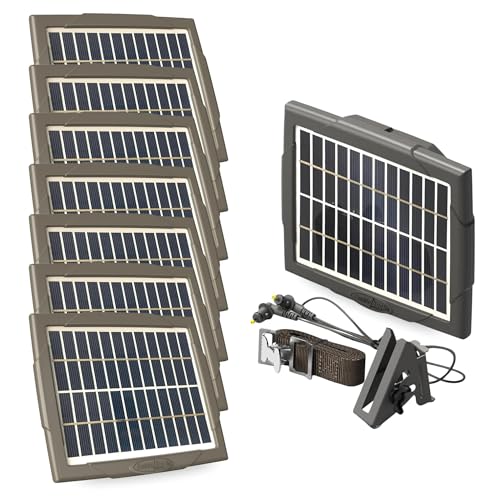
The PW-3600 turns sunlight into stored electrical energy through a built-in solar panel and rechargeable nickel-metal hydride battery. That combination suits remote CuddeLink and Cuddeback Tracks cameras where replacing disposable cells can be inconvenient. Eight units also make stocking spare positions easier.
For most wooded properties, solar charging won’t fully replace attention to placement. Tree cover, seasonal daylight, panel direction, and accumulated dirt can affect available charging, so a shaded location may still need a wired bank or a planned battery swap.
Everyday Perks
- Integrated solar charging reduces routine battery replacements in exposed locations.
- The rechargeable NiMH cell stores daytime energy for periods without direct sun.
- Compatibility spans CuddeLink and Cuddeback Tracks cameras.
- Eight banks cover several cameras and provide useful field spares.
- Round-the-clock support can help with setup or operating questions.
Things To Consider
- Heavy shade limits the practical benefit of the solar panel.
- Keep the charging surface clear of leaves, soil, and snow.
- The eight-pack may be excessive for a single camera.
Feature Snapshot
Made For
This set suits people operating several compatible trail cameras in open or partly exposed locations.
Consider Something Else
The Cuddeback Power Bank is the simpler alternative for deeper shade where solar charging may not contribute enough energy.
The Cuddeback Power Bank takes a different approach from solar charging by supplying camera power through a wired connection. It supports CuddeLink and Cuddeback Tracks cameras, including models operating with or without their internal batteries, which makes it useful during a gradual field conversion. In our view, dependable stored power matters more than solar collection in deeply wooded locations.
Its brown housing also blends more readily with tree trunks and outdoor equipment. Mounting can be compact because the camera may sit against the pack with the Genius Plastic Mount, or the two components can be attached side by side.
Key Advantages
- Broad compatibility simplifies upgrades across Cuddeback camera models.
- Wired power remains unaffected by nearby shade or short daylight periods.
- The camera can operate with or without batteries installed.
- Front or side-by-side mounting offers flexibility at tree-mounted positions.
Small Caveats
- The pack still needs periodic recharging.
- Cable routing and weather exposure require secure installation.
- The listing doesn’t identify its storage capacity.
Key Product Details
Right Fit For
This wired bank best suits owners of mixed compatible cameras, particularly those operating beneath dense tree cover.
Another Choice May Suit
The PW-3600 8 Pack fits remote arrays with strong sunlight and a preference for renewable charging.
Four Blackflash L Series cameras, four battery power banks, and four 16GB SD cards make this a ready-to-deploy package rather than a battery-only purchase. Its black flash is designed to reduce visible illumination at night, a useful attribute for wildlife monitoring where a conspicuous flash could change animal behavior.
Compared with the single LL-2A camera later in this roundup, this package is better suited to covering several locations immediately. You still need a compatible home unit or cellular arrangement to receive images through CuddeLink.
Where It Helps
- Four cameras support immediate monitoring across separate locations.
- Low-visible-light flash design suits discreet nighttime observation.
- Matching power banks simplify initial setup of the four positions.
- Individual 16GB cards keep image storage distributed among cameras.
Points To Note
- The listing provides cameras and accessories rather than a standalone bank.
- CuddeLink range depends heavily on terrain and intermediate camera placement.
- Weatherproof housings still benefit from careful positioning.
Feature Facts
Who Will Love This
This package appeals to new CuddeLink users establishing several remote camera positions at once.
Look Elsewhere
The single LL-2A Wireless Camera fits a smaller installation where four camera bodies would go unused.
The LL-2A is built for a single position within a CuddeLink network, where cameras relay images toward one home unit. Its 850nm infrared LEDs emit light outside the visible range, helping nighttime capture without the glow produced by conventional white illumination. That makes this a sensible camera for sensitive wildlife monitoring.
This choice isn’t a battery accessory, and the listing doesn’t bundle a power bank. You need compatible power arranged separately, either through the Cuddeback Power Bank, PW-3600 solar units, or the battery configuration your camera normally accepts.
Positive Points
- Low-glow 850nm infrared supports discreet night monitoring.
- The stated illumination range reaches 100 feet or more.
- CuddeLink networking can connect as many as 23 cameras.
- A single-camera format suits focused surveillance of one trail or property corner.
Possible Compromises
- Power hardware is not included with the camera.
- A home unit or cellular connection is needed for networked image retrieval.
- Night performance still depends on proper aim and environmental placement.
Who Should Grab It
The LL-2A suits a CuddeLink user who wants one low-visible-flash camera for a specific nighttime monitoring position.
Reach For A Different Pick
The CuddeLink 4 Blackflash Cameras L Series package better serves a new deployment requiring four cameras, power banks, and memory cards together.
The LTC-3A changes the comparison from local camera-to-camera networking to a cellular connection through Verizon or AT&T. That direct LTE route suits isolated positions where chaining CuddeLink cameras would add complexity. It’s also a complete camera, not a battery pack, so power planning remains essential.
The 940nm infrared system uses nonvisible illumination for nighttime capture, while the black-flash format avoids an obvious visible burst. For extensive land, cellular coverage at each camera location matters more than physical proximity to another relay.
What Makes Sense
- LTE connectivity removes the need to route images through neighboring cameras.
- 940nm infrared supports low-visible-light night monitoring.
- Compatibility with PW-3600 solar banks creates a practical off-grid power option.
- Support is available around the clock for setup and troubleshooting guidance.
Details To Watch
- Remote cellular reception varies by carrier and location.
- A compatible data plan is required beyond the hardware.
- Solar exposure and panel maintenance affect field endurance.
- Power banks are not included with this listing.
The Right Fit
The LTC-3A fits people with reliable cellular service who prefer each camera to operate as an independent remote unit.
Swap It Out
The LL-2A Wireless Camera better fits a private CuddeLink network that avoids cellular data plans at remote positions.
This rechargeable battery serves Tactacam DEFEND cellular security cameras rather than CuddeLink equipment, so model compatibility is the first filter. Within that narrower category, it offers a clean solution for gates, driveways, cabins, and other positions without wall power. Rechargeability also avoids discarding cells after routine use.
You can deploy it as the camera’s primary source or pair it with solar or wall power as backup. Since no capacity or runtime figure appears in the supplied information, the sensible move is to verify the camera model’s power requirements and the battery’s specifications before ordering.
A Few Strong Suits
- Rechargeable construction supports repeated use instead of routine disposal.
- Standalone operation expands placement beyond available wall outlets.
- Backup use adds flexibility to existing solar or wired systems.
- Dedicated DEFEND compatibility supports the intended camera ecosystem.
Less-Strong Areas
- It does not serve CuddeLink or Cuddeback cameras.
- Capacity and expected runtime aren’t stated in the provided details.
- Long storage periods call for periodic charge maintenance.
Core Details
Whose Shelf It Belongs On
It belongs with DEFEND owners who need reusable power at a remote property location without easy access to an outlet.
Not Your Match
Cuddeback Power Bank, Brown is the appropriate alternative for compatible CuddeLink and Tracks cameras.
Choosing Field Power That Fits Your Cameras
Match the power system to the camera
A power bank does not automatically suit every camera. Start with the exact camera model, then confirm whether it accepts CuddeLink accessories, standard internal batteries, solar charging, or another connection method. The Cuddeback Power Bank supports CuddeLink and Tracks cameras, while the TACTACAM DEFEND battery belongs to a separate ecosystem.
Decide between solar and stored power
Solar banks are practical where panels receive dependable sunlight. A polyrystalline panel converts light into electrical energy, which then replenishes the built-in rechargeable cell. Under heavy canopy, a wired bank may be more dependable because it does not depend on daily solar collection.
Count cameras and service visits
A single remote position may need only one compact bank, while several cameras can justify an eight-pack or a complete multi-camera bundle. Account for spare units, charging time, and the difficulty of traveling to each location during poor weather.
Check the surrounding equipment
Consider cellular coverage for LTE cameras, relay placement for CuddeLink networks, and memory-card requirements. Also inspect tree growth, mounting security, cable strain, and panel exposure before installation.
Practical Lessons Before You Power Up
Common Shopping Slip Ups
Compatibility causes more confusion than capacity in this category. Confirm the camera model, connector arrangement, and battery format before purchasing. Avoid assuming that solar equipment can carry a camera through a shaded or short winter season without checking the installation.
What Separates Solar From Wired Power
Solar equipment costs more to justify when sunlight is abundant, while wired storage can suit shaded woods and long service gaps. Pay for the approach that matches the site rather than adding complexity that the location cannot support.
Frequently Asked Questions
Which battery works with CuddeLink cameras?
The Cuddeback Power Bank supports CuddeLink and Cuddeback Tracks cameras. Compatibility still depends on your exact model and the connection arrangement specified for that camera.
Is a solar power bank better than regular batteries?
Solar charging can reduce battery replacements in sunny locations. Deep shade, heavy foliage, or limited daylight may make a wired rechargeable bank more dependable.
Does the PW-3600 fit CuddeLink cameras?
Yes, the Cuddeback Solar Power Bank PW-3600 is specified for CuddeLink cameras. The eight-pack provides several power units for multiple positions.
Can CuddeLink cameras send images without cellular service?
CuddeLink cameras transmit through neighboring cameras toward a central home unit rather than requiring cellular service at every camera. Reliable transmission depends on terrain and suitable camera placement.
Is the TACTACAM DEFEND battery compatible with CuddeLink?
No. The TACTACAM DEFEND Rechargeable Camera Battery is designed specifically for Tactacam DEFEND security cameras. CuddeLink owners need a Cuddeback-compatible power option.
Wrap Up
The Cuddeback Solar Power Bank PW-3600 is the most practical renewable option for exposed, multi-camera locations. Shaded installations favor the flexible Cuddeback Power Bank, while complete CuddeLink bundles suit larger network deployments. The TACTACAM DEFEND battery serves a different camera ecosystem, so matching the power unit to the exact model is the essential first step.
