


An aftermarket battery can transform a weekend RV trip, quiet fishing day, or home solar setup, but voltage, capacity, and physical dimensions must align with your equipment. The Rvpozwer options cover large off-grid banks, compact Group 31 installations, and straightforward 12V or 24V systems. The TYKOOL choice takes a different path with a compact powersports format built for motorcycles.
Capacity is only one part of the decision, too. You also need to account for a battery management system, charging limits, cold-weather behavior, expansion options, and hazardous-material shipping rules.
A Closer Look At The Lineup

Rvpozwer 12V 300Ah LiFePO4 Battery 2 Pack

Rvpozwer 12V 100Ah LiFePO4 Battery 2 Pack
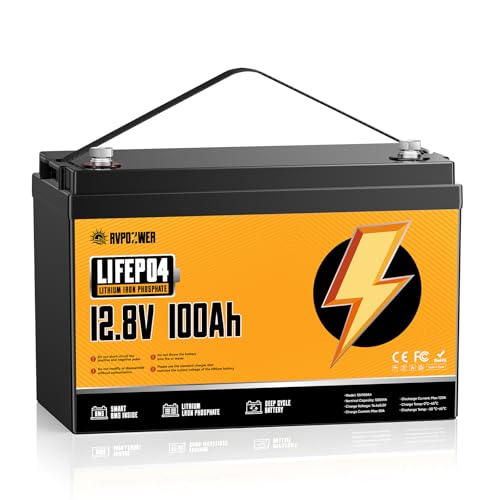
Rvpozwer 12V 100Ah LiFePO4 Battery 120A BMS

Rvpozwer 24V 100Ah LiFePO4 Battery 2560Wh

Rvpozwer 12V 200Ah LiFePO4 Battery 2 Pack

Rvpozwer 12V 200Ah LiFePO4 Battery 2560Wh

TYKOOL LFP9-BS-STD 12V 4Ah Lithium Powersports Battery
Taking A Closer Look At The Options
The 300Ah rating and two-pack format put this option well beyond a weekend accessory bank. You gain substantial stored energy for an RV, marine installation, or solar setup where sustained household loads matter more than carrying one compact unit.
A 200A BMS, which monitors cell balance and guards charging and discharge extremes, makes the high-capacity pairing more practical. For smaller compartments, though, this option makes little sense; the Rvpozwer 12V 100Ah LiFePO4 Battery 2 Pack is easier to manage.
The Upside
- Two 300Ah batteries support larger energy reserves for off-grid living.
- The 200A BMS manages high-current operation and multi-cell balance.
- Low-temperature charging cutoff reduces charging exposure around freezing.
- The listed 15000-plus-cycle figure favors long-term ownership planning.
Worth Noting
- Size, weight, ventilation, and cable sizing require careful planning.
- Hazardous-material rules make the non-returnable restriction important to accept before ordering.
- A charger must match the 12V chemistry and the battery bank’s current requirements.
Key Specs
Built For Large Energy Banks
This pair fits experienced RV, solar, or marine users with the space, mounting hardware, charger, and wiring capacity for a substantial battery bank.
Another Choice May Suit
The Rvpozwer 12V 100Ah LiFePO4 Battery 120A BMS better serves owners who need Group 31 dimensions and lighter handling.
Group 31 dimensions make this pairing more approachable than the 300Ah set, especially for a boat, camper, or RV with a traditional battery tray. Each battery measures 12.99 by 6.77 by 8.46 inches and weighs 23.04 pounds, so a secure mount and manageable lift remain essential.
Its smart BMS provides cell balancing and protection against overcharge, over-discharge, overcurrent, and short circuits. That makes this a sensible bridge between compact lead-acid replacements and much larger custom banks, though compatibility still depends on your compartment and charging equipment.
Useful Touches
- The two-pack format allows matched 12V capacity without a single oversized case.
- Group 31 dimensions ease comparisons with many existing marine and RV installations.
- The 100A BMS supports common deep-cycle loads and protects individual cells.
- Series and parallel expansion reaches as many as 16 batteries in the stated 4S4P arrangement.
Things To Consider
- The source data gives a 100A BMS rating, while its feature copy references a different rating.
- Measure cable reach and clearance because a Group 31 outline does not guarantee a direct fit.
Made For Group 31 Installations
This set fits RV, marine, camping, and solar owners who recognize Group 31 dimensions and need two matched 12V batteries.
Where A Sibling Pick Shines
The Rvpozwer 12V 300Ah LiFePO4 Battery 2 Pack better serves installations needing much more stored energy and heavier-gauge wiring.
A single 100Ah battery keeps this choice simpler than the two-pack options, while the 120A BMS provides more current headroom than Item 2’s stated 100A figure. It works well for a trolling motor, small solar circuit, or RV auxiliary bank where usable dimensions matter as much as capacity.
The listed 1280Wh output reflects the battery’s nominal energy rather than the full amount you should expect from an inverter continuously. Actual usable power depends on inverter draw, wiring, temperature, and depth of discharge, so sizing around your longest expected load is the sensible approach.
Notable Upsides
- Single-battery installation reduces mounting and balancing complexity.
- The 120A BMS handles demanding trolling motor and inverter starts.
- Grade A LiFePO4 cells provide a defined starting point for long service.
- The 12S4P expansion ceiling supports larger RV and solar systems.
Practical Considerations
- One unit may be insufficient for overnight loads in an RV or small cabin.
- Low-temperature charging behavior depends on the exact protection configuration available in your installed unit.
- Terminal position and physical clearance need confirmation before disconnecting an older battery.
Feature Snapshot
Right Fit For Single-Bank Projects
This model suits marine, RV, and solar users who want one 12V unit with higher BMS headroom and a straightforward installation.
Reach For A Different Pick When
The Rvpozwer 12V 200Ah LiFePO4 Battery 2560Wh fits users needing greater single-unit capacity for longer periods away from shore power.
Raising the nominal voltage to 24V reduces the number of parallel cables needed for a given power level. That electrical advantage comes with a physical trade-off: this battery measures 15.12 by 7.64 by 10.04 inches and weighs 41.89 pounds, which may crowd a small boat compartment.
The 100A BMS handles cell protection, while the stated 15000-plus-cycle figure targets long service. For an existing 12V system, this unit is not a direct substitute; your inverter, charger, converters, and controller must support a 24V bank.
What Makes Sense
- 24V operation can simplify high-power wiring compared with a parallel 12V arrangement.
- The 2.56kWh rating matches the energy of two listed 12V 100Ah batteries.
- Expansion supports larger solar and off-grid banks through 4P2S configurations.
Details To Watch
- The case may be too large for a compact marine battery tray.
- Every connected charger and power-conversion device must accept 24V.
- At 41.89 pounds, installation may require two-person handling.
Key Product Details
Best Suited To 24V Systems
This model suits RV, solar, and stationary users whose inverter and charger are designed around a 24V battery bank.
Look Elsewhere For 12V Drops
The Rvpozwer 12V 100Ah LiFePO4 Battery 120A BMS is the more natural replacement for standard 12V RV or marine equipment.
This two-pack balances capacity and modularity better than the 300Ah set. Each 12V battery stores 2560Wh, and its 20.47 by 9.45 by 8.58-inch case gives you flexibility for paired RV, marine, camping, or backup installations.
The 200A BMS supports up to 200A continuous discharge and 100A maximum charging. Those figures make it a practical fit for inverter loads, although your cables, fuse, charge controller, and inverter still set the actual operating limits.
The Value In It
- A two-pack provides useful capacity without requiring a 24V conversion.
- The 200A discharge rating supports substantial inverter and motor loads.
- Cycle figures range from 4000-plus at full depth of discharge to as many as 15000 at 60 percent.
- Up to 16 units can form the stated 48V, 800Ah configuration.
Possible Compromises
- Two full-size cases require more mounting room than a single Group 31 battery.
- Maximum charge current should be respected to avoid pushing the system beyond its specified limits.
- High-current installations need correctly sized cable protection and ventilation.
Who Will Love This
This pack appeals to RV, marine, and off-grid users who want expandable 12V storage with room for high-draw equipment.
Swap It Out For Less Weight
The Rvpozwer 12V 100Ah LiFePO4 Battery 120A BMS offers a lighter installation when 100Ah of capacity is enough.
The single 200Ah format concentrates useful energy into one case, which can simplify wiring compared with the Rvpozwer 12V 200Ah LiFePO4 Battery 2 Pack. It is a natural candidate for an RV inverter, marine electronics, or a compact solar reserve.
Its dimensions remain substantial at 20.47 by 9.45 by 8.58 inches, so a shallow marine compartment may reject an otherwise capable battery. Low-temperature protection adds value for seasonal users, provided charging controls are configured correctly.
Practical Advantages
- 2560Wh in one unit reduces the number of parallel battery connections.
- Continuous 200A discharge support covers inverter peaks and motor starting.
- The 100A maximum charge rate gives you a defined charging target.
- Depth-of-discharge-specific cycle figures help compare real usage patterns.
A Few Limitations
- The full-size case may limit placement in compact boats.
- One battery remains vulnerable to a single-point installation issue.
- Cold charging still requires compatible control equipment.
Made For High-Load 12V Setups
This battery fits owners with a suitably sized compartment and a 12V system that needs substantial single-unit capacity.
A Better Fit Elsewhere
The Rvpozwer 24V 100Ah LiFePO4 Battery 2560Wh suits a 24V architecture where higher voltage can reduce current-carrying demands.
Unlike the deep-cycle Rvpozwer models, the TYKOOL LFP9-BS-STD is shaped for motorcycle and powersports starting. Its 240 CCA rating, which describes cold-cranking performance, targets motorcycles listed in its fitment range rather than an RV inverter or solar bank.
The 4Ah capacity and compact 150 by 87 by 105mm dimensions keep weight manageable on a sport bike or powersports craft. A digital voltage readout and IP66 rating add practical visibility and environmental resistance, though the case must match your vehicle’s polarity, dimensions, and terminal arrangement.
Standout Benefits
- LiFePO4 chemistry reduces weight compared with a similar lead-acid starting battery.
- The digital voltage display gives you a quick state-of-charge reference.
- 240 CCA supports cold-starting demands across the listed motorcycle applications.
Minor Gripes
- Compatibility must be checked against case size, polarity, and the vehicle’s charging system.
- Four amp-hours is intended for starting, not extended accessory power.
Quick Facts
Perfect Match For Powersports
This model fits motorcycle and personal-watercraft owners replacing a compatible YTX9-BS-style starting battery.
Not Your Match For Deep Cycling
The Rvpozwer 12V 100Ah LiFePO4 Battery 120A BMS is the stronger fit for trolling motors, solar storage, and sustained accessory loads.
Match Voltage, Capacity, and Compartment Size Before Buying
Battery fit begins with voltage. A nominal 12V replacement works with a 12V charging system, while the 24V Rvpozwer option requires compatible inverters, converters, and controllers. Never connect either voltage to equipment rated differently.
Capacity then determines runtime. A 100Ah 12V battery stores roughly 1.28kWh on paper, while a 200Ah unit stores about 2.56kWh. Real output falls below those figures depending on inverter draw, wiring losses, temperature, and how deeply the battery is discharged.
Check the Physical Envelope
Measure the compartment before ordering. Group 31 dimensions can simplify one installation, but terminal placement and cable clearance still matter. The 200Ah and 300Ah options add considerable weight, so secure mounting and safe handling deserve equal attention.
Match Current to Your Equipment
The BMS, or battery management system, monitors charging, discharging, cell balance, and electrical faults. Its current rating must complement the battery, cables, fuse, charger, and inverter; a higher BMS figure does not make undersized wiring acceptable.
Plan Expansion Before Buying
You gain flexibility with batteries that support series and parallel connections. Series connections raise system voltage, while parallel connections add capacity at the same voltage. Confirm battery age, model, and capacity remain matched throughout the bank.
Two Details That Prevent Costly Mistakes
Hidden Buying Traps
Ignoring terminal position and charger compatibility can ruin an otherwise sound installation. Measure first, then confirm polarity, voltage, and current limits before removing a working battery.
The Upgrade Payoff
Spending more may buy higher capacity, a stronger BMS, longer stated cycle life, or tighter physical dimensions. Those gains matter most for daily powering, cold-weather charging, or limited engine compartments, while a basic compatible model can suit occasional use.
Frequently Asked Questions
Can a 12V LiFePO4 battery replace a lead-acid battery?
Only after checking dimensions, terminal position, capacity, and charger type. LiFePO4 charging requires different voltage and temperature controls, so an automatic lead-acid charger may not be compatible.
Is a higher amp-hour rating always better?
No. A larger rating adds potential runtime but also increases weight, space, charging time, and cost. Match capacity to realistic loads rather than selecting the largest battery your compartment can hold.
Can multiple Rvpozwer batteries be connected together?
Several models support series or parallel expansion, depending on their specifications. Use matching units, proper cables, and a compatible charge controller, and follow the battery manufacturer’s connection sequence.
Are these batteries maintenance-free?
They require less routine upkeep than flooded lead-acid batteries, but voltage, temperature, terminals, and connections still need occasional attention. Keep the case clean and confirm the BMS reports no fault.
Does the TYKOOL battery work with any motorcycle?
No. Verify the model, case dimensions, polarity, cold-cranking requirement, and charging system before installation. Its compact capacity is designed for starting rather than deep-cycle accessory use.
Final Verdict
Your strongest fit depends on the system, not merely the largest advertised capacity. Compact RV and marine users may favor the Group 31 options, larger off-grid setups benefit from the 200Ah or 300Ah packs, and powersports riders need the TYKOOL’s dedicated fit. Match the numbers to your equipment and choose the installation you can comfortably support.
