


A thermostat that feels inconsistent can make an ordinary day harder than it needs to be, especially when rooms heat and cool at different rates. You may want remote schedule control, a simple interface, or a sensor that helps your system respond to where you actually spend time. These picks cover different homes, budgets, and comfort priorities, from basic programmable control to full smart-home integration. Review the equipment, system compatibility, installation demands, and room coverage before choosing, because the least expensive option is not always the most practical one.
The Leading Options At A Glance

Google Nest Temperature Sensor 2nd Gen

ecobee Comfort and Security Bundle

Coiwsei Programmable Single-Stage Thermostat

ecobee Smart Thermostat Premium WiFi
DIGITEN WTC100 Pro Wireless Thermostat

Google Nest Learning Thermostat 4th Gen Obsidian

Google Nest Learning Thermostat 4th Gen Silver
The Details Behind The Selections
This sensor is designed for homes that already rely on a compatible Nest thermostat. It gives the system a temperature reading from the room where you spend time, which matters in a bedroom, living room, or home office with uneven comfort. The small, unobtrusive format suits everyday placement, although it depends on the rest of your Nest setup.
Compared with a complete ecobee system, this is a focused add-on rather than a standalone controller. You’ll need the compatible Nest Learning Thermostat or Nest Thermostat E, so check your existing equipment before shopping.
The Case For It
- Room-level readings help address hot and cold areas.
- Works with Nest Learning Thermostat models and Nest Thermostat E.
- Scheduling support aligns room temperature with daily routines.
- Its compact form is easier to place than a wall-mounted control.
Practical Considerations
- It is not a standalone thermostat and cannot control common HVAC equipment by itself.
- Battery placement and room selection require occasional attention for consistent readings.
Who It Suits Best
This is a strong fit for Nest households that want more accurate temperature guidance in a frequently used room.
Where A Sibling Pick Shines
Choose the Coiiwsei Programmable Single-Stage Thermostat instead when you need a basic wall controller without the Nest ecosystem.
This bundle combines a smart thermostat with home-security functions, so it fits a connected household rather than a simple heating-only setup. Motion detection and a security base station broaden the purpose beyond temperature control. That makes it appealing for a home office, entry area, or living space where you want several connected functions in one package.
The tradeoff is added complexity compared with a plain programmable thermostat. You’ll need to understand the keypad, base station, sensor placement, and account setup before the system feels routine.
A Few Strong Suits
- Combines temperature management with security monitoring.
- SmartSensor support helps guide room-level comfort decisions.
- A useful choice for connected homes with mixed daily routines.
- The integrated approach may reduce the number of separate smart-home devices.
Things To Consider
- Setup involves more components than a standard thermostat.
- Security features may be more than your household needs, especially in a small apartment.
- Maintenance and troubleshooting can require more attention than a basic wall control.
The Right Fit
It suits connected households that want comfort monitoring and security functions managed through a combined system.
Another Choice May Suit
The DIGITEN WTC100 Pro Wireless Thermostat is a simpler alternative for remote temperature control of a connected appliance or greenhouse.
This programmable controller is built around a familiar single-stage heating and cooling format. Its blue backlight helps you read the display in dim hallways or evening rooms, while the schedule-based format gives you a predictable way to set temperatures. It is a practical choice for a conventional home that does not need voice assistants or remote sensors.
Compatibility is the deciding factor. The listed system range includes forced-air equipment, electric furnaces, steam or radiant systems, heat pumps without auxiliary heat, millivolt gas fireplaces, and several floor or wall furnace arrangements. Check your equipment before purchase because a thermostat with a long compatibility list still must match your wiring and control setup.
What Pays Off
- Simple programming suits regular household schedules.
- Blue backlight improves visibility in low light.
- Broad HVAC compatibility supports many common installations.
- Single-stage control keeps the operating concept straightforward.
Room For Improvement
- It does not provide the remote room sensing offered by the Nest and ecobee picks.
- Heat pumps with auxiliary or emergency heat are not listed as compatible.
- Installation may require careful wiring and system matching.
Built With In Mind
It works well for homeowners with a standard single-stage HVAC system who value uncomplicated scheduling and clear controls.
Reach For A Different Pick When
The Google Nest Learning Thermostat 4th Gen Obsidian is the stronger option for automatic routine learning and room-focused comfort.
The ecobee Smart Thermostat Premium is aimed at homes that already use connected controls or want more than a temperature dial. It includes a SmartSensor, WiFi connectivity, and built-in support for Siri and Alexa. For a family that wants a sensor in the main living area, the added room data can make a noticeable difference in comfort decisions.
Compared with the Coiiwsei model, this system relies more on connected setup and software features. That expands the convenience, though it also makes the thermostat less suitable for someone who wants only a local schedule and uncomplicated wiring.
The Upside
- SmartSensor supports comfort decisions based on an occupied room.
- WiFi control supports remote temperature management.
- Siri and Alexa support suit voice-oriented smart homes.
- Its connected design can fit naturally into an existing automation setup.
Small Caveats
- Connected features require account setup and compatible household infrastructure.
- The SmartSensor adds another device to place and maintain.
- It offers more than some households need, so the feature set may feel busy.
Made For
It suits connected households that value voice control, remote access, and room-based temperature guidance.
A Better Fit Elsewhere
The DIGITEN WTC100 Pro Wireless Thermostat fits homes needing simple remote control for a greenhouse, workshop appliance, or similar setup.
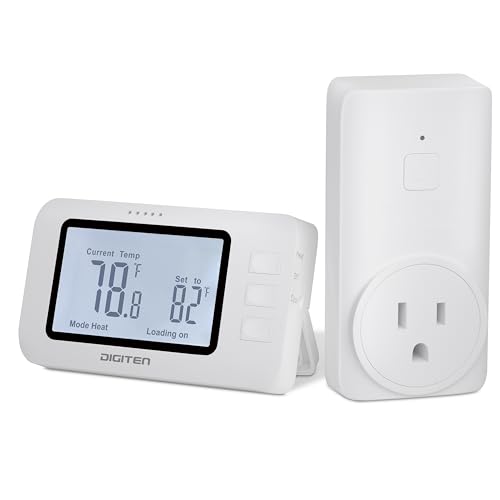
The WTC100 Pro takes a different approach from the whole-home controls in this roundup. It uses a remote-controlled outlet and built-in temperature sensor to manage heating or cooling for a connected appliance, making it relevant to a greenhouse, workshop, or utility space. The three-button interface keeps programming approachable, even for a first wireless controller.
Its temperature display can switch between Celsius and Fahrenheit, which is useful for a shared household or a mixed-location setup. The compromise is that this is not a conventional wall thermostat for central HVAC equipment. Treat it as a focused temperature controller rather than a whole-house replacement.
Where It Delivers
- Plug-and-play setup suits temporary or flexible installations.
- Three-button control keeps programming manageable.
- Remote outlet control separates the controller from the monitored space.
- Greenhouse and home use broaden its practical applications.
Details To Watch
- Its purpose differs from central heating and cooling control.
- Outdoor or damp locations require sensible placement and weather protection.
- You may need to check appliance compatibility before connecting it.
Who Should Grab It
It fits homeowners who need a simple remote temperature controller for a greenhouse, workshop, or other compatible appliance.
Where Another Pick Suits Better
The Coiiwsei Programmable Single-Stage Thermostat is the better fit for a conventional single-stage home HVAC system.
This bundle pairs the Nest Learning Thermostat 4th generation with a second-generation room sensor, giving the system both central control and a more useful temperature reading from the room you choose. That combination works well in a home with a bedroom, office, or living room that does not match the hallway temperature. The learning function is intended to adapt to changing routines rather than relying on a rigid schedule.
Obsidian provides a dark finish that blends into many contemporary interiors. Compared with the silver version later in the roundup, the equipment is functionally similar, so finish preference should guide that choice. You’ll still need compatible heating and cooling equipment and a stable home network for connected control.
Well-Handled Touches
- Room sensor improves comfort decisions beyond the hallway location.
- Learning behavior suits households with changing schedules.
- The bundle reduces the need to purchase a sensor separately.
- Dark finish suits understated, modern wall placement.
Where It May Fall Short
- Learning controls take time to reflect your routine accurately.
- Compatibility and network setup deserve checking before installation.
- The sensor needs a sensible room location for useful readings.
Who Will Love This
It suits homeowners who want adaptive scheduling plus a dedicated room sensor and prefer a dark thermostat finish.
Swap It Out When
The Coiiwsei Programmable Single-Stage Thermostat suits households wanting a basic local controller without connected learning features.
The silver bundle offers the same core pairing as the Obsidian version: a learning thermostat and a room sensor designed to make comfort decisions more relevant to occupied spaces. It works well for a home where the thermostat is visible from a main hallway or living area and you prefer a lighter finish against the wall. The trade-off is visual preference, since the operating approach remains closely matched.
Compared with the DIGITEN WTC100 Pro, this system is designed for integrated home comfort rather than a remote appliance outlet. Its value comes from reducing schedule friction, but the learning behavior needs time and consistent use before you can judge how well it reflects your routine.
Standout Benefits
- Includes both a learning thermostat and room temperature sensor.
- Adapts comfort settings around a changing household routine.
- Silver finish fits light walls and brighter rooms.
- Room-level data can make upstairs or basement comfort more consistent.
Trade Offs To Consider
- It costs more in setup complexity than a basic programmable thermostat.
- Connected features depend on network access and compatible equipment.
- You may need several weeks to learn how the schedule settles.
Best Suited To
It fits homeowners who want adaptive comfort control, a room sensor, and a light-finish thermostat for a visible wall location.
Look Elsewhere When
The DIGITEN WTC100 Pro Wireless Thermostat is the better choice for controlling a separate appliance or greenhouse temperature.
What Matters Most Before You Choose
Confirm system compatibility
A thermostat must match the heating or cooling equipment and its wiring arrangement. The Coiiwsei model is designed for single-stage systems, while the Nest and ecobee choices require compatible smart-thermostat hardware. Check the equipment type, voltage, and wiring instructions before ordering.
Decide how much automation you need
A basic programmable controller is enough for a steady household schedule. Smart platforms are more useful for people who want remote access, room sensors, voice control, or routines that change throughout the day. More connected features also bring more setup and device maintenance.
Match sensors to real occupancy
A room sensor is most helpful where temperature differs from the hallway or main living area. Place it in a room you use regularly, not simply wherever there is an open wall. This matters most for bedrooms, home offices, upstairs spaces, and lower levels.
Key Considerations Across These Picks
Mistakes Worth Dodging
Do not assume a thermostat is compatible because the equipment looks similar. Confirm the system type and wiring first. Also avoid placing a room sensor near a vent, window, or direct sun, since those spots can distort the reading.
What Separates Premium From Basic
Premium models add sensors, learning behavior, remote access, and sometimes voice assistants or security functions. Those features help households with changing routines or uneven room temperatures, while a basic programmable thermostat serves steadier schedules with less setup.
Frequently Asked Questions
Are these thermostats suitable for renters?
A tenant can use a portable temperature controller in some spaces, but a central HVAC thermostat usually requires permission and compatible installation. Check your lease and ask the landlord before altering wiring.
Which pick is simplest for a standard HVAC system?
The Coiiwsei Programmable Single-Stage Thermostat focuses on local programming and works with listed single-stage systems. Confirm your equipment type before purchasing.
Do room sensors make comfort more consistent?
A sensor can provide a more relevant reading for a frequently occupied room. Results depend on placement, airflow, and the rest of the heating and cooling system.
Can I use a wireless controller for a greenhouse?
The DIGITEN WTC100 Pro Wireless Thermostat is designed for remote temperature control and can suit compatible greenhouse or appliance setups. Protect the controller from moisture and check electrical requirements first.
Do I need a smart thermostat for remote control?
A smart thermostat supports connected control, while a conventional programmable model operates locally. Choose based on how much remote access and automation your daily routine requires.
Closing Thoughts
The right thermostat depends on your HVAC equipment, room layout, and tolerance for setup. A basic controller suits straightforward schedules, while Nest and ecobee systems make more sense for connected homes that want room-level guidance. Check compatibility first, then choose the level of automation that will remain useful after the novelty fades.
