


An AC-to-DC charger converts household power into controlled DC electricity for compatible 12V batteries. The right output current depends on battery capacity, chemistry, and how quickly you need it restored, especially during RV travel, home backup use, or off-grid projects. These options cover everything from gentle maintenance to higher-current charging, with one battery included for comparison.
A Fast Comparison Of The Options
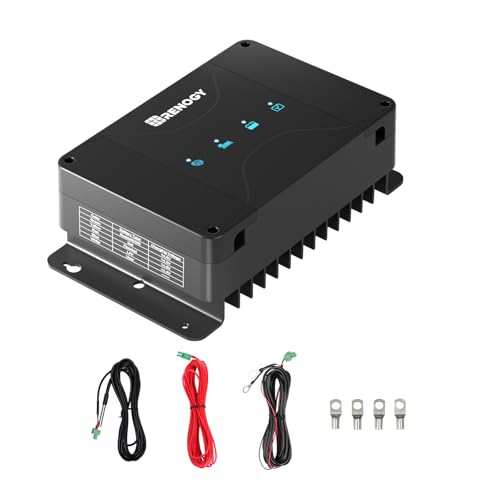
Renogy Smart 30A DC-DC MPPT Battery Charger 12V

LiTime 12V 80A Lithium Battery Charger for LiFePO4

LiTime 12V 10A LiFePO4 Battery Charger with 0V Activation

LiTime 12V 20A LiFePO4 Battery Charger with 0V Activation

Redodo 12V 100Ah LiFePO4 Battery, Group 31

Hiyiton 12V 20A and 24V 10A Smart Battery Charger

Jovialpoa 14.6V LiFePO4 Battery Charger with 0V Activation
Taking A Closer Look At The Options
Vehicle electrical systems rarely rely on one charging source alone, and this Renogy handles both an alternator connection and solar input. Unlike the AC-powered LiTime models later in the list, it is designed to operate as part of an RV or van installation rather than from a household outlet.
Its 30A rating suits owners building a flexible dual-input setup, although exact cable sizing and battery limits still require careful planning. MPPT, which optimizes energy captured from changing solar conditions, is the defining feature here, while listed protection covers overvoltage and short-circuit situations.
Well-Handled Touches
- Alternator and solar inputs reduce dependence on a single power source.
- The 30A output suits many service-battery charging plans.
- Compatibility extends across AGM, gel, flooded, and lithium batteries.
- Protection features support unattended vehicle installations.
Practical Considerations
- This is a DC-to-DC vehicle charger, not a mains-powered AC-to-DC unit.
- Owners still need to plan fusing, grounding, and cable routing during installation.
Feature Snapshot
Built With In Mind
This charger best serves RV and van owners designing a permanent alternator-and-solar charging system.
Where Another Pick Shines
The LiTime 12V 20A LiFePO4 Battery Charger is a more direct fit for household-powered charging of one compatible lithium battery.
The jump from Renogy’s 30A vehicle charger to this 80A model reflects a different job: replenishing a 12V LiFePO4 battery from AC power. LiFePO4 is lithium iron phosphate chemistry, valued for deep-cycle use, and the high current is intended to reduce waiting during substantial recovery sessions.
For a large stationary bank, the output may be useful, though matching charger current to battery specifications matters more than chasing the largest number. The supplied information does not provide a full connector, protection, or enclosure breakdown, so you may need more details from the listing before installation.
What It Does Well
- Up to 80A output shortens charging time for compatible battery banks.
- AC-to-DC operation fits garages, homes, and stationary storage systems.
- LiFePO4-specific charging suits compatible deep-cycle installations.
Things To Consider
- The unit is not waterproof and is unsuitable for exposed marine environments.
- High current may exceed what smaller or unmanaged batteries should receive.
- Ventilation and connection details deserve attention in a confined storage area.
At A Glance
Right Fit
Large-battery owners with a compatible charging profile and a dry, ventilated charging area benefit most from this model.
Consider Something Else When
The LiTime 12V 10A LiFePO4 Battery Charger offers a gentler, more compact path for smaller battery installations.
For a smaller LiFePO4 installation, 10A can be a more sensible operating point than the 80A offered by the preceding pick. The lower current trades speed for a compact charging setup suited to RVs, homes, and modest off-grid systems, particularly where battery size and charger output are carefully matched.
The 14.6V charging profile targets a nominal 12.8V LiFePO4 battery, and constant-current/constant-voltage charging moves through a higher-current stage before tapering. Zero-volt activation is intended for a battery resting below the normal operating voltage, though battery-specific guidance remains important.
The Value In It
- The 10A output avoids the greater installation demands of an 80A charger.
- Constant-current and constant-voltage stages provide a controlled charging profile.
- An Anderson connector supports a secure, purpose-built battery connection.
- LED status feedback gives you a visible charging indicator.
Small Caveats
- It is not waterproof and should stay away from exposed marine locations.
- Charging a large battery bank will take longer than with higher-current models.
Key Specs
Made For
This model suits beginners with smaller compatible LiFePO4 batteries who value straightforward charging over maximum output.
Reach For A Different Pick When
The Hiyiton 12V 20A and 24V 10A Smart Battery Charger makes more sense for a garage that handles several supported battery chemistries.
Twenty amps gives this LiTime model more recovery capability than the preceding 10A charger without moving into the 80A category. That middle ground may suit an RV or off-grid owner with a moderately sized LiFePO4 bank who wants faster replenishment than a low-current charger provides.
The 14.6V profile targets a nominal 12V lithium battery, while zero-volt activation addresses a deeply discharged state. Six listed safety protections add installation value, although correct polarity, ventilation, and battery compatibility remain essential parts of the setup.
Standout Benefits
- 20A output shortens charging sessions compared with the 10A LiTime model.
- Zero-volt activation supports an initial connection to a deeply discharged battery.
- An Anderson connector creates a secure charging interface.
- The LED indicator provides straightforward operating feedback.
- Six listed protections add layers of control during charging.
Details To Watch
- It is not intended for exposed marine environments.
- Confirm that your battery manufacturer permits the charger’s current and voltage profile.
Who It Suits Best
RV and off-grid owners with medium-sized LiFePO4 systems benefit from its balance of charging speed and installation scale.
A Better Fit Elsewhere
The LiTime 12V 10A LiFePO4 Battery Charger is more appropriate for a smaller battery where gentler output matters.
This entry is the battery that needs charging, not an AC-to-DC charger. That distinction matters because adding it to your setup solves a different problem: the Redodo 12V 100Ah LiFePO4 Battery provides the stored-energy side of an RV or marine electrical system, while one of the chargers listed here replenishes it.
Its Group 31 format targets a familiar battery class, and 100Ah describes capacity rather than charger output. The stated low self-discharge and deep-cycle positioning make it relevant to long periods of intermittent use, but you still need a charger with a compatible LiFePO4 profile.
Good Reasons To Consider
- The 100Ah capacity offers substantial storage for RV equipment.
- LiFePO4 chemistry supports deep-cycle applications.
- A stated 3% self-discharge rate helps preserve stored energy during inactivity.
- Listed cycle ranges vary by depth of discharge, providing realistic planning data.
Things That May Matter
- This item cannot recharge a battery on its own.
- Weight, mounting space, and charge-controller requirements need confirmation for your installation.
Product Snapshot
Built For
This battery fits RV or marine storage projects after you confirm physical clearance, weight handling, and charging compatibility.
Another Choice May Suit
The LiTime 12V 20A LiFePO4 Battery Charger is the relevant choice here when you need a charger rather than additional battery capacity.
One charger covering multiple chemistries appeals to a busy garage containing an RV, boat, truck, or motorcycle battery. Hiyiton supplies up to 20A on a 12V system and up to 10A on a 24V system, while listed compatibility includes LiFePO4, lithium, lead-acid, AGM, gel, and SLA batteries.
That breadth distinguishes it from the LiTime models, which focus on 12V LiFePO4 charging with a defined 14.6V profile. The supporting description also mentions trickle charging, maintenance, and pulse functions, though you should verify the selected mode and terminal connection against the battery being serviced.
Positive Takeaways
- Supports several common battery chemistries in one unit.
- Delivers up to 20A for 12V systems and 10A for 24V systems.
- Trickle and maintenance functions suit routine top-ups.
- Broad application coverage reduces the need for separate garage chargers.
Where It May Fall Short
- Compatibility breadth makes careful mode selection more important.
- Marine suitability depends on the charger’s actual enclosure rating rather than the application name alone.
Quick Facts
Who Will Love This
Multi-vehicle households and garage hobbyists benefit from maintaining several supported battery types with one unit.
Look Elsewhere When
The LiTime 12V 20A LiFePO4 Battery Charger better serves a dedicated installation focused on one lithium battery profile.
The source information is inconsistent here: the product name displays 10A, while the description identifies a 20A charger with 292W output. The higher-output description also cites 50Ah, 100Ah, and 200Ah charging scenarios, making this a potentially useful option for larger banks, but you should resolve the current discrepancy from the listing before connecting it.
A 14.6V profile targets a nominal 12.8V LiFePO4 battery, while the described 0V activation function addresses a deeply discharged state. M8 terminals and a 50A Anderson connector provide substantial connection hardware, yet connector current handling and battery guidance still need to match your installation.
Why It Works Well
- The described 292W output targets higher-capacity battery recovery.
- 0V activation supports an initial connection to a deeply discharged battery.
- M8 terminals accommodate a direct terminal connection.
- A 50A Anderson connector supports a high-current charging lead.
Worth Bearing In Mind
- Confirm whether the actual unit is rated at 10A or 20A.
- Check ventilation, polarity, and battery-specific charging limits before use.
- Published charging times depend on ideal conditions and may not reflect your setup.
The Right Fit
Owners of compatible 12.8V LiFePO4 banks benefit from the described high-current design once the rating mismatch is resolved.
Swap It Out When
The LiTime 12V 10A LiFePO4 Battery Charger is the clearer choice when modest output and a more compact charging approach take priority.
What Matters Before You Charge A Lithium Battery
Start with chemistry and voltage. A 12V LiFePO4 battery typically needs a 14.6V charging profile, while lead-acid, AGM, gel, and SLA batteries follow different rules. Confirm those requirements from the battery manufacturer before connecting any unit.
Match Output To Battery Capacity
Higher amperage shortens charging time, but the battery’s permitted charge current sets the ceiling. The LiTime 10A and 20A models cover different use cases, while the 80A model is intended for substantial banks rather than every installation.
Separate AC And Vehicle Charging
AC-to-DC chargers use household electricity, whereas the Renogy model draws from vehicle and solar connections. Your travel pattern determines whether a mains charger, onboard system, or both make the most sense.
Plan The Installation
Account for terminal type, cable size, ventilation, polarity, and moisture exposure. Several LiTime units use Anderson connectors and are not waterproof, so protected placement matters. Secure the battery separately with a suitable charger, as the Redodo 100Ah pack is a battery rather than a charging device.
Charging Details That Prevent Mistakes
Common Shopping Slip Ups
A 12V label alone does not establish lithium compatibility. Check the required charge voltage, permitted current, connector type, and enclosure environment before purchasing, especially when a listing mixes model names with different output claims.
What The Higher Tier Buys
Higher-output models mainly reduce charging time for compatible, larger battery banks. Extra capacity is useful only when wiring, ventilation, and battery specifications support the load, so a 10A charger can be the more rational choice for a smaller installation.
Frequently Asked Questions
Can a 12V lithium battery use any AC-to-DC charger?
No. You need a charger with a charging profile that matches the battery chemistry, nominal voltage, and permitted current.
Is 14.6V correct for a 12V LiFePO4 battery?
It is a common LiFePO4 charge voltage, but the battery manufacturer’s specifications should control your choice.
Does higher amperage charge a battery completely?
Higher current can reduce charging time, but capacity, charge acceptance, wiring, temperature, and the charger’s charging stages affect the result.
Is the Redodo 12V 100Ah battery a charger?
No. It stores energy, while an AC-to-DC charger replenishes that energy from household power.
Can a LiTime charger be used outdoors?
Several listed LiTime models are not waterproof, so protected indoor or weather-sheltered placement is the appropriate expectation.
