


A daily bike ride depends on dependable lighting, a visible position, and controls that don’t distract you near traffic. The right accessories help you see intersections, communicate braking, keep your cockpit orderly, and check traffic behind you without slowing down. For commuters riding dawn routes, suburban roads, or busy city streets, these details matter as much as the bike itself.
The seven selections below cover different needs, from automatic front lighting to wide rear visibility and an adjustable handlebar mirror. Several are tailored to particular computer mounts, while others mount more broadly, so compatibility deserves attention before you make a choice.
A Snapshot Of The Selections

RAVEMEN K1800 Smart Bike Light with AI Mode

RAVEMEN FR300/FR160 Garmin Bike Computer Light
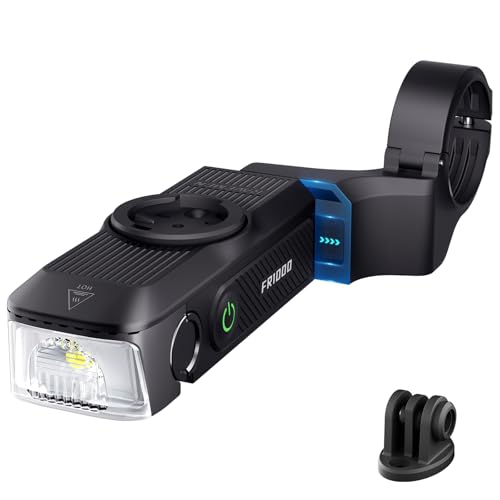
RAVEMEN FR1000 Adjustable Bike Headlight

RAVEMEN FR1100 SE/FR500 Wide-Angle Bike Headlight

RAVEMEN TR150/TR250 280° Bike Tail Light
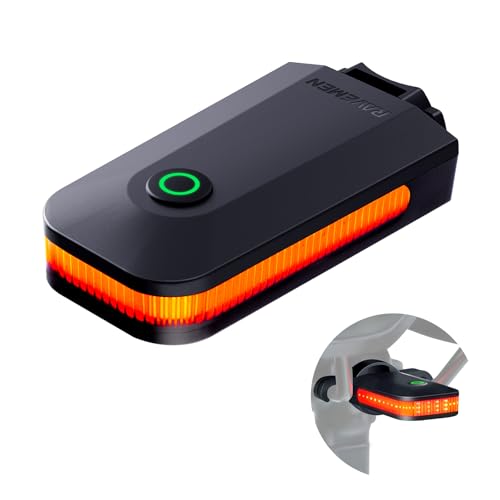
RAVEMEN CL01 300° Saddle Mount Tail Light

BriskMore Folding Handlebar Bike Mirror
The Details Behind The Selections
The K1800 favors commuters whose lighting needs change between shaded streets, bright junctions, and evening roads. Its automatic mode responds to ambient light, which reduces the need to operate a button before every ride. Compared with the fixed-output approach implied by many basic lights, that behavior suits routes crossed by sudden transitions.
Its night-riding system is described as learning a repeated nighttime routine over five days, then modifying brightness according to surroundings and remaining power. You may find this especially useful on a predictable commute, though it adds electronic complexity compared with a simple manual light.
Where It Helps
- Automatic brightness changes reduce manual control during frequent stops.
- Daytime flashing and lower-light illumination serve changing conditions.
- Automatic switching helps conserve power during parked time.
- Adaptive output suits commuters traveling through mixed lighting.
Things To Consider
- The learning function depends on a routine being repeated for several days.
- Automatic controls require occasional cleaning and charge checks.
Quick Facts
Who Will Love This
You’ll appreciate this model most on a repeatable commute spanning tunnels, shaded roads, and open daylight.
Another Choice May Suit
Ravemen FR1000 suits commuters who prefer manual control and an integrated computer bracket.
Mounted beside a compatible bike computer, the FR300/FR160 turns a crowded cockpit into a more compact arrangement. It makes particular sense for riders who already use Garmin hardware and want lighting positioned within the existing display cluster. You gain a central home for navigation and illumination without adding another full-width clamp.
The wide-angle lens spreads light sideways, a useful characteristic at roundabouts and junctions where traffic approaches outside your direct line of travel. That visibility emphasis separates it from the forward-focused K1800, although exact installation depends heavily on your current hardware.
The Good Stuff
- Combines lighting with a compatible computer position.
- Side coverage supports awareness at busy junctions.
- Garmin-style mounting suits many existing setups.
Points To Note
- The Garmin Edge 130 Plus is excluded.
- Wahoo compatibility requires the separately sold QTM01 insert and mounting tab.
- The Wahoo ELEMNT BOLT V1 is not supported.
- Check your bracket geometry before installation.
The Right Fit
This light best serves Garmin-equipped commuters who prioritize compact mounting and side visibility.
Look Elsewhere When
Ravemen FR1100 SE/FR500 better serves commuters wanting higher output and broader urban lighting coverage.
The FR1000 addresses the familiar problem of a handlebar slowly filling with light, bell, display, phone, and brake controls. By combining the front light and bike-computer bracket, it reduces the number of separate mounting points. That leaves your hands free and the cockpit easier to scan during stop-start city riding.
The light head adjusts through a 30-degree range, allowing the beam to sit higher for suburban roads or lower for nearby streets. You’ll gain more practical value from this tilt on a route with changing elevation, though the integrated arrangement could be limiting for riders who need independent bracket positioning.
Everyday Wins
- Combined design reduces separate handlebar hardware.
- Beam adjustment helps match suburban and city routes.
- A single assembly keeps the cockpit visually organized.
Trade Offs
- The integrated bracket may constrain computer placement.
- Angle changes require stopping and readjusting the light.
Built With In Mind
Urban commuters gain the most from its compact layout and adaptable forward beam.
Where A Sibling Pick Shines
Ravemen K1800 suits routes that benefit from automatic brightness changes more than integrated mounting.
For riders moving through poorly lit urban streets, the FR1100 SE/FR500 pairs substantial forward output with a 270-degree viewing angle. Its two high-intensity LEDs produce up to 1,100 lumens, while the revised lens is designed to spread illumination more evenly ahead. You get more usable road detail than a basic commuter light, especially during late shifts or winter mornings.
The wraparound lens also carries light toward the sides, and daytime warning mode adds visibility around moving traffic. Compared with the compact FR300/FR160, this model places more emphasis on forward reach and broad coverage; the added capability comes with a larger electrical system to charge and maintain.
What Works In Its Favor
- Up to 1,100 lumens supports detailed low-light road illumination.
- A 270-degree lens exposes side approaches at intersections.
- Six modes cover daytime and nighttime preferences.
- Automatic switching reduces manual activation.
- Garmin and Wahoo computer compatibility streamlines integration.
Practical Considerations
- Higher output can require more frequent charging than modest lights.
- Computer compatibility still depends on your exact bracket.
Technical Highlights
Made For
Night commuters on dark suburban approaches or frequent urban routes gain the greatest benefit.
Swap It Out When
Ravemen FR1000 better serves those who prioritize compact mounting over maximum output.
The TR150/TR250 focuses on making the rear of your bicycle visible from a distance, making it relevant for straight suburban approaches and unlit roads. Four red LEDs reach up to 150 lumens in flashing mode, with a stated visibility range of 1.5 kilometers. That specification gives you a more concrete idea of its intended role than brightness alone.
A 280-degree viewing field spreads the red output across a broad rear arc. You may notice its benefit most at crossings where vehicles approach diagonally, although roadside debris and wet weather still call for routine lens cleaning.
Practical Advantages
- A 1.5-kilometer stated range suits longer road stretches.
- Four LEDs provide a bright flashing rear signature.
- The 280-degree field covers rear and diagonal approaches.
Small Caveats
- Stated visibility depends on darkness, weather, and sightlines.
- Rear-light performance cannot replace front illumination.
Best Suited To
You gain the most from this model on darker suburban roads with long sightlines.
A Better Fit Elsewhere
Ravemen CL01 better serves commuters seeking under-saddle mounting and two installation positions.
The CL01 favors commuters who want their rear light concealed beneath the saddle rather than dominating the seatpost. Its horizontal strip produces 30 lumens across a stated 300-degree field, spreading light sideways as well as behind you. That geometry feels appropriate for dense streets, where visibility often comes from more than a single straight-on angle.
You receive a saddle-rail bracket, two zip ties, and a seatpost option for alternative positioning. Brake sensing and automatic operation reduce the need to reach back, while five modes provide flexibility for different visibility conditions.
Where It Excels
- The 300-degree spread covers several rear approach angles.
- Under-saddle mounting keeps the seatpost visually uncluttered.
- Seatpost placement offers a straightforward alternative.
- Brake sensing reduces manual light operation.
- Five modes suit changing daylight conditions.
A Few Limitations
- Its 30-lumen output is lower than the TR150/TR250.
- Saddle-rail dimensions require checking before installation.
Key Facts
Who Should Grab It
City commuters appreciate the low-profile housing and broad rear field of view.
Reach For A Different Pick When
Ravemen TR150/TR250 suits dark-road riders who prioritize greater brightness and distance.
A mirror adds a different kind of awareness to the equipment in this roundup. The BriskMore model uses a convex lens to show a broad section behind your left shoulder, useful during lane changes, curbside stops, and quiet street crossings. Its adjustable joint lets you refine the angle after mounting, while the folding design lets it move inward when desired.
The 4.7-by-2.4-inch lens and reinforced glass construction give it a more substantial presence than a tiny add-on mirror. You’ll need to confirm that your handlebar falls within the stated 21-to-26-millimeter range, and the left-side-only fit rules it out for drop-bar road setups.
Useful Strengths
- The convex lens expands rearward coverage beyond a flat mirror.
- 360-degree rotation and 180-degree tilt support precise positioning.
- Folding helps conserve space in crowded riding environments.
- Nylon with 30 percent glass fiber provides a durable housing.
- The 304 stainless steel screw and aluminum clamp suit repeated adjustment.
Where It May Fall Short
- Left-side mounting excludes mirrored right-side setups.
- Drop bars and baby carriages fall outside the fit.
- Dirt and water spots need regular lens cleaning.
Built With In Mind
Flat-bar commuters on mountain, hybrid, cruiser, or e-bike setups gain the clearest fit.
Not Your Match When
Ravemen CL01 better serves riders who prioritize rear lighting rather than visual checking behind them.
Build A Commuter Setup Around Your Route
Match Lighting To The Darkest Stretch
Your darkest stretch matters more than a broad idea of typical visibility. City riders may need strong side coverage near intersections, while suburban commuters may prioritize forward reach and rear detection at long sightlines. The FR1100 SE/FR500 leans toward illumination, whereas the CL01 favors compact rear mounting.
Check Every Mount Before Buying
Compatibility errors usually appear at the handlebar, saddle, or computer bracket. Confirm the device dimensions and named exclusions before ordering, particularly with the FR300/FR160 and BriskMore mirror. A secure fit starts with the correct adapter and unobstructed lever clearance.
Treat Visibility As A System
A bright front lamp cannot compensate for an unseen vehicle approaching from behind, and neither replaces the other. Your setup works best as a coordinated system: directional front light, wide-angle tail light, and awareness tools matched to traffic patterns. Regular charging and lens cleaning preserve the intended performance over time.
Consider Control And Cockpit Space
Automatic modes and brake sensing reduce repetitive button presses, especially during stop-start traffic. Integrated brackets can also free handlebar room, but they may restrict repositioning your computer. Choose the layout that remains comfortable without forcing you to glance down repeatedly.
Common Mistakes To Avoid Before You Add More Gear
Pitfalls Shoppers Hit
A common mistake is buying for peak brightness while ignoring mounting compatibility. Another is adding a wide accessory without checking clearance around cables, brakes, or the computer. Measure the attachment point and review every stated exclusion before checkout.
Why Higher-End Lighting May Suit You
Higher-output lights typically cost more because they use stronger light sources, larger optics, and more substantial power systems. That extra capability can help on unlit suburban roads, but it also means more charging and bulk. City commuters may receive greater value from wide viewing angles or automatic controls instead.
Frequently Asked Questions
Which Bike Light Is Best For Night Commuting?
Choose based on route length, nearby traffic, and existing mounts. Dark suburban roads reward stronger forward and rear illumination, while dense city riding often emphasizes wide visibility and compact controls.
Do These Lights Work With Bike Computers?
Several Ravemen options support Garmin or Wahoo-style computer setups, but compatibility varies by model. The FR300/FR160 excludes specific devices, while the FR1100 SE/FR500 requires a compatible mounting arrangement.
Which Rear Light Fits Under A Saddle?
The Ravemen CL01 includes a saddle-rail mount and a seatpost option. Check the saddle dimensions shown in the product imagery before installation.
Is A Handlebar Mirror Useful For Cycling?
A mirror adds awareness of vehicles approaching from behind, especially near junctions and during lane changes. The BriskMore model fits left-side flat handlebars from 21 to 26 millimeters.
How Often Should Bike Lights Be Cleaned?
Clean the lens whenever dirt, mud, or road spray reduces visibility. Regular charging and a quick mount inspection also help prevent avoidable problems during frequent commutes.
Final Verdict
The strongest commuter setup starts with your route rather than a pile of accessories. Choose the K1800 for adaptive lighting, FR1000 for a compact cockpit, or FR1100 SE/FR500 for greater nighttime coverage. Pair those decisions with the CL01 or TR150/TR250 at the rear, and add the BriskMore mirror only when your flat handlebars meet its fit requirements.
