


Battery charging setups range from tiny stylus-pen chargers to stations handling 24 cells, but capacity alone doesn’t determine compatibility. A charger built for 1.2-volt Ni-MH or Ni-Cd cells won’t charge the 1.5-volt lithium chemistry used by some modern AA batteries, so matching the chemistry matters just as much as checking the physical size.
This lineup covers AAAA power for slim stylus pens, mixed AA and AAA households, and high-volume charging stations for flashlights, remotes, toys, and other everyday electronics. Seven choices serve everything from a compact two-cell kit to a 24-battery hub.
The Lineup, Simplified
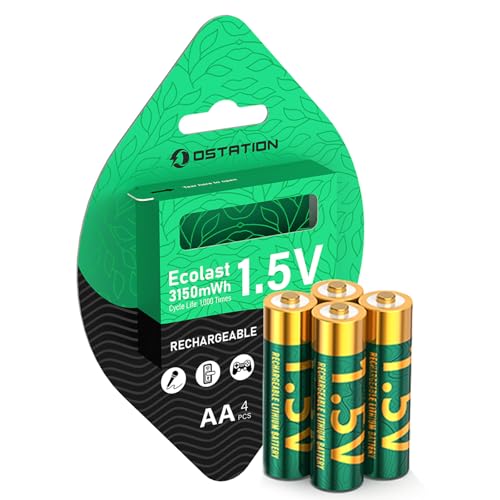
Ostation 1.5V AA Lithium Batteries 2100mAh 4 Pack

Ostation 2 Pro Charging Station with 24 Batteries

Mspalocell 16-Bay AA AAA Battery Charger

EBL 400mAh AAAA Batteries with Charger

BONAI 16-Pack AAA Batteries and 16-Bay Charger

EBL Universal Smart Charger with Discharge Function

Ostation 2 Charging Station with 24 Batteries
More On The Choices That Made The List
This four-cell pack provides a useful bridge from disposable AA batteries to rechargeable power, although it isn’t a standalone charger. The 1.5-volt lithium cells hold 2100mAh apiece, giving high-drain flashlights and demanding household electronics more capacity than a typical AA rechargeable cell.
A battery management system, or BMS, is an internal circuit that monitors charging conditions and regulates current and temperature. These cells communicate with Ostation 2 series charging stations, so you need a compatible charger even though the pack itself doesn’t include one.
Why It Works Well
- Four cells cover common remote, clock, and flashlight needs in one package.
- The 2100mAh rating supports devices that draw more current than basic household cells.
- Built-in battery management supports controlled charging in compatible Ostation stations.
Practical Considerations
- A compatible Ostation 2 series charger is sold separately.
- Keep lithium AA batteries separated from alkaline cells because their voltages and charging requirements differ.
The Numbers That Matter
Built With In Mind
This pack suits households already using an Ostation 2 charger and needing durable AA cells for flashlights, remotes, or other high-use devices.
A Better Fit Elsewhere
The EBL 400mAh AAAA Batteries with Charger is the more practical choice for slim Surface stylus pens that specifically require AAAA cells.
Busy households can treat charging as a central routine with this 24-battery station. It combines a charger, tester, and organizer, reducing the loose-cell pile that usually forms beside a television, desk, or tool cabinet. Thermal-adaptive charging and real-time monitoring add useful control when several AA and AAA cells charge together.
Compared with the Mspalocell 16-Bay AA AAA Battery Charger, this setup offers more storage and testing functions, though it occupies substantially more space. It also includes magnetic charging ports for compatible Olight flashlights, a niche benefit for technicians or outdoor users who regularly rotate those lights.
What Helps Most
- The 24-cell capacity handles large collections without splitting them between chargers.
- Built-in testing gives you a place to identify battery condition before deployment.
- Storage and charging combine in one base, keeping cells organized between uses.
- Dual magnetic ports suit compatible Olight flashlight setups.
Where It May Fall Short
- The footprint makes it less convenient for a small desk or travel pouch.
- Twenty-four batteries create more cells to inspect, rotate, and keep matched by device type.
Who Should Grab It
Professionals, families, and flashlight users with a large rechargeable AA and AAA collection benefit most from the storage, testing, and charging combination.
Consider Something Else
The Mspalocell 16-Bay AA AAA Battery Charger takes less space for people who prioritize simple Ni-MH and Ni-CD charging over testing and built-in organization.
Sixteen independently controlled positions make this a practical choice for collectors who regularly rotate batteries through remotes, clocks, flashlights, and small toys. An independent channel is a charging path that manages one cell separately, helping mixed loads avoid sharing a single charge cycle.
You can mix AA and AAA Ni-MH and Ni-Cd cells within the same charger, which saves the inconvenience of sorting by exact format. The status lights use red during charging, green once complete, and flashing for a cell the charger cannot process, a useful signal for removing an incompatible or questionable battery.
Useful Highlights
- Sixteen bays accommodate sizable AA and AAA collections.
- Mixed Ni-MH and Ni-CD cells can share the same charging session.
- Individual channels simplify diagnosis because each position reports its own status.
- Red, green, and flashing indicators make charging states easy to scan.
- The round bay layout gives AA and AAA cells separate physical positions.
Things To Weigh
- Lithium-ion and alkaline batteries are outside the stated compatibility.
- Owners commonly avoid leaving cells seated longer than necessary after the green indication appears.
Made For
This charger suits homes and workshops that hold many traditional Ni-MH or Ni-CD AA and AAA batteries across several devices.
Another Choice May Suit
The Ostation 2 Pro Charging Station with 24 Batteries is the stronger fit for organized collections that also need battery testing and built-in storage.
AAAA cells solve a very specific problem: many slim stylus pens need a battery smaller than AA or AAA. This EBL set pairs two 1.2-volt, 400mAh Ni-MH cells with a dedicated charger, removing the need to improvise with a larger multi-size station. That focused design makes it easier to keep at a desk with the pen.
The stated 1,200-cycle figure indicates a long-term reuse target, though actual service depends on charge depth, storage temperature, and device demand. The 5-volt, 1-amp input also suits modern USB power arrangements better than a bulky wall adapter, provided the included charger is used as intended.
What It Does Well
- The two-cell format fits a slim stylus-pen routine without taking over the desk.
- A dedicated AAAA charger removes battery-format guesswork from the setup.
- The 400mAh capacity gives each cell more charge than a minimal primary AAAA alternative.
Minor Gripes
- Two batteries are convenient for rotation but light on spare capacity.
- The dedicated charger doesn’t serve AA, AAA, or other battery formats.
Quick Facts
Right Fit For
This kit suits Surface stylus-pen owners who specifically need rechargeable AAAA cells and prefer a compact charging setup.
Look Elsewhere
The BONAI 16-Pack AAA Batteries and 16-Bay Charger makes more sense for a household managing several standard-size AAA devices.
This package makes the starting point simpler by including 16 rechargeable AAA cells rather than only a charger. It’s a sensible fit for a remote-heavy living room, several children’s toys, or a collection of small electronics that consume AAA power regularly.
Each 1100mAh cell operates at 1.2 volts and fits into a 16-bay charger that also accepts AA batteries. Individual charging control lets cells charge separately instead of forcing an unnecessary pair-based routine, while the surrounding LEDs let you scan progress across the full set.
Notable Upsides
- Sixteen AAA batteries provide a useful replacement pool from day one.
- The charger accepts mixed AA and AAA rechargeable cells.
- Separate charging positions suit partially depleted sets instead of forcing matched pairs.
- Red charging and green completion lights provide a quick visual scan.
Points To Note
- The set centers on AAA batteries, so extra AA cells must come from elsewhere.
- Cleaning the bay contacts periodically helps maintain reliable connections in a shared battery drawer.
Who Will Love This
Families replacing disposable AAA batteries across many remotes, toys, and small appliances will appreciate the included cell count.
Reach For A Different Pick
The EBL Universal Smart Charger with Discharge Function is the better option for a mixed collection that also includes C, D, and 9-volt batteries.
The EBL Universal Smart Charger broadens the format list beyond the AA and AAA focus of most compact stations. Its bays accept one through four AA, AAA, C, or D cells, plus one or two 9-volt batteries, making it a natural fit for a household battery drawer with several rechargeable formats.
The LCD provides more charging context than a basic LED, and the blue control activates discharge mode for Ni-MH or Ni-Cd cells. Discharge cycling means using stored energy before returning cells to charge, a useful control for people who manage mixed-condition batteries, though the added controls take a little more learning.
Benefits That Matter
- Five supported battery formats reduce the need for separate chargers.
- Independent slots allow mixed sizes to charge together.
- The LCD gives clearer status information than a single indicator light.
- Discharge mode helps manage stored charge in compatible Ni-MH and Ni-Cd cells.
- The nine-volt positions cover a format many AA-only chargers overlook.
Practical Considerations
- Alkaline and lithium-ion cells remain incompatible with a charger designed for Ni-MH and Ni-CD chemistry.
- Its multi-format layout uses more desk space than a dedicated AAA or AAAA charger.
Feature Snapshot
Built With In Mind
This charger suits mixed-device households that regularly charge rechargeable C, D, 9-volt, AA, and AAA cells.
Where A Sibling Pick Shines
The Ostation 2 Pro Charging Station with 24 Batteries better serves a large AA and AAA collection needing extensive storage and battery testing.
For a household moving beyond a few loose rechargeable cells, this Ostation 2 package puts charging, organization, and status monitoring in one place. Twenty-four AA and AAA batteries accompany the station, so the setup can support multiple remotes, clocks, flashlights, or small appliances from the outset.
Unlike the more specialized Ostation 2 Pro package, this version lacks the listed dual magnetic flashlight ports, but it retains the broader appeal of a 24-cell AA and AAA hub. You may find the larger base most useful in a utility room or shared family charging area rather than on a compact desk.
Good Reasons To Consider
- Twenty-four included cells support several devices without an immediate spare-cell shortage.
- Charger and organizer functions reduce loose battery clutter.
- Real-time monitoring gives useful status information during charging.
- Thermal-adaptive charging suits collections with cells at different charge levels.
Smaller Caveats
- Twenty-four cells require periodic rotation to keep matching devices supplied with equivalent sets.
- The footprint is substantial for a single stylus pen, remote, or clock.
The Right Fit
Busy homes, studios, and shared workspaces benefit most from 24 organized rechargeable cells plus a central charging base.
Swap It Out
The EBL 400mAh AAAA Batteries with Charger is a more sensible option for people whose only rechargeable device needs slim AAAA cells.
Match the Charger to Your Battery Collection
Confirm Size and Chemistry First
AAAA, AA, and AAA describe physical dimensions, not electrical behavior. Ni-MH cells generally operate at 1.2 volts, while the Ostation lithium AA cells in this lineup use 1.5 volts, so a charger must explicitly support the chemistry you own rather than relying on physical fit.
Count the Cells You Actually Use
A four-battery charger suits a remote and clock, while 16-bay models serve toy collections and shared workstations. Stations with 24 positions make sense only when you have enough devices to justify the footprint and regular battery rotation.
Look Beyond Basic Charging
Status lights, testing, discharge mode, and integrated storage can make maintenance easier. Charging speed alone matters less than independent channel control, clear compatibility, and a layout that fits your available shelf or desk space.
Why Battery Chemistry Changes the Setup
Ni-MH and Ni-CD are rechargeable chemistries that need dedicated chargers. Alkaline cells are designed for single use, while 1.5-volt lithium-ion AA cells require a charger made for their higher voltage and management requirements.
Many chargers handle Ni-MH and Ni-CD cells but exclude lithium chemistry. Treat the battery label as decisive: match the size, voltage, and chemistry before placing a cell into any charging bay.
Smart Features That Carry Real Weight
Independent channels let the charger assess cells separately, which helps when a set contains mixed charge levels. Testing or discharge functions can also help identify aging cells, though a display adds complexity that may not be necessary for a small collection.
Larger stations earn their footprint through storage and cell management. A dedicated two-cell charger is easier to store, but its narrow format limits you to one battery type and a small group of devices.
Matching Chargers to Everyday Battery Routines
Mistakes Worth Dodging
Avoid judging compatibility by battery length alone. Confirm the charger lists your exact size, voltage, and rechargeable chemistry, because even a cell that physically fits may charge incorrectly in an unsupported station.
The Upgrade Payoff
Higher-tier stations tend to add capacity, testing, status displays, or organization. Those extras matter across mixed device collections, while a compact dedicated charger is usually more practical when you only power one or two slim devices.
Frequently Asked Questions
Can an AAAA charger charge AA or AAA batteries?
Most dedicated AAAA chargers handle only AAAA cells. Multi-format chargers support AA and AAA only when their stated chemistry support includes the cells you own.
Are Ni-MH and Ni-CD batteries interchangeable?
Many multi-bay chargers support both chemistries, including mixed AA and AAA loads. Verify the listed compatibility before charging cells with different voltage levels or unfamiliar labels.
Does a higher mAh rating increase battery size?
No. Capacity and physical size are separate attributes. AAAA, AA, AAA, C, and D describe dimensions, while mAh indicates how much charge a cell can hold.
Can 1.5-volt lithium AA batteries use a standard charger?
Only a charger explicitly designed for that lithium chemistry and voltage. A charger intended for 1.2-volt Ni-MH cells may not provide the correct charge process for 1.5-volt lithium cells.
Do battery chargers need individual channels?
Individual channels can improve mixed-load charging by managing each cell separately. They also help with partially charged sets, although your device’s charger instructions should remain the deciding factor.
Final Verdict
The EBL 400mAh AAAA Batteries with Charger best serves slim stylus-pen setups, while the Mspalocell and Ostation stations cover larger AA and AAA collections. Choose Ostation for integrated organization and testing, BONAI for a large included AAA set, or the EBL Universal Smart Charger for several rechargeable formats. Match the chemistry before the format, then consider charging controls, capacity, and available storage space.
