


Choosing AA batteries becomes easier once charging habits and device demands are clear. Rechargeable lithium-ion cells suit game controllers, cameras, smart-home equipment, and other high-drain electronics, while disposable lithium batteries offer long storage life for occasional gear. Capacity, charging setup, package size, and voltage behavior determine which format fits your routine.
The Lineup, Simplified

PHILIPS 8-Pack AA Rechargeable Lithium Batteries 3000mWh

BEVIGOR Lithium AA Batteries 4Pack 3000mAh Non-Rechargeable
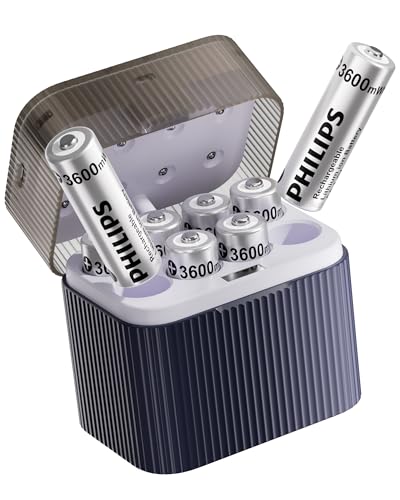
PHILIPS 8-Pack Rechargeable AA Lithium Batteries 3600mWh

PHILIPS 4-Pack AA Rechargeable Lithium Batteries 3600mWh

NINMAX Lithium AA Batteries 3500mAh 96 Count Non-Rechargeable

POWEROWL Pro 1.5V Rechargeable AA Lithium Batteries 3600mWh
BEVIGOR Lithium AA Batteries 4Pack 3000mAh Non-Rechargeable
Why These Options Stand Out
A rechargeable 1.5V lithium-ion format makes more sense for devices you run regularly, especially game controllers and cameras that see frequent use. This PHILIPS set combines an eight-cell count with a Type-C charging case, reducing the loose-battery clutter that usually ends up beside the television.
Constant voltage means the cells are designed to hold 1.5V as they discharge, which can feel more consistent in compatible high-drain electronics. For frequent gaming sessions, the eight-battery format is practical; for occasional flashlights, one of the disposable sets may create less charging overhead.
Positive Takeaways
- Eight cells cover several controllers, remotes, or household devices.
- The Type-C case combines charging and storage.
- Stable 1.5V output suits compatible electronics that expect lithium AA power.
- The 3000mWh rating provides a practical capacity tier for daily equipment.
Things To Consider
- Confirm device compatibility because rechargeable lithium chemistry is not interchangeable with every disposable AA battery.
- Charge all eight cells evenly to keep rotation between multiple devices convenient.
Quick Facts
Made For
You benefit most with several compatible controllers, remotes, or household devices that you use throughout the week.
A Better Fit Elsewhere
The PHILIPS 8-Pack Rechargeable AA Lithium Batteries 3600mWh offers more capacity and a specified 1,200-cycle life for heavier use.
Disposable lithium iron cells serve a different purpose from the PHILIPS set: you keep them on standby rather than returning them to a charger. This four-pack suits flashlights, remote controls, toys, and household devices that you use occasionally, especially where alkaline battery changes become a recurring nuisance.
The listed 3000mAh capacity provides useful energy density, while the stated 10-year lifespan supports long-term storage. You still need a proper inventory system, since disposable cells eventually need replacement even though the storage life is long.
A Few Highlights
- Four cells offer a manageable starting quantity for mixed household devices.
- The 1.5V output fits many common AA-powered electronics.
- Long stated shelf life supports emergency and occasional-use equipment.
Worth Noting
- Disposable chemistry adds replacement costs for frequently used controllers.
- Each cell weighs about 15g, a relevant detail for compact portable equipment.
- Stored cells still need protection from moisture and physical damage.
- Sorting is essential because this set cannot be recharged.
The Right Fit
You benefit most with a mixed collection of low-to-moderate-drain household devices and an emergency kit.
Consider Something Else When
NINMAX Lithium AA Batteries 3500mAh 96 Count Non-Rechargeable makes more sense for many cameras, alarms, and other devices that consume batteries steadily.
Daily gaming exposes weak battery behavior quickly, making this higher-capacity PHILIPS set a logical step up from the 3000mWh model. Eight 3600mWh cells support rotation across multiple controllers, digital cameras, and household electronics without relying on disposable replacements.
The storage case adds more than a charger: its identification chip monitors battery status, while the Type-C connection accepts a 5V/2A input. That organization matters in a busy entertainment area, where loose cells often disappear into drawers.
What Works In Its Favor
- The 3600mWh rating offers more capacity than the first PHILIPS set.
- A listed 1,200-cycle life supports frequent recharging.
- The 5V/2A Type-C case simplifies charging from compatible USB sources.
- Status detection helps organize compatible cells during charging.
- Eight batteries make controller rotation straightforward.
Small Caveats
- The charging case increases the amount of equipment you must store.
- Device compatibility should be confirmed before building a rotation system.
Feature Snapshot
Who Will Love This
You benefit most with multiple compatible controllers or a mixed household setup that uses rechargeable cells throughout the week.
Another Choice May Suit
The PHILIPS 4-Pack AA Rechargeable Lithium Batteries 3600mWh offers a smaller footprint for travel or a limited device collection.
Smart-home equipment rarely sits beside a permanent charger, so keeping four 3600mWh cells in a dedicated case changes the ownership equation. The PHILIPS box combines charging and storage and accepts power banks, car chargers, and USB ports through its 5V/3A connection.
A matching chip limits charging to the dedicated PHILIPS lithium AA format, reducing confusion around incompatible cells. You gain compact organization, although the proprietary case gives you less freedom to mix batteries from other rechargeable systems.
Practical Advantages
- The four-cell count fits remote controls and selected smart-home hardware without excess bulk.
- Stable 1.5V output targets compatible high-drain equipment.
- The 5V/3A input supports higher charging input than the eight-cell PHILIPS case.
- Charging and storage remain in one travel-ready box.
Points To Keep In Mind
- The dedicated box is designed for matching PHILIPS cells, reducing flexibility.
- Four batteries may require more frequent charging during heavy controller use.
Technical Highlights
Built With In Mind
You benefit most with a few compatible smart-home devices, cameras, or remotes and a preference for compact charging storage.
Where A Sibling Pick Shines
The PHILIPS 8-Pack Rechargeable AA Lithium Batteries 3600mWh suits larger collections that benefit from spare cells and the wider 5V/2A Type-C case.
NINMAX takes a different route with a 96-cell disposable supply, making this option suited to households managing several battery-hungry devices. Eight packs of 12 create a substantial reserve for Blink cameras, trail cameras, alarms, game controllers, and other AA-powered equipment.
The listed operating range of -40°F to 140°F is especially relevant for outdoor electronics, including cameras and alarms. Storage becomes the main responsibility, because this quantity can be forgotten in a drawer without a charger.
Notable Upsides
- Ninety-six cells suit households with many battery-powered devices.
- The 3500mAh rating targets high-drain equipment.
- The broad temperature specification supports outdoor deployment.
- Leakage-control features add value around sensitive cameras and alarms.
Things That May Matter
- Ninety-six disposable cells create more inventory than many homes need.
- You must separate used cells from fresh replacements to maintain rotation.
- Stored batteries require a cool, dry location away from physical damage.
- The large pack may be excessive for a single remote control.
Important Details
Whose Shelf It Belongs On
You benefit most with multiple cameras, alarms, sensors, or game devices that require a large disposable battery reserve.
Reach For A Different Pick When
POWEROWL Pro 1.5V Rechargeable AA Lithium Batteries 3600mWh better fits frequent users who prefer recharging over maintaining disposable stock.
Long gaming sessions put a premium on stable voltage and recharge frequency, which makes the POWEROWL Pro set a practical contender. Eight 3600mWh cells carry a 20% capacity increase over a stated comparison baseline, while the listed 2,500-cycle life targets long-term ownership.
Wireless security cameras and game controllers represent the strongest use cases because both benefit from consistent 1.5V output. You may find the included charging arrangement more convenient than managing separate cells, though exact charger details are limited in the supplied information.
What Earns Its Place
- The 3600mWh capacity supports high-drain electronics.
- A listed 2,500-cycle life targets frequent charging.
- The no-memory-effect design reduces concerns about partial charge habits.
- Low self-discharge supports storage between uses.
- Zero-volt activation and recovery charging target depleted stored cells.
A Few Limitations
- The supplied information provides fewer charger and case details than the PHILIPS options.
- Compatibility with your controller or camera still deserves confirmation.
- You need a consistent charging routine to keep eight cells ready.
Core Features
Gaming Focused
You benefit most with compatible controllers used for long sessions or wireless cameras that need steady lithium AA power.
Swap It Out When
The PHILIPS 4-Pack AA Rechargeable Lithium Batteries 3600mWh makes more sense when a compact 5V/3A charging and storage box matters.
Outdoor equipment places temperature tolerance and leakage control ahead of charging convenience, which makes this BEVIGOR set worth considering. The disposable 1.5V lithium iron cells cover flashlights, radios, clocks, lanterns, remote controls, toys, and digital cameras across a stated -40°F to 140°F range.
Compared with the earlier BEVIGOR listing, this version provides more explicit temperature and application details. The trade-off remains simple: four cells offer emergency convenience, while rechargeable sets become more economical for equipment used every day.
What Stands Out
- The broad temperature range targets outdoor and exposed use.
- A three-layer leakage-control design suits sensitive electronics.
- The 3000mAh capacity supports many household devices.
- Four cells pack neatly into emergency kits and camping gear.
Less-Strong Areas
- Frequent gaming use makes disposable replacement less convenient.
- The four-cell quantity may require frequent changes across several devices.
- Storage away from moisture remains important despite the sealing design.
Feature Facts
On-The-Go Choice
You benefit most with flashlights, radios, outdoor toys, and backup equipment stored for occasional use.
Look Elsewhere When
NINMAX Lithium AA Batteries 3500mAh 96 Count Non-Rechargeable suits larger camera and alarm networks that consume cells steadily.
What Matters Before You Choose AA Batteries
Rechargeable or disposable
Rechargeable lithium-ion cells reduce recurring replacement work for controllers, cameras, and frequently handled remotes. Disposable lithium cells make more sense for emergency kits, seasonal equipment, and devices used only a few times each year.
Capacity and voltage behavior
Capacity is measured in watt-hours for these listings, combining voltage and amp-hour capacity into stored energy. Constant 1.5V output can benefit compatible equipment, but battery chemistry and voltage requirements still need to match the device.
Charging and storage
An integrated case reduces loose cells and provides a fixed charging method. Type-C inputs suit modern USB power sources, while higher stated charging inputs can shorten case charging under compatible conditions.
Package size
Eight rechargeable cells support rotation across several devices. Four disposable cells are easier to carry, while a 96-cell supply suits households managing numerous cameras, alarms, sensors, or game accessories.
Common Mistakes Worth Avoiding
Pitfalls Shoppers Hit
Don’t assume every rechargeable AA battery uses the same chemistry or charger. Confirm voltage, dimensions, charging requirements, and case compatibility before replacing existing cells.
What Separates Premium From Basic
Higher-tier sets often add larger cases, faster charging inputs, status identification, or greater battery counts. Those features matter most when you regularly rotate cells across several compatible electronics.
Frequently Asked Questions
Are 1.5V lithium AA batteries interchangeable?
Not always. Confirm the battery chemistry, voltage, size, and charging requirements listed for your device.
How many rechargeable AA batteries do you need?
Four cells suit a small device collection, while eight batteries make rotation easier across several controllers, cameras, or remotes.
Can rechargeable lithium AA batteries replace alkaline batteries?
Compatible devices may operate with rechargeable lithium cells, but you should verify the manufacturer’s battery guidance before changing chemistry.
What capacity is best for high-drain devices?
Higher watt-hour ratings can provide more operating time, though actual device behavior also depends on electronics design and battery fit.
Where should non-rechargeable lithium batteries be stored?
Keep cells in a cool, dry place away from moisture, direct heat, and physical damage. Organize them by device to simplify rotation.
Final Verdict
Your best fit depends on use frequency: rechargeable sets suit daily electronics, four-cell disposable packs suit portable emergencies, and large disposable reserves fit multi-device households. Match chemistry, capacity, charger design, and package size to the equipment you actually use. The most dependable setup is the one you can charge or replace without adding unnecessary clutter.
