


Rechargeable AA batteries save money and reduce disposal, but compatibility matters more than capacity. Devices such as game controllers, camera accessories, flashlights, clocks, and remote controls may require either 1.2V Ni-MH or 1.5V lithium-ion cells. The right choice depends on your charger, battery compartment, and expected runtime.
The list below covers both formats, including a compact AAA option for smaller devices. Lithium-ion cells provide a higher operating voltage, while Ni-MH works across broad charger compatibility and suits many traditional AA applications.
How The Shortlist Stacks Up
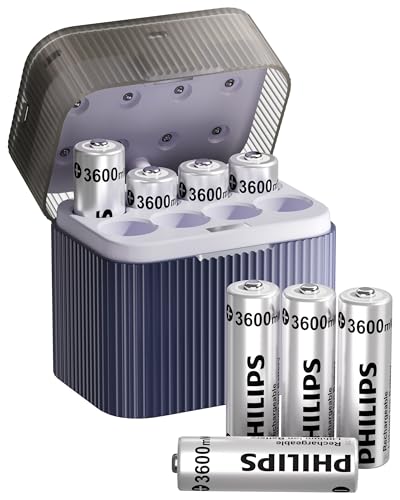
PHILIPS Rechargeable AA Lithium Batteries 8 Pack
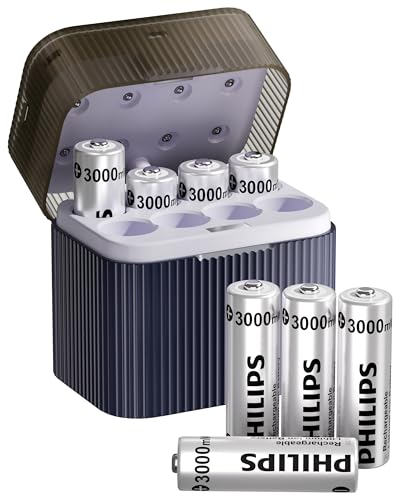
PHILIPS Rechargeable 3000mWh AA Lithium Batteries
Teneyuuo 2000mAh 1.2V Ni-MH AA Batteries 6 Pack

iMah HR6 AA Ni-MH Batteries 1800mAh 8-Pack

GENYESTAR Ni-MH AA Batteries 1800mAh 8-Pack

PHILIPS Rechargeable AAA Lithium Battery 8 Pack

PHILIPS Rechargeable AA Lithium Battery 4 Pack
What Each Pick Brings To The Table
Eight 1.5V lithium-ion cells give game controllers and demanding household electronics the higher voltage those devices may expect. The 3600mWh rating represents stored energy, so it becomes most meaningful when compared with device requirements and competing cells.
That makes this set a sensible fit for long gaming sessions or camera work where an early voltage drop is inconvenient. Unlike the Ni-MH options later in the list, it needs device-specific lithium compatibility and a compatible charging arrangement.
Practical Advantages
- Steady 1.5V output suits high-drain devices, meaning devices that consume power quickly.
- The eight-cell format supports several controllers, remotes, or camera accessories.
- 3600mWh capacity favors sustained workloads over occasional standby use.
- Lithium-ion chemistry avoids the gradual voltage decline associated with partially discharged Ni-MH cells.
Small Caveats
- Your devices and charger must support rechargeable 1.5V lithium-ion AA cells.
- The chemistry and full charge matter because mixing cell types can produce uneven device behavior.
Feature Snapshot
Who Will Love This
This set suits gamers, camera users, and households operating compatible high-drain electronics at 1.5V.
A Better Fit Elsewhere
Teneyuuo 2000mAh 1.2V Ni-MH AA Batteries suit standard Ni-MH chargers and conventional household devices.
The integrated charging case makes this the most travel-conscious AA set here. Type-C charging reduces the need to carry a separate cable, while eight slots help keep controllers, cameras, and remotes organized between uses.
Its 3000mWh cells sit below the 3600mWh PHILIPS set, but the case may matter more in a camera bag. For home-only charging, PHILIPS Rechargeable AA Lithium Batteries 8 Pack offers more energy per cell.
Strong Points
- Type-C charging simplifies replenishing power at home or while traveling.
- The case stores and charges eight cells together.
- Steady 1.5V output targets compatible controllers, cameras, and household electronics.
- The matching chip helps coordinate charging across the pack.
Things To Consider
- Lower stated capacity than the 3600mWh PHILIPS AA option.
- Solar chargers and Ni-MH-only charging systems may not support this lithium set.
- The case is useful, though it replaces a separate eight-bay charger.
Made For
Travelers and households wanting a compact charging setup for several compatible 1.5V devices will find this arrangement practical.
Where Another Pick Shines
PHILIPS Rechargeable AA Lithium Batteries 8 Pack offer more stated energy for high-drain gaming and camera use.
Standard 1.2V Ni-MH makes this set familiar territory for solar lights, toys, flashlights, and other replaceable cells. Its 2000mAh rating exceeds the two 1800mAh Ni-MH options here, although nominal capacity alone does not determine runtime.
Solar charging will vary with panel placement and available light, so these cells are not automatically full replacements for mains-powered charging. They suit households building a broad mixed-device battery drawer.
What Pays Off
- The 2000mAh rating supports everyday rechargeable AA applications.
- Standard AA dimensions ease replacement in compatible household devices.
- Solar-compatible construction offers a useful path for outdoor light replenishment.
- Six cells cover several low-to-moderate drain devices.
Practical Considerations
- Arrival charge is listed at 35%, so full charging is needed before initial use.
- Charging time and solar replenishment depend on the charger and light exposure.
- Six cells are fewer than the eight supplied by most other options.
Quick Facts
Built With In Mind
Beginners replacing Ni-MH cells in solar lights, clocks, toys, and simple remotes will find the format easy to manage.
Another Choice May Suit
iMah HR6 AA Ni-MH Batteries suit mixed-device households that need an eight-pack and broader charger expectations.
Eight HR6 cells cover the common AA footprint used by flashlights, remotes, toy cars, and clocks. The 1.2V Ni-MH format also fits many solar chargers and standard AA battery chargers, giving you more setup flexibility than the 1.5V lithium sets.
The listed 1800mAh capacity is modest beside 2000mAh cells, yet it remains relevant for intermittent devices. Low self-discharge, meaning the gradual loss of stored energy while idle, supports customers who need backup cells to remain useful between uses.
What Helps Most
- Eight cells support a large spread of low-drain household devices.
- Compatibility with typical Ni-MH and solar chargers simplifies charging.
- No memory effect reduces concerns about regular partial charging.
- Low self-discharge helps cells retain charge during storage.
Details To Watch
- Runtime may trail higher-capacity cells in demanding AA equipment.
- Chargers marketed only for alkaline cells will not recharge this set.
- Owners commonly mix cell ages, which can produce uneven runtimes.
Technical Highlights
The Right Fit
Households using many replaceable Ni-MH devices will value the broad charging compatibility and eight-cell inventory.
Reach For A Different Pick When
Teneyuuo 2000mAh 1.2V Ni-MH AA Batteries suit users prioritizing higher nominal capacity over an eight-pack.
Solar lights and portable lanterns are the clearest applications for this 1.2V Ni-MH set. Standard AA dimensions help keep replacement uncomplicated, while the eight-pack covers multiple fixtures without requiring cells to rotate between devices.
Its 1800mAh rating places it level with the iMah HR6 set, though fit depends more on charger support and device acceptance than on the stated capacity. The listed operating range also makes it more relevant across changing conditions.
Reasons It Performs
- Solar-light compatibility supports off-grid charging setups.
- Eight cells suit multi-fixture gardens, sheds, and lantern collections.
- The stated temperature range supports varied indoor and outdoor conditions.
- Ni-MH chemistry works with many dedicated rechargeable AA chargers.
Possible Compromises
- 1800mAh trails the 2000mAh Teneyuuo set in nominal capacity.
- Panels with limited sunlight may replenish the cells slowly.
- Some electronics designed for 1.5V cells may not accept these batteries.
Whose Shelf It Belongs On
Homeowners maintaining solar lights, lanterns, and other compatible 1.2V devices will find the eight-cell format useful.
Look Elsewhere When
PHILIPS Rechargeable AAA Lithium Battery 8 Pack suits compact AAA controllers and remotes requiring 1.5V power.
AAA compartments leave less room than AA bays, making these 1300mWh cells useful for slimmer controllers, remotes, and household electronics. Their 1.5V output follows the lithium approach used by the PHILIPS AA sets, but the smaller format is not a substitute for AA devices.
The eight-slot Type-C station makes charging less cluttered, with independent slots supporting organized rotation. That setup fits desks and travel bags better than a loose group of cells, assuming your equipment supports this battery format.
Well-Handled Touches
- Eight independent slots keep replacement cells organized.
- Type-C charging removes the need for a barrel-style power lead.
- Constant 1.5V output suits compatible high-drain electronics.
- The AAA format reaches devices too compact for AA cells.
Less-Strong Areas
- It cannot replace AA cells despite sharing similar lithium chemistry.
- Many older Ni-MH chargers will not accept these cells.
- The 1300mWh rating is lower than the AA lithium options.
Feature Breakdown
Best Suited To
People replacing compatible AAA cells in controllers, remotes, and compact electronics will value the integrated station.
Swap It Out When
PHILIPS Rechargeable AA Lithium Batteries 8 Pack are the relevant choice for devices that require full-size AA cells.
Four high-energy AA cells offer a more compact alternative to the eight-cell PHILIPS lithium set. The 3600mWh rating and 1.5V output target demanding controllers, cameras, and similar electronics, while the smaller quantity suits a single device or travel kit.
The integrated smart charging and storage box reduces loose-cell clutter, though it offers fewer spare cells than PHILIPS Rechargeable AA Lithium Batteries 8 Pack. Depending on your equipment list, charging convenience may outweigh inventory.
Everyday Wins
- High stated capacity supports demanding game controllers and cameras.
- The four-cell kit is easier to carry than an eight-battery set.
- Integrated charging and storage keeps replacements together.
- Constant 1.5V output suits compatible high-drain electronics.
- Lithium-ion cells avoid the partial-discharge concerns associated with Ni-MH use.
Points To Note
- Only four cells are included for a smaller replacement inventory.
- Your charger and devices must support rechargeable 1.5V lithium-ion AA cells.
- The compact case is less convenient for maintaining several mixed AA devices.
The Main Details
Who Should Grab It
Travelers and camera users who need a small number of high-energy 1.5V cells will find this format manageable.
A Better Fit Elsewhere
iMah HR6 AA Ni-MH Batteries suit households using standard Ni-MH chargers across many lower-drain devices.
Battery Fit Comes Before Battery Capacity
Voltage and chemistry determine whether a battery will work correctly, so begin with the markings inside your device compartment. Most traditional rechargeable AA applications use 1.2V Ni-MH, while certain controllers, cameras, and household electronics call for 1.5V lithium-ion cells. Never assume all rechargeable AA batteries are interchangeable.
Capacity describes charge storage, but amp-hour ratings and watt-hour ratings are not interchangeable. A 2000mAh Ni-MH cell is not directly comparable with a 3600mWh lithium cell because the chemistries and operating voltages differ. Use capacity to estimate runtime only after confirming the device and charger support the format.
The charger remains just as important as the battery. Ni-MH charging systems generally fit conventional rechargeable AA cells, while lithium options require compatible Type-C stations or specified battery chargers. Solar panels also vary in charging current, so slower replenishment may be realistic in shaded locations.
Two Decisions That Shape Rechargeable AA Performance
Wrong Turns To Avoid
A common mistake is selecting by capacity before checking the device voltage. Another is assuming a solar lantern or flashlight can use any rechargeable AA cell. Confirm the compartment, charging contacts, and stated battery type before replacing installed cells.
What Separates Lithium From Ni-MH
The higher-tier lithium sets here emphasize 1.5V output, larger watt-hour ratings, and integrated Type-C storage. Those details matter for compatible high-drain equipment, while the Ni-MH options earn their place through broad charger familiarity and lower-cost replacement routines.
Frequently Asked Questions
Are 1.5V lithium-ion AA batteries interchangeable with 1.2V Ni-MH batteries?
No. Device voltage requirements, charger design, and contact behavior must match. Replacing one chemistry with the other can cause shutdowns, charging failures, or uneven operation.
Can these AA batteries charge in solar battery chargers?
Teneyuuo and iMah Ni-MH options are designed for compatible solar charging, while GENYESTAR also targets solar-light use. Charging speed depends on panel output and available sunlight.
Which pack is easiest to travel with?
PHILIPS Rechargeable AAA Lithium Battery 8 Pack has the smaller cell format, while PHILIPS Rechargeable 3000mWh AA Lithium Batteries includes a Type-C charging case. Choose based on the device size and number of cells you carry.
Does higher battery capacity always mean longer runtime?
No. Device demand, conversion efficiency, temperature, age, and cutoff behavior all affect runtime. Compatibility comes first because a larger cell has little value in equipment designed for another format.
Are AAA batteries suitable for AA compartments?
No. AAA and AA share a general rechargeable category but have different physical dimensions. You need the exact cell format specified by the device or its original battery compartment.
Final Verdict
For traditional rechargeable AA equipment, the Teneyuuo and iMah Ni-MH sets offer the more familiar route. Compatible high-drain electronics favor the 1.5V PHILIPS lithium options, where stored energy and charging convenience are the deciding details. Match the chemistry and voltage first, then choose the pack size that fits your routine.
