


Rechargeable AA batteries fit neatly into game controllers, camera accessories, remote controls, flashlights, and the many battery-powered devices that quietly accumulate around your home. The difficult part is choosing chemistry, capacity, charger design, and pack size without overpaying for features you will never use. These seven options cover different needs, from compact AAA support to high-capacity AA cells for demanding equipment.
The Lineup, Simplified

PHILIPS 8-Pack AA Lithium Rechargeable Batteries 1.5V 3000mWh
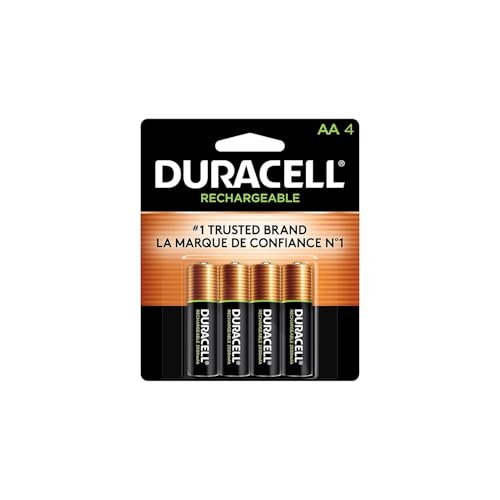
Duracell NLAA4BCD Rechargeable NiMH AA Batteries 4-Pack
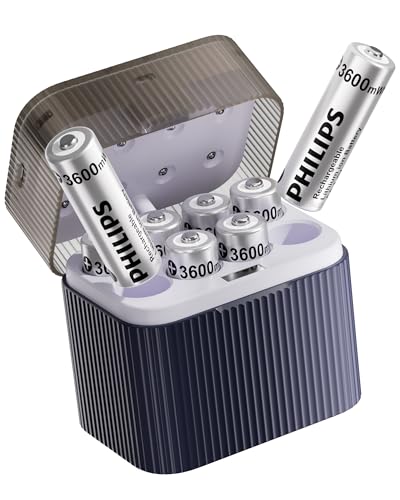
PHILIPS 8-Pack Rechargeable AA Lithium Batteries 1.5V 3600mWh
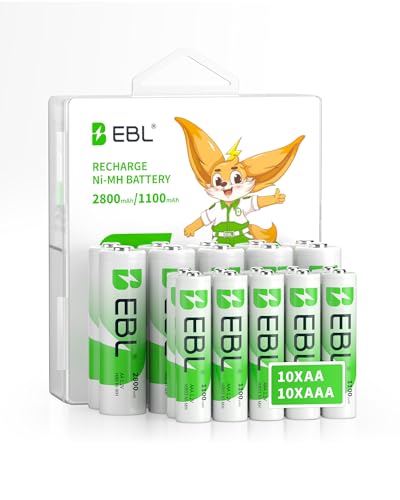
EBL Rechargeable AA 2800mAh and AAA 1100mAh Combo

PHILIPS 4-Pack Rechargeable AA Lithium Batteries 1.5V 3600mWh

Howardly Ni-MH AA 1.2V 600mAh Rechargeable Batteries

PHILIPS 8-Pack Rechargeable AAA Lithium Batteries 1.5V 1300mWh
The Details Behind The Selections
Constant voltage matters in devices that accept AA lithium cells because the battery continues presenting 1.5V as it discharges, rather than stepping downward like a conventional NiMH cell. These batteries offer a practical middle ground between PHILIPS’s 3600mWh sets and smaller four-cell kits.
Eight cells suit a household with several remotes, controllers, or accessories running at different times. For high-drain photography equipment, the PHILIPS 3600mWh 4-Pack offers more headroom, while you gain eight batteries here for broader rotation.
A Few Highlights
- Steady 1.5V output supports compatible high-drain electronics.
- The 3000mWh capacity reduces charging frequency during heavy use.
- Eight cells keep several devices ready without constant pairing.
- Integrated Type-C charging simplifies topping up the set.
Points To Note
- Lithium chemistry requires a compatible charger, not every basic NiMH charger.
- The 3000mWh rating trails the larger 3600mWh PHILIPS options for intensive equipment.
At A Glance
Made For
You benefit most with several compatible household devices and a preference for stable voltage without moving to the largest AA capacity.
Another Choice May Suit
Choose the PHILIPS 3600mWh 4-Pack instead for fewer, higher-capacity cells used in demanding cameras or controllers.
NiMH remains a familiar format, and that familiarity is the Duracell set’s main advantage. You can use it with compatible NiMH chargers, making it more practical for homes that already own chargers designed for standard rechargeable AA cells.
Four batteries suit a remote-heavy living room, paired controllers, or a handful of lights. Unlike the regulated lithium options, NiMH cells start around 1.2V and rise toward AA voltage during discharge, so device compatibility deserves more attention.
Strong Points
- Uses the broadly recognized NiMH rechargeable format.
- Arrives ready for use with compatible NiMH charging equipment.
- Low self-discharge helps preserve stored charge for occasional-use devices.
- The four-cell format is easy to rotate across two devices.
Worth Noting
- The pack contains four batteries, fewer than most lithium sets in this lineup.
- Its falling voltage profile can matter in equipment designed specifically for 1.5V AA lithium cells.
- Separate NiMH charging equipment is needed rather than the integrated USB case found on PHILIPS.
Quick Facts
The Right Fit
This set suits you most when charger compatibility and familiar NiMH handling matter more than regulated 1.5V output.
Reach For A Different Pick
The EBL Rechargeable AA 2800mAh and AAA 1100mAh Combo serves mixed-device households that want more cells and two battery sizes.
Eight 3600mWh cells put this set near the center of the lineup for high-use households. Constant 1.5V output makes the chemistry more predictable in compatible controllers, cameras, and other equipment than NiMH cells with a rising discharge curve.
The integrated case does more than recharge: it stores the batteries and helps prevent loose cells from disappearing across the home. You may find the combined function especially useful for a gaming setup or photography kit, though the dedicated model restrictions matter.
Well-Handled Touches
- 3600mWh capacity offers strong runtime for demanding compatible devices.
- Stable 1.5V output reduces voltage drop through a discharge cycle.
- Eight cells support several devices or a rotation-based charging setup.
- Type-C charging simplifies recharging from compatible USB power sources.
- The built-in compartment keeps cells together between uses.
Smaller Caveats
- The intelligent matching chip is designed for PHILIPS-compatible batteries, so mixed cells may not be accepted.
- Lithium cells require more charger awareness than the Duracell NiMH option.
- Eight batteries create a larger carrying set for travel.
Technical Sheet
Built With In Mind
You get the most from these batteries in a controller-heavy home or photography setup that supports regulated 1.5V AA cells.
Where A Sibling Pick Shines
The PHILIPS 8-Pack AA Rechargeable Lithium Batteries 1.5V 3000mWh offers similar organization with lower capacity and lighter demand on your charger.
Having both AA and AAA cells in one package solves the common problem of replacing two sizes without maintaining separate inventories. Ten AA cells at 2800mAh cover larger devices, while the ten AAA cells at 1100mAh handle smaller remotes, toys, and accessories.
The included organizer provides a home for cells that would otherwise scatter across a drawer. For most mixed-device households, this variety is more useful than another pack of a single size.
Useful Strengths
- Twenty batteries cover both common AA and AAA formats.
- The organizer keeps frequently changed cells visible and contained.
- Low self-discharge supports devices used only from time to time.
- The larger AA inventory suits high-drain household accessories.
Practical Considerations
- The 1100mAh AAA cells provide less capacity than the AA cells and suit lighter-duty devices.
- NiMH charging requirements make device compatibility important.
- Twenty loose batteries can be challenging to rotate without a systematic labeling or storage routine.
Who It Suits Best
This package fits families, offices, and hobby areas that regularly cycle AA and AAA batteries across several low- to medium-drain devices.
Look Elsewhere When
The PHILIPS 8-Pack Rechargeable AA Lithium Batteries 1.5V 3600mWh better serves power-heavy equipment requiring constant 1.5V output.
The four-cell count keeps this PHILIPS package compact without sacrificing its 3600mWh capacity or regulated 1.5V output. That makes it more focused than the eight-cell PHILIPS set, particularly for a camera, controller, or other setup that always uses two batteries.
Its charging case doubles as storage and accepts several common USB power sources. The model-matching circuit adds a controlled charging setup, although it also narrows the case’s usefulness with batteries from other ranges.
A Favorable Mix
- 3600mWh capacity supports sustained use in compatible high-drain devices.
- Constant 1.5V output improves voltage consistency through discharge.
- 5V/3A charging offers a faster pathway than lower-current integrated cases.
- USB charging works with compatible power banks, car chargers, and wall adapters.
Details To Watch
- The matching chip is intended for PHILIPS dedicated AA lithium batteries.
- Four cells may be too few for a home that rotates batteries through several devices.
- The lithium chemistry requires device and charger compatibility checks.
Feature Snapshot
Made For
You benefit most with two-battery electronics and a preference for a compact, high-capacity case with flexible USB charging.
A Better Fit Elsewhere
Choose the PHILIPS 8-Pack Rechargeable AA Lithium Batteries 1.5V 3600mWh for more simultaneous devices and wider rotation.
Low-draw solar garden lights need something quite different from a camera or gaming controller. These 600mAh NiMH cells target that lighter duty, accepting charging through compatible solar fixtures or a separate charger.
The 1.2V nominal output matches NiMH expectations and suits devices designed around that chemistry. Their modest capacity limits them in demanding electronics, but several cells kept near outdoor lighting can provide a practical replacement route.
Real-World Strengths
- A four-cell package supports multiple compatible solar lights.
- Solar-lamp charging reduces routine charger handling.
- Separate NiMH charging remains available for scheduled top-ups.
- Rechargeable cells suit repeated use in suitable low-drain lights.
Possible Compromises
- No charger is included, so setup depends on compatible household equipment.
- The 600mAh capacity is modest beside 2800mAh AA NiMH alternatives.
- Variable outdoor temperatures can affect stored charge and runtime.
Core Details
The Right Fit
These batteries suit homeowners maintaining compatible solar garden lights with modest, predictable energy needs.
Swap It Out When
The PHILIPS 8-Pack AA Rechargeable Lithium Batteries 1.5V 3000mWh better serves controllers, cameras, and other higher-demand electronics.
AAA devices need more usable capacity than a tiny backup cell, and this eight-pack provides 1300mWh per battery. Constant 1.5V output suits compatible controllers, remotes, and household electronics that benefit from regulated power.
The compact AAA format reaches devices the AA-focused PHILIPS sets cannot. An eight-slot Type-C station keeps charging and storage together, making this the natural choice for homes with several smaller battery compartments.
The Good Stuff
- 1300mWh capacity gives AAA devices more runtime than minimal backup cells.
- Stable 1.5V output supports compatible household electronics.
- Eight cells suit multiple small remotes, toys, or controller slots.
- Independent slots organize charging across the full pack.
- Type-C recharging reduces cable and charger fuss.
Potential Drawbacks
- AAA size limits compatibility to devices designed for that format.
- The 1300mWh cells provide less capacity than the PHILIPS AA sets.
- Model-specific charging requirements may prevent mixing cells from other ranges.
Who Will Love This
You get the most value with several AAA-powered controllers, remotes, or accessories that need stable voltage and convenient group charging.
Another Choice May Suit
The EBL Rechargeable AA 2800mAh and AAA 1100mAh Combo suits mixed households needing more AAA cells plus a matching AA inventory.
What Matters Before You Choose
Check The Device Requirements
Start with voltage, size, and chemistry. NiMH AA cells typically operate around 1.2V nominal voltage, while these lithium options regulate output at 1.5V. A device may specify rechargeable AA, NiMH, or lithium compatibility, and its manual or original battery marking provides the clearest starting point.
Match Capacity To The Workload
Capacity describes stored energy, but device demand determines how quickly that reserve disappears. Solar lights need little; controllers and cameras can demand much more. The 600mAh Howardly set focuses on the first scenario, while PHILIPS’s 3600mWh AA packs target more demanding use.
Look Beyond Battery Specifications
Integrated charging, individual slots, storage compartments, and model-identification features can reduce daily friction. You also gain convenience from Type-C power and a case that keeps cells organized, though specialized charging systems may be less flexible with mixed brands.
A Practical Look At Battery Chemistry
Mistakes Worth Dodging
Do not assume every rechargeable AA battery works with every charger. Lithium and NiMH are distinct chemistries, and charging requirements differ. Also avoid judging by pack size alone: eight lower-capacity cells may suit many remotes better than four cells intended for high-drain cameras.
What Separates Lithium From Basic
Lithium sets add regulated 1.5V output, higher energy density, and USB-integrated cases. The extra complexity primarily benefits compatible high-drain equipment, households wanting fewer charging accessories, and anyone who values organized storage.
Frequently Asked Questions
Can Lithium AA Batteries Replace NiMH AA Batteries?
Some devices support both, but others require one chemistry or a specific voltage range. Check the device markings or manual before switching, especially with cameras, controllers, and older household equipment.
Are 1.5V Lithium Batteries Better Than NiMH?
Lithium cells can provide steadier voltage and higher capacity in compatible devices. NiMH remains practical for lower-demand equipment and offers broader familiarity with standard rechargeable-battery chargers.
Do Rechargeable AA Batteries Lose Their Charge?
All rechargeable batteries experience some self-discharge while stored. Keeping partially used sets charged and avoiding prolonged storage in hot or damp locations helps preserve their remaining charge.
Can You Use Different Brands Together?
Only use cells with compatible size, chemistry, voltage, and charging requirements. An integrated charging case may restrict operation to its specified battery models, so confirm the instructions before mixing brands.
How Many Batteries Should a Household Keep?
Eight cells cover many common four-device arrangements and allow rotation while another set charges. Larger households or mixed AA-and-AAA setups may benefit from a 20-cell combo for easier inventory management.
Final Verdict
Constant-voltage lithium cells suit compatible controllers, cameras, and modern household electronics, while NiMH remains sensible for familiar charging setups and low-drain garden lights. Match the chemistry to your devices, choose capacity around actual demand, and treat integrated charging and storage as practical benefits rather than substitute features for compatibility. The right set keeps your routine orderly without adding unnecessary complexity.
