


A 9V charger that looks versatile can still leave you with dead batteries. Match the chemistry, connector, slot size, and charging capacity to the devices you actually use, especially when smoke detectors, microphones, or household electronics are involved.
The right charger keeps a mixed battery drawer organized without treating every cell like the same object. These options cover dedicated 9V systems, mixed AA through 9V charging, high-output D-cell charging, and one automotive exception for maintaining vehicle batteries.
The Main Contenders

Palogreen Mixed AA-9V Charger with Discharge

Palogreen 4-Bay 1.2V D-Cell Charger

EBL 9V Battery Five-Pack with Charger

Schumacher Electric SC1355 6V/12V Charger

Tenergy TN486U 5-Bay AA-9V Charger
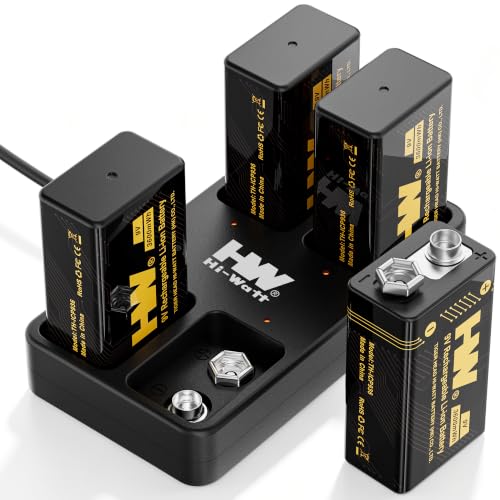
HW 3600mWh 9V Lithium Four-Pack with Charger

Palogreen 8-Bay LCD AA-D Charger
Taking A Closer Look At The Options
Households often accumulate AA, AAA, C, D, and 9V rechargeable cells faster than they remember which charger goes with each format. This Palogreen model handles as many as four AA, AAA, C, or D cells alongside one or two 9V batteries, making it useful for flashlights, toys, and larger household equipment.
Independent channels mean a single loose battery does not force you to fill a pair. Unlike the Palogreen 8-Bay LCD AA-D Charger later in this list, it also accepts 9V rechargeable batteries and includes both an AC connection and a car charging lead.
What Helps Most
- Charges mixed AA, AAA, C, D, and 9V formats without changing bases.
- Independent slots reduce wasted space and accommodate odd-numbered battery sets.
- The discharge mode helps prepare compatible cylindrical cells for reuse.
- Home and vehicle leads support charging in different settings.
Practical Considerations
- The 9V section handles fewer batteries than the AA through D section.
- Discharge mode applies only to compatible rechargeable cylindrical cells, not 9V batteries.
- Separate power leads add cable management compared with a compact USB model.
Key Specs
Made For
This charger fits households maintaining several rechargeable battery formats plus occasional 9V equipment.
Another Choice May Suit
The Tenergy TN486U suits people who prefer USB-C and Micro USB inputs instead of a home plug and car lead.
D cells are large enough that a charger built around smaller cells can feel awkwardly sparse. This model instead gives each of its four slots an independent lane, making it more natural for radios, toys, or equipment that regularly uses 1.2V rechargeable D cells. The box shape also keeps stored batteries together.
That focus has consequences. Unlike the Palogreen Mixed AA-9V Charger with Discharge, this unit accepts only one rechargeable D format, so you will need separate equipment for AA batteries or square 9V cells.
Where It Delivers
- Four independent bays let you charge any available number of D cells.
- Trickle charging maintains full cells while reducing prolonged high output.
- The storage-box format keeps unused batteries together and away from dust.
- USB power supports compact setups at home or during travel.
Worth Noting
- C cells may fit poorly because the slots are shaped specifically for D cells.
- Lithium-ion, damaged, dry, and non-rechargeable cells are not suitable.
- Owners should keep the slots clear of dust and inspect contacts periodically.
Built With In Mind
This charger suits people whose recurring device needs are limited to 1.2V rechargeable D cells.
A Better Fit Elsewhere
The EBL 9V Battery Five-Pack with Charger serves households replacing disposable square batteries rather than cylindrical D cells.
Starting a rechargeable 9V setup is easier when the batteries and charging base arrive together. This EBL package includes five 9V lithium-ion rechargeable batteries and a five-position charger, a combination that works neatly for households with several compatible devices. You can rotate spare cells through the charger as older sets reach the end of their useful life.
The charger accepts paired or unpaired batteries and allows mixed charge states. That flexibility is more specialized than the Palogreen 8-Bay LCD AA-D Charger, which serves broad cylindrical collections but does not include 9V batteries.
Benefits That Matter
- Five batteries support staggered replacement across compatible 9V devices.
- Five independent positions reduce the need to charge in pairs.
- USB input works with wall adapters or suitable power banks.
- The included set avoids assembling compatible batteries and a separate base.
Small Caveats
- The eight-point-four-volt lithium-ion chemistry must match your devices.
- The power adapter is not described as part of the package.
- The product is dedicated to 9V cells rather than mixed household formats.
Technical Highlights
Right Fit For
New users maintaining several compatible 9V devices benefit most from the complete five-battery set.
Reach For A Different Pick When
The Palogreen Mixed AA-9V Charger with Discharge is better for a mixed AA, AAA, C, D, and 9V battery drawer.
Vehicle batteries operate at much higher voltages than household 9V cells, so the SC1355 belongs in a separate part of the category. Its 1.5-amp output supports 6V and 12V charging, maintenance, and reconditioning functions for cars, motorcycles, ATVs, trucks, SUVs, and boats. It suits a garage routine focused on seasonal vehicles rather than a drawer of interchangeable batteries.
Compatibility extends across standard, AGM, and deep-cycle vehicle battery types. Compared with the HW 3600mWh 9V Lithium Four-Pack with Charger, the Schumacher has much greater physical scale and a completely different connection format.
Notable Upsides
- Charging, maintaining, and reconditioning functions serve multiple storage routines.
- Selectable 6V and 12V operation broadens vehicle compatibility.
- Support for AGM and deep-cycle batteries covers common garage applications.
- Low 1.5-amp output suits controlled maintenance charging.
Where It May Fall Short
- It cannot charge AA, AAA, C, D, or 9V household batteries.
- The slower output takes longer during substantial vehicle charging.
- Setup requires correct battery polarity and compatibility checks.
Whose Shelf It Belongs On
Home mechanics and households storing several types of vehicles benefit from its charging and maintenance functions.
Swap It Out When
The Tenergy TN486U is the relevant choice for portable AA, AAA, C, D, and 9V rechargeable household cells.
The TN486U brings the strongest format coverage here, handling AA, AAA, C, D, and 9V NiMH or NiCD cells in as many as five mixed positions. That matters for flashlights, remote controls, household tools, and portable devices sharing one charging area. Its LCD supplies the kind of status detail you rarely receive from a basic four-light charger.
USB power and both Micro USB and USB-C inputs improve placement flexibility. Compared with the earlier Palogreen Mixed AA-9V Charger with Discharge, the Tenergy gives you more input options, though it lacks the listed discharge function.
Positive Points
- Five bays accept a mixed selection of five common rechargeable formats.
- LCD status information makes charging progress easier to monitor.
- Dual input interfaces reduce cable dependence for many setups.
- The maximum 600mA output suits a manageable mixed household collection.
Possible Compromises
- Rechargeable batteries are not included with the charger.
- Only five batteries can charge at once despite the broad format support.
- USB-C and Micro USB cables may need to be managed separately.
Feature Snapshot
Made For
Mixed-format households benefit most from one compact charger covering five rechargeable cell sizes.
Where Another Pick Shines
The EBL 9V Battery Five-Pack with Charger is better suited to starting a dedicated lithium-ion 9V battery collection.
This kit targets the practical side of running rechargeable 9V batteries rather than offering only a charging base. Four lithium cells each carry a stated 3600mWh capacity, and the four-slot charger can replenish them together through Micro USB. That arrangement suits households that prefer keeping a spare cell ready for compatible smoke detectors, microphones, TENS units, or similar equipment.
The stated charging time is about 2.5 hours, followed by automatic shutoff. Compared with EBL’s five-battery package, HW offers fewer cells but includes detailed capacity and cycle information in the available specifications.
Practical Pluses
- Four included cells support device rotation without constant charging interruptions.
- The four-position charger handles the entire battery set in one session.
- LED colors distinguish charging from completed states.
- A stated 3600mWh capacity supports higher-use compatible equipment.
Areas To Watch
- Compatibility depends on each device accepting rechargeable 9V lithium batteries.
- Micro USB requires a compatible cable and suitable power source.
- Capacity and cycle figures apply only to the included battery chemistry.
The Main Details
Who Will Love This
Households using several compatible 9V devices benefit from the included batteries and coordinated four-slot charger.
Look Elsewhere When
The Tenergy TN486U is better for NiMH and NiCD batteries across cylindrical and 9V formats without supplying cells.
Recurring AA and AAA use can quickly fill a smaller charger, particularly across remote controls, clocks, lights, and small household devices. This eight-bay Palogreen model takes up to eight AA or AAA cells or four C or D cells through independent channels. You can charge fewer batteries without leaving empty positions as the only way to operate the base.
The LCD marks charging and error conditions, including damaged cells or placement problems. Compared with the Tenergy TN486U, this option offers more AA and AAA positions but no stated 9V support, so dedicated 9V systems still need another charger.
Useful Highlights
- Eight AA or AAA positions suit high-frequency household replacement.
- Independent channels accommodate partial loads rather than fixed pairs.
- The LCD distinguishes normal charging from an error condition.
- Dual input options make desktop and portable power setups easier to arrange.
Trade Offs To Consider
- The charger supports cylindrical NiMH and NiCD cells but not 9V batteries.
- A source above two amps is advised for the stated charging configuration.
- The adapter and charging cable may need separate setup.
Best Suited To
Households with many AA or AAA rechargeable cells benefit from the eight-position layout.
Consider Something Else When
The Palogreen Mixed AA-9V Charger with Discharge fits mixed cylindrical collections that also need 9V charging.
Matching Charger Chemistry To Your Batteries
Battery chemistry matters more than connector shape. NiMH and NiCD cells require compatible charging profiles, while lithium-ion 9V cells use a different full-charge voltage. A charger listing several sizes still needs clear chemistry support for the cells you own.
Square and cylindrical formats require separate attention. A 9V battery may resemble another 9V model while using a different rechargeable chemistry, and C or D cells can share a charger only when both dimensions and voltage fit.
Capacity determines how useful a charger becomes. Eight AA positions suit frequent AA replacement, four D-cell positions serve larger equipment, and dedicated 9V slots keep compatible batteries cycling as a separate group. Match bay count to your collection rather than simply choosing the largest number.
Power and status features affect daily convenience. USB-C or Micro USB makes a compact base easier to place, while an LCD can expose charging or placement errors. Independent channels prevent one empty position from forcing unused capacity elsewhere.
Avoiding Battery And Charger Mismatches
Common Shopping Slip Ups
Connector shape alone rarely identifies compatibility. Check battery size, rechargeable chemistry, voltage, and the charger’s stated supported formats before adding anything to a mixed household collection.
Where The Extra Money Goes
Additional spending may buy batteries, more charging positions, status displays, or multiple input options. Those features help most for larger collections or frequent device use, while a single compatible battery may only need a simple dedicated base.
Frequently Asked Questions
Can one charger handle both 9V and AA batteries?
Yes. The Palogreen Mixed AA-9V Charger with Discharge and Tenergy TN486U support cylindrical formats alongside compatible 9V rechargeable cells.
Are all 9V rechargeable batteries interchangeable?
No. Lithium-ion, NiMH, and NiCD batteries use different charging requirements. Confirm that both the battery and charger support the same chemistry and voltage.
How many 9V batteries can charge together?
Capacity depends on the model. EBL supports up to five lithium-ion 9V batteries, while HW includes a four-position charger and four batteries.
Can a household battery charger charge a car battery?
No. Automotive batteries require a suitable 6V or 12V charger with compatible connections, such as the Schumacher Electric SC1355.
Should rechargeable batteries be left in a charger?
Follow the charger’s charging and maintenance instructions. Continuous charging is unsuitable for some battery types, and non-rechargeable cells should never be inserted.
Final Verdict
Choose the Palogreen Mixed AA-9V Charger with Discharge for broad household coverage, the EBL or HW kit for batteries included, and the Tenergy TN486U for a balanced rechargeable selection. Match chemistry first, then choose the capacity and connection style that suit your devices and storage routine.
