


9v Rechargeable Batteries can reduce replacement hassles around the home, but charging design, capacity, and device compatibility matter more than the label alone. You’ll find this roundup especially useful for smoke alarms, carbon monoxide detectors, guitar pedals, microphones, flashlights, multimeters, walkie-talkies, and other 9V-powered equipment.
The best rechargeables suit people who want dependable power without frequent battery swaps. Household safety devices call for careful compatibility checking, while musicians and stage crews benefit from larger packs that can be rotated through a charging routine. Battery chemistry also shapes your choices: lithium-ion models recharge repeatedly, whereas disposable alkaline and primary lithium batteries offer low-maintenance operation but eventually need replacement.
The Lineup, Simplified
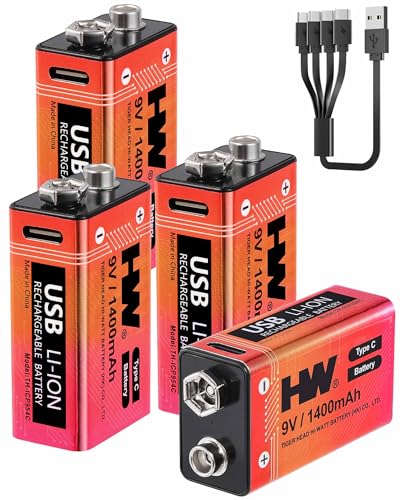
HW 9V Batteries 1400mAh USB-C 4 Pack

PHILIPS 9V Lithium Batteries 1200mAh 4 Pack

LP 9V Rechargeable Lithium-Ion Batteries 4-Pack 1100mAh USB-C Charging

Kratax 9v Rechargeable Batteries 4 Pack 850mAh 6F22

HW 9V Batteries 1400mAh USB-C 8 Pack for Guitar Pedals

HW 9V Batteries 1400mAh USB-C 12 Pack for Wireless Mics

POWER FLASH 9V Alkaline Batteries 12 Count Family Pack
The Strengths Of Each Pick
A smoke-alarm rotation is where convenience becomes visible, and this four-pack keeps spare cells ready without a separate charging dock. Its built-in USB-C ports accept the included four-in-one cable, while a 1400mAh rating places it above several other rechargeable choices in this lineup.
For alarms, carbon monoxide detectors, and other compatible household equipment, the setup looks pleasantly straightforward. Depending on your device’s charging requirements, USB-C speed may not affect daily performance much, but the larger capacity should matter more over repeated use.
Practical Advantages
- Four cells support scheduled household rotations.
- The 1400mAh rating favors longer operating intervals between charges.
- Built-in USB-C removes the need for a separate 9V charger.
- The included four-in-one cable simplifies mixed-device charging.
Points To Note
- Your safety device must accept rechargeable 9V batteries.
- Charge several cells on a schedule rather than waiting for a complete depletion.
Quick Facts
Built With In Mind
This set suits households managing multiple compatible alarms or detectors without frequent disposable battery changes.
Where A Sibling Pick Shines
PHILIPS 9V Lithium Batteries 1200mAh 4 Pack better serves you when you prefer disposable cells and no charging routine.
Disposable power makes sense for alarms in hard-to-reach spots or devices that sit near a wall where charging access is awkward. This PHILIPS pack provides four 1200mAh primary lithium cells, offering a straightforward alternative to the rechargeable HW model without a charging cable or charging schedule.
Smoke alarms, carbon monoxide detectors, and emergency equipment are the natural focus. You should still confirm compatibility and observe each device’s battery-change guidance, especially where low-battery prompts appear less frequently than expected.
A Few Strong Suits
- No charger or battery rotation is required.
- The 1200mAh capacity suits sustained household electronics.
- Four cells provide practical replacement coverage.
Trade Offs
- These batteries are not rechargeable.
- Repeated disposal raises the long-term maintenance burden.
- Household storage still benefits from cool, dry conditions.
Feature Snapshot
The Right Fit
You’ll appreciate this option in homes where low-maintenance disposable batteries fit device access and replacement habits better.
Another Choice May Suit
HW 9V Batteries 1400mAh USB-C 4 Pack suits you better when recurring charges are preferable to eventual disposal.
The LP pack spans more use cases than a safety-focused battery set, covering compatible alarms, walkie-talkies, game controllers, microphones, and flashlights. Its built-in USB-C port keeps charging simple, while the supplied two-in-one cable reduces connector clutter.
That flexibility makes it useful in a busy household or hobby space where several supported devices share the same battery format. Compared with the 1400mAh HW packs, its 1100mAh rating is lower, yet the broader device focus may matter more to you than maximum capacity.
Strengths Worth Knowing
- Supports a wide range of compatible 9V devices.
- Direct USB-C charging eliminates a dedicated charging cradle.
- LED indicators provide visible charging-status information.
- The included cable supports a tidier charging setup.
Small Caveats
- Capacity falls below the HW options at 1100mAh.
- Device-specific compatibility still needs confirmation.
- Owners commonly alternate batteries to keep several devices ready.
Made For
This four-pack fits households and hobbyists who regularly rotate rechargeable cells among several device types.
Reach For A Different Pick When
HW 9V Batteries 1400mAh USB-C 8 Pack for Guitar Pedals serves you better when a larger pedal rotation outweighs broader household compatibility.
Instrument work gives the Kratax set a distinct role. It targets smoke alarms, guitars, multimeters, and microphones, making it more specialized than the LP pack even though both use rechargeable lithium-ion cells.
The 850mAh rating is lower than every other rechargeable option here, so lighter-duty use may produce more noticeable charge intervals. The stated 1000-cycle lifespan remains useful for regular instruments, although the absence of a charger adds a setup decision before the first charge.
The Helpful Details
- Four batteries support instrument and meter rotations.
- The listed cycle life accommodates repeated long-term charging.
- Compatibility spans several hobby and household devices.
- The 6F22 format suits matching 9V equipment.
Practical Considerations
- A compatible charger is not included.
- Capacity is 850mAh, below the other rechargeable sets.
- Long charging gaps may suit occasional use better.
Core Details
Hobbyist Pick
You’ll find this set useful for guitars, multimeters, and compatible microphones used on a moderate schedule.
A Better Fit Elsewhere
LP 9V Rechargeable Lithium-Ion Batteries 4-Pack 1100mAh USB-C Charging suits you better when direct charging matters.
Eight batteries create a natural rotation for a pedal-heavy board, rehearsal room, or mobile rig. You can keep several cells in service while the rest recharge, reducing the chance of a pedal going dark during a session.
The 1400mAh capacity and built-in USB-C ports extend the same core design found in the four-pack, just with more inventory. Compared with the 850mAh Kratax option, this set offers greater stated capacity and simpler cable-based charging, although eight cells need more storage and rotation discipline.
Notable Gains
- Eight cells simplify multi-pedal rotations.
- 1400mAh capacity supports longer use intervals.
- USB-C charging works without a separate charger.
- The four-in-one cable accommodates common charging leads.
Worth Noting
- More cells mean more devices to track and recharge.
- Pedal voltage requirements still need verification.
- Storage benefit depends on your rotation habit.
Technical Highlights
Whose Shelf It Belongs On
This pack belongs in home studios, rehearsal rooms, and pedal setups that run several compatible 9V devices.
Swap It Out When
HW 9V Batteries 1400mAh USB-C 4 Pack for Smoke Detectors suits you better when a smaller household rotation is enough.
Wireless microphone work creates a strong case for the largest pack here. Twelve cells can support multiple handheld or headset microphones, rotate through performers, or stay ready in a case during rehearsals, worship services, and small events.
The familiar 1400mAh rating and direct USB-C charging make this set convenient, though its size may be excessive for a single microphone or occasional home project. For a working performer, you may find that quantity offsets the extra storage burden, especially during multi-person setups.
The Good Stuff
- Twelve cells suit multi-microphone rotations.
- 1400mAh supports extended operating intervals.
- USB-C removes a dedicated battery charger.
- Spare inventory reduces interruptions during events.
Details To Watch
- The large quantity may not suit light users.
- Labels help track each microphone’s battery.
- Confirm each microphone accepts rechargeable cells.
Built For Demanding Routines
This set fits performers, instructors, and event crews who rotate batteries across several wireless microphones.
Look Elsewhere When
HW 9V Batteries 1400mAh USB-C 4 Pack for Smoke Detectors serves you better for a compact household alarm rotation.
This disposable alkaline pack serves a different need from the rechargeables: keeping several batteries in storage without chargers, cables, or rotation tracking. The twelve-count format fits emergency kits, toolboxes, and a range of general-purpose 9V devices.
The stated production date falls after December 2020, with shelf storage claimed at up to five years. That makes this more of a stocking option than a rechargeable solution, and you’ll still need to replace depleted cells because these batteries cannot be recharged.
What It Does Well
- Twelve cells support broad household stocking.
- Alkaline chemistry avoids charging equipment.
- Stored cells can cover assorted compatible devices.
- The pack works well in emergency preparedness kits.
A Few Limitations
- Depleted cells cannot be restored through charging.
- Storage life does not equal in-device shelf life.
- Separate spares still require periodic inspection.
Important Details
Made For Storage
This family pack suits you when you want disposable 9V cells available across emergency kits and mixed household devices.
Not Your Match When
HW 9V Batteries 1400mAh USB-C 4 Pack better fits recurring use where you prefer to recharge rather than replace cells.
Choosing Rechargeable Power Without Guesswork
Capacity matters, but compatibility sets the ceiling on every choice. Lithium-ion chemistry is rechargeable and stores energy for repeated use, while alkaline and primary lithium cells are disposable. Start with the device manual and confirm its required battery type before narrowing the field.
Check the Device Before the Capacity
Smoke alarms, microphones, pedalboards, meters, and flashlights can all use the rectangular 9V format, yet their charging requirements and current demands may differ. Rechargeable batteries can also trigger low-battery warnings differently in certain devices. Compatibility confirmation prevents an otherwise capable battery from becoming an inconvenient choice.
Capacity Shapes the Rotation
A higher milliamp-hour rating represents greater stored energy, which can extend intervals between charges. It doesn’t guarantee identical runtime in every device, because power draw, battery age, temperature, and equipment design affect results. Match capacity to how often and how hard you use the equipment rather than chasing the largest number alone.
Charging Setup Changes Convenience
Built-in USB-C is useful because you can connect the battery directly to a compatible cable and power source. That avoids a dedicated 9V charging cradle. Packs that exclude a charger, such as the Kratax selection, place more responsibility on you to source matching charging equipment.
Count the Batteries You’ll Actually Rotate
Four cells suit common household replacements, while eight or twelve become more useful with multiple pedals, microphones, or frequent events. Larger packs reduce battery shortages but create additional charging and storage tasks. You’ll enjoy the flexibility more when your devices outnumber the included cells.
Pack Size and Recharge Routine Matter
Capacity is useful only within a sensible charging routine. You’ll see more value from a moderate pack that you rotate regularly than from a large set that sits unused for months. Label cells, keep compatible charging leads together, and recharge replacements before a device needs them.
Making Better Battery Calls
Common Shopping Slip Ups
Don’t treat every 9V battery as interchangeable chemistry, and don’t assume a rechargeable pack suits a device without checking its instructions. Avoid buying a large set before calculating how many batteries sit in active rotation. Charging access, storage space, and replacement frequency deserve as much attention as the capacity figure.
What Separates Rechargeable From Basic
The upgrade usually pays off through direct USB-C charging, higher reusable capacity, status indicators, or enough cells to maintain a rotation. A disposable alkaline pack remains sensible for rarely used equipment, though those batteries are eventually discarded. Repeated use gives rechargeables the stronger fit for frequently operated devices.
