


A guitar pedal can sound fine at rehearsal and disappear in the middle of a set because its 9V battery is drained or chemically unsuitable. Battery chemistry, capacity, fit, and recharge setup matter, especially for pedalboards that stay powered for hours or travel between gigs. These seven options cover rechargeable, alkaline, and lithium choices for guitar players, musicians, and households that need dependable 9V power.
Your Options, Compared
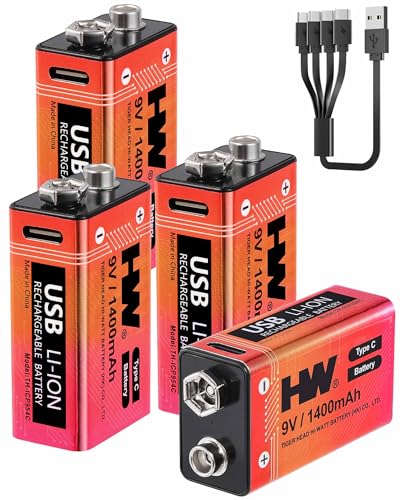
HW 9V Batteries 1400mAh USB-C 4 Pack

Interstate 9 Volt Alkaline Batteries 12-Pack

Enegitech 9V Lithium Battery 1200mAh 4 Pack

Duracell Alkaline 9V Battery 1 Count

EBL 9 Volt Alkaline Batteries 4 Pack

HW 9V Batteries 1400mAh USB-C 8 Pack

HW 9V Batteries 1400mAh USB-C 12 Pack
A Deeper Look At The Lineup
Rechargeable power removes the routine of replacing loose alkaline cells, which makes this HW set practical for smoke detectors, keyless locks, and compatible guitar effects. The 1400mAh rating means higher nominal capacity than ordinary disposable 9V cells, although actual pedal runtime varies with current draw.
Built-in USB-C charging removes the need for a separate 9V charger, and the four-battery format keeps a small rotation available. For a pedalboard owner, this is more practical than the single Duracell cell, though the HW 8 Pack offers a larger reserve.
Positive Points
- USB-C charging simplifies routine power replenishment.
- The 1400mAh rating supports devices that draw steady current.
- Four rechargeable cells suit compact pedalboards and household alarms.
- Reuse reduces the need to keep loose disposable batteries nearby.
Things To Consider
- Pedal polarity and recharge compatibility should be checked before installation.
- Rechargeable cells need periodic charging during storage, particularly in cool conditions.
Key Specs
Made For
This set suits musicians with several compatible pedals who prefer one charging routine for stage gear and household devices.
A Better Fit Elsewhere
Interstate 9 Volt Alkaline Batteries 12-Pack suits players who want disposable cells for mixed household devices and occasional pedal changes.
Alkaline chemistry remains straightforward for pedalboards, garage-door remotes, clocks, walkie-talkies, and household electronics. This 12-cell carton gives you spare stock for an entire home or studio, so a depleted cell rarely becomes an interruption before a rehearsal.
Unlike the rechargeable HW options, these cells are disposable and should not be placed on a charger. For a player moving between venues, the trade-off is simple: shelf convenience replaces reusable charging infrastructure.
Features That Help
- A large pack reduces the need for emergency battery runs.
- Alkaline chemistry fits many common 9V-compatible devices.
- The reserve is useful across pedals, toys, remotes, and garage openers.
- Disposable cells are convenient for occasional players.
Worth Noting
- Do not recharge alkaline cells.
- Long-term storage works best in a cool, dry place.
- Heavy current draw can shorten usable runtime compared with rechargeable lithium options.
At A Glance
Who It Suits Best
Home studios and occasional pedal users benefit most from keeping a generous disposable reserve nearby.
Consider Something Else When
HW 9V Batteries 1400mAh USB-C 8 Pack fits players who reject disposable cells and prefer rechargeable pedal power.
Lithium chemistry gives this Enegitech set a different ownership rhythm from alkaline. It targets devices with higher current demand, including some pedals, multimeters, keyless-entry locks, smoke detectors, and electronic instruments. The 1200mAh rating offers a useful middle ground between compact disposable cells and the 1400mAh HW rechargeable sets.
These are non-rechargeable cells, so the absence of a charging cable is not a practical weakness. Still, pedal polarity matters, and runtime can vary sharply with pedal design, especially across a large tuner, looping pedal, and overdrive.
What It Does Well
- The 1200mAh rating supports relatively demanding 9V equipment.
- Lithium chemistry suits devices that drain ordinary alkaline cells quickly.
- A four-cell pack covers several compatible devices without excess stock.
- Disposable construction avoids managing a pedalboard-specific charger.
Points To Note
- These batteries are not rechargeable.
- Runtime will vary among pedals with substantially different current demands.
Feature Snapshot
Right Fit For
Guitarists using higher-drain pedals benefit from the lithium capacity without committing to a rechargeable battery routine.
Look Elsewhere When
HW 9V Batteries 1400mAh USB-C 8 Pack suits pedalists who prioritize repeated USB-C charging over disposable lithium cells.
A single alkaline cell solves the narrow problem of replacing one depleted pedal battery without creating spare inventory. Its familiar disposable format requires no charging equipment, which suits occasional practice sessions and short rehearsals where a full pedalboard is not always powered.
The pack size is the honest limitation. Compared with Interstate’s 12-pack or HW’s eight rechargeable cells, this option is easy to carry but inconvenient for frequent rotation, so keeping several units on hand makes more practical sense.
Real-World Strengths
- Single-cell packaging suits a quick, one-device replacement.
- Disposable use avoids charging setup for occasional players.
- Alkaline chemistry is widely compatible with standard 9V devices.
Minor Gripes
- One cell offers little backup for frequent pedal changes.
- Alkaline batteries should be removed from long-term storage locations where leakage could become costly.
- The disposable format creates recurring replacement work.
Made For
This cell fits beginners or occasional players who need one straightforward replacement for a compatible pedal.
Reach For A Different Pick When
EBL 9 Volt Alkaline Batteries 4 Pack serves you better when several devices or rehearsals require a spare-battery reserve.
The EBL four-pack balances inventory size and disposable convenience. Alkaline cells make sense for smoke and carbon-monoxide alarms, toys, audio equipment, wireless microphones, and selected guitar pedals, especially across a home where several devices use the same battery format.
For a musician with one or two pedals, four cells cover rotation better than the single Duracell unit. High-demand effects may still favor Enegitech lithium or HW rechargeable power, while the largest alkaline reserve remains Interstate’s 12-pack.
Real Benefits
- Four cells provide useful stock for mixed household electronics.
- Disposable alkaline cells simplify replacements during busy weeks.
- The moderate pack size avoids the bulk of a 12-cell reserve.
- Multiple devices can share the same battery standard.
Trade Offs
- Do not place these alkaline cells in a charger.
- Store unused cells in a cool, dry location and separate damaged or leaking cells.
- Pedals with substantial current draw may need lithium chemistry.
The Right Fit
This pack suits household musicians who power several compatible devices but rotate batteries only a few times each month.
Another Choice May Suit
Enegitech 9V Lithium Battery 1200mAh 4 Pack is the stronger fit for pedal boards that place a heavy load on each cell.
This is the most focused match for a guitar pedalboard in the group. Eight cells give you a practical in-use and charging rotation, while the built-in USB-C ports remove the need for a socket charger dedicated to 9V batteries. Capacity is specified at 1400mAh per cell.
Real pedal runtime still depends on current draw and how deeply the circuit loads the battery. Players with true-polarity effects or demanding digital pedals should check compatibility, and you may find lithium disposable cells simpler where rechargeable chemistry is not supported.
Advantages To Know
- USB-C recharging simplifies pedalboard power maintenance.
- Eight cells support several pedals without constant single-cell swaps.
- The 1400mAh rating offers substantial capacity for compatible circuits.
- Reuse cuts down on routine disposable-cell replacement.
Honest Caveats
- Not every pedal or polarity arrangement suits rechargeable 9V operation.
- Charged cells can lose readiness during prolonged storage, so check them before a show.
- USB cables occupy space in a crowded pedalboard bag.
Technical Highlights
Built With In Mind
Rehearsing musicians and home-studio players benefit most from a reusable set sized for several compatible effects.
Swap It Out When
Enegitech 9V Lithium Battery 1200mAh 4 Pack suits players whose pedals do not support rechargeable 9V chemistry.
Twelve rechargeable cells serve more than a normal pedalboard, but that scale makes sense for wireless microphones, stage electronics, rehearsal rooms, and musicians sharing equipment. The same 1400mAh rating and USB-C approach used in the HW guitar-pedal set carries over, with room for a much larger rotation.
Compared with HW’s eight-pack, this version reduces the chance that every compatible device is charging at rehearsal. The extra inventory demands disciplined labeling and charging, and rechargeable chemistry still needs device-level compatibility checks.
Practical Pluses
- Twelve cells cover large pedalboards and several wireless devices.
- USB-C charging creates one familiar replenishment method.
- High capacity supports extended operation in compatible equipment.
- The larger pack reduces frequency between complete charging cycles.
Small Caveats
- More cells require clearer labeling and storage discipline.
- Overcharging is not the concern here, but leaving cables attached to every unit can clutter your workspace.
- Compatibility remains essential for older or unusual polarity arrangements.
Core Details
Whose Shelf It Belongs On
Touring musicians, rehearsal-space operators, and recording engineers benefit from a broad rechargeable inventory.
Not Your Match When
HW 9V Batteries 1400mAh USB-C 4 Pack fits a smaller setup better and avoids excess cells for basic household use.
Matching Battery Chemistry To Your Pedalboard
Capacity measures how much charge a cell stores, with milliampere-hours abbreviated as mAh. Higher capacity can support longer runtime, but pedal design and current draw remain decisive, so capacity alone does not determine the best battery.
Rechargeable Or Disposable?
Rechargeable 9V cells suit players who regularly rehearse or perform and prefer USB-C charging over repeated purchases of disposable cells. The HW 8 Pack and 12 Pack provide the largest reusable rotations, while the 4 Pack covers smaller pedalboards and household alarms.
Disposable alkaline cells remain useful for occasional playing, mixed device inventories, and pedals with recharge compatibility concerns. Lithium disposable cells add another path for equipment that draws power heavily. Check the pedal manual or manufacturer documentation before introducing rechargeable chemistry.
Match Polarity Before Buying
Standard 9V batteries deliver power through a positive and negative terminal, but some pedal wiring arrangements reverse that relationship. A cell can physically fit while failing to power the circuit, so confirm polarity and battery compatibility before filling a pedalboard.
Build Around Actual Runtime
A six-pedal board running continuously through rehearsal needs more usable capacity than one pedal used for occasional songwriting. Rotating several batteries helps, but keeping partially charged cells separated by chemistry can prevent confusion. Labeling cells and storing them in a dry case also protects contacts and avoids accidental intermixing.
Common Power Mistakes To Avoid
Pitfalls Shoppers Hit
Do not choose solely by capacity, since chemistry, polarity, and device demand can matter more. Alkaline cells should never enter a charger, while rechargeable or lithium cells should never be treated as interchangeable without checking each device’s requirements.
What The Upgrade Buys
Rechargeable packs trade purchase frequency for charging routine and more careful inventory control. The upgrade makes the most sense for frequent players, while disposable lithium or alkaline cells remain simpler for occasional use and equipment with unusual power requirements.
Frequently Asked Questions
Can rechargeable 9V batteries power guitar pedals?
Many compatible guitar pedals accept rechargeable 9V cells. Check the polarity and battery guidance for each effect before installation.
Are lithium 9V batteries better for pedals?
Lithium cells can suit pedals with heavier current demands because of their energy density. Compatibility and runtime still depend on the individual circuit.
Can I recharge alkaline 9V batteries?
No. Alkaline cells are disposable and should be removed before charging equipment.
How many batteries should a pedalboard stock?
The right count depends on the number of pedal-powered devices and how long they run. Four cells suit a small board, while eight or twelve provide a larger rotation.
Should guitar pedal batteries be stored installed?
Long-term storage is safer with batteries removed and contacts protected. Store each chemistry separately in a dry place according to its instructions.
Final Verdict
HW 9V Batteries 1400mAh USB-C 8 Pack is the most focused fit for frequent guitar players, while the 12 Pack suits larger pedalboards and portable audio systems. Enegitech lithium or EBL alkaline cells make sense for disposable use, and compact setups can use a smaller pack without sacrificing a straightforward replacement routine.
