


9V batteries quietly power smoke alarms, garage sensors, guitar pedals, microphones, and plenty of household electronics. The hard part is choosing between disposable alkaline cells, lithium replacements, rechargeable sets, and chargers that handle multiple formats. This guide sorts the differences so you can match battery chemistry, charger compatibility, and runtime to your devices without paying for the wrong system.
The Main Contenders

Amazon Basics 4-Pack 9 Volt Lithium Batteries

EBL 8-Pack AA AAA Batteries with 4-Bay LCD Charger

DURNERGY 9V Batteries 8 Pack, 10-Year Shelf Life

EBL 4-Bay LCD AA AAA Rechargeable Battery Charger

Allmax 9V Maximum Power Alkaline Batteries, 4 Count
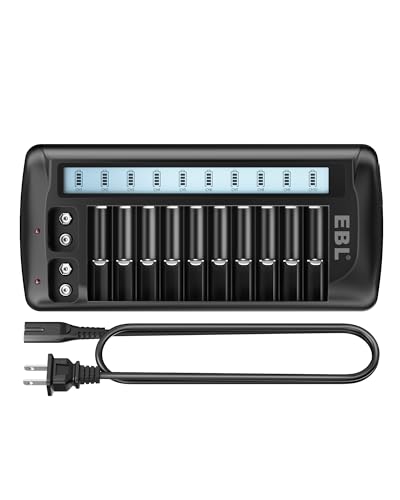
EBL 12-Bay LCD AA AAA and 9V Battery Charger

TQTHL 4-Pack Rechargeable 9V Batteries with USB-C Cable
Meet The Standout Selections
Disposable power is convenient until a drawer starts filling with half-used cells and forgotten expiration dates. This four-pack takes a simpler route for cameras, handheld games, smart-home controls, and outdoor sensors, with lithium chemistry designed to sit in storage without frequent checks.
Compared with the DURNERGY alkaline pack, it favors long storage over carrying a larger disposable reserve. The stated temperature range of -40°F to 140°F may also suit equipment stored in a garage or outdoor enclosure, though actual device requirements still matter.
Everyday Perks
- Ten-year storage life simplifies emergency and seasonal replacements.
- Lithium chemistry suits low-drain sensors that may remain idle.
- The four-pack provides a practical spare for multiple devices.
- Wide temperature tolerance supports indoor and outdoor use.
Small Caveats
- Disposable lithium cells still create ongoing replacement waste.
- Device manuals may specify alkaline chemistry for a particular model.
Key Specs
Made For
You benefit most with a mixed collection of low-drain household devices and a preference for maintenance-free cells.
A Better Fit Elsewhere
The EBL 12-Bay LCD AA AAA and 9V Battery Charger suits you better when you want reusable 9V power.
A complete starter set makes sense for a household already rotating small remotes, toys, flashlights, and clocks. You receive four rechargeable AA cells, four rechargeable AAA cells, and a four-bay LCD charger, which removes the need to assemble compatible components separately.
This isn’t a 9V solution, despite the broader charging focus of the roundup. The AA and AAA pairing is more useful for mixed high-drain electronics, and you may find the four-slot layout limiting once your collection grows.
Good Reasons To Consider
- Includes both AA and AAA rechargeable batteries.
- LCD readouts show charging status and per-slot battery level.
- The 2800mAh AA cells suit frequently handled household devices.
- Four slots reduce clutter from separate charging stations.
Practical Considerations
- No 9V batteries or 9V charging bay are included.
- Rechargeable cells need periodic charging and battery-care attention.
- The AAA capacity is lower than the AA capacity, reflecting the smaller format.
Feature Snapshot
Right Fit For
Households beginning a rechargeable AA and AAA collection benefit most from the batteries and charger arriving together.
Another Choice May Suit
Amazon Basics 4-Pack 9 Volt Lithium Batteries serves you better for maintenance-free 9V replacements.
Eight cells give you room to cover several alarms, microphones, and pedal accessories without making weekly runs for replacements. The pack targets 6LR61 9V alkaline devices, making it a more conventional choice than the rechargeable TQTHL set covered later.
Its stated service life is six to eight times that of an ordinary carbon-zinc 9V cell. That comparison is useful for judging service intervals, but your own runtime still depends on the device, battery age, temperature, and drain rate.
Noteworthy Benefits
- The eight-pack supports a broad household spare reserve.
- Alkaline chemistry suits many alarms, pedals, and microphones.
- A stated 10-year shelf life simplifies long-term storage.
- The steel enclosure is designed to resist corrosion.
Points To Note
- These are disposable cells rather than a reusable charging system.
- Storage temperature still affects long-term performance.
- Replace smoke-alarm cells according to the alarm’s instructions.
Technical Highlights
Who Will Love This
You get the most value with several compatible 9V devices and a preference for simple disposable replacements.
Where A Sibling Pick Shines
Allmax 9V Maximum Power Alkaline Batteries may suit audio equipment where discharge demand is your priority.
Keeping four batteries rotating is much less cluttered with a dedicated charging dock. This EBL unit handles one through four AA or AAA NiMH or NiCD cells, where NiMH denotes nickel-metal hydride chemistry and NiCD identifies older nickel-cadmium cells.
Compared with the larger EBL 12-bay model, the tradeoff is capacity. You trade the 9V bay and extra AA/AAA slots for a smaller setup, which can make sense in an apartment or a single-device household.
Useful Touches
- Four independent positions suit partially used collections.
- The LCD keeps charging progress visible.
- Up to 500mA per slot supports a measured charging routine.
- Micro-USB and USB-C inputs add connection flexibility.
Some Limits To Know
- It does not accept 9V rechargeable batteries.
- Four slots may slow you down with a large mixed collection.
- Older NiCD cells require more attentive retirement planning.
Quick Facts
Best Suited To
You benefit most with up to four AA or AAA rechargeable batteries and limited shelf space.
Consider Something Else When
The EBL 12-Bay LCD AA AAA and 9V Battery Charger fits you better with a larger rechargeable collection.
Pedalboards and wireless microphones can demand more consistent output than a low-drain wall sensor, so discharge behavior deserves attention. The Allmax pack positions its four alkaline cells for higher-power electronics rather than long-term rechargeable use.
Its EnergyCircle Technology is the brand’s stated power-focused design, yet runtime claims remain tied to your equipment. Compared with the DURNERGY eight-pack, you receive half as many cells but a more audio-oriented positioning.
Everyday Advantages
- Four cells suit compact pedalboard or microphone kits.
- Alkaline chemistry avoids charger setup for occasional use.
- Power-focused construction targets higher-drain electronics.
- The small pack simplifies selective replacement.
Worth Bearing In Mind
- Four cells offer less backup than an eight-battery pack.
- Disposable chemistry requires eventual replacement.
- Noise-sensitive audio equipment can still be sensitive to battery behavior.
Core Details
Built With In Mind
Guitarists, musicians, and home audio users gain the clearest benefit from this power-focused disposable pack.
Swap It Out When
DURNERGY 9V Batteries 8 Pack, 10-Year Shelf Life suits you better when maintaining a larger emergency reserve matters most.
Most households do not use one battery size alone, and this charger reduces the need to maintain three separate docks. Ten flexible positions accept AA or AAA cells, while two dedicated bays handle rechargeable 9V batteries.
That makes it the most format-flexible charging option here, though you must supply compatible rechargeable cells. The LCD provides charging status and level information for each occupied position, useful when several devices draw power at different times.
Real-World Strengths
- AA, AAA, and 9V formats share one charging base.
- Twelve positions suit a broad household collection.
- Independent operation lets mixed sets charge together.
- Per-slot readouts clarify charging progress.
Possible Compromises
- Rechargeable batteries are not included.
- Disposable alkaline cells cannot enter the charger.
- The larger footprint may crowd a compact utility drawer.
Whose Shelf It Belongs On
You benefit most with many rechargeable devices across all three supported sizes and a central charging location.
A Better Fit Elsewhere
The EBL 4-Bay LCD AA AAA Rechargeable Battery Charger suits you better in a small-space setup limited to four cells.
Rechargeable 9V cells can simplify a household that repeatedly powers smoke detectors, fire alarms, and remote controls. This TQTHL set includes four lithium-ion batteries and a two-in-one USB-C cable, giving you a compact starting point without a separate 9V dock.
The stated cycle rating reaches 1,000, offering a clear reuse-oriented design. Still, the brand cautions against professional musical instruments and noise-sensitive equipment because these cells may affect sound quality or stability.
What Earns Its Place
- Four cells cover several compatible household devices.
- Lithium-ion chemistry supports repeat charging.
- The included USB-C cable simplifies power access.
- A stated 1,000-cycle rating suits frequent rotation.
Honest Caveats
- Rechargeable cells need periodic charging.
- Smoke detectors may specify alkaline or lithium disposable chemistry.
- Professional audio gear falls outside the stated use profile.
Feature Rundown
The Right Fit
You benefit most with compatible household alarms and remotes that permit rechargeable 9V cells.
Reach For A Different Pick When
Allmax 9V Maximum Power Alkaline Batteries suit you better for professional audio equipment.
Choosing A Battery System That Fits
Start with the devices already in your home. Count 9V smoke alarms, microphones, and pedals separately, then note each manual’s required chemistry. A charger that accepts AA and AAA cells cannot recharge 9V batteries, and a disposable alkaline pack cannot feed power into a charging dock.
Chemistry Determines Compatibility
Alkaline cells are single-use, while lithium disposable cells also provide maintenance-free operation with a long storage window. Rechargeable lithium-ion and NiMH systems trade disposable convenience for repeated use, but each requires its own compatible charging arrangement.
Match The Charger To Your Collection
A four-bay charger suits a small AA and AAA collection. The EBL 12-bay model earns its larger footprint with ten AA/AAA positions and two dedicated 9V bays, making it more useful for mixed rechargeable inventories.
Consider Runtime And Storage
Low-drain sensors may spend long periods idle, where shelf life becomes important. Audio pedals and wireless microphones usually care more about consistent output, so a disposable power-focused cell can be more appropriate than a rechargeable option.
Check Device Instructions First
Compatibility details matter more than headline capacity. Some alarms, microphones, and older electronics restrict battery chemistry, while rechargeable systems may require consistent charging intervals and occasional capacity checks.
Getting The Charging Details Right
Mistakes Worth Dodging
A 9V-shaped charger does not automatically mean it accepts every 9V battery. Confirm the supported chemistry, terminal arrangement, and device requirements before charging, and never place disposable alkaline cells into a rechargeable dock.
What Separates Premium From Basic
A larger charger adds dedicated bays, per-cell displays, and broader format support. Those features matter once you rotate several battery types regularly; a simpler four-slot dock remains adequate for a small collection.
Frequently Asked Questions
Can a 9V battery charger charge alkaline batteries?
No, standard rechargeable chargers do not accept disposable alkaline cells. Charging requires compatible rechargeable batteries designed for that charger and chemistry.
Which charger handles AA, AAA, and 9V batteries?
The EBL 12-Bay LCD AA AAA and 9V Battery Charger supports all three formats. It provides ten AA/AAA positions and two dedicated 9V slots.
Are rechargeable 9V batteries suitable for smoke detectors?
Only use them when the detector’s manufacturer permits them. Some models specify disposable alkaline or lithium chemistry, so check the battery compartment and instructions.
Are alkaline or lithium 9V batteries better for storage?
Lithium cells generally suit long storage because of their stated shelf life. Alkaline cells remain useful for immediate use, but storage duration and temperature still influence performance.
Can TQTHL rechargeable 9V batteries power microphones?
The stated guidance excludes professional instruments and noise-sensitive equipment. Standard household devices may be more suitable, subject to each device’s compatibility requirements.
Final Verdict
Choose disposable alkaline or lithium cells for low-maintenance replacements, and favor rechargeable systems only after checking device instructions. The EBL 12-bay charger offers the broadest rechargeable format support, while the TQTHL set provides a simpler reusable 9V starting point. Match the chemistry to the equipment, not simply to the battery shape.
