


Rechargeable 9-volt batteries reduce the routine of replacing cells in smoke detectors, microphones, guitar pedals, flashlights, and other compatible equipment. The right choice depends on battery chemistry, charging method, capacity, and how often each device draws power. You’ll find convenient options for light-duty use and higher-capacity sets for demanding audio gear, while disposable lithium and alkaline batteries remain useful when you want simple, replaceable power.
The Leading Options At A Glance

Reoben 7500mAh Ryobi 40V Replacement
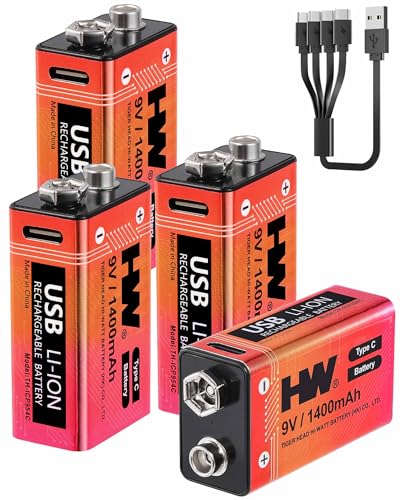
HW 1400mAh USB-C 9V Battery 4-Pack

PHILIPS 9V Lithium Battery 4-Pack

Hixon 9.6V LiFePO4 Battery 4-Pack with Charger

EGSMOR 9V 6LR61 Alkaline Battery 16-Pack

HW 1400mAh USB-C 9V Battery 8-Pack

HW 1400mAh USB-C 9V Battery 12-Pack
A Breakdown Of The Leading Choices
This Reoben pack belongs in a cordless-tool discussion rather than a 9-volt shortlist. Its 40-volt rating makes it intended to replace compatible Ryobi tool packs, a meaningful distinction from the household batteries that follow.
For a workshop using Ryobi routers, trimmers, saws, or blowers, the stated 7.5Ah capacity may reduce charging interruptions. You’ll need to check your tool’s voltage, connector, and model compatibility before ordering, since none of the 9-volt devices in this roundup can use it.
Positive Takeaways
- The 7500mAh capacity targets extended work sessions with compatible 40V tools.
- Compatibility is listed for several Ryobi 40V cordless-tool families.
- Using the correct charger helps maintain consistent pack performance.
Trade Offs
- Its 40V configuration makes it unusable for 9V household devices.
- Tool fit should be confirmed against the listed model numbers and charger.
Feature Snapshot
Made For
You’ll benefit most as a Ryobi 40V tool owner replacing a compatible high-capacity pack.
Look Elsewhere When
The HW 1400mAh USB-C 9V Battery 4-Pack suits household electronics rather than this 40V application.
A USB-C port built into each battery removes the separate charger from the setup. That convenience makes this four-pack practical for smoke detectors and household devices that operate on a standard 9-volt form factor.
Unlike the Reoben lead item, these batteries belong in low-voltage electronics. The stated 1400mAh capacity and charging-status light give you more control than disposable cells, though the four-pack size favors homes with a handful of devices rather than larger audio setups.
A Few Highlights
- USB-C charging reduces cable and charger clutter.
- The included multi-battery cable simplifies routine charging.
- Four cells provide a manageable rotation for compatible alarms and accessories.
- An LED indicator makes charging status easier to check.
Small Caveats
- Compatibility still depends on your device accepting rechargeable 9V cells.
- Charging batteries in small groups takes planning compared with disposable replacement.
Quick Facts
Who It Suits Best
This set fits you best with a few compatible household devices and a preference for simple USB-C charging.
A Better Fit Elsewhere
The HW 12-Pack offers a larger reserve for performers managing numerous wireless microphones.
These PHILIPS cells serve the opposite ownership need from the rechargeable sets: you buy them, use them, and replace them later. Their primary appeal is long storage life without requiring a charging routine, which can suit infrequently used clocks, toys, or household electronics.
Lithium chemistry can retain useful capacity during prolonged storage better than conventional alkaline cells, making these practical for emergency supplies. They are labeled as non-rechargeable, so placing them in a charger can create a safety hazard and shorten their service life.
Notable Gains
- Long shelf life suits backup drawers and rarely used devices.
- The claimed runtime advantage supports dependable household use.
- Four cells cover several compatible devices without charging.
Worth Noting
- They are non-rechargeable despite the broader roundup’s focus.
- Regular replacement adds ongoing waste compared with reusable cells.
- Device instructions may restrict lithium use in certain applications.
Right Fit For
You’ll like these batteries for low-drain standby use where long storage matters more than repeated charging.
Another Choice May Suit
The HW 1400mAh USB-C 9V Battery 4-Pack is more appropriate for devices you expect to cycle frequently.
The Hixon set targets people who use 9V batteries regularly and want a chemistry designed for repeated cycling. Lithium iron phosphate, abbreviated LiFePO4, is the battery chemistry here, distinguishing it from conventional nickel-metal hydride and alkaline options.
You’ll get four 9V cells plus a charger, which makes the set more self-contained than batteries requiring separate accessories. The stated cycle claim of more than 2,000 charges is compelling for alarms, microphones, and flashlights, though device voltage tolerance and physical fit still deserve checking.
The Practical Payoff
- The claimed cycle life suits frequently used household and audio equipment.
- Four cells support rotation across several devices.
- The included charger removes the need to source one separately.
- LiFePO4 chemistry emphasizes repeated charge and discharge use.
Practical Considerations
- A charger designed for ordinary 9V cells may not be appropriate.
- Some sensitive devices may not accept the stated 9.6V output.
- Storage temperature and charging practices can affect long-term cell condition.
Technical Highlights
Built With In Mind
This set suits people managing several compatible devices that drain replaceable 9V cells regularly.
Swap It Out When
The HW 4-Pack offers a smaller and more conventional rechargeable format for light household use.
The EGSMOR pack serves people who prefer immediate replacement over a rechargeable routine. Sixteen single-use cells create a useful reserve for game controllers, flashlights, clocks, toys, and other compatible equipment around a home or office.
Alkaline chemistry is familiar, inexpensive to replace, and easy to rotate, although it creates more discarded material than reusable batteries. The listed five-year shelf-life claim gives you flexibility to store unused cells, but date coding helps you manage freshness.
A Strong Showing
- Sixteen cells cover many household and office devices.
- A tight seal is designed to reduce leakage risk.
- Date coding helps track storage freshness.
- The broad operating-temperature range suits varied indoor storage.
Points To Note
- These batteries cannot be recharged.
- Frequent replacement generates more waste than rechargeable sets.
- Storage near heat can shorten usable shelf life.
Whose Shelf It Belongs On
You’ll appreciate this pack as a straightforward backup for mixed devices that use disposable 9V cells.
Where A Sibling Pick Shines
The Hixon LiFePO4 set better serves people seeking long-term reuse across frequently operated devices.
An eight-battery reserve fits a pedalboard populated by several compatible effects units. You can rotate cells between rehearsal, practice, and transport instead of concentrating all usage on one battery.
The 1400mAh rating and USB-C charging design build on the smaller HW four-pack. That added quantity helps musicians managing a full stage setup, but a rechargeable 9V cell introduces discharge monitoring and charging time that you avoid with disposable lithium options.
What Pays Off
- Eight cells support a multi-pedal setup.
- USB-C ports simplify charging at home or on the road.
- The included cable reduces the number of separate charging accessories.
- LED indicators make individual battery status easier to monitor.
- Rotating cells can extend listening sessions between charges.
Details To Watch
- Pedal compatibility should be confirmed before committing to rechargeable cells.
- Carrying eight cells adds more bulk than a small household set.
Feature Breakdown
Who Should Grab It
This battery set fits guitarists running several compatible effects units and tired of disposable cells.
Reach For A Different Pick When
The PHILIPS 9V Lithium Battery 4-Pack better suits rare-use devices where charging rotation is inconvenient.
Twelve cells give wireless-microphone users the deepest reserve in this rechargeable HW range. You can keep several microphones in rotation, share a charging cable, and reduce the interruptions that occur during rehearsals or productions.
The 1400mAh capacity matches the smaller HW packs, so the key difference is quantity rather than cell rating. Depending on your mic’s current draw, the larger set may feel excessive for casual home use, while active performers can spread charging across a full equipment kit.
Real Benefits
- Twelve cells support a broad wireless-microphone rotation.
- USB-C charging simplifies power preparation.
- The larger reserve reduces dependence on spare disposable batteries.
- LED indicators help separate charging from ready-to-use cells.
- Individually rechargeable units make it easier to replace one depleted battery.
Possible Compromises
- Storage space becomes tight for people using only one or two microphones.
- Charging all cells requires planning around a production schedule.
- Microphone voltage requirements should be checked before use.
Important Details
The Right Fit
You’ll gain the most from this set as a performer or production user managing several compatible wireless microphones.
Consider Something Else When
The HW 4-Pack is a more restrained choice for households needing a few cells for mixed devices.
What Matters Before You Choose
Confirm Voltage And Form Factor
A 9V label doesn’t guarantee equal behavior across every battery. Rechargeable options may output 9.6V, while disposable lithium cells use a different discharge profile. Check the device manual, battery dimensions, contacts, and any rechargeable-battery restrictions before ordering.
Match Capacity To Actual Drain
Capacity is measured in milliampere-hours, or mAh, which describes stored charge rather than guaranteed runtime. Smoke detectors and clocks may draw light current, while microphones and effects can demand more power. The same 1400mAh rating therefore supports different runtimes across different devices.
Decide Between Built-In Charging And A Separate Charger
USB-C cells are convenient for travel and small households because a common cable handles charging. Sets that require a dedicated charger take more setup but may be easier to organize as a complete system. Confirm that the supplied charger supports the battery chemistry and quantity.
Account For Pack Size
Small four-packs suit a few household devices. Eight or twelve cells reduce charging interruptions for pedalboards and wireless microphones, but they require more storage and planning. Choose the smallest quantity that comfortably covers your regular devices and expected rotation.
Rechargeable Battery Choices, Compared
Common Shopping Slip Ups
Don’t assume every device accepts rechargeable 9V batteries, since some equipment may require disposable lithium or alkaline chemistry. Ignoring the higher output of a 9.6V rechargeable cell can also lead to compatibility problems, especially with sensitive vintage equipment.
What The Higher Tier Buys
Higher-tier sets typically add battery quantity, specialized charging, or cycle-focused chemistry such as LiFePO4. Those features help people who rotate cells through demanding equipment, while a small household may get more value from fewer cells and a familiar USB-C setup.
Frequently Asked Questions
Are all 9V rechargeable batteries the same?
No. Capacity, chemistry, charging voltage, and physical design vary. Check the device instructions before choosing a rechargeable cell.
Can rechargeable 9V batteries power smoke detectors?
Only devices that explicitly permit rechargeable 9V batteries should receive them. Follow the detector’s replacement guidance and test procedure.
Are 1400mAh batteries better than alkaline cells?
They can provide useful runtime for compatible devices while allowing repeated charging. Performance still depends on device draw, battery condition, and usage patterns.
Does a higher capacity guarantee longer runtime?
No. Capacity indicates stored charge, while runtime also depends on device power consumption, battery age, temperature, and discharge behavior.
Can the Hixon batteries use a standard 9V charger?
Use only the specified or appropriate LiFePO4-compatible charging equipment. A generic charger may be incompatible with the battery chemistry or charging profile.
Final Verdict
Choose a small USB-C pack for a few compatible household devices, a larger HW set for pedalboards or wireless microphones, and the Hixon LiFePO4 option for frequent cycling. Disposable PHILIPS or EGSMOR batteries make more sense for long storage and minimal maintenance. Always verify voltage, dimensions, charging requirements, and device compatibility before making a recharge cycle part of your routine.
