


A smoke alarm battery turns a routine replacement into a small but important home maintenance task. The right 9V cell needs dependable power, a form factor compatible with your alarm, and a replacement schedule that suits your household. For frequent travelers, larger homes, or anyone managing several alarms, rechargeability and battery capacity matter alongside chemistry.
The seven options below cover rechargeable packs, disposable alkaline cells, lithium power, and bulk storage, with differences designed for different homes and device demands.
Your Options, Compared
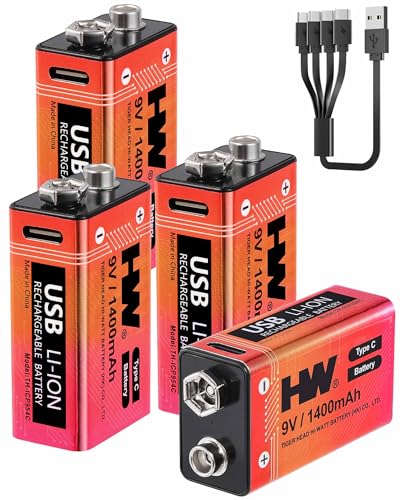
HW 9V Batteries 1400mAh USB-C 4 Pack

PROCELL 9V Alkaline Batteries 72 Count

Energizer Industrial Alkaline 9V Batteries 12 Count

Batteriol 9V Lithium Batteries 1200mAh 4 Pack

EBL 9 Volt Alkaline Batteries 4 Pack

HW 9V Batteries 1400mAh USB-C 8 Pack

HW 9V Batteries 1400mAh USB-C 12 Pack
Taking A Closer Look At The Options
A rechargeable four-pack suits homes where several alarms share a maintenance routine. Its 1400mAh capacity, meaning the charge held by each cell, gives you a reusable alternative to replacing disposable cells one at a time. The built-in USB-C ports and included four-in-one cable simplify charging, although your alarm’s battery guidance remains the deciding factor.
Compared with PROCELL’s disposable 72-count pack, this option trades reserve inventory for repeat use. For apartments, smaller homes, and anyone reducing recurring battery waste, that balance can be useful, provided the alarm accepts rechargeable 9V cells.
Standout Benefits
- Four cells support staggered smoke-alarm rotations.
- USB-C charging removes the need for a separate 9V charger.
- The LED indicator provides visible charging feedback.
- 1400mAh capacity supports longer reusable runtime.
Points To Note
- Rechargeable cells may not suit every alarm model.
- Four cells offer less reserve storage than a bulk pack.
Key Specs
Who It Suits Best
You benefit most in a small home with several compatible alarms and a preference for rechargeable maintenance.
A Better Fit Elsewhere
PROCELL 9V Alkaline Batteries 72 Count suits larger properties that favor disposable stock and minimal charging.
Seventy-two disposable cells make sense for landlords, caretakers, or large households managing many alarm locations. The count creates useful replacement inventory without requiring a charging station. PROCELL positions this line for professional equipment, including smoke detectors, carbon monoxide alarms, security panels, and other 9V-powered devices.
That same disposable format creates its main trade-off. Unlike HW’s rechargeable cells, these batteries become routine consumables, though their bulk packaging is more convenient for sites where replacement volume matters.
What Helps Most
- Seventy-two cells cover extensive maintenance needs.
- Alkaline chemistry suits common 9V devices.
- Broad use across alarms and security equipment.
Trade Offs
- Disposable cells create recurring replacement needs.
- Large packs require sensible dry storage.
- Overstock can be unnecessary for a small apartment.
Feature Snapshot
Made For
Property managers, facilities teams, and large households benefit from the high replacement count.
Consider Something Else When
HW 9V Batteries 1400mAh USB-C 4 Pack fits smaller homes that favor rechargeability over disposable inventory.
A twelve-count alkaline pack fits apartments and modest homes that want spare 9V cells without a large maintenance inventory. These batteries are listed for smoke detectors, transistor radios, and other compatible devices, giving the pack broader household utility. The date-coded cells also support inventory tracking through expiration dates.
Compared with PROCELL’s 72-count pack, this format is easier to store and less likely to leave excess cells in a drawer. The honest trade-off is less reserve coverage, which may matter more in a busy property than in a single-unit home.
Advantages To Know
- Twelve cells cover several routine replacements.
- Date coding assists replacement tracking.
- Mercury-free construction suits household use.
- Works with listed 9V devices.
Small Caveats
- The disposable format requires recurring purchases.
- Smaller quantity offers less backup for large homes.
Who Will Love This
Apartment residents and small households benefit from the moderate count and straightforward storage.
Another Choice May Suit
PROCELL 9V Alkaline Batteries 72 Count suits large properties that need a deeper replacement reserve.
Lithium chemistry makes this pack appealing for alarms and 9V accessories kept for extended periods. Its stated 1200mAh capacity provides substantial charge capacity, while the advertised 10-year shelf life is especially relevant for emergency replacements. The cells are disposable, so you avoid a charging routine but still schedule replacement checks.
For a home with mixed electronics, the broader device compatibility adds value beyond smoke alarms. Compared with the four-pack of rechargeable HW cells, Batteriol emphasizes storage convenience, while HW emphasizes repeated use.
Good Reasons To Consider
- A 10-year shelf life supports long-term storage.
- 1200mAh offers high disposable-cell capacity.
- Four batteries cover multiple 9V devices.
- Suitable for microphones and two-way radios.
Worth Noting
- Cells are not rechargeable.
- Long shelf life depends on proper storage.
- Lithium chemistry may cost more than alkaline.
Technical Highlights
The Right Fit
You gain the most from this pack in a home that stores spare batteries for alarms, radios, and audio gear.
Where A Sibling Pick Shines
HW 9V Batteries 1400mAh USB-C 4 Pack better serves households seeking reusable cells instead of disposable lithium replacements.
The EBL four-pack keeps home maintenance uncomplicated. Alkaline cells suit routine replacement in compatible smoke detectors and carbon monoxide alarms, while four units are enough for a small apartment or several devices around the house. The stated shelf life of up to seven years also makes unused cells practical to keep as backups.
Its versatility extends to toys, audio equipment, wireless microphones, and guitar pedals, though those uses may drain cells faster than an alarm. Compared with Batteriol’s lithium option, EBL offers a familiar disposable format, but it does not provide the same stated storage-life figure.
Well-Handled Touches
- Four cells handle routine alarm replacements.
- Up to seven-year shelf life supports backup storage.
- Alkaline chemistry works across several device types.
Practical Considerations
- Disposable cells need periodic replacement.
- Small quantity limits multi-device inventory.
- Storage life assumes appropriate handling.
Built With In Mind
Homeowners wanting a simple four-cell alkaline routine benefit most from this practical format.
Swap It Out When
Batteriol 9V Lithium Batteries 1200mAh 4 Pack suits households that prioritize a longer stated storage life.
Eight rechargeable cells make this HW pack more compelling for guitar pedalboards than the four-cell version. A pedal setup may draw power during rehearsals, recording sessions, and shows, while 1400mAh capacity supports extended reuse. USB-C charging and the included four-in-one cable help reduce the friction of maintaining several cells.
Smoke-alarm shoppers can still consider it for a large home, but its guitar-focused packaging gives the twelve-pack sibling greater inventory depth. Device compatibility deserves attention too, since not every alarm accepts rechargeable 9V batteries.
The Helpful Details
- Eight cells fit multi-pedal inventories.
- 1400mAh capacity supports repeated use.
- USB-C ports simplify charging.
- LED feedback displays charging status.
- Four-in-one cable handles multiple cells.
Details To Watch
- Compatible devices must accept rechargeable cells.
- Routine charging replaces disposable battery disposal.
- Capacity alone does not predict every device’s runtime.
Feature Facts
Who Should Grab It
Guitarists running several pedal effects benefit most from eight reusable cells and centralized charging.
Reach For A Different Pick When
HW 9V Batteries 1400mAh USB-C 4 Pack better serves a smaller home with fewer rechargeable devices.
Twelve rechargeable cells provide the deepest hardware inventory among the HW options. Wireless microphones, stage audio, and production equipment can rotate through the pack without reaching for disposable cells during every session. The 1400mAh capacity and built-in USB-C connections support that repeat-use approach.
For smoke alarms, twelve cells may be excessive in a small home, although the pack can cover several compatible alarms and other 9V equipment. Compared with PROCELL’s bulk alkaline pack, this option reduces replacement consumption but demands more charging discipline and compatible storage.
Everyday Wins
- Twelve cells support audio and production inventories.
- Rechargeable design avoids repeated disposable purchases.
- USB-C simplifies batch charging.
- LED indicators show charging status.
Where It May Fall Short
- The pack may be oversized for one alarm.
- Rechargeable compatibility varies by device.
- Twelve cells require organized storage and charging.
Quick Facts
Made For
Musicians and production teams benefit most from a large rechargeable reserve for wireless audio gear.
Look Elsewhere When
PROCELL 9V Alkaline Batteries 72 Count suits facilities that need disposable cells at much greater volume.
Choosing Rechargeable, Alkaline, or Lithium Power
The chemistry behind a 9V cell shapes how you maintain it. Alkaline batteries are disposable cells designed for straightforward replacement, lithium cells add long storage life but remain disposable, and rechargeable NiMH-type cells return to service through regular charging. Your alarm or device instructions determine which choices are appropriate.
Match The Chemistry To Your Routine
Disposable alkaline works well for households wanting familiar replacement behavior. Lithium makes the most sense for rarely used backups stored in dry conditions, while rechargeable cells suit people who want a predictable charging routine. Confirm device compatibility before making the switch, particularly with smoke alarms that may restrict battery chemistry.
Capacity Is Only Part Of The Decision
Capacity describes how much charge a battery can hold, expressed in milliampere-hours, or mAh. Higher capacity can support longer operation, but device design, age, temperature, and usage patterns also affect runtime. For smoke alarms, fit, chemistry guidance, and prompt replacement deserve more weight than a headline capacity figure.
Count The Devices You Need To Serve
A four-cell pack suits a smaller home with several compatible alarms or a limited collection of 9V gear. Eight cells make sense for pedalboards, while twelve better support wireless microphones and production equipment. A 72-count disposable pack serves large properties where maintaining a deep reserve matters more than avoiding repeated charging.
Practical Battery Selection Lessons
Where Shoppers Go Wrong
Avoid choosing solely by mAh or pack count, since the alarm’s battery instructions and connector requirements come first. Also account for storage conditions, rechargeability, and how many devices share the inventory; a large pack is useful only when the cells have compatible uses.
What Separates Rechargeable From Basic
Rechargeable cells add capacity and repeated use, while basic disposable packs prioritize simple replacement. The upgrade pays off for people who regularly power demanding 9V devices, but disposable lithium can be more practical for long-term emergency storage.
Frequently Asked Questions
Can You Use Rechargeable 9V Batteries In A Smoke Alarm?
Only use rechargeable batteries when the alarm or charging system explicitly supports them. Some alarm models require disposable 9V cells, so check the manufacturer guidance first.
How Often Should Smoke Alarm Batteries Be Replaced?
Follow the replacement interval printed in your alarm manual and heed low-power prompts. Replace the entire battery promptly when the alarm signals that service is due.
Is Higher mAh Better For A Smoke Alarm?
Higher mAh indicates greater stored charge, but compatibility matters more than capacity alone. A correctly sized approved battery is more suitable than a higher-capacity cell the alarm does not support.
Can Alkaline 9V Batteries Be Stored For Years?
You can store unused alkaline cells in a cool, dry place, but shelf life is not a guarantee of in-device service. Check expiration dates and rotate older stock.
Are Lithium 9V Batteries Better Than Alkaline?
Lithium cells are attractive for long-term storage and low-maintenance backups. Alkaline cells can still suit routine replacements, so choose based on device guidance, storage needs, and replacement frequency.
Final Verdict
The right battery comes down to compatibility, chemistry, and inventory size. HW’s rechargeable packs serve homes seeking repeat use, PROCELL and Energizer cover disposable replacement routines, and Batteriol emphasizes long storage life. Check your alarm’s instructions, match the chemistry, and keep a sensible replacement schedule.
