


An 8-cell setup suits households that cycle through rechargeable AA and AAA batteries for flashlights, remotes, toys, clocks, and small electronics. Capacity alone doesn’t tell the whole story, though: chemistry support, independent slots, status displays, and USB power requirements determine how well a charger fits your routine. These seven options range from compact four-slot units to eight-bay charging stations.
The Essentials At A Glance

Vidonergy 8-Bay USB-C AA AAA Battery Charger

Generic 4- or 6-Slot USB AA Charger

BEVIGOR 4-Bay AA AAA NiMH NiCD Charger with Type-C and Fault Detection
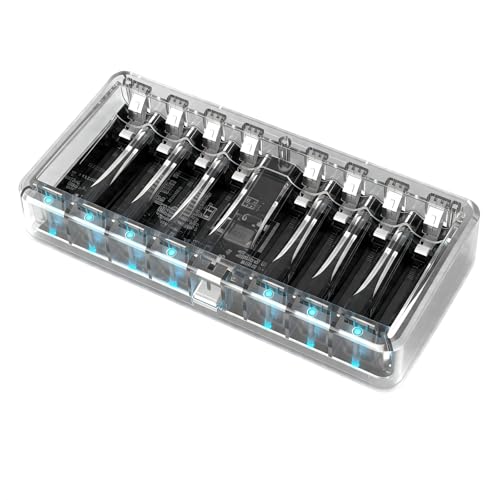
BEVIGOR 8-Bay AA AAA Charger, Charger Only

BEVIGOR 4-Bay AA AAA USB-C Charger with Overheat Protection

BEVIGOR 8-Bay AA AAA Charger
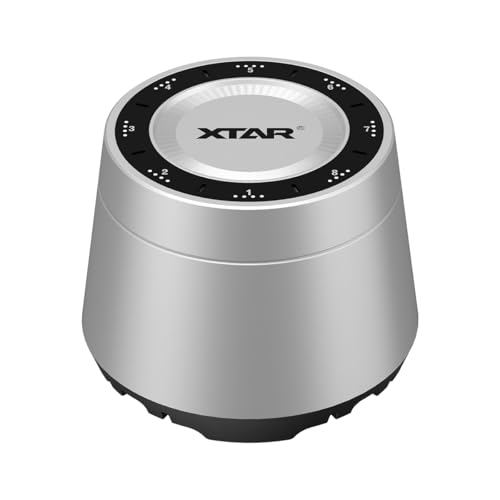
XTAR L8 Box Universal 8-Bay AA AAA Charger
Taking A Closer Look At The Options
Eight positions don’t always require a large charging base, and the Vidonergy unit measures only 7.6 by 5.8 by 7.1 cm. That footprint suits a crowded desk, a workshop bench, or a carry-on pouch where a full-size charging station would be awkward.
You can charge as many as six AA cells and two AAA cells at once, with separate outputs for the two sizes. The 15W USB-C input is notable, but your adapter must meet the stated power requirement. Compared with the larger eight-bay options ahead, this model prioritizes portability.
A Few Highlights
- Eight bays reduce the need to rotate batteries in matched pairs.
- Separate AA and AAA outputs support a mixed collection.
- Red, green, and thermal-status LEDs simplify monitoring.
- The reinforced nine-core cable should tolerate routine packing and handling.
- ABS housing keeps the unit light and easy to store.
Points To Note
- Batteries are not included, so existing rechargeable cells are required.
- A compatible 15W USB-C power source may add desk clutter.
- Owners should keep the vents unobstructed during charging.
Quick Facts
Made For
You benefit most from this compact charger when your desk or travel setup needs eight positions without a bulky base.
A Better Fit Elsewhere
The XTAR L8 Box serves you better when charging both 1.5V lithium-ion and 1.2V NiMH cells is essential.
Not every household needs eight charging positions, so the Generic charger offers four- and six-slot arrangements within the same listing. You can mix AA and AAA rechargeable cells, which makes the layout practical for a handful of high-use remotes, flashlights, or toys.
The charging light turns red while the charger operates, giving you a simple status cue without a screen. This model’s honest limitation is capacity: it falls short of the literal eight-cell focus, so it’s better viewed as a compact supplemental unit than a full household station.
Everyday Wins
- Mixed AA and AAA support covers common household formats.
- Short-circuit protection adds a useful electrical safeguard.
- Copper-plated contacts resist corrosion during regular use.
- Ventilation openings support heat dissipation.
Worth Noting
- The charger accepts 1.2V rechargeable AA and AAA cells only.
- The red indicator provides less detail than a multi-slot display.
- Six positions remain below the eight-cell capacity many families prefer.
- Cleaning around the contacts helps prevent poor connections.
Right Fit For
This option suits you best with a small AA and AAA collection and a straightforward charging routine.
Another Choice May Suit
The BEVIGOR 8-Bay AA AAA Charger, Charger Only better serves larger families that want all eight cells charging together.
BEVIGOR expands beyond the usual AA and AAA pairing with support for C and D rechargeable cells. NiMH and NiCD are established rechargeable chemistries, meaning you can organize several battery formats without maintaining a separate charger for each one.
Four independent slots also reduce the waiting created by incorrectly paired batteries. Fault detection is especially useful in mixed collections: a flashing red light alerts you to a damaged, misplaced, or non-rechargeable cell. You still need to use only supported rechargeable batteries.
The Good Stuff
- AA, AAA, C, and D support broadens household utility.
- Independent control lets each occupied slot operate separately.
- Per-slot fault alerts make battery problems easier to identify.
- USB-C input reduces cable clutter around the charging area.
Honest Caveats
- Four bays fall short of a full eight-cell charging session.
- Batteries are not included.
- You must confirm cell chemistry and voltage before insertion.
Feature Snapshot
Built With In Mind
You get the most from this charger while sorting rechargeable AA, AAA, C, and D cells for household equipment.
Look Elsewhere When
The Vidonergy 8-Bay USB-C AA AAA Battery Charger better serves you when eight compact charging positions matter more than C and D support.
An eight-slot layout gives you a straightforward place to recharge a full household rotation. The BEVIGOR model accepts any combination of one to eight AA or AAA NiMH and NiCD cells, so you can avoid repeatedly moving partially charged batteries into different positions.
Each bay operates independently, which helps mixed sets finish without forced pairing. The clear charging process makes this a sensible central station for a kitchen drawer, office, or hobby area, although the listing is charger-only and includes no cells.
Real Benefits
- Eight independent bays serve a full mixed battery rotation.
- Trickle charging near full capacity supports rechargeable-cell maintenance.
- AA and AAA flexibility avoids separate charging stations.
Some Limits To Know
- No rechargeable batteries are included.
- The available details do not identify USB-C power requirements.
- Use only NiMH or NiCD cells in the slots.
Core Details
Who It Suits Best
You benefit most from this model with several rechargeable AA and AAA cells used across different home devices.
Reach For A Different Pick When
The XTAR L8 Box serves you better when your collection combines 1.2V NiMH and 1.5V lithium-ion batteries.
Standard USB power gives this four-bay charger more flexibility than a fixed wall adapter. You can power it through a suitable wall adapter, power bank, laptop, or car charger, which makes it useful during travel or in locations with several USB outlets.
Four isolated circuits manage between one and four NiMH or NiCD cells without mandatory pairing. The stated charging time is about three hours for four 1800mAh AA cells. Compared with the eight-bay Vidonergy option, you trade capacity for a simpler portable power setup.
The Case For It
- USB-C power supports several everyday power sources.
- Independent circuits reduce waiting caused by paired batteries.
- Overheat protection adds a practical safety layer.
- NiMH and NiCD compatibility covers common rechargeable cells.
Practical Considerations
- Four slots limit full-family batch charging.
- A suitable USB-C power source isn’t included.
- Keep the charging area ventilated and dry.
Technical Highlights
Made For
You benefit most from this charger during travel or in a compact workspace where USB power is more accessible than a wall outlet.
Swap It Out When
The BEVIGOR 8-Bay AA AAA Charger better suits you when charging eight cells at once takes priority over portability.
The transparent eight-bay layout gives you a clear view of your battery collection, which helps you notice empty slots and mixed cell sizes. The listing also identifies a version bundled with four AA and four AAA cells, making that configuration convenient for households starting from scratch.
Because variants can differ, confirm the contents and charger details on the selected listing before ordering. The basic appeal is straightforward: one central base handles a larger family rotation instead of scattering batteries among several small chargers.
Why It Works Well
- Eight bays support a larger household battery rotation.
- The transparent housing improves slot visibility.
- A listed bundle can include four AA and four AAA cells.
- A single base reduces charging-clutter around the home.
Details To Watch
- Some variants exclude batteries.
- The visible details don’t establish lithium-ion compatibility.
- Confirm the power connection and included accessories before purchase.
- Keep the transparent base away from damp storage areas.
Who Will Love This
This eight-bay model suits you when visual organization and a large AA or AAA collection shape your charging needs.
Skip It When
The XTAR L8 Box better suits you when detailed slot displays and mixed lithium-ion and NiMH support matter most.
The XTAR L8 Box handles two rechargeable AA and AAA formats: 1.5V lithium-ion and 1.2V NiMH. That wider chemistry support separates it from the BEVIGOR models, which focus on NiMH and NiCD. You gain one organized home for cells collected from different devices.
Its LCD provides charging information for each position, while the stated charging time reaches eight lithium-ion cells in 2.6 hours. The box also stores cells together, reducing loose batteries around a kitchen, office, or workshop. Protection covers overcharging, overheating, and short circuits.
Practical Advantages
- Supports both 1.5V lithium-ion and 1.2V NiMH cells.
- The LCD removes the need to guess individual slot status.
- Charging and storage combine in one organized station.
- Eight-position capacity suits a broad rechargeable collection.
- Multiple protections improve everyday charging oversight.
Possible Compromises
- The stated 2.6-hour figure applies to eight lithium-ion cells.
- Battery chemistry and voltage must be checked before charging.
- A bulkier charging box may consume more counter space.
The Numbers That Matter
The Right Fit
You benefit most from the XTAR L8 Box when your collection includes both lithium-ion and NiMH rechargeable AA or AAA cells.
Where Another Pick Shines
The Vidonergy 8-Bay USB-C AA AAA Battery Charger better serves you who prioritize a much smaller footprint over mixed-chemistry support.
What Matters Before You Choose A Battery Charger
Match The Battery Chemistry First
AA and AAA describe a cell’s size, not its chemistry. NiMH and NiCD cells usually operate at 1.2V, while 1.5V lithium-ion cells use a different charging profile. A charger built for one format can reject or poorly manage another, so verify both voltage and chemistry before arranging your collection.
Count Slots By Your Largest Rotation
Eight bays suit households with many frequently used cells. Some models devote six positions to AA and two to AAA, while universal designs accept either format in every slot. You get the most value by matching capacity to your real collection instead of paying for empty positions you rarely use.
Check The Power Source
USB-C and USB power add placement flexibility because you can use an adapter, laptop, or suitable power bank. Input ratings still matter: a higher-watt charger may require a compatible supply. Check the stated input, the adapter you plan to use, and whether a cable is included.
Look For Useful Status Information
A single red charging light offers limited detail, while per-slot indicators help you identify an unfinished cell or occupied bay. LCD screens provide more precise charging visibility. Independent slots are also useful because they reduce the need to replace one partially charged battery merely to complete a pair.
Charging Details That Prevent Mistakes
Common Shopping Slip Ups
Cell size doesn’t determine rechargeable chemistry, so confirm voltage and chemistry before ordering. Check whether batteries and power adapters are included, because several listings are charger-only. Eight visible positions can also carry a fixed AA or AAA allocation rather than accept both sizes freely.
What The Higher Tier Buys
Advanced chargers add broader chemistry support, per-slot displays, clearer fault alerts, and stronger charging specifications. Those details matter for mixed collections or frequent battery turnover. A basic charger remains sensible for a few NiMH cells used in occasional household devices.
Frequently Asked Questions
Can One Charger Handle Both AA And AAA Batteries?
Yes, but you must insert each battery in a slot that supports its size and chemistry. Flexible bays accept either format, while fixed layouts dedicate certain positions to AA or AAA cells.
Are 1.5V Lithium-Ion Batteries The Same As NiMH Cells?
No. A 1.5V lithium-ion cell and a 1.2V NiMH cell have different voltages and charging characteristics. Use a charger explicitly compatible with both types, such as the XTAR L8 Box.
Do Eight-Bay Chargers Charge Batteries In Pairs?
It depends on the design. Independent charging lets each slot operate separately, while some lower-cost models may pair positions. Independent systems give you more scheduling flexibility.
Are Rechargeable Batteries Included?
Not consistently. Some listings offer batteries, while others include only the charger. Read the selected listing carefully, especially for variations that differ by bundle.
Wrap Up
An eight-cell charger works best when capacity, chemistry, and power access align with your routine. The XTAR L8 Box leads for mixed rechargeable formats, while the Vidonergy model stands apart for compact size. Choose based on the cells you already own and the charging station you can use consistently.
