


Eight-bay charging makes sense for households that cycle through AA and AAA cells for cameras, flashlights, toys, remotes, and wireless mice. The tricky part is finding a charger that suits your battery mix and charging routine. Some options manage only four cells, while larger stations organize as many as 24 and handle mixed battery types. The following comparisons highlight the practical differences that matter in real homes.
The Choices Worth Comparing

Panasonic eneloop BQ-CC63SBA 8-Position Charger

RECYKO 4-Bay Type-C AA AAA Charger

Ostation 2 Pro AA AAA Charging Station
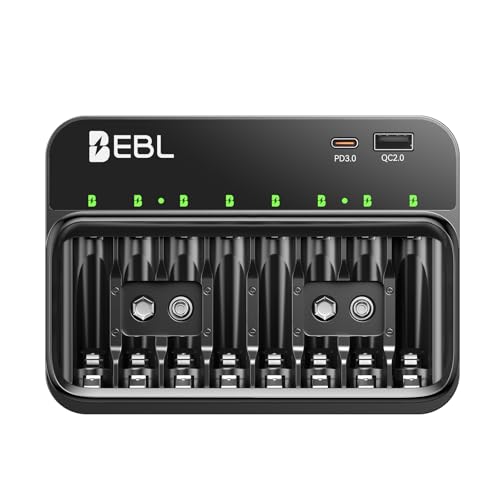
EBL PD 20W Multi-Battery Charger
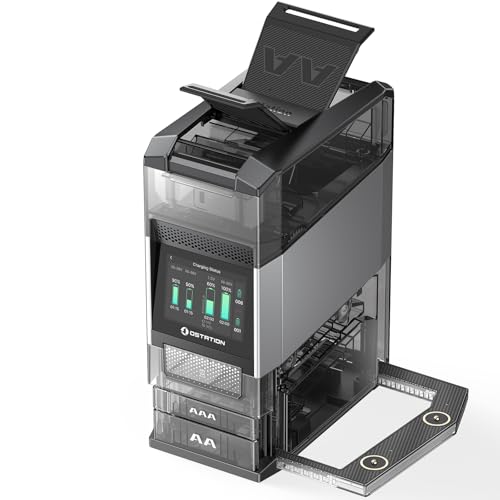
Ostation 2 Pro AA AAA Charging Station

Ostation 2 Smart AA AAA Charging Station

Ostation 2 AA AAA Station with Batteries
More Details On Our Top Picks
The BQ-CC63SBA brings order to an eight-cell charging routine without taking on the storage role of the larger Ostation stations. Individual positions let each cell charge according to its own remaining charge, so a partly used AA and an empty AAA can share the same run.
That setup suits households with several eneloop batteries spread among household remotes, cameras, and toys. It is less expansive than a 24-slot organizer, though the dedicated indicator lights make checking eight batteries much easier.
Why It Works Well
- Eight independent positions accommodate any combination of AA and AAA cells.
- Individual charging avoids forcing mixed charge levels into one shared process.
- Eight indicators show the status of each battery separately.
- The stated charging cycle reaches five hours for eight AA batteries.
Points To Note
- The charger focuses on eneloop batteries rather than providing a large storage station.
- Eight occupied positions can take longer than a smaller charger running several short groups.
Key Product Details
Made For
You benefit most from this model when your household already relies on eneloop AA and AAA batteries across several frequently used devices.
A Better Fit Elsewhere
Ostation 2 Pro suits you better when charging, testing, and storing as many as 24 cells in one station matters more than a dedicated eight-bay layout.
Four bays make this a practical choice for a small collection rather than a high-volume battery station. The Type-C connection reduces cable clutter and is convenient in a home office, travel bag, or shared charging area.
For gaming controllers, wireless mice, and occasional AA or AAA use, the format keeps charging straightforward. You give up the storage and sorting capacity that makes the Ostation models more useful for busy households.
Where It Excels
- Four independent bays handle partial AA and AAA loads without empty positions.
- USB Power Delivery compatibility supports modern Type-C power arrangements.
- The stated one-hour charging cycle suits quick turnaround needs.
- Green LEDs use flashing and solid states to communicate progress.
Minor Gripes
- Four positions may feel restrictive for a family maintaining more than eight rechargeable cells.
- Owners must verify battery chemistry compatibility, as NiMH, meaning nickel-metal hydride, differs from alkaline cells.
- Keeping the small charger accessible matters because loose batteries are easy to leave elsewhere.
Quick Facts
The Right Fit
This charger fits you best with a small set of rechargeable AA or AAA cells and a preference for a compact desk setup.
Another Choice May Suit
Panasonic eneloop BQ-CC63SBA offers a better fit for you because it doubles the individual bay count while retaining separate AA and AAA positions.
Twenty-four slots change the job from basic recharging to battery management. You can charge, test, and organize AA and AAA cells, reducing the loose collection that usually forms inside a busy kitchen drawer.
The Pro station is most convincing for households with many devices or professionals rotating cells through lights, meters, and small electronics. Your desk or workbench needs enough room for the larger footprint, which the four-bay RECYKO avoids.
Positive Points
- Twenty-four positions cover substantially more batteries than conventional eight-slot chargers.
- Built-in testing helps you identify cells that may no longer hold a useful charge.
- Smart sorting keeps charging tasks organized across the full station.
- Real-time monitoring gives a clearer view of battery status than a basic on-off light.
- Dual magnetic charging ports add value for compatible Olight flashlights.
Practical Considerations
- The station takes up more counter or shelf space than an eight-position model.
- Thermal-adaptive charging adds complexity that may be unnecessary for only a few occasional batteries.
Right Fit For
You gain the most from this station when regularly managing mixed AA and AAA batteries across a large collection of electronics.
Consider Something Else
RECYKO 4-Bay Type-C AA AAA Charger is the more practical choice for you when portability and a compact footprint outweigh large-scale storage.
The EBL expands beyond AA and AAA cells with a dedicated 9V option. Its eight small-cell positions or pair of 9V positions suit a mixed drawer containing remote-control batteries, flashlight cells, and older rechargeable models.
That flexibility distinguishes it from the eneloop BQ-CC63SBA, which concentrates on AA and AAA batteries. The EBL is a natural fit for a shared household station, provided the rechargeable cells use compatible NiMH or NiCD chemistry.
What Helps Most
- Eight AA or AAA positions cover the common household batteries used in remotes, mice, toys, and lights.
- Two 9V positions remove the need for a separate charger for that battery format.
- Individual charging supports a mixed collection with cells at different charge levels.
- USB Power Delivery adds a familiar power connection for compatible setups.
Details To Watch
- The 9V section and AA/AAA section serve different formats, so you may not use every position together.
- NiCD compatibility is useful for legacy equipment, but many newer households use only NiMH cells.
- Keep channels clear and dry because crowded household storage can hide dust around the bays.
Technical Highlights
Built With In Mind
This station serves you well when a household needs eight AA or AAA positions plus 9V support in one compact charging area.
Where A Sibling Pick Shines
Ostation 2 Smart fits you better when charging, polarity-free detection, and organized storage matter more than dedicated 9V battery charging.
The battery-management side of the Ostation 2 Pro becomes more useful as the collection grows. Twenty-four AA and AAA positions create a central home for cells used across gaming equipment, flashlights, toys, remotes, and household electronics.
Compared with the Panasonic eneloop charger, this station prioritizes organization and monitoring over a familiar eight-position layout. Depending on your available counter space, you may find that trade worthwhile.
Useful Strengths
- Twenty-four slots prevent large battery collections from spreading through drawers and cases.
- Testing functionality helps track weakening cells before moving them into regular service.
- Smart sorting supports a mixed AA and AAA collection without manual grouping.
- Thermal-adaptive charging is relevant to larger batches that remain connected longer.
Trade-Offs
- The broad management features go largely unused with only four or six batteries.
- Its footprint can crowd a small charging shelf.
- Dust can collect between many storage slots, so periodic dry cleaning is sensible.
Who Will Love This
You benefit most from this station when several people regularly exchange AA and AAA batteries among a wide range of devices.
A Better Fit Elsewhere
Ostation 2 AA AAA Station with Batteries fits a new rechargeable setup better when you want a larger collection organized from the outset.
Polarity-free handling removes much of the guesswork associated with inserting rechargeable cells. Auto detection and sorting make this a comfortable choice for gaming accessories, smart-home remotes, and mixed household battery routines.
The twenty-four-slot layout carries the same organization benefits as the Pro station. For a smaller setup, the added detection features may feel oversized, but a household with many cells can use the capacity more regularly.
Where It Delivers
- Polarity-free handling reduces the need to check each cell’s orientation.
- Auto detection adapts to a mixed selection of supported batteries.
- Twenty-four positions combine charging with an organized home for AA and AAA cells.
- Compatibility across NiMH and Ostation lithium formats suits mixed-brand collections.
- Real-time monitoring reduces uncertainty while a large group recharges.
Points To Keep In Mind
- Smart features make more sense after your collection outgrows a small four-bay charger.
- You should confirm that every battery format in your drawer belongs on the supported chemistry list.
- Regularly clearing the larger organizer helps maintain access to individual positions.
Feature Snapshot
Made For
This model suits you best when you manage many supported batteries and want easier placement, sorting, and charging in one station.
Another Choice May Suit
EBL PD 20W Multi-Battery Charger serves you better when dedicated rechargeable 9V positions matter more than 24-slot AA and AAA organization.
Pairing the station with a substantial battery set gives you a functional charging and storage routine from the outset. That convenience matters for a new game controller setup, a large remote-control household, or a collection of rechargeable flashlights.
Compared with the separate Ostation 2 Pro option, this package is the more straightforward starting point for a household building a reusable battery inventory. Confirm the included battery count and chemistry on the listing before planning around individual device requirements.
What Stands Out
- The battery bundle reduces the need to assemble a full collection separately.
- Twenty-four positions create room for AA and AAA cells across multiple device categories.
- Sorting and real-time monitoring support routine battery maintenance.
- Compatibility with supported NiMH and Ostation lithium batteries supports mixed charging tasks.
Worth Bearing In Mind
- A larger package can duplicate batteries you already own, so check your existing inventory first.
- Twenty-four positions may exceed the needs of a small apartment or occasional battery user.
- Labeling battery groups helps preserve useful organization as the collection grows.
The Details
Whose Shelf It Belongs On
This package fits you best when you want an established AA and AAA charging system without assembling every battery separately.
Reach For A Different Pick
Panasonic eneloop BQ-CC63SBA is the better fit for you when eight independently controlled positions and eneloop-focused charging outweigh bulk battery storage.
Choosing the Right Battery Management Setup
Match Capacity to Your Actual Collection
An eight-position charger serves a modest AA and AAA collection, while a 24-slot station suits households rotating batteries through many devices. Count your regularly used cells rather than every loose battery in a drawer. This prevents you from paying for storage capacity you may never fill.
Check Battery Chemistry and Size
NiMH is the main rechargeable format in this group, while some options also accept NiCD or supported lithium cells. Chemistry compatibility matters because charger controls must match the battery design. Check size support too, especially when the charger also offers a dedicated 9V section.
Separate Charging From Storage
A basic charger replenishes cells, but a larger station can also test, sort, and organize them. You gain convenience from storing charged batteries in their assigned positions. The trade-off is additional size, more controls, and more surface area to clean.
Consider Charging Speed Carefully
A shorter stated charging cycle helps during busy periods, but speed alone does not determine suitability. Cell chemistry, capacity, and the charger’s electrical design all matter. Choose the model that best matches your supported battery types rather than selecting solely by timing.
Practical Charging Decisions
Mistakes Worth Dodging
Counting available slots alone can leave you with the wrong charger. Check chemistry, AA or AAA size, connector requirements, and storage space before choosing. Avoid combining disposable alkaline cells with rechargeable charging stations, and keep loose batteries away from moisture and debris.
What Separates Premium From Basic
The larger Ostation stations add sorting, testing, monitoring, and as many as 24 positions. That extra capacity helps busy households manage collections in one place. A smaller charger remains more practical for a few batteries, a limited shelf, or frequent travel.
Frequently Asked Questions for 8 Bay Smart Battery Chargers
Can an eight-bay charger mix AA and AAA batteries?
Panasonic BQ-CC63SBA supports mixed AA and AAA charging across its eight independent positions. Check the supported formats and chemistry of other chargers, especially models dedicated to a specific battery family.
Are four-bay chargers suitable for large families?
You can use a four-bay charger across multiple groups, but it requires more frequent charging sessions. A 24-slot station offers better organization for homes continuously rotating batteries among many devices.
What does polarity-free charging mean?
Polarity-free charging removes the need to align a battery by its positive or negative terminal. Ostation 2 Smart uses this approach alongside automatic battery detection to simplify placement.
Can AA and AAA chargers handle 9V batteries?
Only chargers with a dedicated 9V charging position are suitable for 9V cells. EBL PD 20W Multi-Battery Charger supports up to two rechargeable 9V batteries alongside its AA and AAA positions.
How many batteries can the Ostation stations hold?
The listed Ostation 2 and Ostation 2 Pro stations accommodate up to 24 AA or AAA batteries. Capacity alone does not guarantee compatibility with every chemistry, so confirm your battery types before charging.
Closing Verdict
Choose the Panasonic for eight independently managed eneloop positions, the RECYKO for a compact Type-C setup, or the EBL for 9V flexibility. The Ostation options make the most sense when you need charging, testing, and organized storage for a large battery collection. Match the charger to your existing cells rather than the other way around.
