


A Group 78 battery commonly serves cars, light trucks, and vans, but the shortlist also includes several powersports batteries with different dimensions and electrical requirements. The confusion starts with similar-looking model numbers that may not share a case size, terminal arrangement, or cold-cranking rating. This guide narrows the field by fitment, power output, chemistry, and practical ownership demands, helping you choose the correct replacement for your vehicle.
The Picks In Brief

Odyssey Batteries 78 PC1500-A Automotive Battery

Interstate MTP-78 Group 78 Battery 800 CCA
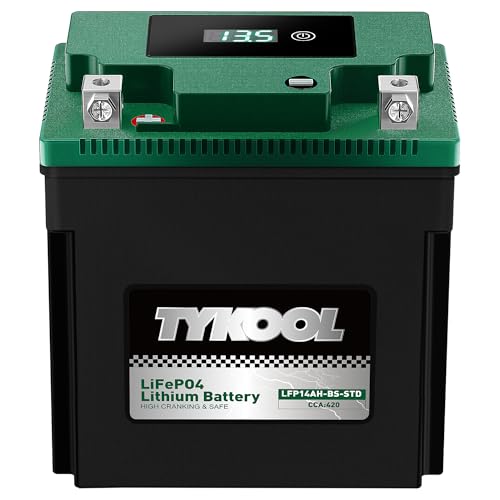
TYKOOL YTX14AH-BS-STD LiFePO4 Battery 7Ah

TYKOOL LFP14AHL-BS-STD Lithium Battery 7Ah

Odyssey ODYODX-AGM3478 Automotive Battery

TYKOOL LFP9-BS-STD Lithium Battery 4Ah

TYKOOL LFP14AH-BS-PRO Lithium Battery 8Ah
A Breakdown Of The Leading Choices
The PC1500-A focuses on sustained electrical capacity, a useful trait for light trucks and vans carrying climate controls, heated equipment, and other electronics. Its plates use pure virgin lead rather than the lead alloy common in conventional batteries, allowing more plate material within the case. For daily commuting or commercial work, that extra capacity can be meaningful, although case dimensions and terminal placement still control whether it fits.
Compare that approach with the Interstate MTP-78, which presents a more familiar Group 78 replacement format with explicit compatibility details. The Odyssey option may appeal more to people prioritizing plate area over lithium chemistry, particularly where charging equipment and installation practices favor traditional lead-based systems. The honest read is that this is a strong fit for power-hungry road vehicles, not a general substitute for the smaller powersports options later in the list.
Bright Spots
- Pure lead plates provide more active material than a typical alloy-based design.
- The larger plate area supports vehicles with several electrical accessories.
- Its Group 78 positioning suits compatible automotive and light-truck applications.
Small Caveats
- Installation requires an exact dimensional and terminal-position match.
- Owners should keep terminals clean and monitor the battery during routine servicing.
Key Attributes
Built With In Mind
This battery suits commuters and light-truck operators with a confirmed Group 78 case fit and substantial accessory loads.
A Better Fit Elsewhere
TYKOOL LFP14AH-BS-PRO offers a lighter lithium alternative for compatible ATVs, UTVs, and motorcycles.
The MTP-78 takes the most conventional path through this list: a 12-volt Group 78 battery with 800 cold-cranking amps, a measure of starting output under defined cold conditions. Its compatibility spans more than 2,000 listed year, make, and model combinations, which makes it useful for broad vehicle research, though you still need to verify the manufacturer’s recommended battery.
For daily cars, SUVs, trucks, and cargo vans, that breadth provides an advantage over the TYKOOL powersports batteries, which serve entirely different case formats. Fitment still deserves careful attention, especially around terminal orientation and battery dimensions. Assuming your vehicle truly requires an MTP-78, this is a refreshingly straightforward option with enough output for routine starting demands.
What Earns Its Place
- The 800 CCA rating provides ample starting output for many road vehicles.
- A listed fitment range covers more than 2,000 vehicle configurations.
- Its standard 12-volt format suits familiar automotive charging systems.
Worth Noting
- Vehicle compatibility does not replace a physical case-size check.
- Terminal corrosion can restrict starting, so periodic cleaning remains important.
- A 30-month coverage term should not be confused with the battery’s service life.
Feature Snapshot
Made For
Daily drivers need a confirmed MTP-78 replacement and want straightforward cold-weather starting capability.
Look Elsewhere When
Odyssey ODYODX-AGM3478 better serves compatible applications requiring 850 CCA and both top and side terminals.
Trail machines place a premium on starting output and weight, which the YTX14AH-BS-STD addresses with 7Ah of lithium iron phosphate capacity and a 420 CCA rating. At 3.10 pounds, it weighs substantially less than the 11-pound lead-acid battery cited for comparison. That reduction can matter more during technical trail riding, where steering response and carrying weight influence how a vehicle feels over rough ground.
Unlike the Group 78 automotive options, this battery is aimed at motorcycles and powersports vehicles using the YTX14AH-BS format. The digital readout is a useful ownership detail, while polarity must be checked because the listed orientation is positive then negative. Its broader compatibility with ATVs, UTVs, and snowmobiles makes it useful, but the case and charging system must match.
Practical Pluses
- 420 CCA supports quick cranking in large single-cylinder and V-twin engines.
- The 3.10-pound construction reduces carried weight during trail use.
- A digital readout provides a convenient voltage reference during storage checks.
- Seven amp-hours offer useful capacity for accessories and repeated starts.
Practical Considerations
- Lithium chemistry requires compatibility with the vehicle’s charging system.
- Polarity and the listed 5.31-by-3.50-by-6.54-inch case need confirmation before installation.
Right Fit For
Trail riders with a confirmed YTX14AH-BS application benefit from strong cranking output and reduced battery weight.
Swap It Out When
TYKOOL LFP9-BS-STD is the more suitable option for compact motorcycles requiring a 4Ah YTX9-BS-format case.
The LFP14AHL-BS-STD is not a generic YTX14AH substitute. Its identifying detail is the YTX14AHL-BS case, which appears in applications including the Kawasaki KLR650, Suzuki Boulevard S40, and Royal Enfield fitments listed for the battery. That specificity makes it a sensible lithium conversion for compatible motorcycles, ATVs, and scooters, especially where reducing the roughly 11-pound lead-acid weight is desirable.
Charging compatibility deserves more attention here than physical appearance. The source specifies a qualified regulator below 15 volts, a recommended charging level of 14.4 volts with a 0.2-volt tolerance, and a dedicated lithium iron phosphate charger rather than a lead-acid pulse-repair unit. That makes installation less interchangeable than the broad compatibility lists may initially suggest.
Reasons It Performs
- The 420 CCA rating supports strong starting performance in compatible engines.
- Lithium construction substantially reduces weight compared with the cited lead-acid design.
- The digital readout simplifies routine voltage checks.
Factors To Consider
- The listed negative-then-positive polarity must match your terminal arrangement.
- An incompatible charger can prevent the battery from operating as intended.
- YTX14AHL-BS and YTX14AH-BS are distinct formats, so the final letter matters.
Core Details
Who Will Love This
This battery suits riders with a confirmed YTX14AHL-BS application, compatible charging system, and a preference for reduced weight.
Another Choice May Suit
TYKOOL YTX14AH-BS-STD fits owners who need the shorter YTX14AH-BS format rather than the longer AHL case.
The AGM3478 stands apart through 850 CCA and a terminal layout offering both top posts and threaded side posts. AGM, or absorbed glass mat, technology holds electrolyte within fiberglass mats, a design commonly associated with resistance to vibration and stable starting performance. Those attributes can make sense in work trucks, vans, and road vehicles carrying substantial electrical demand.
Its 10.80-by-7.80-by-7.00-inch case is substantial, so installation clearance needs attention in tight engine compartments. This model also carries the awkward AG3478 model designation rather than a conventional Group 78 name. The fitment question is therefore specific: a vehicle requiring this case and terminal arrangement may benefit, while an MTP-78 installation calls for Interstate MTP-78.
The Upside
- The 850 CCA rating provides greater cold-starting output than the 800 CCA Interstate option.
- Top posts plus threaded side posts expand connection options for compatible vehicles.
- AGM construction is well suited to vibration-prone road use.
Details To Watch
- Confirm clearance for the 10.80-inch length and 7.80-inch height.
- Terminal adapters may be needed for a connection geometry different from the vehicle’s original setup.
Feature Facts
Best Suited To
Work-truck and van operators benefit from high cold-cranking output and flexible terminal positioning in a confirmed AGM3478 installation.
Where A Sibling Pick Shines
Interstate MTP-78 fits a broader Group 78 replacement scenario and offers a simpler match for compatible standard automotive layouts.
Compact sport motorcycles often lack the battery space available in an ATV, and the LFP9-BS-STD answers that problem with a 4Ah lithium iron phosphate case measuring 5.91 by 3.43 by 3.66 inches. Its 240 CCA rating gives smaller engines the cranking support they need, while listed applications include the Kawasaki Ninja 400, Honda CBR600F4i, KTM Duke 390, and several Suzuki models.
That application list is useful only after checking your exact motorcycle and its specified battery. Unlike the 7Ah TYKOOL options, this unit prioritizes lower weight and a smaller envelope over longer reserve capacity. The IP66 rating indicates resistance to dust ingress and water jets under specified conditions, which is reassuring during wet rides, although it does not make the battery waterproof.
The Good Stuff
- The compact 4Ah format suits space-conscious sport motorcycles.
- 240 CCA provides dedicated starting output for compatible smaller engines.
- The digital voltage display helps identify charge state during routine checks.
- IP66 protection supports use in dusty or wet riding conditions.
Honest Caveats
- The listed positive-then-negative orientation must match the wiring arrangement.
- Four amp-hours is less capacity than the 7Ah and 8Ah TYKOOL alternatives.
- Charging-system compatibility remains essential for a lithium installation.
Who Should Grab It
Riders with a confirmed YTX9-BS application benefit from this compact option, particularly where reduced weight and a tight battery tray leave little room.
Reach For A Different Pick When
TYKOOL LFP14AH-BS-PRO offers greater capacity and 480 CCA for larger powersports applications.
The PRO model raises the stakes within the YTX14AH-BS family, combining 8Ah of capacity with a 480 CCA starting rating. That additional output distinguishes it from the 7Ah TYKOOL YTX14AH-BS-STD while preserving the same 5.31-by-3.50-by-6.54-inch case. For compatible Polaris, Kawasaki, motorcycle, ATV, or UTV applications, the extra headroom may suit heavily equipped machines or repeated starting use.
At 3.20 pounds, it retains the weight advantage associated with lithium chemistry, which can make a practical difference over technical terrain. You still need a stable mounting point, matching cables, and a charging system suited to lithium batteries. Compared with the smaller LFP9-BS-STD, this is the more substantial option rather than the more universal compact one.
A Strong Showing
- Eight amp-hours provides more reserve capacity than the 7Ah alternatives.
- The 480 CCA rating supports demanding starting conditions.
- A 3.20-pound weight limits the penalty commonly associated with battery replacement.
- The digital readout assists with storage and ride checks.
Possible Compromises
- Lithium charging requirements can complicate an otherwise direct swap.
- The battery needs a secure fit in the same YTX14AH-BS case format.
Quick Technical Notes
Built For High-Demand Rides
Powersports riders with a confirmed YTX14AH-BS fitment benefit from the higher capacity and cranking output of this model.
Not Your Match When
TYKOOL YTX14AH-BS-STD is the lighter-cost option for compatible users who find 7Ah sufficient.
Matching Battery Size And Electrical Needs
Start with the physical replacement requirement, not the number printed in the listing title. A group number describes a standardized case category, but it does not guarantee identical terminal placement, polarity, or clearance. Measure the existing battery and compare the hold-down area as well as the case footprint.
Confirm Voltage And Cranking Needs
Cold-cranking amps, abbreviated CCA, measure starting output under a defined low-temperature condition. Higher values can benefit vehicles operating in cold climates or carrying heavy electrical loads, but exceeding the manufacturer’s recommendation does not automatically improve the electrical system. Match the required voltage, polarity, and starting specification to the vehicle.
Check Chemistry Carefully
Lead-acid, AGM, and LiFePO4 batteries use different charging characteristics. LiFePO4 reduces weight substantially, yet a compatible charger and vehicle regulator remain essential. On a long ride, carrying a lithium battery without a suitable charging path can turn a low-mass advantage into an inconvenient roadside problem.
Account For Capacity And Access
Capacity, measured in amp-hours, indicates stored electrical energy rather than engine size alone. Higher capacity can support more accessories and repeated starts, but it usually requires a larger or heavier case. You also need room for terminals, cables, ventilation, and a secure hold-down without crowding nearby components.
Battery Mistakes Worth Avoiding
Common Shopping Slip Ups
A model number alone rarely settles compatibility. Group 78, YTX14AH-BS, YTX14AHL-BS, and YTX9-BS describe different physical and electrical requirements, so using one as a substitute for another can create installation or charging problems. Always compare dimensions, polarity, terminal position, and the vehicle manufacturer’s specification.
What The Higher Tier Buys
The Odyssey ODYODX-AGM3478 adds 850 CCA and two terminal-location choices, while the TYKOOL LFP14AH-BS-PRO raises lithium capacity to 8Ah and output to 480 CCA. Those upgrades matter when the vehicle requires the extra capability, while routine users may gain little from a larger or more specialized design. Fitment and charging compatibility remain more important than headline numbers.
Frequently Asked Questions
Does Group 78 Fit Every Battery Shaped Like One?
No. Group size defines a case category, while terminal placement, polarity, dimensions, and electrical requirements can still differ. Confirm the exact model recommended for your vehicle.
Can A LiFePO4 Battery Replace A Lead-Acid Unit?
Sometimes, but only where dimensions, polarity, capacity, and charging conditions are compatible. A dedicated LiFePO4-compatible charging setup is important for long-term operation.
What Does 420 CCA Mean?
CCA is a standardized measure of starting output under cold conditions. A 420 CCA battery offers more rated starting capacity than a 240 CCA unit, but your vehicle must support the battery’s electrical requirements.
Are The TYKOOL Batteries Interchangeable?
No. YTX14AH-BS, YTX14AHL-BS, and YTX9-BS describe distinct formats. Check the full case, polarity, capacity, and charging system before choosing among them.
Does More CCA Guarantee Longer Battery Life?
No. CCA describes starting output, not total lifespan. Capacity, chemistry, charging compatibility, heat, vibration, and maintenance also affect ownership experience.
Final Thoughts
For a confirmed Group 78 installation, Interstate MTP-78 offers the most straightforward compatibility path, while Odyssey ODYODX-AGM3478 makes sense for the specific high-output, dual-terminal layout it provides. The TYKOOL choices belong to a different category, selected for confirmed YTX-series powersports fitments rather than automotive Group 80 applications. Match the case, terminals, polarity, and charging system before choosing.
