


A 6V motorcycle battery charger matters most during long storage, after wet weather, and before a long trip. A low-current charger can preserve a battery without delivering the abrupt charging current of a large garage unit, while a multi-voltage model gives you more flexibility across motorcycles, ATVs, lawn equipment, and classic vehicles. Battery chemistry, charging stages, and connector fit deserve as much attention as the amp rating. The seven options below cover compact maintainers, multi-unit packs, automatic chargers, and wheeled workshop models.
A Fast Comparison Of The Options

Battery Tender Plus 12V 1.25A Maintainer

NEXPEAK 4-Pack 1.75A 6V/12V Smart Charger

CARSHAM 4-Pack 6V/12V Smart Maintainer

Heagstat 2A/5.5A 6V/12V Smart Charger
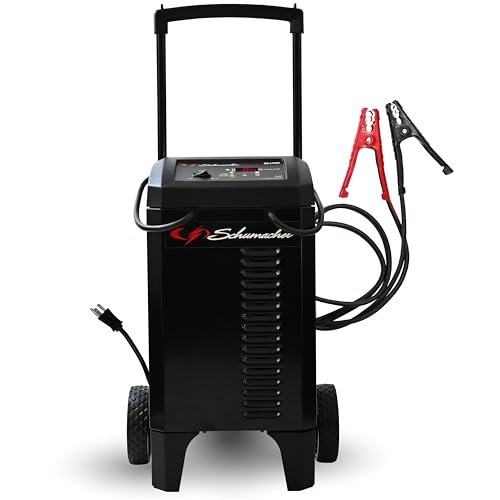
Schumacher SC1400 6A Wheeled Charger

Schumacher SC1446 10A Wheeled Charger

Schumacher SC1445 6/12V 250A Starter/Charger
Meet The Standout Selections
Battery Tender Plus suits motorcycles and powersports with 12V batteries left idle through winter or an extended trip. Its 1.25A output favors patient maintenance over heavy recovery, which makes it more appropriate for a healthy battery than a deeply depleted one.
The four-step charging sequence adapts as the battery changes state, while float charging reduces the risk of continually adding current after the battery reaches a maintained level. Compared with the NEXPEAK four-pack, it serves one vehicle at a time and does not support 6V batteries.
Why It Works Well
- Low 1.25A output suits routine storage maintenance.
- Automatic stages reduce the need for frequent manual adjustments.
- Fits common 12V motorcycle, ATV, and lawn-equipment batteries.
Points To Note
- It is a 12V unit, so it cannot charge a 6V battery.
- A severely depleted battery may require a higher-current charger.
- Long-term cable placement requires protection from moisture and pinching.
Quick Facts
Who It Suits Best
You get the most benefit with a 12V motorcycle that parks for weeks and needs steady storage support.
A Better Fit Elsewhere
Owners of genuine 6V systems get a more appropriate choice from the Heagstat 2A/5.5A 6V/12V Smart Charger.
Four chargers make the NEXPEAK useful for households with several stored motorcycles, ATVs, boats, lawn mowers, or cars. Each unit handles 6V and 12V lead-acid batteries, including common flooded, gel, AGM, SLA, and VRLA types.
The 1.75A rate is conservative for maintenance, and the LCD provides a clearer view of charging status than many basic maintainers. Unlike Battery Tender Plus, this package also accommodates classic 6V equipment, but you must select the correct voltage before connection.
Practical Pluses
- Four units allow simultaneous storage charging.
- The display shows charging progress without guesswork.
- Dual-voltage support covers a broad equipment mix.
- Lead-acid compatibility includes several common constructions.
Small Caveats
- The modest current prioritizes maintenance over rapid recovery.
- Four separate leads and connectors require organized storage.
- Automatic operation still depends on selecting the battery chemistry and voltage correctly.
Feature Snapshot
Built With In Mind
You benefit most with several 6V or 12V vehicles stored at the same property.
Consider Something Else
One motorcycle and limited storage space make CARSHAM’s 4-Pack 6V/12V Smart Maintainer more proportionate.
CARSHAM broadens the storage-charger category by handling 6V and 12V sealed lead-acid batteries along with 12V LiFePO4 batteries equipped with a battery management system. That chemistry range helps households moving between older vehicles and modern lithium installations.
The four-unit format covers motorcycles, tractors, scooters, snowmobiles, campers, boats, and other equipment. Compared with NEXPEAK, lithium charging is the clearer distinction, although lead-acid repair language should be treated cautiously because a maintainer cannot reverse every form of battery damage.
Useful Highlights
- Supports common 6V and 12V sealed lead-acid batteries.
- Charges 12V LiFePO4 batteries that include a BMS.
- Four units suit larger collections of stored equipment.
Trade-Offs To Consider
- LiFePO4 support is limited to 12V batteries with a battery management system.
- Maintainer charging is gentler than a high-current recovery setup.
- Owners commonly need to route multiple cords neatly to prevent wear or tangling.
Made For
You get strong utility from mixed lead-acid and managed lithium equipment, particularly across a large garage collection.
Look Elsewhere
For a single storage location, the Battery Tender Plus offers a more focused 12V maintenance approach.
Heagstat sits between a small maintainer and a heavier workshop charger, with selectable 2A and 5.5A rates for 6V or 12V use. It suits a motorcycle that spends weeks unattended but occasionally needs a more assertive recovery session before storage.
Its eight stages include testing, desulfation, soft start, bulk charging, absorption, analysis, float, and pulse maintenance. Desulfation is a corrective charging phase intended to address sulfate buildup, while soft start gradually raises current for a more controlled beginning.
Reasons It Performs
- Two current settings serve both maintenance and stronger recovery.
- Six-volt and 12-volt operation covers classic and modern batteries.
- Five listed modes include slow, fast, winter, and LiFePO4 options.
- Year-round storage is supported by float and pulse stages.
Less Ideal Details
- Mode selection demands attention to the battery’s label.
- A single unit cannot maintain several vehicles simultaneously.
- More stages add complexity for first-time charger users.
Technical Highlights
Who Will Love This
You’ll appreciate the adjustable current while maintaining one 6V battery or a lightly used 12V powersport battery.
Reach For A Different Pick
Owners managing several stored vehicles get more convenience from NEXPEAK’s four individual 1.75A chargers.
Schumacher’s SC1400 brings garage-level charging power and wheels to a larger vehicle collection. Its 6A output is more substantial than the compact maintainers, although that also makes it less restrained for an already-full motorcycle battery.
The unit combines charging, maintaining, reconditioning, and engine-starting functions in a movable format. That versatility suits a garage shared with cars, tractors, and farm equipment, but the supplied vehicle-class charging data does not establish 6V compatibility, so confirm the battery voltage before connection.
Everyday Wins
- Wheels make movement around a garage easier.
- The 6A rate offers more recovery capability than low-current maintainers.
- Charging and starting functions serve mixed workshop tasks.
Things To Consider
- The size and weight exceed the compact options in this list.
- Its size may outpace a one-bike maintenance need.
- Lead placement around moving vehicles and walkways requires care.
Built With In Mind
You get the most benefit in a busy garage that also charges larger 12V vehicles and equipment.
A Better Fit Elsewhere
A compact storage shelf makes the Heagstat 2A/5.5A 6V/12V Smart Charger easier to manage.
Manual controls make the SC1446 feel more like workshop equipment than an automatic maintainer. That can be useful with older tractors, neglected 12V equipment, or batteries that automatic detection may not recognize as chargeable.
The 10A current gives it substantially more recovery capability than the SC1400’s 6A setting, but the trade-off is additional operating responsibility. You control the sequence instead of relying on a fully automatic program, and the wheeled format helps during garage moves.
The Value In It
- Ten-amp output supports stronger battery recovery.
- Manual operation gives you direct control over charging.
- Wheels support a working garage rather than shelf storage.
Practical Considerations
- You must understand battery condition and charger controls.
- Its size is excessive for routine motorcycle-topping needs.
- The supplied vehicle-class description does not confirm 6V operation.
Core Details
Right Fit For
You get a sensible fit when restoring neglected 12V equipment and prefer hands-on charger controls.
Swap It Out
Long-term unattended maintenance points you toward the Battery Tender Plus 12V 1.25A Maintainer.
The SC1445 is the heavy workshop choice here, combining 6V and 12V battery charging with a 250A engine-starting function. The starter figure applies to engine starting, not sustained battery charging, while the charger supplies a more restrained 10A output.
That split makes the unit relevant to garages with motorcycles, cars, tractors, and other equipment needing both battery recovery and starting assistance. Compared with the SC1446, it adds a 6V setting and starting capability, at the cost of more size, power, and operating complexity.
Everyday Advantages
- Six- and 12-volt charging cover a wider equipment range.
- The 250A starting function assists larger engine starting jobs.
- Ten-amp charging provides useful recovery output.
- Wheels support movement around a working shop.
Small Limitations
- Its size is excessive for one stored motorcycle.
- Manual operation calls for care with battery and control selection.
- Heavy leads require dry, unobstructed storage.
Key Attributes
Whose Shelf It Belongs On
You benefit from the SC1445 in a permanent workshop that handles mixed equipment and frequent engine-starting needs.
Another Choice May Suit
A single lightweight motorcycle is better served by the NEXPEAK 4-Pack 1.75A 6V/12V Smart Charger.
Matching The Charger To Your Battery And Routine
Start With Battery Chemistry
Battery chemistry determines the acceptable charging profile. Flooded, gel, AGM, SLA, and VRLA are lead-acid families, while LiFePO4 requires a compatible charger and often a battery management system. A label reading “12V” does not prove lithium chemistry, so verify the battery before connecting a maintainer.
Separate Storage From Recovery
Storage charging aims to replace small energy losses gradually. Recovery handles a more depleted battery and may use a higher current, especially after a motorcycle sits unattended through several cold months. A 1.25A or 1.75A maintainer is gentler for routine storage, while a 5.5A or 10A unit suits more active garage work.
Check Voltage Before Size
True 6V systems are less common in modern motorcycles, which frequently use 12V batteries. Do not choose a 12V maintainer for a 6V battery, and do not assume a general automotive charger supports 6V. The NEXPEAK, CARSHAM, Heagstat, and Schumacher SC1445 explicitly include 6V capability in the supplied information.
Consider Unattended Use
Automatic float or pulse maintenance is convenient for long storage. Manual controls provide greater oversight but demand more attention. A wheeled format makes sense beside multiple vehicles, while a compact unit is easier to connect, cover, and store.
Charger Details That Shape Daily Use
Pitfalls Shoppers Hit
A mismatched voltage mode can harm a battery, while treating maintenance as recovery can leave a deeply discharged unit needing more time and current. Avoid lithium charging unless the battery type is confirmed and compatible. Unattended leads also need clean routing away from sharp edges, moving belts, and standing water.
What The Higher Tier Buys
Wheeled workshop models add current, starting assistance, or manual control. That capability helps with mixed equipment and neglected batteries, but it also adds bulk, cable management, and operating responsibility. One compact maintainer remains more sensible for a single healthy motorcycle.
Frequently Asked Questions for 6v Motorcycle Battery Chargers
Can a 6V charger maintain a 12V motorcycle battery?
No. A 6V charging mode cannot safely maintain a 12V battery, so you need a charger that explicitly supports the battery’s voltage.
How long should a motorcycle battery stay on a maintainer?
The duration depends on storage length and battery condition. Periodic status checks help you confirm that charging has reached a maintained state.
Is higher amperage better for a motorcycle battery?
Not always. Higher current helps recover a depleted battery, while gentler maintenance current suits long-term storage and a healthy battery.
Can one charger maintain several batteries at once?
Only with a correctly designed multi-battery charging system. Individual units in the NEXPEAK and CARSHAM packs provide a simpler separate connection for each battery.
Are LiFePO4 motorcycles compatible with any smart charger?
No. You need a mode designed for 12V LiFePO4 chemistry and compatible battery management electronics.
Closing Remarks
Your best fit depends on the battery label, storage duration, and garage setup. A compact automatic maintainer suits routine motorcycle storage, while selectable current, manual controls, and engine-starting functions serve broader workshop needs. Confirm voltage and chemistry first, then choose the least bulky charger that meets your actual recovery requirements.
