


RV battery choices rarely fit neatly into one category. A camper with a 12V house system may need substantial deep-cycle capacity, a boater may care more about trolling-motor support, and a small mobility device might rely on a compact sealed lead-acid replacement. The confusing part is that most batteries marketed for these uses are 12V or 24V, not 6V, so voltage compatibility matters more than the label in a roundup.
The seven options below cover high-capacity RV storage, marine monitoring, trolling-motor demands, compact equipment, and smaller replacement applications. LiFePO4 chemistry uses lithium iron phosphate cells and generally provides higher usable capacity than lead-acid at the same nominal rating, while BMS technology means the battery management system regulates charging and discharge. Your existing charger, motor, cable, and connector must still match the battery you select.
A Quick View Of The Lineup

Redodo 12V 300Ah LiFePO4 Battery 2-Pack
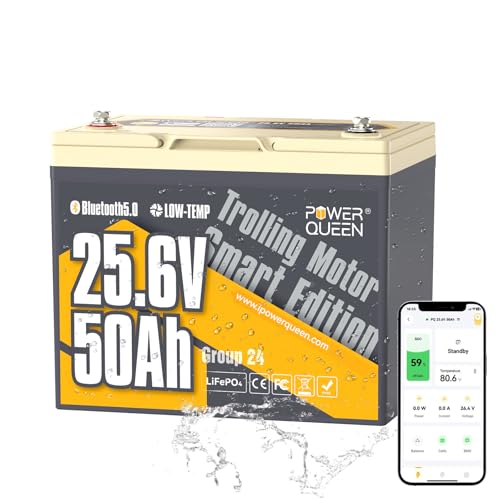
Power Queen 24V 50Ah LiFePO4 Bluetooth Battery

Power Queen 12V 100Ah Trolling Motor Battery

AJC Toyo 6FMH4 12V 5Ah Replacement Battery

Generic 12V 50Ah LiFePO4 Deep Cycle Battery

Power Queen 12V 100Ah Group 31 Bluetooth Battery
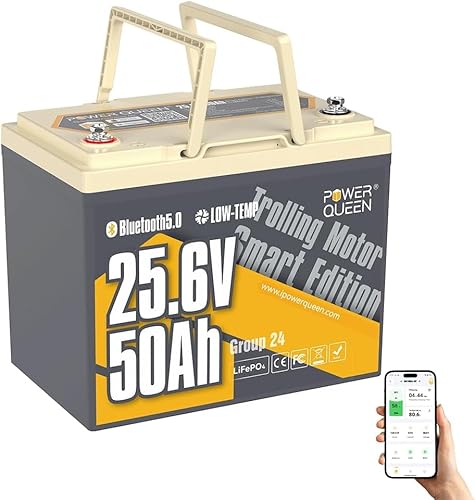
Power Queen 24V 50Ah Trolling Motor Bluetooth Battery
The Picks, Examined More Closely
Two 12V 300Ah batteries give an RV a substantial energy reserve for extended stays away from shore power. Unlike the smaller choices later in this list, the Redodo pair is aimed at demanding house loads, although weight, charger compatibility, and available floor space deserve attention first.
The built-in BMS, or battery management system, handles charging and operating safeguards within the battery design. For a well-ventilated installation with sound wiring, this arrangement suits experienced RV owners seeking deep-cycle capacity rather than a small mobility-device replacement.
Features That Help
- The two-battery configuration supports greater stored energy for overnight appliances and longer off-grid periods.
- Each 12V 300Ah battery uses LiFePO4 chemistry for deep-cycle storage rather than starting-engine duty.
- The integrated BMS helps coordinate charging and operating limits without requiring a separate enclosure.
- RV and marine positioning makes the pair relevant to stationary and onboard power demands.
Things To Consider
- High capacity creates a substantial weight load, so payload ratings and mounting structure need checking.
- Lead-acid chargers and poorly vented compartments may not suit this lithium installation.
- Separate deliveries are possible with a large two-pack, so access to secure storage may be needed.
Key Specs
Built With In Mind
This pair best fits experienced RV owners with a high-load 12V system, adequate payload capacity, and a charger designed for lithium batteries.
A Better Fit Elsewhere
The Generic 12V 50Ah LiFePO4 Deep Cycle Battery offers a lighter alternative for smaller RV circuits where two 300Ah units would be excessive.
Phone-based monitoring makes this 24V battery more useful during a boating trip, where checking voltage from the helm can be inconvenient. Compared with the AJC replacement, it serves a completely different role: sustained marine energy storage rather than a small equipment-specific reserve.
Bluetooth 5.0 connectivity adds visibility, but it depends on a compatible phone and the accompanying app. A 24V setup also requires matching equipment, so existing 12V electronics cannot connect directly.
The Case For It
- Remote status checks reduce the need to access a battery compartment during a trip.
- The 24V configuration suits boats and systems already designed around a higher operating voltage.
- LiFePO4 chemistry supports repeated deep-cycle storage with less bulk than comparable lead-acid arrangements.
- Marine positioning makes remote battery visibility especially relevant on a boat.
Worth Noting
- App connectivity adds a separate layer to setup, and your device may need renewed location access.
- A 24V charger and compatible motor or inverter electronics are required.
- The cable and enclosure still need secure marine installation and suitable corrosion protection.
Feature Snapshot
Who It Suits Best
Connected marine users with a 24V system benefit most from this battery’s status monitoring and deep-cycle capacity.
Another Choice May Suit
The Power Queen 24V 50Ah Trolling Motor Bluetooth Battery is the closer fit for anglers whose motor voltage and current requirements are documented.
A long day on open water raises different demands from powering cabin lights, and this 12V 100Ah battery is tailored toward trolling-motor loads. The listed support for motors up to 120 pounds of thrust makes motor matching the decisive first step.
Cold protection also matters for anglers fishing early in the season. Charging stops below 32°F and discharging stops below -4°F, which can reduce cold-weather flexibility even though the controls help manage difficult conditions.
Well-Handled Touches
- Motor compatibility extends to documented trolling-motor models rated up to 120 pounds of thrust.
- A surge protector helps steady output against voltage spikes generated in the motor circuit.
- Cold-temperature charging and discharge limits add useful control during early-season fishing.
- The 100Ah rating provides meaningful runtime between charges for compatible 12V motors.
Practical Considerations
- The 120-pound thrust ceiling is only useful when your motor’s voltage, connector, and current requirements match.
- Low-temperature cutoffs can limit operation during cold-weather outings.
- Lithium charging requires a compatible charger and correctly sized cables.
Quick Facts
The Right Fit
Anglers with a compatible 12V motor up to 120 pounds of thrust gain the most from the documented marine focus.
Where Another Pick Shines
The Power Queen 24V 50Ah Trolling Motor Bluetooth Battery better serves a fishing setup already centered on a 24V motor and app monitoring.
Small mobility equipment needs a precise physical match, and the AJC replacement centers on the Toyo 6FMH4 format. Its sealed lead-acid construction and modest 5Ah capacity suit a compact device rather than a house bank or trolling motor.
That makes it the outlier in this lineup, but also its clearest use case. Verify the battery compartment dimensions, F1 terminals, mounting clearance, and charger type before replacing an existing unit.
Useful Touches
- The 12V operating voltage supports a broad range of compact 12V equipment.
- A 5Ah capacity keeps weight and physical bulk more manageable than deep-cycle options.
- Sealed construction avoids exposed venting during routine equipment use.
- The specified F1 terminals simplify matching to compatible lead-acid connections.
Small Caveats
- The 5Ah capacity is inadequate for most RV living loads or sustained marine motor use.
- Lead-acid batteries usually need secure upright mounting and controlled ventilation.
- Toyo 6FMH4 compatibility does not remove the need to match case size and terminal position.
Whose Shelf It Belongs On
This battery suits owners replacing a compact Toyo 6FMH4 unit in a small mobility device with matching F1 terminals.
Reach For A Different Pick When
The Generic 12V 50Ah LiFePO4 Deep Cycle Battery makes more sense for a larger 12V storage application that needs greater capacity.
For a moderate 12V circuit, this battery sits between the AJC unit and the much larger Redodo pair. Its stated applications span RV use, home storage, trolling motors, off-grid systems, solar storage, and marine equipment, which makes it flexible but also places the compatibility burden on you.
You may find the compact dimensions useful in a tighter installation, though exact cable clearance still matters. Verify the charger and load requirements before using one battery across several roles.
Good Reasons To Consider
- 50Ah capacity provides a practical middle ground for moderate 12V loads.
- LiFePO4 chemistry targets repeated deep-cycle storage applications.
- The listed dimensions help you compare the case with a confined battery compartment.
- Broad application support makes it relevant to RV, solar, marine, and stationary storage.
- A 50A BMS provides a defined management current for the battery system.
Possible Compromises
- The generic branding offers fewer model-specific details for equipment integration.
- One 50Ah battery may be insufficient for larger RV appliances or high-output motors.
- Lithium installation still depends on a compatible charger and secure restraint.
Core Details
Made For
RV owners with moderate 12V loads and limited space benefit most from this capacity-focused lithium option.
Swap It Out When
The Power Queen 12V 100Ah Trolling Motor Battery is a stronger consideration for documented high-output marine loads.
Checking charge before launching can prevent an inconvenient day on the water, and Bluetooth access puts battery information on your phone. Compared with the earlier Power Queen 12V 100Ah model, this Group 31 version adds app visibility and discharge controls to a similar voltage and capacity class.
Smart features don’t replace basic electrical planning. Confirm terminal placement, cable capacity, motor requirements, and low-temperature expectations before committing.
What Works In Its Favor
- Phone access can show state of charge, which represents remaining charge, along with voltage and operating status.
- Remote discharge control gives connected users an added layer of operating visibility.
- The 100Ah capacity supports meaningful runtime for compatible 12V marine loads.
- Low-temperature cutoffs suspend charging below 32°F and discharging below -4°F.
Details To Watch
- Bluetooth setup depends on a compatible phone and the related application.
- The cold-weather cutoffs restrict operation during freezing conditions.
- Group 31 labeling helps comparisons, but actual case measurements should still be checked.
Made For
Boaters with a compatible 12V trolling-motor system benefit from phone-based charge visibility and monitoring.
A Better Fit Elsewhere
The Redodo 12V 300Ah LiFePO4 Battery 2-Pack better serves RV owners who need much greater house-storage capacity.
Higher motor voltage can reduce the current burden on cabling, and this 24V 50Ah battery is designed for compatible trolling-motor systems up to 100 pounds of thrust. That makes it a distinct step from the 12V Power Queen option rather than simply a larger version.
Bluetooth monitoring and low-temperature controls improve oversight away from the dock, yet a 24V battery pack remains a substantial installation. Confirm your motor’s voltage range and ensure the charger and cable set support the full configuration.
Positive Points
- The stated 1,280Wh energy capacity provides a useful measure for planning battery output.
- A maximum continuous discharge rating of 50A defines the expected sustained output level.
- Documented support extends to compatible 70- to 100-pound trolling motors.
- Bluetooth monitoring allows status checks through a phone during marine use.
- The BMS includes more than 20 listed operating protections.
Practical Considerations
- The continuous current limit matters for long runs and heavily loaded motor conditions.
- A 24V arrangement requires compatible electronics, charger, cable sizing, and connector planning.
- Low-temperature cutoffs may limit cold-weather flexibility.
Technical Reference
Who Will Love This
Anglers with a compatible 24V motor between 70 and 100 pounds of thrust gain the most from its documented output range.
Where A Sibling Pick Shines
The Power Queen 12V 100Ah Trolling Motor Battery better fits anglers with a 12V motor rated up to 120 pounds of thrust.
Choosing Batteries That Match Your Electrical System
Start with the equipment instead of the category label. These options are predominantly 12V or 24V, so none should be treated as a universal 6V replacement. Record the battery compartment requirements, charger voltage, cable size, connector style, and continuous load before choosing.
Voltage and Chemistry Compatibility
A nominal 12V LiFePO4 battery operates at a different resting voltage than a 12V lead-acid battery, and its charging profile also differs. A charger designed only for flooded or sealed lead-acid chemistry may not provide the correct charging stages for lithium iron phosphate cells.
Marine users need to match trolling-motor voltage as well as current. A 12V motor cannot normally use a 24V battery directly, while a motor marked for a voltage range may still need careful attention to its wiring and load.
Capacity and Physical Clearance
Capacity describes charge storage, while amp-hour ratings alone do not tell you how quickly a battery can deliver power. Sustained motor use also depends on continuous discharge capability, cable resistance, and charger output.
Measure the compartment before ordering a large unit. Pay attention to case height, terminal clearance, restraint points, cable bend radius, and ventilation needs, especially with sealed lead-acid designs.
Battery Choices That Avoid Common Errors
Common Shopping Slip Ups
The biggest error is treating every “12V” battery as interchangeable. Voltage, chemistry, terminal position, physical dimensions, and charging requirements must all agree. Joining multiple batteries also requires correct polarity, matching cell types, suitable cable sizing, and a compatible charger.
What Separates Lithium From Lead-Acid
Lithium options typically add a BMS, lower weight, and greater usable deep-cycle capacity. Lead-acid replacements may make more sense for small, compatible equipment where simplicity and a compact sealed case matter most.
Choosing Batteries That Fit RV and Marine Use
Start With The Existing System
Your RV or boat already determines several battery requirements. Trace each load, record its voltage, identify the charger, and measure the available compartment before comparing capacity or connectivity features.
Match Output To The Motor
Trolling-motor batteries need adequate voltage, continuous discharge capability, and correctly sized cables. For RV living loads, look at usable storage, inverter requirements, cooling, and realistic energy consumption rather than capacity alone.
Bluetooth monitoring is useful for frequent-use systems, though it does not compensate for an undersized battery bank. Start with sound electrical compatibility, then choose connected monitoring as a convenience feature.
Frequently Asked Questions
Are Any Of These Batteries Actually 6V?
No. The listed options use 12V or 24V configurations, so none should replace a genuine 6V battery without a verified voltage-conversion system.
Can A 12V LiFePO4 Battery Replace Lead-Acid?
It can fit a compatible 12V system, but the charger and load requirements must support lithium iron phosphate operation. Case size, terminals, cable capacity, and ventilation also need confirmation.
How Much Battery Capacity Does An RV Need?
Capacity depends on your appliances, inverter load, average consumption, and expected time away from shore power. A small overnight setup may need far less storage than air conditioning, refrigeration, and other sustained loads.
Is Bluetooth Battery Monitoring Necessary?
It is convenient for charging checks and system diagnostics, especially on a boat. It is optional rather than essential when the battery compartment is easy to access and your other equipment functions properly.
What Matters Most With A Trolling-Motor Battery?
Motor voltage, thrust rating, continuous output, and cable compatibility come first. Battery capacity determines runtime, while cold-temperature behavior and monitoring improve convenience and operating control.
Final Verdict
The right battery depends on your actual voltage, load, charger, and available space. Large RV systems favor substantial deep-cycle storage, anglers need motor-specific output and current handling, and compact equipment calls for an exact dimensional replacement. Start with compatibility, then choose capacity and monitoring to match the way you actually use your vehicle.
