


A dead battery rarely waits for a convenient moment. It can leave you stranded in a parking lot, delay a roadside repair, or turn a routine commute into an expensive problem. The right battery or portable jump starter depends on your vehicle, engine size, and whether you need starting power, deep-cycle capacity, or both.
The Leading Options At A Glance

AstroAI S8 1500A Portable Jump Box

AstroAI S8 Ultra 4000A Jump Starter
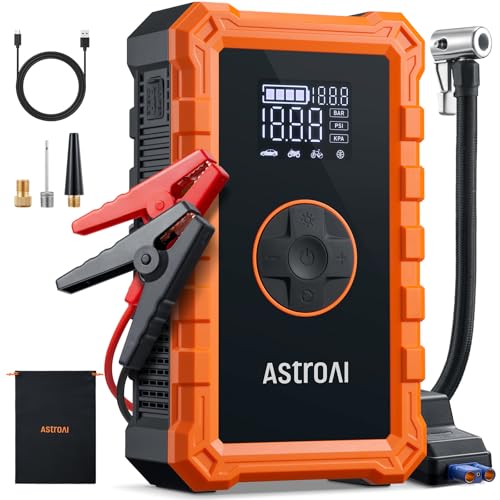
AstroAI S8 Air 3000A Jump Box
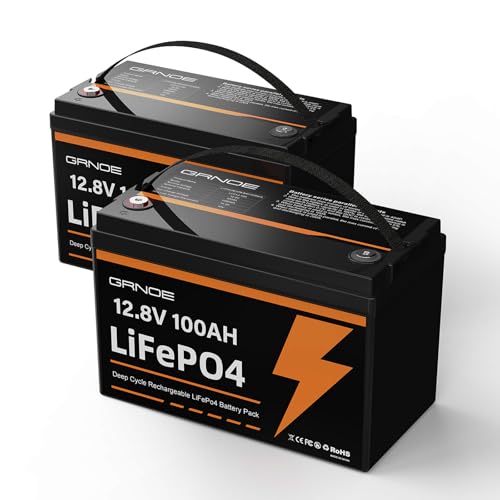
GRNOE 12V 100Ah Group 31 Battery

Interstate IBX 12V 60Ah AGM Battery

VEVOR 12V 60Ah Group 24 Battery

SDULIBITIY Group 48 60Ah Battery
More Details On Our Top Picks
The AstroAI S8 is built for the common roadside interruption: a flat 12V battery in a car, motorcycle, SUV, pickup, or lawn mower. Its 1500A peak rating and stated coverage for gasoline engines up to 6.0L and diesel engines up to 3.0L give daily drivers practical starting headroom, though actual fit depends on battery condition and connection quality.
Compared with the larger S8 Ultra, this model is easier to carry for routine use and adds a three-mode flashlight plus power-bank function. That makes it useful beyond emergencies, especially for weekend road trips where a dead battery or low tire can derail the plan.
What Earns Its Place
- 1500A peak output supports common 12V vehicles and smaller engines.
- Three flashlight modes help during a roadside recovery at night.
- Power-bank capability adds utility beyond engine starting.
- Portable lithium format suits a glove box or travel kit.
Things To Consider
- Large diesel engines exceed the stated 3.0L range.
- Smart jumper cables still need clean terminals and a correct connection sequence.
Quick Facts
Who It Suits Best
It suits daily commuters and households keeping a compact emergency kit for a standard car, motorcycle, or small diesel vehicle.
Consider Something Else When
The AstroAI S8 Ultra 4000A Jump Starter better fits large gasoline vehicles and diesel engines beyond the S8’s stated range.
The S8 Ultra is aimed at drivers who regularly handle larger vehicles or live where a roadside dead battery is a recurring inconvenience. Its 4000A peak output and stated support for gasoline vehicles and diesel engines up to 12L create a wider margin than the AstroAI S8, especially for pickups, SUVs, and work vehicles.
Smart jumper cables with indicators help you check the setup before attempting a start, which is a useful safeguard for beginners. The trade-off is bulk: a higher-output unit can be less convenient to carry every day than the smaller S8, so vehicle fit and storage space matter.
Positive Takeaways
- 4000A peak output gives larger engines more starting capability.
- Stated diesel coverage extends to 12L engines.
- Indicator-equipped smart cables simplify setup checks.
- Useful for trucks, SUVs, and work vehicles.
Worth Noting
- The larger output may make it less convenient for a compact emergency kit.
- Peak current does not replace routine battery maintenance or terminal checks.
Made For
It fits owners of large gasoline vehicles and diesel trucks who want more starting headroom than a compact jump box provides.
A Better Fit Elsewhere
The AstroAI S8 1500A Portable Jump Box is the more practical carry option for owners with standard passenger vehicles and limited storage.
The S8 Air combines jump starting with an air compressor, making it more useful for weekend drivers who may also need to inflate a tire. Its stated 3000A peak output is rated for gasoline engines up to 9L and diesel engines up to 6.5L, placing it between the AstroAI S8 and S8 Ultra in engine coverage.
The compressor broadens the use case, but it does not eliminate the need to check tire pressure, connector placement, and battery condition. Compared with the VEVOR 12V 60Ah Group 24 Battery, this is a portable recovery tool rather than a permanently installed dual-purpose battery.
Bright Spots
- 3000A peak output covers many midsize and larger engines.
- Built-in air compressor handles a second common roadside need.
- Up to 20 stated jump starts per charge supports repeated use.
- Works across cars, motorcycles, boats, snowmobiles, and lawn equipment.
Room For Improvement
- It needs regular charging before emergency use.
- Air-hose storage adds bulk to a compact vehicle kit.
Feature Snapshot
Who Will Love This
It suits road-trip owners, campers, and daily drivers who want starting power and tire inflation in one portable package.
Where Another Pick Suits Better
The Interstate IBX 12V 60Ah AGM Battery better fits a vehicle that needs a permanent replacement battery rather than a portable emergency booster.
The GRNOE 100Ah battery serves a different job from a jump box: it stores energy for RV, marine, van, and backup-power applications. Its Group 31 format and built-in 100A BMS, or battery management system, suit users who want a high-capacity LiFePO4 power source and may need to adjust the system as demand changes.
Multiple batteries can be combined to reach configurations listed up to 48V and 20.48kWh, though the exact arrangement depends on the equipment and wiring plan. This is not a direct substitute for a 60Ah automotive starter battery, and the two-pack ships separately because of weight.
Advantages To Know
- 100Ah capacity supports energy storage beyond vehicle starting.
- Built-in 100A BMS helps manage charging and discharge.
- Expandable configurations support RV, marine, van, and backup use.
- Two-pack format helps users plan capacity in advance.
Practical Considerations
- Weight and separate box shipments complicate handling.
- Series and parallel setup requires correct wiring and compatible equipment.
Key Specs
The Right Fit
It fits RV owners, marine users, and van or backup-system owners who need deep-cycle storage rather than a compact roadside booster.
Look Elsewhere When
The SDULIBITIY Group 48 60Ah Battery is a better match for a vehicle seeking a 60Ah starter-and-deep-cycle replacement.
The Interstate IBX is the conventional replacement-battery option in this group, with 60Ah capacity, 650 cold cranking amps, and an absorbed glass-mat, or AGM, design. AGM construction places electrolyte in a glass-fiber separator, which supports starting performance and resistance to vibration in compatible vehicles.
Its Group H5 and size 47 designation make fit the central issue. Measure the battery bay, confirm terminal placement, and compare the vehicle’s required group size before ordering; a correct capacity rating alone cannot compensate for a mismatched case or hold-down arrangement.
Strengths Worth Knowing
- 650CCA provides a clear cold-starting reference.
- 60Ah capacity suits many standard automotive electrical demands.
- AGM format is designed for vibration resistance and starting duty.
- Group H5 format offers a defined case and terminal fit target.
Details To Watch
- Compatibility depends on case size, terminal layout, and vehicle requirements.
- It is a starter-focused battery, not a high-capacity portable power station.
Who Should Grab It
It fits owners replacing an AGM starter battery in a vehicle that accepts the Group H5, size 47 configuration and requires 60Ah capacity.
Another Choice May Suit
The VEVOR 12V 60Ah Group 24 Battery better suits owners who need both engine starting and deeper accessory support in a compatible case.
The VEVOR 60Ah battery is built for users who want one unit to handle engine starting and powered accessories. Its 800CCA rating supports starting duty, while the 60Ah LiFePO4 capacity can serve equipment such as fans, speakers, fish finders, and trolling motors in compatible systems.
That flexibility makes it interesting for an RV, boat, or mixed-use setup, but the Group 24 case and terminal arrangement must match your equipment. Compared with the Interstate IBX, this is more specialized for dual-purpose use, and its charging requirements should be checked against the vehicle or system.
A Strong Showing
- 800CCA gives the battery a strong starting reference.
- 60Ah capacity supports more than engine cranking.
- LiFePO4 chemistry suits rechargeable deep-cycle applications.
- Built-in smart BMS manages several electrical protection functions.
Possible Compromises
- Group 24 dimensions and terminal layout may not match every vehicle.
- Accessory and engine loads should stay within the equipment’s design limits.
Technical Highlights
Built With In Mind
It fits RV, marine, trolling-motor, and automotive users who need starting power and accessory capacity in one compatible package.
Reach For A Different Pick When
The GRNOE 12V 100Ah Group 31 Battery better fits larger energy-storage systems where capacity matters more than starter-focused CCA.
The SDULIBITIY Group 48 battery targets drivers replacing a 60Ah LiFePO4 starter battery, particularly in compatible start-stop vehicles. Its 1100CCA rating provides a higher starting reference than the Interstate IBX, while the LED display gives you a visible indication of the battery’s operating status.
Its dimensions are listed at 10.82 by 6.89 by 7.48 inches, with the negative terminal on the left and positive on the right. That layout deserves careful comparison with your existing battery, especially in crowded engine bays where cable length and hold-down clearance can be tight.
Well-Handled Touches
- 1100CCA offers a strong starting reference.
- 60Ah capacity matches the stated automotive replacement class.
- LED display provides visible status information.
- Emergency start button adds a separate starting control.
Soft Spots
- Group 48 fit, terminal direction, and cable clearance require verification.
- Lithium battery replacement still depends on proper charging-system compatibility.
Core Details
Best Suited To
It fits owners of compatible Group 48 start-stop vehicles who want a 60Ah lithium battery with a status display and emergency start control.
Swap It Out When
The Interstate IBX 12V 60Ah AGM Battery may suit drivers who prefer a conventional starter battery and can match its Group H5 case exactly.
What Matters Before You Choose
Match the battery group
Group size describes more than capacity. Measure the old battery, compare the case dimensions, and verify terminal placement before ordering. A 60Ah rating cannot compensate for a case that will not fit or cables that reach awkwardly.
Separate starting from deep-cycle use
CCA measures cold-cranking performance, while Ah describes stored capacity. A starter battery prioritizes bursts of power; an RV, marine, or trolling-motor system may need sustained energy for fans, electronics, and other equipment. A dual-purpose lithium battery can bridge both needs, but the connected equipment still sets the requirement.
Think about charging and storage
A portable jump starter needs regular charging before an emergency. A permanently installed lithium battery must pair with a compatible charging system, and a heavy Group 31 pack may require careful handling. Confirm the connection method and available space before installation.
Common Shopping Slip Ups
The most common mistake is treating every 12V battery as interchangeable. Another is choosing CCA without checking the case, terminals, or vehicle electronics. Portable jump boxes also need regular charging, while installed batteries need a compatible charger and clean connections.
What The Higher Tier Buys
Higher peak current helps with larger engines or repeated starts, while higher Ah capacity supports longer accessory loads. Displays, battery-management systems, and emergency controls add convenience, but the upgrade is only worthwhile when your vehicle or equipment needs that capability. Match the specification, not the extra feature list.
Frequently Asked Questions
Is a 60Ah battery suitable for a start-stop vehicle?
Possibly, provided its case, terminals, CCA, and charging system match the vehicle. Start-stop vehicles place added demand on the electrical system, so compatibility matters more than capacity alone.
Is CCA the same as Ah?
No. CCA describes cold-cranking performance, while Ah describes battery capacity over time. A starter application leans on CCA; an RV or marine accessory application may place more importance on Ah.
Are jump starters replacements for installed batteries?
No. A jump starter provides temporary starting assistance, while an installed battery supplies the vehicle’s ongoing electrical support. Both are useful, but they serve different ownership needs.
Can I use a Group 31 battery in a car?
Only when the case dimensions, terminal arrangement, charging system, and starting requirements fit the vehicle. Group labels are useful guides, not a substitute for a physical and electrical comparison.
Do I need to charge a lithium jump starter monthly?
Charge it according to the manufacturer’s instructions and keep it ready before a long trip. A portable unit left uncharged cannot provide dependable starting assistance when a battery goes flat.
Final Verdict
Choose the AstroAI S8 or S8 Ultra for portable recovery, the S8 Air for combined jump-starting and inflation, and the GRNOE or VEVOR lithium models for deeper energy demands. A conventional replacement battery suits compatible vehicles better when straightforward installation and starter-focused performance are the priority. Match the case, terminals, electrical needs, and charging setup before making the final call.
