


Choosing a battery for an 8D marine setup starts with the electrical system, not the label alone. You need enough capacity for trolling motors, electronics, lighting, and charging loads while keeping weight, cold-weather behavior, and cable demands under control. A battery can fit a Group 31 or Group 24 space without delivering the starting current, usable capacity, or protection your boat actually requires.
Not every option below is a traditional 8D battery. The list includes lithium power banks, dual-purpose cranking batteries, and a 24-volt battery-management panel because those products solve closely related marine electrical needs. The most practical choice depends on motor load, available space, charger compatibility, and whether starting and house power share one battery.
A Fast Comparison Of The Options
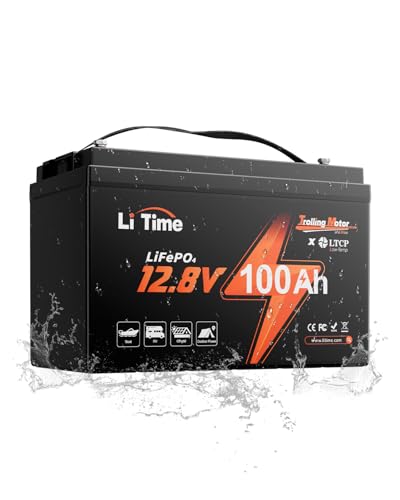
Litime 12V 100Ah Trolling Motor LiFePO4 Marine Battery Group 31, 1280Wh

Litime 12V 100Ah Bluetooth Trolling Motor LiFePO4 Marine Battery, 1280Wh
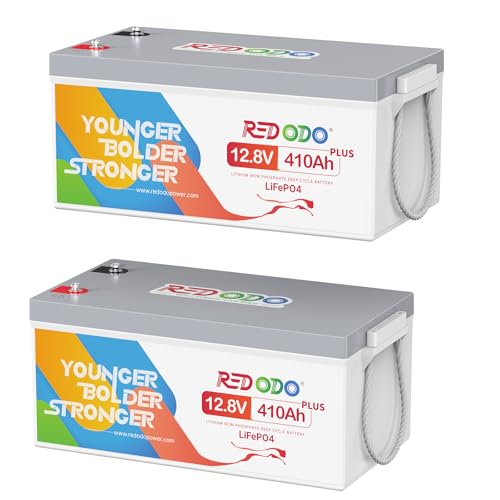
Redodo 12V 410Ah LiFePO4 Pack

Blue Sea Systems 8689 24VDC Battery Panel

LiTime 12V 100Ah Cranking LiFePO4 Battery

Redodo 24V 200Ah LiFePO4 Pack

Litime 165Ah 12V Cranking Deep-Cycle LiFePO4 Marine Battery, 1200 CCA
A Closer Look At Each Pick
Group 31 is a common battery case size, not a capacity standard, and this Litime unit fits that format while supplying 100Ah. That combination can suit anglers running a trolling motor alongside electronics, cabin lighting, and a modest house load, particularly in a boat where weight and volume matter. Compared with the much larger Redodo banks later, it keeps installation more approachable.
Lithium iron phosphate, often shortened to LiFePO4, provides usable capacity with a relatively low weight. At 22.16 pounds, this battery offers a meaningful reduction from lead-acid systems, though actual runtime depends on motor draw, solar input, and reserve settings.
What Makes Sense
- The 1280Wh capacity supports trolling and electronics without a multi-battery installation.
- A Group 31 case helps existing boat compartments and trays remain practical.
- The 100A BMS manages charging and discharge protection for a demanding electrical setup.
- IP65 sealing adds resistance to dust and water exposure in a damp marine compartment.
Small Caveats
- Cold-weather charging protection can interrupt charging below 32°F, so seasonal storage needs planning.
- Your onboard charger must support lithium chemistry and the battery’s charging profile.
Key Specs
Made For
This battery suits anglers with a Group 31 compartment who need balanced trolling-motor runtime, moderate accessory power, and lower weight than a lead-acid setup.
Where Another Pick Shines
Redodo 12V 410Ah LiFePO4 Pack fits larger RV and solar installations that need substantially more stored energy than a single trolling battery can provide.
The second Litime option keeps the same basic 12V, 100Ah, Group 31 foundation as the first pick, but adds Bluetooth monitoring. That distinction matters on a boat with multiple batteries, where checking state of charge and discharge behavior from a phone can be more useful than relying only on a basic voltmeter.
For a weekend angler, the monitoring feature may seem like extra sophistication rather than a necessity. Still, it can make troubleshooting easier when a trolling motor, depth finder, and cabin loads are connected during a long day on the water.
What Earns Its Place
- Bluetooth access provides battery status, discharge controls, and system checks from a phone.
- The 1280Wh capacity matches the first Litime pick for trolling and accessory use.
- A listed weight of 19.13 pounds helps with boat loading and battery handling.
- More than 20 listed safety protections support demanding charging environments.
Points To Note
- Bluetooth monitoring adds another small piece of software to learn.
- Charging protection stops below 32°F and discharge protection stops below -4°F.
- Phone monitoring does not replace proper charger matching or secure battery retention.
Right Fit For
Connected anglers and boaters who want visible battery data without repeatedly checking a physical meter fit this model well.
A Better Fit Elsewhere
Choose Litime 165Ah 12V Cranking Deep-Cycle LiFePO4 Marine Battery when outboard starting and cold-weather cranking matter more than app-based monitoring.
Capacity is the defining feature here. Each 12V battery provides 410Ah, or 5.248kWh according to the listed specifications, so the two-battery set is aimed at people building a large house or solar system rather than simply extending a small trolling run. The package may also arrive as separate units because of shipping-size limits.
For a full-size RV, liveaboard, or stationary solar installation, that scale can make sense. For a compact fishing boat, however, the weight and space demands may be excessive, and the smaller Litime Group 31 options are easier to manage.
Where It Excels
- The 410Ah rating gives each unit much greater storage capacity than a standard Group 31 battery.
- The listed 5.248kWh per battery supports extended household and renewable-energy use.
- Two units provide flexibility for load management, redundancy planning, or a larger bank.
Practical Considerations
- Large batteries require more space, heavier handling, and careful mounting.
- Separate deliveries mean the installation timeline may be less predictable.
At A Glance
Built With In Mind
This pack suits RV owners, liveaboards, and solar users who need extended house power and have the space to support a large battery bank.
Consider Something Else When
Litime 12V 100Ah Bluetooth Trolling Motor LiFePO4 Marine Battery is the easier fit for a single compact boat with Group 31 storage.
This entry solves a different part of the problem: managing a 24-volt DC battery system rather than storing energy. The Blue Sea Systems 8689 panel is an electronic switch for single-engine arrangements, separating the engine circuit from the house circuit while providing high-ampere load protection.
That separation can simplify a complex electrical layout where starting equipment, electronics, and house loads need different control paths. It does not replace an 8D battery, so most people will treat it as a supporting component rather than a standalone power source.
Practical Advantages
- Engine and house circuits receive independent control paths.
- High-ampere protection supports demanding 24-volt boat electrical systems.
- The panel format keeps switching functions organized in one location.
Where It May Fall Short
- The product supplies no battery capacity, so it cannot power electronics by itself.
- Its single-engine focus may not match a twin-engine installation.
Feature Facts
Whose Shelf It Belongs On
Marine electricians and owners of single-engine 24-volt boats benefit from this panel when circuit separation and load protection are the immediate requirements.
Another Choice May Suit
LiTime 12V 100Ah Cranking LiFePO4 Battery better serves an owner who needs actual stored starting and house power.
Separate starting and deep-cycle batteries can consume valuable compartment space on a boat. This LiTime Group 24 design combines cranking and house-power duties in one 12V lithium iron phosphate unit, giving outboard owners a more consolidated layout.
That approach is especially relevant in small fishing boats where electronics and an outboard share limited room. The honest caveat is that dual-purpose operation depends on the battery, charger, cables, and electrical distribution being sized correctly for both loads.
The Good Stuff
- One unit handles outboard starting and deep-cycle equipment loads.
- Combining both jobs can reduce battery count and free compartment space.
- The Group 24 format supports a more compact installation than two large batteries.
- Deep-cycle operation lets the unit serve fish finders, lighting, and other marine devices.
Less Ideal Details
- Starting current specifications are not provided in the available data, so compatibility deserves careful checking.
- A lithium-compatible charger and correctly sized cable system remain necessary.
Who It Suits Best
Small-boat owners with a Group 24 compartment and an outboard motor benefit from the reduced battery count and dual-purpose design.
Reach For A Different Pick When
LiTime 165Ah 12V Cranking Deep-Cycle LiFePO4 Marine Battery offers a clearer fit when high cranking current, self-heating, and 165Ah capacity are priorities.
This four-battery set moves beyond a typical boat installation and into serious RV or stationary solar storage. Each unit uses a nominal 25.6V, creating a 24V-class system, and provides 200Ah with 5120Wh of energy. That makes the pack more relevant to household appliances and renewable-energy storage than a single trolling-motor battery.
Each battery weighs 82.67 pounds, so installation requires attention to mounting, lifting, and floor or deck loading. The listed EV-grade cells help explain the high energy density, but parallel configuration, ventilation, and charger sizing remain essential.
Useful Touches
- Each 24V battery provides 5120Wh for high-capacity household storage.
- The four-pack format supports substantial 24V system expansion.
- EV-grade cells support a strong power-to-weight balance for mobile storage.
- A listed 82.67-pound weight remains manageable for a stationary battery bank compared with many lead-acid alternatives.
Things To Weigh Up
- Four large units require substantial floor space and secure mounting.
- Delivery can occur in separate pieces because of size limits.
Feature Breakdown
Made For
Solar-powered RV owners and stationary storage users with a 24V architecture benefit from this high-capacity pack.
Not Your Match When
A compact marine trolling setup is better served by Litime 12V 100Ah Trolling Motor LiFePO4 Marine Battery Group 31, 1280Wh.
Starting power and deep-cycle endurance come together in this Group 31 design. The listed 1200 CCA at 14°F and 1300 MCA at 32°F make it a strong consideration for cold-weather outboard use, while 165Ah supports trolling motors, fish finders, and other marine electronics.
Self-heating adds another layer of cold-weather practicality, and the 15% emergency reserve helps preserve capacity for starting and return. Compatibility still deserves attention: the listed fit covers common Mercury models except Optimax, along with Honda, Suzuki, Evinrude, and Tohatsu applications.
Notable Upsides
- Dual-purpose construction supports both engine cranking and marine electronics.
- Self-heating helps manage cold-weather operating conditions.
- The Group 31 case balances high capacity with a familiar marine footprint.
- 4000+ listed deep cycles point to a design intended for repeated discharge use.
- The 15% emergency reserve protects power for ignition and return.
Details To Watch
- Mercury Optimax applications are excluded from the listed compatibility.
- Engine-specific terminals, charging requirements, and cable sizing need verification before installation.
Technical Highlights
Who Should Grab It
Cold-water anglers and outboard owners needing one battery for starting, trolling, and electronics fit this model’s stated feature set.
Swap It Out When
Litime 12V 100Ah Bluetooth Trolling Motor LiFePO4 Marine Battery is a simpler fit for non-starting trolling applications where phone monitoring matters.
What Matters Before Choosing A Marine Battery
Start with the load, not the case size. A trolling motor, depth finder, lighting, refrigerator, and cabin heater can produce very different demand. Calculate the expected simultaneous load, then choose capacity with enough headroom for motor surge and reserve power. LiFePO4 is useful for high usable capacity, but the battery still needs a charger matched to lithium chemistry and your system voltage.
Starting demands change the equation. A pure deep-cycle battery may provide excellent house runtime while falling short for an outboard engine. Dual-purpose lithium batteries address that conflict, yet cranking ratings and engine compatibility must be checked before installation. The 165Ah Litime model is more relevant when cold-weather starting is a stated requirement, while a dedicated Group 31 pack is easier for trolling-only systems.
Marine installation deserves equal attention. Confirm the physical case, terminal arrangement, cable length, mounting security, ventilation, and corrosion exposure. A battery can be powerful and still create problems through poor connection or an undersized charger. The Blue Sea panel also shows why circuit management matters, especially in boats with separate engine and house circuits.
Capacity, cold-weather operation, and charging behavior
Larger Redodo packs make sense for RV, solar, or liveaboad power where appliances run for extended periods. Smaller Group 31 or Group 24 lithium batteries are more manageable for a single boat compartment. Think about the complete system rather than the battery alone, including motor controller limits, inverter requirements, and available charging time.
Common Mistakes In Marine Battery Selection
Wrong Turns To Avoid
Do not choose from physical size alone, since Group 24, Group 31, and 8D cases describe dimensions rather than a fixed capacity or starting standard. A low-capacity battery can look identical in a catalog while falling short under a trolling motor’s peak draw. Review the motor specifications, accessory load, and system voltage first.
What The Higher Tier Buys
Higher-capacity models add stored energy, parallel capacity, or specialized features such as Bluetooth monitoring, self-heating, and stronger cranking ratings. Those upgrades help boats with long runtime needs, cold starts, or more complex electronics. A larger bank is not automatically better for a small fishing boat, where extra weight, mounting work, and charging demands can outweigh the added capacity.
Frequently Asked Questions
Is an 8D marine battery the same as a Group 31 battery?
No. 8D and Group 31 describe different physical case formats, with capacity and cranking performance varying by model. Measure the compartment and confirm terminal placement before selecting either format.
Can a LiFePO4 battery replace a lead-acid marine battery?
It can fit many applications, but the charger, wiring, and system controls must support lithium chemistry. Existing lead-acid cables and chargers may not be suitable without checking their ratings.
What capacity do I need for a trolling motor?
Your motor’s current draw, expected run time, electronics, solar charging, and desired reserve determine capacity. A 100Ah Group 31 battery can suit moderate loads, while larger banks fit extended runtime and heavier equipment.
Do dual-purpose marine batteries handle both starting and electronics?
Yes, the listed dual-purpose designs are intended to handle cranking and deep-cycle loads. Confirm engine compatibility, cranking ratings, charger operation, and cable sizing before installation.
Are Bluetooth marine batteries worth considering?
They can simplify status checks and discharge monitoring on multi-battery systems. For a small, uncomplicated installation, the convenience may not justify the added electronics.
Wrap Up
The right 8D marine battery is one that matches your motor load, starting needs, compartment, charger, and available runtime. Litime leads the practical 12V and dual-purpose options, while Redodo covers larger solar and RV storage needs, and Blue Sea supports a specialized 24V management role. Choose the system that fits the boat, not simply the battery with the largest number on the label.
