


The Choices Worth Comparing
Battery fit matters more than raw capacity. A marine installation needs a charging system, physical space, and motor voltage that all agree, while an RV or off-grid setup may value usable capacity and manageable weight over starting power. The BtrPower options cover 12V, 24V, and 36V configurations, plus high-capacity and compact choices, so you can match the battery to the equipment rather than forcing a square peg into a round hole.
The Choices Worth Comparing

BtrPower 24V 50Ah LiFePO4 Trolling Motor Battery

BtrPower 24V 140Ah LiFePO4 Battery 3584Wh

BtrPower 12V 50Ah LiFePO4 Trolling Motor Battery

Odyssey Battery 94R-850 Performance Automotive Battery

BtrPower 36V 50Ah LiFePO4 Trolling Motor Battery
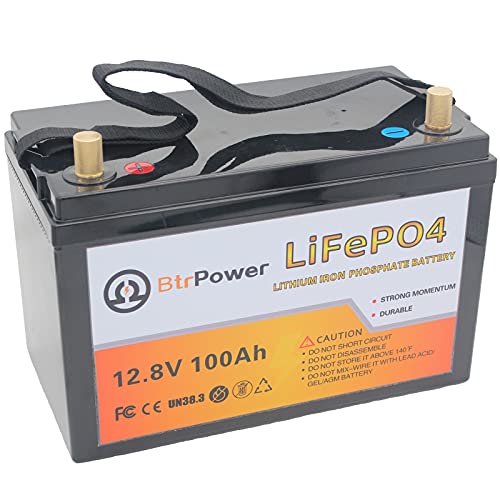
BtrPower 12V 100Ah LiFePO4 Deep Cycle Battery

BtrPower 24V 80Ah LiFePO4 Deep Cycle Marine Battery
The Details Behind The Selections
The BtrPower 24V 50Ah LiFePO4 battery is sized for boats with 24V trolling motors, including common 70- to 100-pound-thrust setups. Compared with a lead-acid battery, its lighter lithium-iron-phosphate format is easier to handle during installation and removal, especially in a cramped boat compartment.
That balance makes sense for anglers who want dependable runtime without moving the largest pack available. You still need a charger and motor system designed for 24V lithium chemistry, so the battery alone does not complete the conversion.
Useful Highlights
- Designed for 24V trolling motors, giving it a clear marine use case.
- LiFePO4 chemistry supports repeated deep discharge without the weight of lead-acid alternatives.
- Grade A cells are specified for more than 5,000 deep cycles under the stated conditions.
- Suitable for boats, RVs, off-grid power, and backup applications.
Trade Offs
- A 50Ah pack gives less runtime than the 80Ah and 100Ah options in this list.
- Owners must use charging equipment compatible with lithium batteries; incompatible chargers can limit performance or damage components.
- The physical dimensions and terminal layout need checking before replacing an existing battery.
Key Specs
Made For
This battery suits anglers and boaters with a 24V trolling motor who want a manageable lithium upgrade for moderate runtime.
Where Another Pick Suits Better
Choose the BtrPower 24V 80Ah LiFePO4 Deep Cycle Marine Battery instead for longer outings and a larger 24V energy reserve.
This is the high-capacity option in the group, with a stated 3,584Wh energy capacity and 140Ah rating at 24V. The extra reserve makes it more relevant to RVs, solar storage, and off-grid systems than a small boat with modest daily energy needs.
Compared with the BtrPower 24V 50Ah LiFePO4 Trolling Motor Battery, it offers much more storage in one enclosure, although its size and weight may complicate installation. The 100A BMS helps monitor charging and operating conditions, but system sizing still matters.
Useful Touches
- Large 140Ah capacity supports extended off-grid runtime.
- 3,584Wh provides a clear energy figure for system planning.
- The built-in 100A BMS helps manage charging, discharge, current, and temperature-related protection.
- Grade A LiFePO4 cells are specified for more than 3,000 deep cycles, with 80% capacity retention stated after 3,000 cycles.
Potential Drawbacks
- The larger enclosure may not fit a standard marine battery tray.
- Moving this much lithium capacity requires careful planning for lifting, securing, and ventilation.
- A high-capacity battery still needs properly matched solar controllers, inverters, and chargers.
Feature Snapshot
Who Will Love This
RV owners, solar users, and off-grid households with adequate space benefit most from this high-capacity configuration.
Consider Something Else When
Choose the BtrPower 12V 100Ah LiFePO4 Deep Cycle Battery for a lower-voltage system with simpler parallel planning.
The 12V 50Ah configuration targets smaller trolling motors rated from 30 to 50 pounds of thrust, making it a natural fit for portable boats, trailers, and modest camping setups. At 11 pounds, it is easier to carry between a vehicle and a shoreline than a much larger battery bank.
Unlike the 24V and 36V marine options, this battery follows the simpler voltage used by many smaller electric motors. The capacity remains the deciding factor, so long days on the water may call for a larger pack.
Well-Handled Touches
- 11-pound listed weight supports easier transport and battery changes.
- 12V format matches many common trolling motor and trailer electrical arrangements.
- 50Ah capacity is practical for lighter marine and outdoor equipment.
- LiFePO4 chemistry is suited to repeated deep-cycle applications.
Small Caveats
- It is not a direct fit for a 24V or 36V trolling motor system.
- Long outings with electronics or a higher-thrust motor can expose the 50Ah limit quickly.
- Confirm charger compatibility before using it in an RV, trailer, or solar setup.
Built With In Mind
This model suits boaters and campers who value portability more than maximum endurance and use a 12V, low-to-moderate-thrust motor.
Another Choice May Suit
The BtrPower 24V 50Ah LiFePO4 Trolling Motor Battery is a better fit for a 24V motor that needs more voltage than this portable pack provides.
The Odyssey 94R-850 is built for automotive electrical demands, including vehicles carrying more and more onboard accessories. Its performance-series design focuses on starting reliability and deep-cycle capability, so it serves a different purpose from the marine lithium batteries elsewhere in this roundup.
That distinction matters for a daily-driven vehicle with frequent stops and starts, yet the 94R-850 is not a direct substitute for a trolling motor battery. Its case dimensions, terminal arrangement, charging profile, and vehicle requirements need confirmation before purchase.
Real-World Strengths
- Automotive 94R-850 format targets vehicle starting and accessory loads.
- Performance-series construction supports both cranking and deep-cycle use.
- Useful for drivers seeking a single battery for daily vehicle demands.
- Deep-cycle capability helps with accessories beyond basic starting.
Where It May Fall Short
- It is not a 12V, 24V, or 36V LiFePO4 marine battery for trolling motor replacement.
- Vehicle fit must match the battery group size, terminal polarity, and hold-down arrangement.
- Its cold cranking and reserve capacity are described as slightly lower than the Extreme series, so demanding vehicle use deserves careful fit research.
Right Fit For
This battery suits drivers replacing a compatible 94R automotive battery for daily vehicle starting and accessory loads.
Look Elsewhere When
The BtrPower 12V 50Ah LiFePO4 Trolling Motor Battery is the better choice for a portable marine motor rather than an automotive starting system.
For a trolling motor system already designed around 36V, this BtrPower pack keeps the voltage-specific approach while providing 50Ah of capacity. It is listed for motors in the 100- to 120-pound-thrust range, which puts it above the smaller 12V pick in both equipment demands and electrical scale.
The 36V format reduces the need for high-current connections compared with some lower-voltage arrangements, but only when the motor controller and charger support the same voltage. Boats with limited battery space should measure the case before ordering.
The Practical Payoff
- 36V format fits compatible high-thrust trolling motor systems.
- 100- to 120-pound-thrust motor range is identified in the product context.
- Grade A LiFePO4 cells are specified for more than 5,000 deep cycles.
- Designed as a replacement-oriented option for many 36V lead-acid and AGM installations.
Practical Considerations
- It cannot power a 12V or 24V device directly without appropriate system conversion and regulation.
- Some boat electrical layouts will need new cabling, connectors, or a different mounting position.
- Lithium charging requirements differ from those used with many lead-acid systems.
Technical Highlights
Who Should Grab It
Boaters with a compatible 36V motor in the stated thrust range benefit from the voltage-specific design and deep-cycle format.
Swap It Out When
Choose the BtrPower 12V 50Ah LiFePO4 Trolling Motor Battery for a smaller 12V motor and easier portability.
The 12V 100Ah BtrPower battery is a flexible middle ground between a portable 50Ah pack and the much larger 24V 140Ah unit. Its 100Ah rating makes it relevant to RV house banks, marine equipment, and solar storage, where more usable capacity matters more than carrying the lowest possible weight.
Compared with the 12V 50Ah option, it doubles the nominal amp-hour storage, which can reduce the frequency of recharging. The trade-off is a heavier pack and a larger installation, so it works best where space and secure mounting are available.
Key Advantages
- 100Ah capacity provides a substantial 12V storage reserve.
- Deep-cycle LiFePO4 format suits RVs, boats, and solar systems.
- Built-in 100A BMS provides protection against overcharging, over-discharging, over-current, short circuits, and over-temperature conditions.
- More capacity can extend runtime between charging opportunities.
Details To Watch
- Its larger mass makes it less convenient for frequent shoreline handling than the 12V 50Ah pick.
- Series and parallel connections require matched batteries and correct wiring.
- Solar controllers, inverters, and chargers should be selected for 12V LiFePO4 charging.
Key Product Details
Made For
RV, marine, and solar users with a 12V system benefit from the larger reserve and built-in battery management.
Not Your Match When
Choose the BtrPower 12V 50Ah LiFePO4 Trolling Motor Battery for a smaller motor application where portability matters more than capacity.
The 24V 80Ah model fills the gap between the compact 50Ah BtrPower marine battery and the 140Ah high-capacity pack. Its described smaller size and lower weight than a lead-acid battery of comparable capacity make handling more convenient during boat maintenance or off-grid setup.
You also get a 100A BMS and low-temperature protection in the product context, which helps with controlled charging and operating conditions. The main limitation is straightforward: 24V equipment and charging components must be ready for lithium operation before installation.
Everyday Advantages
- 24V format targets common trolling motor and marine power systems.
- 80Ah capacity offers more runtime than the 50Ah BtrPower 24V option.
- Compact lithium construction eases handling compared with lead-acid alternatives.
- Built-in 100A BMS supports battery monitoring and protection.
- Low-temperature protection is identified for the battery design.
Points To Note
- It still requires a 24V-compatible motor controller and charger.
- Terminal layout, case dimensions, and cable clearance need checking in an existing battery compartment.
- Owners following a maintenance schedule should keep terminals clean and confirm the charger remains connected only as intended for lithium charging.
Feature Card
The Right Fit
This model suits 24V anglers and marine installers who want more capacity than the 50Ah pack without moving to the 140Ah enclosure.
Reach For A Different Pick When
Choose the BtrPower 24V 140Ah LiFePO4 Battery 3584Wh for a larger off-grid or RV energy reserve where installation space allows.
What Matters Most in a 24V or 12V Battery Choice
Match the voltage first
The motor, charger, inverter, and battery bank must operate at the same voltage. A 12V trolling motor will not pair directly with a 24V or 36V battery, and a high-voltage pack does not automatically improve every installation. Start with the equipment already in your boat, RV, or solar system.
Capacity depends on runtime
Ah, or amp-hours, describes how much charge a battery stores. Higher capacity can support longer runtime between charging sessions, but it also increases weight, size, and cost in practical ownership terms. Choose capacity based on your motor load, accessory draw, and expected time away from charging.
BMS and charging matter
A battery management system, or BMS, helps monitor charging, discharge, current, and temperature-related conditions. It adds an important layer of system control, but a suitable charger still matters. Look for charging equipment designed specifically for LiFePO4 batteries rather than assuming a lead-acid profile will work.
Key Considerations Across These Picks
Common Shopping Slip Ups
A frequent mistake is selecting capacity before confirming physical fit. Measure the compartment, terminal positions, cable clearance, and hold-down area. Another common error is buying a high-capacity pack for a small motor, leaving you with extra weight and installation complexity that the equipment does not need.
What The Higher Tier Buys
Higher-capacity models add usable runtime and reduce charging frequency, but the trade-off is weight and space. The 24V 140Ah battery makes sense for extended off-grid use, while the 12V 50Ah battery is easier to carry for smaller marine systems. Choose the larger pack when your energy demand genuinely calls for it.
Frequently Asked Questions
Is an 80Ah LiFePO4 battery suitable for a trolling motor?
It suits a compatible 24V system, with motor voltage and charging requirements determining the final fit. Runtime depends on motor thrust, speed, current draw, and operating time.
Can a 24V battery replace a 12V battery?
Only with a correctly engineered voltage-conversion system. A trolling motor designed for 12V will not operate properly from a 24V battery without matching controllers and other components.
Is a higher Ah rating better for an RV?
Higher Ah can provide longer runtime between charging opportunities, but it also adds weight and requires more physical space. Match capacity to your daily loads and available installation room.
Does a BMS replace a proper charger?
No. A BMS helps monitor and protect battery conditions, while the charger controls charging based on the battery chemistry and system requirements. Use equipment designed for LiFePO4 charging.
Is the Odyssey 94R-850 a marine battery?
The 94R-850 is an automotive battery model, so it is a different fit from the BtrPower trolling motor options. Confirm your vehicle or marine system requires that group size and charging arrangement before selecting it.
Final Verdict
For a 24V trolling motor, the BtrPower 24V 80Ah LiFePO4 Deep Cycle Marine Battery offers a practical middle ground between compact handling and extended capacity. The 12V 50Ah pack serves smaller portable systems, the 24V 140Ah pack favors larger off-grid installations, and the Odyssey 94R-850 belongs in a compatible automotive application. Confirm voltage, charger type, physical dimensions, and mounting details before ordering.
