


A 72V lithium golf cart battery setup can simplify a high-voltage conversion, but voltage alone tells only part of the story. You also need pack dimensions, charger compatibility, battery-management features, and enough usable capacity for hills, passengers, and accessories. The list includes several 48V batteries because many common golf cart systems still require that voltage, plus a wide-range meter that can check a 72V pack. Choose the hardware that matches your cart, not simply the largest number on a listing.
A Side-By-Side Look

Cloudenergy 48V 105AH Lithium Battery Kit

TEMGO 48V 100Ah LiFePO4 Battery 200A BMS

OGRPHY 48V 105AH Lithium Battery 200A BMS

CHINS 36V 100AH Lithium Golf Cart Battery
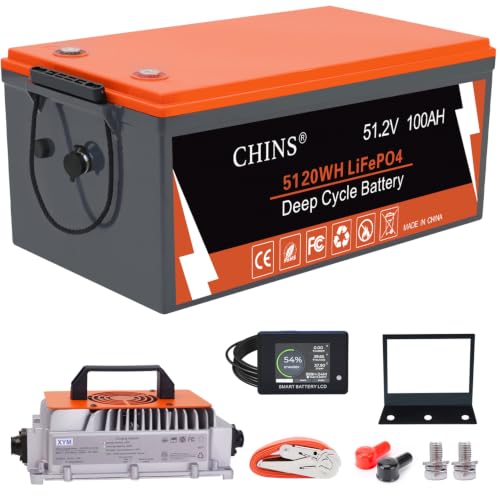
CHINS 48V 100AH Lithium Battery 200A BMS

CHINS 48V 100AH Lithium Battery Monitor

TRISCO 12V-72V Waterproof Battery Meter
A Deeper Look At The Lineup
Capacity is the central attraction here, with a nominal 48V pack rated at 105Ah. That combination favors long neighborhood routes and carts carrying clubs or passengers, although range still depends on terrain and motor demand. Unlike the monitored picks later in the list, this kit centers on bulk capacity and a straightforward 20A charging setup.
For a club-owned 48V cart used five or six days per week, the Cloudenergy kit can be a practical capacity-focused conversion. You still need to confirm bay dimensions, terminal placement, and controller settings before installation.
Useful Touches
- The 105Ah rating offers substantial energy storage for extended 48V routes.
- The included 20A charger simplifies the initial charging setup.
- A complete kit reduces the need to source several components separately.
- The higher capacity can suit carts that carry passengers or accessories.
Practical Considerations
- It is a 48V battery and cannot replace a 72V pack without a properly engineered system conversion.
- Owners should measure the battery bay and inspect cable reach before ordering.
- Lithium charging requires the specified charger and correct charging procedure.
At A Glance
Built For Extended Routes
You benefit most with a 48V club car that travels long paved routes and carries several passengers regularly.
A Better Fit Elsewhere
The CHINS 48V 100AH Lithium Battery Monitor is a better fit for you when in-pack monitoring matters more than the extra 5Ah.
LiFePO4 chemistry, which uses lithium iron phosphate rather than a cobalt-heavy formulation, is paired here with unusually visible system information. A 2.8-inch touch display and Bluetooth application let you inspect operating data, while the 200A BMS, or battery management system, controls electrical conditions within the pack.
This setup fits an owner who wants fewer separate accessories and clearer charge information. Compared with Cloudenergy’s 105Ah option, TEMGO trades 5Ah of nominal capacity for a more elaborate monitoring package and a smaller listed peak output.
Real Benefits
- The touch display provides convenient pack information during routine use.
- Bluetooth monitoring can reduce guesswork while the cart is stored.
- The 200A BMS is suited to carts that need substantial continuous discharge.
- The included charger and retention strap create a more complete installation kit.
Details To Watch
- Application setup and display placement add steps that a simpler lead-acid conversion may not require.
- The 100Ah rating sits below the Cloudenergy kit’s 105Ah capacity.
- Your cart’s motor, controller, and converter must support the intended 48V lithium operating profile.
Feature Snapshot
Made For Connected Monitoring
You benefit most with a 48V cart owner who values an LCD screen, app access, and a coordinated charger-and-display kit.
Consider A Different Pick
The Cloudenergy 48V 105AH Lithium Battery Kit suits you better when maximum listed capacity matters more than integrated touch monitoring.
OGRPHY builds this 51.2V lithium battery around a 200A management system and a 105Ah capacity. The listed 10.24kW sustained output targets demanding cart use, while peak figures cover short bursts associated with acceleration, inclines, or heavy electrical loads.
That makes it a sensible consideration for hilly courses, though your cart still needs suitable power electronics and adequate battery clearance. Compared with TEMGO’s 100Ah pack, OGRPHY offers more nominal capacity and a larger stated peak-current figure.
Strengths Worth Knowing
- The 105Ah rating provides more nominal storage than the 100Ah alternatives.
- A 10.24kW sustained output target suits performance-oriented 48V carts.
- The listed 1000A short-duration peak supports sudden high-load events.
- The touch LCD keeps operating information close at hand.
- An 18A charger is included for a coordinated 48V lithium setup.
Trade-Offs To Consider
- High output figures do not remove the need to match the battery to the controller and motor.
- For mostly flat neighborhood routes, the 105Ah capacity may be more than your driving pattern requires.
- Installation still depends on correct cable length, terminal clearance, and secure retention.
Key Product Details
Built With Hills In Mind
You benefit most on a 48V course with steep terrain, frequent stops, or a controller designed for substantial lithium power delivery.
Swap It Out When
The CHINS 48V 100AH Lithium Battery Monitor better suits you when app-based routine monitoring matters more than the OGRPHY battery’s higher stated output envelope.
A 36V system is lower in voltage than the 48V options here, but it remains relevant for many older or smaller carts. This CHINS battery combines 100Ah capacity with an onboard monitor, a 200A continuous discharge rating, and short-duration peaks up to 1000A.
For a flat neighborhood course or a small utility cart, that balance can be easier to work with than a larger high-voltage conversion. The included charger and monitoring hardware make it more useful for routine ownership than an unmonitored bare pack.
Why It Works Well
- The 100Ah rating supplies useful capacity for moderate daily routes.
- The monitor and application support convenient charge-status checks.
- The 200A continuous rating handles a wide range of 36V cart motors.
- The listed cycle figure points toward long-term high-use potential.
Some Limits To Know
- This is a 36V battery, so it is unsuitable for a cart designed around a 48V lithium pack.
- A controller and converter not designed for lithium may require replacement.
- Monitor placement and cable routing should be planned before removing the existing pack.
Quick Facts
The Right Fit
You benefit most with an older 36V cart used on relatively level terrain for neighborhood cruising or light utility work.
Where A Sibling Pick Shines
The TEMGO 48V 100Ah LiFePO4 Battery 200A BMS suits you better for a modern 48V cart with integrated touch monitoring.
This 48V CHINS pack combines 100Ah capacity with a 200A continuous discharge rating and peak output listed at 1000A. The Bluetooth application and external monitoring system provide pack information, while the included 18A charger simplifies charging after a compatible installation.
It is a balanced choice for a frequently used 48V cart, especially one with moderate hills or occasional passenger loads. Compared with OGRPHY, it has the same nominal capacity but a smaller listed sustained-output figure; compared with TEMGO, it provides app monitoring without a touch LCD.
A Strong Showing
- The 200A continuous rating supports regular high-current cart operation.
- Bluetooth monitoring helps you check charging information remotely.
- The 1000A peak figure offers headroom for brief acceleration demands.
- The included charger and monitor create a practical 48V package.
- A listed cycle count above 5,000 supports high-frequency use planning.
Honest Caveats
- The battery is not a direct match for a 72V cart without major system changes.
- Application-dependent features require correct phone and connection setup.
- The 100Ah capacity is not an upgrade over another 100Ah 48V pack, so range gains depend on the rest of the conversion.
Who Should Grab It
You benefit most with a 48V neighborhood or club cart that runs regularly and needs app-based monitoring without a large touch display.
Another Choice May Suit
The OGRPHY 48V 105AH Lithium Battery 200A BMS better serves you when higher stated sustained output and 5Ah more capacity justify the larger electrical envelope.
The 48V configuration, 100Ah capacity, and 200A continuous rating make this a conventional high-use choice for common lithium conversions. You can check charge information through the onboard monitor and application, which is helpful during daily storage and after returning from longer routes.
Compared with the closely related CHINS 48V 100AH model earlier in the list, the published names do not expose every distinguishing specification clearly. You should verify the listing details and current contents before ordering rather than assuming both models are identical.
What Works In Its Favor
- The 100Ah rating offers useful energy storage for routine golf cart travel.
- A 200A continuous discharge rating supports high-current motor operation.
- Onboard and app-based monitoring make state-of-charge checks convenient.
- The included 18A charger reduces the number of separate purchases.
Points To Note
- It cannot serve a 72V cart without a properly designed voltage conversion.
- Some listed high-current claims depend on a short peak window rather than sustained output.
- Owners commonly need to secure the monitor and route cables away from moving suspension components.
Made For Everyday Routes
You benefit most with a standard 48V cart used for neighborhood travel, moderate courses, and frequent charge-status monitoring.
Look Elsewhere When
The CHINS 36V 100AH Lithium Golf Cart Battery better fits you when your existing cart system operates at 36V rather than 48V.
This is the only actual 72V-compatible item in the group, but it is a meter rather than a battery. TRISCO supports displayed voltage and charge-level readings across 12V through 72V systems, making it useful for checking a high-voltage pack or diagnosing uncertain charge readings.
Its IP65 enclosure rating indicates resistance to dust and water jets, which suits outdoor carts, RVs, and sightseeing vehicles. The button switches between voltage and battery-level information, although the meter cannot replace a proper battery-management system or diagnose every electrical fault.
The Helpful Details
- The 12V to 72V range covers many common golf cart configurations.
- Voltage and battery-level displays provide two views of pack condition.
- Compatibility spans lead-acid, lithium-ion, and LiFePO4 battery types.
- The IP65 enclosure supports use in wet outdoor environments.
Smaller Caveats
- It monitors a battery but stores no energy and cannot power a cart.
- Reading accuracy still depends on correct wiring, probe placement, and battery chemistry selection.
- You should route and secure the leads away from sharp edges and moving components.
Who Will Love This
You benefit most as the owner of a 72V golf cart who wants a simple independent voltage and charge indicator outdoors.
Reach For A Different Pick
The Cloudenergy 48V 105AH Lithium Battery Kit suits you better when you need to replace and recharge a complete 48V battery system.
Matching Storage Power To Your Cart
Start with the voltage printed on the cart’s battery bay, controller, and converter. A 72V lithium system is not simply a larger 48V pack, and the six replacement batteries here are intended for 36V or 48V carts. You should also account for a separate 72V meter when monitoring a high-voltage conversion.
Capacity comes next. Battery capacity, measured in amp-hours, stores energy, but the range you receive depends on motor size, terrain, passenger load, speed, tire pressure, and ambient conditions. The 100Ah and 105Ah options here may feel similar on a short course yet behave differently on long routes.
A BMS protects a lithium pack by monitoring electrical conditions and limiting unsuitable charge or discharge. For carts with steep hills, frequent acceleration, or large motors, compare continuous output separately from short peak-current figures. A high peak number does not replace the need for a properly sized controller.
Installation details deserve the same attention as the battery. Measure the bay, check terminal orientation, confirm cable reach, and make sure the charger matches the battery chemistry and nominal voltage. You should also use suitable mounting hardware and protection against vibration, moisture, and accidental contact with conductive objects.
Pitfalls To Avoid In Battery Selection
Mistakes Worth Dodging
Don’t assume a 72V label makes every listed item usable. Six choices are replacement batteries for 36V or 48V systems, while the TRISCO 12V-72V Waterproof Battery Meter only measures pack condition. Confirm cart voltage, controller compatibility, bay dimensions, terminal position, and charger requirements before purchasing.
What The Extra Output Buys
A higher current rating can help during steep climbs, rapid acceleration, and prolonged passenger loads. It does not automatically add range, however. For routine neighborhood use, a properly matched 100Ah pack may be sufficient, while high-demand courses can justify the larger 105Ah options and higher output specifications.
Frequently Asked Questions
Can a 48V battery power a 72V golf cart?
No, not as a direct replacement. A properly engineered 72V system requires matching batteries, controller, converter, charger, cables, and compatible electrical protection.
Is 100Ah enough for a golf cart?
It can suit moderate routes on compatible 36V and 48V carts. Hills, speed, passenger weight, motor demand, and accessory use can reduce the range delivered from that capacity.
What does peak current mean?
Peak current describes a short-duration discharge allowance, not sustained output. Your controller, wiring, and motor system must also tolerate the battery’s specified limits.
Do these batteries fit every golf cart?
No, battery-box dimensions, weight, terminal position, cable length, and connector type must match. Voltage compatibility alone does not confirm physical or electrical fit.
Can the TRISCO meter replace a battery-management system?
No, it provides a voltage or charge-level reading only. It cannot balance cells, control charging, or manage current inside a lithium battery pack.
Final Thoughts
Most of the batteries here serve 48V or 36V carts rather than 72V systems, so your first decision should be voltage compatibility. Within the 48V group, choose 100Ah for balanced routine use or consider the 105Ah models for greater listed storage and output. The TRISCO meter serves a different role by giving you an independent reading across a broad voltage range. Match the complete electrical system, then evaluate capacity and monitoring.
